



Trading Basics · Beginner · 9 min read
Day Trading Discussion Boards: How to Use Forums Without Losing Money
What day trading discussion boards are and why traders use them
Day trading discussion boards are online forums where active traders share strategies, trade setups, market analysis and real-time ideas with other members. They range from niche specialist forums to platforms with tens of thousands of participants, split into dedicated sections for stocks, forex, crypto, futures and options.
For retail traders, they offer a way to learn from experienced participants outside a broker's platform.
The appeal is straightforward. A retail trader working alone has no colleagues, no trading floor and no natural feedback loop on their decisions.
Understanding types of traders and their timeframes can help you identify where you fit in the market ecosystem. A trading community fills that gap: you post a chart, explain your reasoning and receive critique within hours. You also read how others react to the same market events you are watching, which sharpens your judgement about what is signal and what is noise.
That said, a day trading forum is not a substitute for structured learning. It is a supplement. The value depends on the quality of the members, the discipline of the moderators and, above all, your own ability to filter useful posts from noise. A beginner treating a forum as a source of trade tips is very different from an intermediate trader using it to stress-test their own methodology.
Putting this into practice means opening an account: start with the best forex brokers our team reviewed.
How trading communities work and what you'll find inside
Most boards operate as topic-based forums with separate sections for different asset classes, trading styles and experience levels. Members post trade setups with entry and exit reasoning, share technical analysis charts (visual studies of price behaviour using indicators like moving averages), discuss broker platforms and maintain trading journals to track performance over time. Larger platforms also run real-time chat rooms where traders discuss intraday moves as they happen.
Structurally, a well-run board separates content by function. Educational threads sit apart from live trade calls. Beginner questions have their own subforum. Broker reviews live in a dedicated section, often with a rating system. Some boards require a minimum post count before you can start new threads, which reduces spam and pump-and-dump schemes (coordinated efforts to inflate a thinly traded asset before insiders sell).
Moderation is the single most important variable. Tightly managed boards enforce rules against unlicensed advice, personal attacks and undisclosed paid promotions. Loose boards let anything through, and the signal-to-noise ratio collapses quickly. Before you engage, read the last week of top threads: you will learn more from the tone of moderation than from any 'about us' page.
Most forums also host tool-specific sections. You will find threads on MT4 and MT5 (the MetaTrader charting and order platforms), on cTrader, and on TradingView, a browser-based charting service used by many prop firms. Quality varies: some threads are technical and useful, others are little more than product complaints.
Genuine benefits of joining a day trading forum
A good trading community offers peer learning, accountability and exposure to diverse approaches without the cost of a formal course. You can observe how experienced members structure their analysis, manage losing trades and scale positions across different market conditions. Broker reviews and platform comparisons written by actual users are often more candid than official material, which helps you avoid costly mistakes when choosing where to trade.
Sharing your own trades accelerates learning. Writing out your reasoning forces clarity: if you cannot explain why you entered a trade, you probably should not have taken it. Feedback from other members catches blind spots you would miss alone, whether that is an obvious support level, a scheduled economic release you overlooked, or a position size that is too large for your account.
The social element also matters. Retail day trading is isolating, and long losing streaks test anyone's discipline. A community of peers who understand what a drawdown (the fall from a capital peak to the trough before a new peak) actually feels like can steady you through the psychological rough patches that solo traders often mishandle.
Risks and pitfalls to watch for in trading discussion boards

Not all advice on trading boards is sound. Following unvetted trade ideas without doing your own analysis is a common path to losses. Pump-and-dump schemes, where members hype low-liquidity stocks or coins to push price up before dumping their own holdings, occur on less-moderated forums. Survivorship bias is rife: profitable traders post their wins loudly, while quiet losers rarely broadcast their drawdowns, which skews your sense of what is realistic.
Understanding how many day traders are actually successful can help you calibrate realistic expectations.
Some boards attract self-proclaimed gurus selling courses or signal services, blurring the line between community and sales pitch. Watch for accounts that only post trade calls, never losses, and always link to a paid product. Watch also for the time cost: hours spent scrolling forums can become a form of procrastination that delays the harder work of writing and testing your own plan.
Regulatory boundaries are the least discussed risk. According to the FCA, giving personalised investment advice in the UK requires authorisation. A forum member telling a specific stranger to 'buy this stock at this price with this stop' is, in strict terms, straying into regulated territory. Most members treat this casually, but the legal responsibility does not disappear because a message was posted on a public board.
How to evaluate and choose a trading community that fits your needs

Start by identifying your trading focus: stocks, forex, crypto or options. Then search for boards with active sections in that asset class and check how recently threads are being posted. A community with the last serious thread three months ago is effectively dead, whatever the historical archive looks like.
Read the rules and moderation policy carefully. Look for explicit bans on personalised advice, undisclosed promotions and coordinated hype. Look for evidence of experienced members: long-standing contributors with detailed trade journals, transparent profit-and-loss records and a track record of thoughtful posts. Avoid boards where the top threads are always sales pitches or where moderators appear absent.
Use the table below as a quick checklist before joining any trading community.
| Signal | Healthy community | Warning sign |
|---|---|---|
| Moderation | Clear rules, active moderators, visible enforcement | No visible mods, spam left up for days |
| Content mix | Educational threads, journals, broker reviews, chat | Almost entirely signal calls or product links |
| Member behaviour | Losses shared openly, questions welcomed | Only wins posted, newcomers attacked |
| Commercial disclosure | Paid promotions labelled, courses in a dedicated section | Hidden affiliate links, guru accounts unmarked |
| Broker discussion | Named entities, licence numbers, honest gripes | Vague praise, no regulator references |
Test the community with a small commitment first. Lurk and read for a week before posting. Pay attention to the tone: healthy boards welcome questions; toxic ones silence dissent.
Psychological and regulatory considerations for active traders
Day trading discussion boards can amplify emotional decision-making if you chase trades posted by others or feel pressure to match their activity. Discipline means sticking to your own plan and risk rules, not mirroring someone else's position. Thinking carefully about how many trades per day you should make helps you avoid forum-driven impulse trading. A concrete technique: before acting on any forum idea, write down the trade in your own journal with your own entry, stop and target. If you cannot justify it on your own terms, you do not take it. This single filter removes most forum-driven impulse trades.
On the regulatory side, the FCA has repeatedly warned that unqualified individuals giving trading advice online may be breaching financial services rules. UK retail leverage caps also apply regardless of what a forum member is trading in another jurisdiction: 1:30 on major forex pairs, 1:20 on major indices, 1:5 on individual equities, and CFDs on crypto are prohibited for UK retail clients by the FCA. If a forum thread encourages you to route around those caps through an offshore entity, treat it as a red flag.
Tax rules are another blind spot. Active traders in the UK must report gains and losses to HMRC, and depending on volume and intent, some activity is taxed as capital gains and some as income.
Understanding how taxable brokerage accounts work and your tax obligations is essential.
Discussion boards rarely handle this accurately, so consult a tax professional rather than trusting a forum thread. Your broker's group entity and licence also matter: an FCA-authorised entity provides the strongest retail protections, while offshore entities within the same brand carry different rules.
Backtesting, performance tracking, and using forums to refine your edge

Many trading forums include threads on backtesting (testing a strategy on historical price data to estimate how it would have performed) and on trade performance metrics, but few go deep into the mechanics. Backtesting before risking real money is essential, yet many forum members skip this step and trade live immediately. Some boards host discussions on MT4, MT5 and TradingView for charting and strategy testing, but the quality of advice varies widely.
To use a forum effectively for refining your edge, post your backtested results and ask for critique on your methodology, not just your recent live trades. Track a consistent set of metrics: win rate (share of trades that close profitably), average win versus average loss, maximum drawdown, and the Sharpe ratio (return per unit of volatility). Compare your live results against the backtest to identify where psychology or slippage is costing you.
Automation discussions surface often. Threads on Expert Advisors (EAs, which are automated trading scripts on MetaTrader) or on Pine Script strategies in TradingView can save development time, but a copy-pasted algorithm you do not understand is riskier than a manual system you do.
Learning how to build, backtest and deploy automated trading strategies gives you a foundation for evaluating forum code.
Read the code, test it on out-of-sample data, and start with the smallest position size your broker allows. Forums are useful for learning what metrics matter and what tools exist; the discipline of applying them consistently is on you.
Frequently Asked Questions
Are day trading discussion boards worth joining if I am a beginner?
Yes, but treat them as a place to observe and ask questions, not as a source of trades. Spend the first weeks reading educational threads and journals rather than acting on live calls. A beginner following unvetted forum tips typically loses money faster than one who studies the same market alone for a few months.
What is the difference between a trading forum and a paid trading community or course?
A forum is a peer discussion space, usually free, where members share ideas without a curriculum. A paid community or course has structured lessons, an instructor and, sometimes, ongoing signals. Paid does not equal better: many free forums outperform expensive courses, and some paid rooms are little more than repackaged forum content with a subscription fee attached.
How do I avoid losing money by following bad advice on trading boards?
Never take a forum trade without running it through your own plan. Write the setup in your journal, define your own entry, stop and target, and check the position size against your account risk rules. If the trade does not survive that filter, skip it. This one habit removes almost all impulse losses caused by forum influence.
Can I make money just by copying trades shared on discussion boards?
No, and treating a forum like a signal service is one of the fastest ways to lose capital. You cannot see the poster's real position size, entry timing or exit discipline. You also cannot verify their track record. Copying without understanding leaves you exposed to slippage, bad timing and the poster's undisclosed risk decisions.
What should I look for in a trading community to avoid scams and pump-and-dump schemes?
Look for active moderation, clear rules against undisclosed promotions, transparent trade journals from long-standing members and a healthy mix of losses posted alongside wins. Avoid boards where the top threads are always product pitches, where low-liquidity stocks or coins get sudden coordinated attention, or where moderators tolerate anonymous accounts that only post buy calls.
About the authors


Put this into practice
Brokers we have reviewed
Scored on the same five dimensions. Here are three of them — the full list is on the brokers page.



Related articles

ECN vs Market Maker Broker: What the Difference Actually Costs You
ECN vs market maker broker: understand the real cost difference, conflict of interest risks, and which model suits your trading style
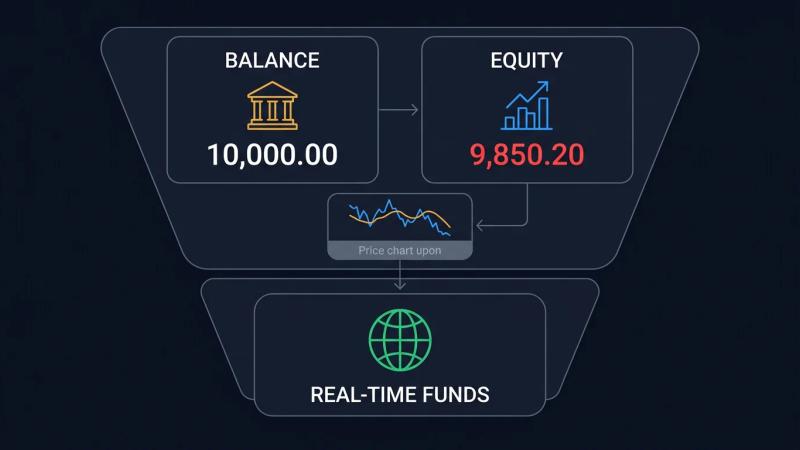
Equity vs Balance in a Trading Account: What's the Real Difference
Your trading platform shows balance and equity side by side for a reason, and understanding how each figure is calculated, when they diverge, and why only one of them can trigger a margin call changes how you read your account window.

Forex Broker Scam Warning Signs: How to Spot a Fake Before You Deposit
Learn the key forex broker scam warning signs before you deposit. Check regulation, spot red flags, and protect your funds with this verification guide.
0 comments