




N
Nik
✓ Verified
It is definitely gaining its place among the big guys. Good trading conditions and instruments.


Our Overall
Score
4.00
Traders Score
5.0
$0
Tier 3
7
Fusion Markets suits cost-focused forex traders with low commissions of $4.50 round turn, raw spreads from 0.0 pips, and four trading platforms. ASIC oversight applies to Australians, but most international clients trade under lighter offshore entities lacking compensation schemes. Education and asset diversity beyond CFDs remain limited.
Fusion Markets has staked its entire reputation on a single promise: cheaper trades. Launched in 2019 out of Melbourne, Australia, the broker charges $2.25 per side on forex, roughly 36% less than IC Markets or Pepperstone. Low commissions are only half the story, though. This Fusion Markets review digs into the regulation, spreads, platforms, and fine print so you can judge whether this broker actually earns your deposit.
Cost is the headline, and the numbers hold up under scrutiny. Fusion Markets charges a round-turn commission of $4.50 per standard lot on its Zero Account. IC Markets charges $7.00. Pepperstone charges $7.00. On raw spreads, EUR/USD averages around 0.02–0.11 pips, putting your all-in trading cost per lot on EUR/USD at roughly $5.50. That sits well below the industry norm of $7–$8.
The broker is more than just a pricing story, though. It supports four major trading platforms: MT4, MT5, cTrader, and TradingView. Very few brokers let you pick from the full lineup without switching providers. There is no minimum deposit requirement, 250+ instruments cover forex, indices, commodities, crypto CFDs, and US share CFDs, and the Fusion+ copy trading system lets you mirror other traders directly within the platform.
Founded in 2017 by a team led by CEO Phil Horner, Fusion Markets started accepting clients in 2019. The company is headquartered in Melbourne (Level 10, 627 Chapel St, South Yarra) and holds an ASIC license (AFSL 385620) as its primary regulation, with additional entities in Vanuatu (VFSC) and the Seychelles (FSA). Over 90 forex pairs are available, and the broker carries a near-perfect Trustpilot rating from 6,200+ reviews, with customer support agents regularly praised by name.
The pitch is simple: pay less per trade, keep more of your returns. What follows is whether the trade-offs hold up for your specific situation.
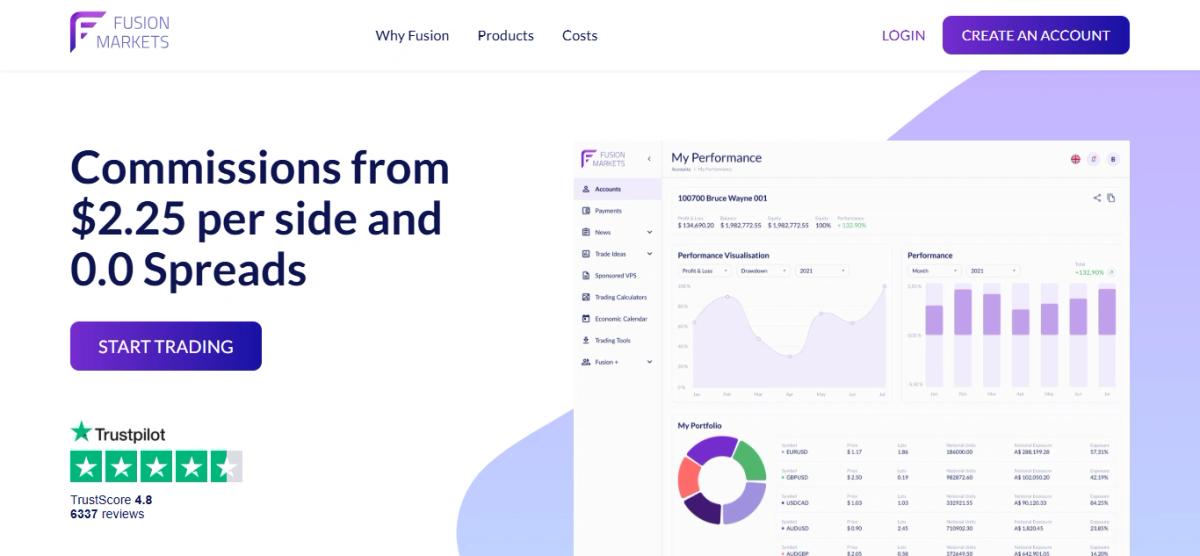
The cost advantage is real and easy to quantify. At $4.50 round turn versus $7.00 at most major competitors, frequent traders pocket meaningful savings over time. A trader executing 100 standard lots per month saves $250 in commissions alone compared to IC Markets or Pepperstone. That number compounds quickly if you trade at any serious volume.
Platform choice is another genuine strength. Having MT4, MT5, cTrader, and TradingView under one roof means you are not locked into a single charting ecosystem. The zero minimum deposit removes a common barrier for new account holders, and the 24/7 live chat connects you to human agents, not bots. That last point comes up repeatedly across review platforms.
Education is thin. If you are a beginner looking for structured courses, video tutorials, or a proper trading academy, Fusion Markets will leave you wanting. Pepperstone and IG both offer far more on this front. There is no investor compensation scheme (a government-backed fund that reimburses clients if a broker becomes insolvent) under any of Fusion Markets' entities. Clients outside Australia also miss out on negative balance protection. Swap rates run higher than average, and while the instrument range is solid for forex, it lacks real stocks, ETFs, bonds, and futures.
Fusion Markets fits intermediate to advanced forex traders, scalpers, and algo traders who prioritize low costs and platform flexibility above all else. If you need extensive education, broad asset coverage, or the strongest regulatory protection across every jurisdiction, other brokers will serve you better.
Your money's safety hinges on who regulates your broker. With Fusion Markets, the answer depends on where you live.
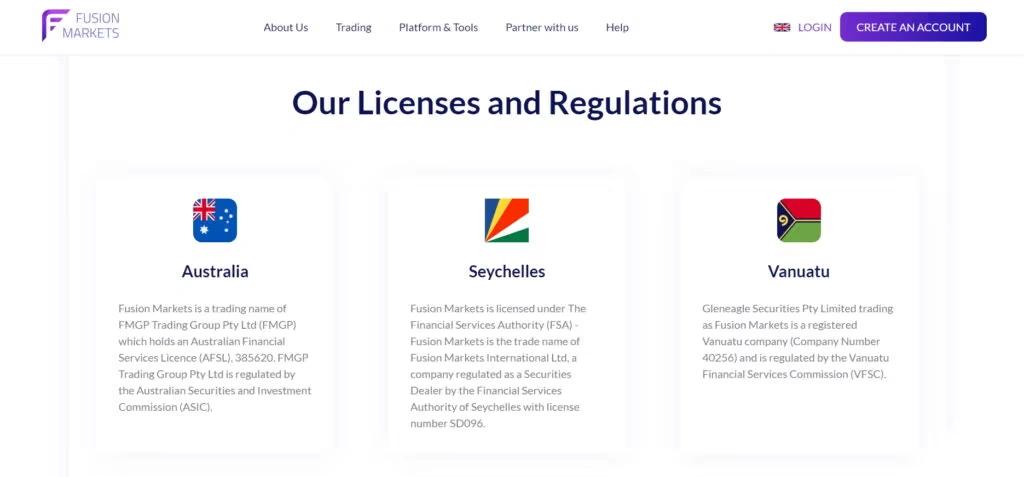
Fusion Markets operates through three regulated entities:
The ASIC license is what gives Fusion Markets its credibility. That said, if you are based outside Australia, you will almost certainly trade under the VFSC entity, which carries significantly lighter regulatory requirements. This matters because ASIC caps leverage at 1:30 for retail clients, while VFSC clients can access up to 1:500. Higher leverage means higher risk exposure, and fewer guardrails if something goes wrong.
Fusion Markets does not hold licenses from the FCA (UK), CySEC (EU), or SEC (US).
Fusion Markets holds client funds in segregated accounts at National Australia Bank (NAB), one of Australia's four major banks. In practice, this means your trading capital is kept separate from the company's operating funds, so the broker cannot use your money to cover its own expenses.
Negative balance protection is available for ASIC-regulated retail clients only. If you trade under the VFSC or Seychelles entities, you do not receive this safeguard. There is no investor compensation scheme under any of Fusion Markets' entities either, so in the unlikely event of broker insolvency, there is no government-backed fund to make you whole.
Fusion Markets was founded in 2017, with live trading beginning in 2019. The parent company, Gleneagle Securities Pty Limited, has been operating since 2010. To date, the broker has maintained a clean regulatory record with no fines, sanctions, or enforcement actions from any regulator.
On Trustpilot, Fusion Markets holds approximately 5 stars from over 6,200 reviews. Positive feedback consistently highlights low trading costs, fast withdrawals, and responsive customer support. ForexPeaceArmy and TradingView user communities reflect similar sentiment. Occasional complaints about spread widening during high volatility and crypto withdrawal delays do surface, but they remain isolated rather than systemic.
The company employs over 100 staff and has won multiple industry awards for its low-cost trading model.
Fusion Markets keeps its account structure deliberately simple: two main options and one specialty account.
Zero Account - The most popular choice. Raw spreads start from 0.0 pips (EUR/USD averages around 0.02–0.11 pips), and you pay a commission of $2.25 per side ($4.50 round turn per standard lot). This account suits experienced traders who are comfortable factoring commissions into their cost analysis. cTrader and TradingView are available exclusively on this account type.
Classic Account - Spreads start from 0.9 pips on EUR/USD (averaging around 0.93–1.01 pips) with zero commission. The broker's markup is built into the spread instead. This works well for traders who prefer a simpler, all-inclusive pricing model without tracking separate commission charges.
Swap-Free Account - Built for traders who cannot receive or pay overnight interest. Spreads start from 1.4 pips on EUR/USD with no commissions. An administrative fee kicks in for positions held open beyond a 7-day grace period, with fees varying by instrument.
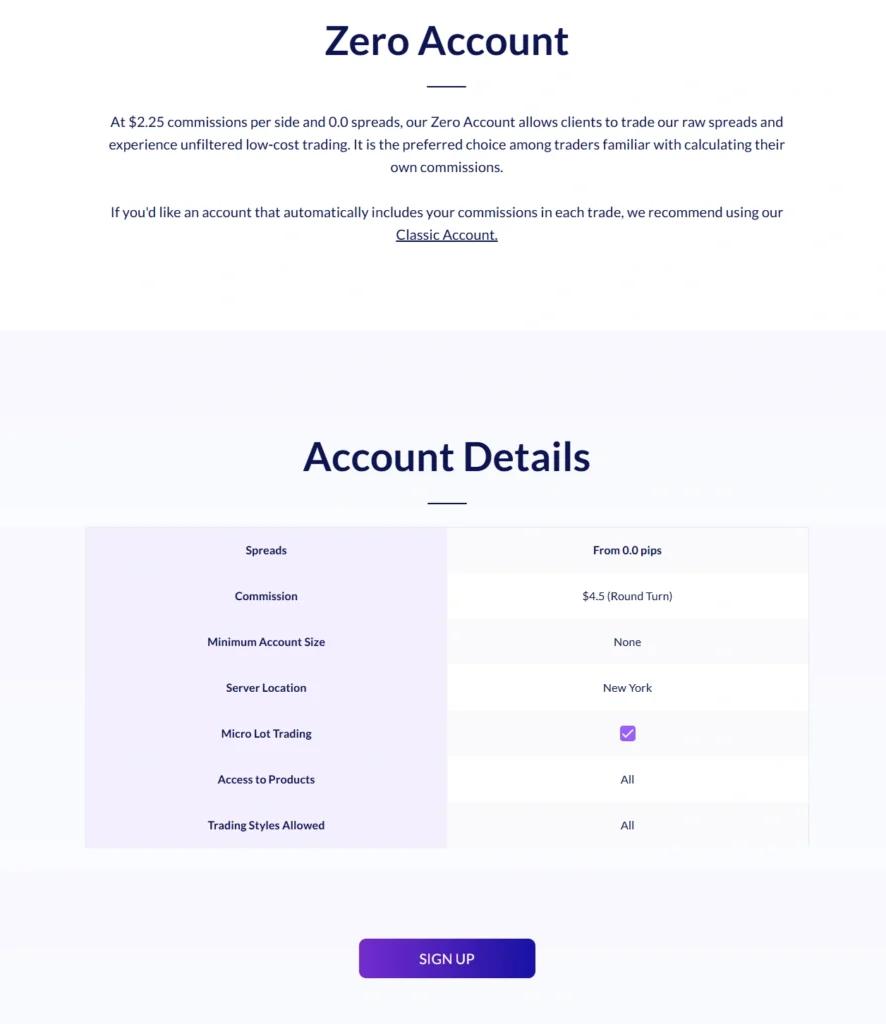
All three account types share these features:
Platform variety is one of Fusion Markets' clearest competitive edges. Four major platforms under one roof puts it ahead of most rivals.
MetaTrader 4 (MT4) - Still the industry workhorse for forex trading. Supports Expert Advisors (automated trading bots), custom indicators, and one-click trading. Available on Windows, Mac, web, and mobile. Both Zero and Classic accounts can use MT4.
MetaTrader 5 (MT5) - The successor to MT4, with an expanded set of timeframes, more order types, and access to US share CFDs (110+ stocks). If you want to trade stock CFDs, MT5 is required. Available on all devices and both account types.
cTrader - A modern platform that appeals to scalpers and algorithmic traders for its fast execution, advanced order types, and depth-of-market display (which shows resting buy and sell orders at each price level). Available only on the Zero Account.
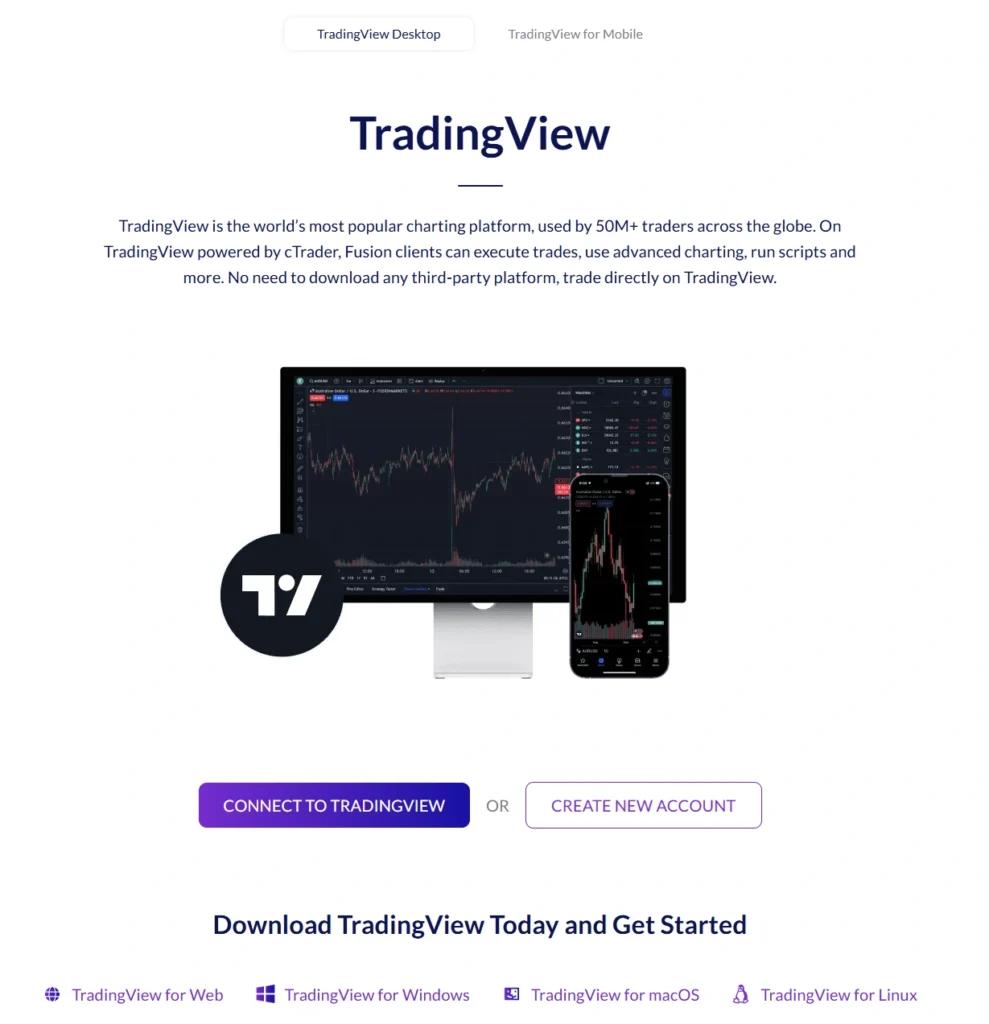
TradingView - The popular charting platform now works as a full trading solution through Fusion Markets. Connect your Zero Account directly and execute trades from TradingView's interface without switching windows. Available only on the Zero Account.
Beyond the core platforms, Fusion Markets offers several supplementary tools:
Fusion Markets offers 250+ instruments across multiple asset classes, all traded as CFDs (Contracts for Difference, meaning you speculate on price movements without owning the underlying asset).
Forex - 90+ currency pairs covering majors (EUR/USD, GBP/USD, USD/JPY), minors, and exotics (NZD/SGD, NOK/SEK, CHF/PLN). This is a broad offering that exceeds many competitors. Maximum leverage reaches 1:500 for major pairs under the VFSC entity, or 1:30 under ASIC.
Indices - Approximately 15 major global indices including the S&P 500, FTSE 100, DAX 40, Nikkei 225, and ASX 200. No commission is charged on index CFDs.
Commodities - Energy products (WTI Crude Oil, Brent Crude, Natural Gas) and metals (Gold, Silver, Platinum, Zinc, Copper). Precious metals support leverage up to 1:500 under VFSC.
Cryptocurrencies - 13+ crypto CFDs including BTC/USD, ETH/USD, XRP/USD, LTC/USD, and DASH/USD. No commission, with Bitcoin spreads starting at 0.04%. These are crypto CFDs only, not spot crypto, so you never actually hold the coins.
US Share CFDs - 110+ major US equities available exclusively through MT5. Commission-free ($0) with maximum leverage of 1:20.
Notable absences: Fusion Markets does not offer ETFs, bonds, futures, options, or real (non-CFD) stock ownership. If portfolio diversification beyond forex and CFDs is important to you, this is a genuine limitation worth weighing.
Low costs are Fusion Markets' headline selling point, and the numbers largely back the claim.
| Pair | Zero Account Avg. Spread | Classic Account Avg. Spread | Zero Commission (RT) | Classic Commission | Zero All-In Cost (1 lot) |
|---|---|---|---|---|---|
| EUR/USD | 0.02 - 0.11 pips | 0.93 - 1.01 pips | $4.50 | $0 | ~$5.50 - $5.60 |
| GBP/USD | ~0.09 pips | ~1.0 pips | $4.50 | $0 | ~$5.40 |
| AUD/USD | ~0.02 pips | ~0.92 pips | $4.50 | $0 | ~$4.70 |
| USD/JPY | ~0.08 pips | ~0.98 pips | $4.50 | $0 | ~$5.30 |
To put those numbers in context: the all-in cost at IC Markets on EUR/USD (raw spread of ~0.02 pips plus $7.00 commission) totals approximately $7.20 per standard lot. At Pepperstone (raw spread of ~0.10 pips plus $7.00 commission), you are looking at around $8.00. Fusion Markets' $5.50 saves you roughly $1.70–$2.50 per lot, and that gap compounds quickly for anyone trading at volume.
The Classic Account ends up being the more expensive option overall, but it has a place for traders who prefer not to track separate commission charges. Adding approximately 0.9 pips to the Zero Account spread gives you the equivalent Classic spread.
Swap rates at Fusion Markets run higher than average. This is worth flagging if you regularly hold positions overnight, as swap charges (the interest cost for carrying a position past the daily rollover) vary by instrument, currency pair, and trade direction. The broker provides swap calculators within its platform tools to help estimate these costs before you commit to a trade.
Execution model: Fusion Markets operates an STP/ECN model with no dealing desk. Your orders route directly to liquidity providers, and the broker earns revenue from commissions and spread markup rather than taking the other side of your trades.
Funding your Fusion Markets account is straightforward, with a wide range of options and no fees on most methods.
Deposit methods: Visa, Mastercard (credit and debit), Bank Transfer, PayPal, Skrill, Neteller, Fasapay, Jeton Wallet, Perfect Money, MiFinity, Sticpay, and cryptocurrency (BTC, ETH, USDT). Local bank transfers are available in Singapore, Indonesia, EEA, Philippines, United Kingdom, Malaysia, Vietnam, and Thailand.
Deposit fees: Fusion Markets charges no fees on any deposit method. That said, international wire transfers to an Australian bank may incur intermediary bank charges of $20–$30 on the sender's end.
Deposit processing: Credit/debit card and e-wallet deposits are credited instantly. International bank wires take 2–3 business days.
Withdrawal processing: All requests received before 11am AEDT are processed the same day. Requests after this cutoff are processed the next business day. Funds typically arrive within 1–5 business days for credit/debit cards and 2–5 business days for bank wires.
Withdrawal fees: No fees from Fusion Markets. Bank intermediary fees may apply for international wires.
Minimum withdrawal: $30 via bank wire.
Ten base currencies are supported (USD, AUD, NZD, CAD, HKD, SGD, GBP, EUR, JPY, CHF), which helps many international traders avoid conversion fees.
Fusion Markets delivers strong customer support but falls noticeably short on educational content.
Support channels: 24/7 live chat (staffed by human agents, not chatbots) and email (help@fusionmarkets.com). There is no phone support listed. The live chat consistently draws praise across Trustpilot and other review platforms, with individual support agents frequently mentioned by name. Response times are generally fast across all trading sessions.
Education: Fusion Markets does not offer a structured trading academy, in-depth video courses, or beginner-focused learning paths. The available resources are limited to an economic calendar, basic trading calculators, and some blog content. The Trading Central integration (Analyst Views, Technical Insights, Market Buzz AI) partially fills the gap for market analysis, but those tools assume you already know what you are looking at.
If you are new to forex trading and expect your broker to double as your classroom, Fusion Markets is not the right fit. Pepperstone and IG both provide significantly richer educational ecosystems with webinars, structured courses, and video libraries.
The low-cost broker conversation usually narrows to three names: Fusion Markets, IC Markets, and Pepperstone. Here is how they stack up on the factors that matter most.
| Factor | Fusion Markets | IC Markets | Pepperstone |
|---|---|---|---|
| Commission (RT) | $4.50 | $7.00 | $7.00 |
| EUR/USD Raw Spread | ~0.02-0.11 pips | ~0.02 pips | ~0.10 pips |
| All-In Cost (EUR/USD) | ~$5.50 | ~$7.20 | ~$8.00 |
| Platforms | MT4, MT5, cTrader, TradingView | MT4, MT5, cTrader | MT4, MT5, cTrader, TradingView |
| Min Deposit | $0 | $200 | $0 |
| Regulation | ASIC, VFSC, FSA Seychelles | ASIC, CySEC, FSA Seychelles | ASIC, FCA, CySEC, DFSA |
| Instruments | 250+ | 3,500+ | 1,700+ |
| Education | Weak | Moderate | Strong |
Fusion Markets wins on cost. The $2.50 saving per lot over IC Markets and Pepperstone is the single biggest differentiator. For high-volume traders, that gap translates to hundreds of dollars each month.
IC Markets wins on instrument range. With 3,500+ markets versus Fusion Markets' 250+, IC Markets gives you far more to trade, including a wider selection of stock CFDs and asset classes.
Pepperstone wins on regulation and education. Holding licenses from the FCA (UK), CySEC (EU), DFSA (UAE), and ASIC, Pepperstone offers broader Tier 1 regulatory coverage. Its educational content is also substantially better for newer traders.
If your priority is the lowest possible trading cost and you are comfortable with ASIC-anchored regulation through an offshore entity, Fusion Markets is the strongest option in this group. If you need broader Tier 1 regulation across multiple jurisdictions or meaningful educational support, IC Markets or Pepperstone may be a better fit.
Fusion Markets delivers on its core promise of low-cost forex trading. The $2.25 per side commission is verifiably cheaper than its closest competitors, the four-platform lineup (MT4, MT5, cTrader, TradingView) is among the broadest available, and the ASIC license provides a credible regulatory foundation.
This broker fits cost-conscious forex traders, scalpers, and algorithmic traders who know their way around the markets and want to minimize what they pay per trade. The zero minimum deposit and free VPS for active traders add further appeal.
It is not the right choice for beginners who need guided education, traders who want real stocks or ETFs, or anyone who requires Tier 1 regulation across all jurisdictions. Most international clients will trade under the VFSC (Vanuatu) entity, which provides significantly less regulatory protection than ASIC.
For traders who prioritize broader regulatory coverage, IC Markets (ASIC, CySEC) and Pepperstone (ASIC, FCA, CySEC, DFSA) are strong alternatives worth exploring.
Risk Disclaimer: CFDs are complex instruments and come with a high risk of losing money rapidly due to leverage. A significant majority of retail investor accounts lose money when trading CFDs. You should consider whether you understand how CFDs work and whether you can afford to take the high risk of losing your money.
Five weighted dimensions, two analysis levels, and a framework built for retail traders (FCA, ASIC, CySEC, NFA).
Spreads are quoted in pips, which only becomes a cost once you know your lot size and pair. Put both into our pip value calculator to see what Fusion Markets’s spread is worth per trade in your account currency.
See how Fusion Markets stacks up against the other top-rated forex brokers in our independent ranking.
Nik
✓ Verified
It is definitely gaining its place among the big guys. Good trading conditions and instruments.
Add Fusion Markets to the comparison tool to put it side by side with other options on costs, conditions, and score.
Compare Fusion Markets →