



CFD Trading · Intermediate · 6 min read
PDT Rule: What Changed and How the New Intraday Margin Framework Affects You
The PDT rule is a FINRA regulation that historically required traders executing four or more day trades within five business days to hold at least $25,000 in a margin account. On April 14, 2026, the SEC approved amendments that eliminated the pattern day trader designation and the $25,000 minimum, replacing them with a risk-based intraday margin framework that took effect June 4, 2026.
What Is the PDT Rule and What Changed
The PDT rule was a trade-count barrier that flagged frequent day traders and forced them to maintain a high equity floor. According to the SEC (2026), FINRA's amendments to Rule 4210 eliminate the pattern day trader designation and the $25,000 minimum equity requirement. In its place, brokers now monitor intraday margin in real time.
You are no longer penalised for trading frequently; instead, your positions are restricted only if your actual margin usage breaches thresholds during the trading day. A day trade is the purchase and sale of the same security on the same trading day in a margin account.
[SEC Investor.gov, 2026]: The SEC approved FINRA's proposed amendments to Rule 4210 on April 14, 2026, eliminating the pattern day trader designation and the $25,000 minimum equity requirement.
Compare spreads and regulation across the best CFD brokers.
The Old PDT Rule: How It Worked Before

The pattern day trading rule was introduced in September 2001 as an amendment to FINRA Rule 4210, following the dot-com bubble collapse. Regulators wanted to protect retail traders from the leverage-driven losses that had marked the crash.
Under the outgoing rule, you were flagged as a pattern day trader if you executed 4 day trades in 5 business days; more than 6% of total trades during that period. Once designated, you had to hold at least $25,000 and could only trade in a margin account: a brokerage account that lets you borrow funds against your equity. Cash accounts were off limits for pattern day traders, and small accounts were effectively locked out of active intraday trading.
New Intraday Margin Framework: How It Works Now
The replacement framework tracks your margin balance throughout the session rather than counting trades.
According to the SEC (2026), the minimum equity requirement for former PDT accounts drops to $2,000, matching the standard margin account minimum. Your broker calculates intraday margin in real time and can restrict you from creating or increasing short positions or debit balances (borrowed cash used to hold a position) if you breach requirements.
Small deficits below the lesser of 5% of equity or $1,000, and those from extraordinary circumstances, are exempt. If you repeatedly fail to meet intraday margin within five business days, you face a 90-day restriction on new short positions or debit increases. This is more granular than the old trade-count method, but it asks you to watch margin actively.
Who Is Affected and What You Need to Know
If you trade US equities on margin with a US broker, the changes apply to you directly. Traders with accounts between $2,000 and $25,000 now have a clear path to intraday trading without the old PDT barrier.
The new intraday margin requirements took effect on June 4, 2026, with a transition period until October 20, 2027 for firms that need more time to comply. If you trade CFDs on equities or indices through a UK-regulated broker, FCA leverage caps apply instead: equities are capped at 1:5 for retail clients, indices at 1:20, major forex pairs at 1:30, and CFDs on crypto are prohibited for UK retail. The PDT rule applies only to US equities traded on US brokers; it never touched CFDs, spot forex or non-US markets.
| Jurisdiction | Product | Retail leverage cap |
|---|---|---|
| US (FINRA) | Equities on margin | 1:2 overnight, 1:4 intraday |
| UK (FCA) | Equity CFDs | 1:5 |
| UK (FCA) | Index CFDs | 1:20 |
| UK (FCA) | Major forex CFDs | 1:30 |
| UK (FCA) | Crypto CFDs | Prohibited |
Practical Steps to Transition
- Start by confirming your broker's implementation timeline: not all US brokers roll out changes on the same date, and the SEC's compliance window extends to October 20, 2027.
- Review your account size and typical trading frequency to see whether you fall under the new $2,000 minimum or still sit above the old $25,000 threshold.
- Enable margin alerts and use your broker's intraday monitoring tools, especially if you carry multiple positions.
- Log your trades and margin usage to spot patterns that could trigger the 90-day restriction.
- If you are a UK retail trader on a CFD broker, verify your leverage settings match FCA caps.
- Above all, adjust position sizing so a single trade cannot push you into an intraday margin deficit larger than the exempt threshold.
Common Misconceptions
A frequent misunderstanding is that the change removes all day trading restrictions. It does not. The new framework replaces the old trade-count method with real-time margin monitoring.
Another myth is that the $2,000 minimum applies globally: it applies only to US equities traded on US brokers under FINRA rules. Some assume lower equity means lower risk; it does not. Position sizing and stop losses (pre-set exit orders that cap the loss on a trade) matter more, not less, when you can trade with a smaller balance.
[SEC Investor.gov]: FINRA rules define a pattern day trader as any customer who executes four or more day trades within five business days, provided those day trades represent more than 6% of the customer's total trades in the margin account during that same period.
Why the SEC Changed the Rule
The SEC concluded that a 25-year-old trade-count rule no longer matched how brokers manage risk. The original 2001 rule was a blunt instrument designed for a market where real-time margin systems barely existed. Modern brokers can monitor exposure tick by tick, so restricting traders by activity rather than by actual risk is obsolete.
The new framework is more risk-sensitive: it acts on margin usage in the moment rather than punishing frequency. For you, the trade-off is clear. The barrier to entry is lower, but the burden of margin awareness shifts onto you. Traders with $3,000 or $5,000 accounts can now day trade US equities legitimately, while institutions lose part of the structural advantage they held under the old regime.
Frequently Asked Questions
Do you still need $25,000 to day trade after the PDT rule change?
No. The SEC approved the removal of the $25,000 minimum equity requirement on April 14, 2026. From June 4, 2026, the minimum drops to $2,000, matching the standard margin account minimum for US equities.
What happens if you breach intraday margin under the new framework?
Your broker can restrict you from creating or increasing short positions or debit balances. Deficits below the lesser of 5% of account equity or $1,000 are exempt. Repeat breaches within five business days trigger a 90-day restriction.
Does the PDT rule change apply to CFD trading or only US equities?
It applies only to US equities traded on US brokers under FINRA rules. CFD trading on equities, indices, forex or crypto is governed by the trader's local regulator; in the UK, that is the FCA, with leverage capped at 1:5 for equity CFDs.
When does the new PDT rule take effect and do all brokers implement it on the same date?
The new intraday margin requirements take effect on June 4, 2026. The transition period extends until October 20, 2027, so brokers that need more time to update their systems may roll out changes on different dates.
Can you day trade with less than $2,000 under the new rules?
No. The $2,000 minimum is the standard margin account requirement in the US. Below that, you cannot maintain a margin account for day trading US equities. Cash account trading remains possible but is subject to settlement rules.
About the authors


Put this into practice
Related articles
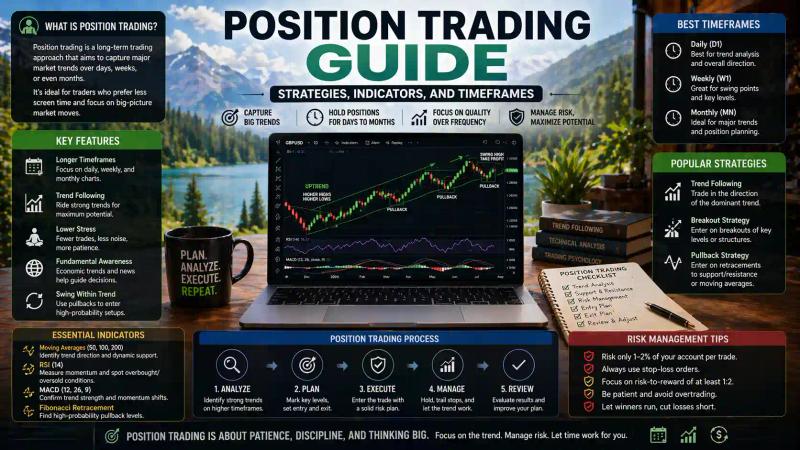
Position Trading Guide: Strategies, Indicators, and Timeframes
Learn in this position trading guide the strategies, indicators, and timeframes for capturing large market moves. Includes risk management tips

Swing Trading Complete Guide: Strategies, Timeframes, Indicators, and Screeners
Learn swing trading from timeframes and indicators to screeners and risk management. Covers stocks, forex, strategies, and building a repeatable system.

Trading Styles Explained: Find the Approach That Fits You
Discover which trading style matches your lifestyle, personality, and goals. Compare scalping, day trading, swing trading, and position trading.
0 comments