



Common Trading Mistakes and How to Avoid Them
Trading offers real opportunities, but the path to consistent results is littered with avoidable errors. Some of them are technical, but others purely psychological. Understanding where traders commonly go wrong is the first step toward changing your outcomes.
This guide breaks down the most damaging trading mistakes by category: emotional, risk-related, strategic, and knowledge-based, and explains not just what these mistakes look like, but why they cause so much damage.
By the end, you’ll have a clear framework for identifying which errors might be affecting your trading and practical steps to address them.
Disclaimer: This content is for educational and informational purposes only and does not constitute financial advice. Trading involves substantial risk of loss and is not suitable for all investors.
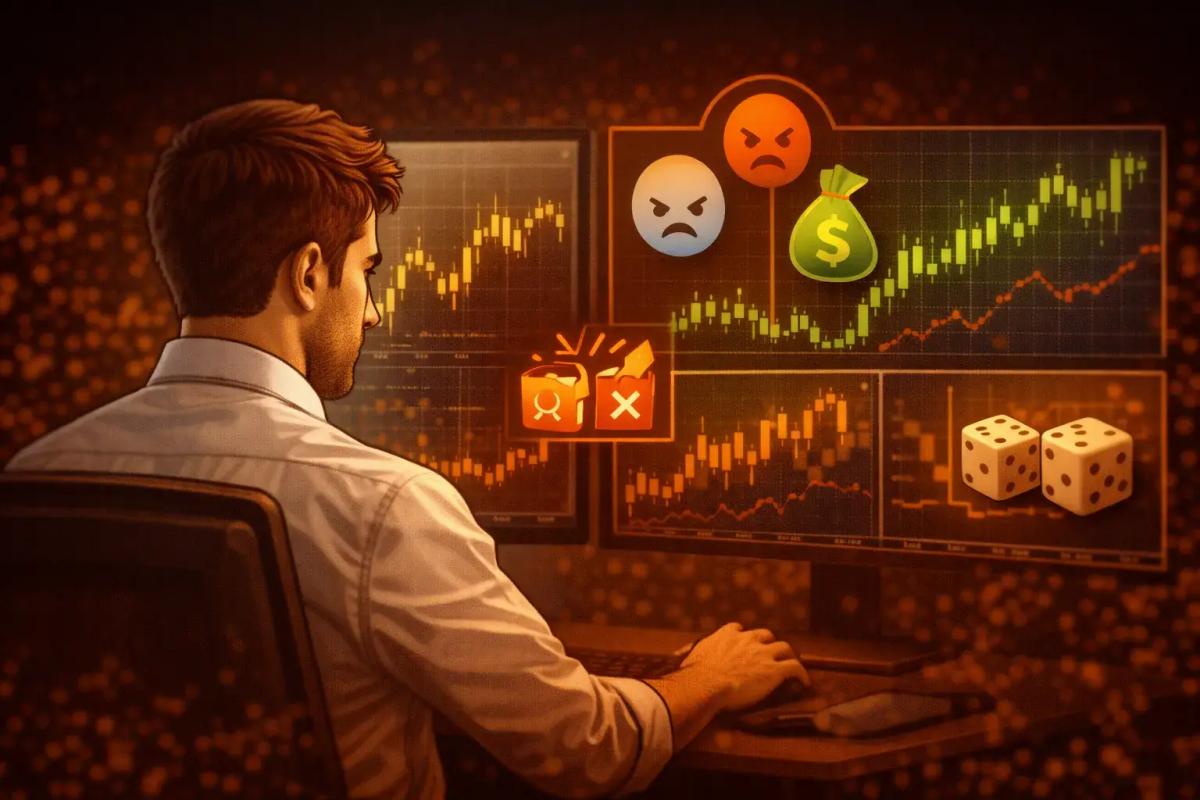
Why Most Traders Fail (and What That Means for You)
The statistics around trading failure rates are widely cited, though exact numbers vary by source and market. What remains consistent across studies is that a significant majority of retail traders lose money over time. This is because most traders repeat the same fundamental mistakes.
The encouraging part is that these mistakes are identifiable and correctable. Traders who fail typically lose through accumulated small errors, repeated behavioral patterns, and gaps in their approach that compound over time.
Understanding these patterns puts you ahead of most market participants who never examine their own behavior. The mistakes outlined below are the real reasons traders struggle.
Recognizing them in your own trading is where improvement starts.
Prop firms test exactly this discipline: compare the best prop firms.
Emotional and Psychological Mistakes
Trading is often described as a mental game, and for good reason. Technical knowledge and market understanding mean little if emotional reactions consistently override rational decision-making.
These psychological pitfalls affect traders at every level but hit hardest for those who haven’t yet developed awareness of their own patterns.
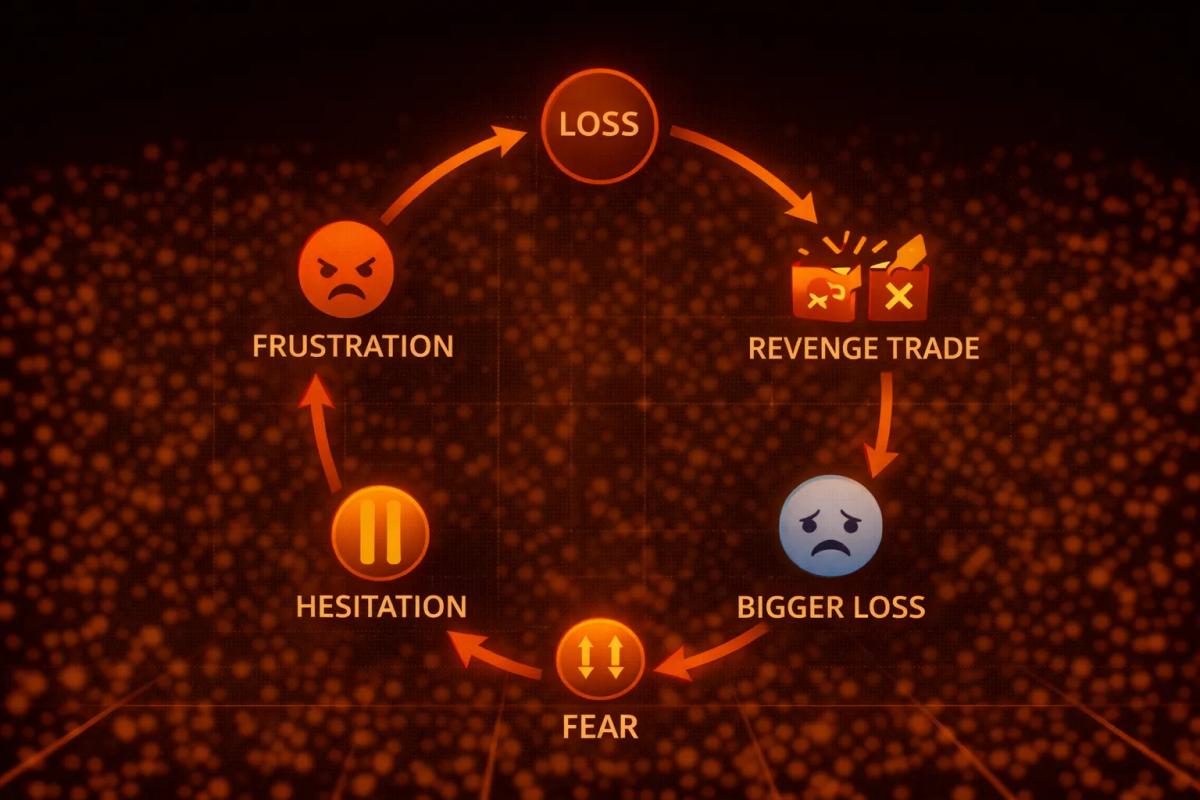
Revenge Trading After Losses
Revenge trading happens when a loss triggers an emotional response that leads to immediate, unplanned trades aimed at “winning back” what was lost. Instead of stepping away to reassess, the trader increases position size or frequency, often abandoning their normal criteria entirely.
This compounds losses. The emotional state following a loss is precisely when decision-making quality is lowest. Trades made from frustration rather than analysis tend to have poor risk-reward characteristics and lower probability of success.
Revenge trading often creates a destructive cycle: loss leads to revenge trade, which leads to bigger loss, which triggers an even more aggressive response. Breaking this losing cycle requires recognizing the emotional trigger before acting on it.
Overconfidence After Wins
The opposite emotional extreme is equally dangerous. A string of winning trades can create a sense of invincibility that leads to oversized positions, relaxed risk rules, and trades that wouldn’t normally meet your criteria.
Markets have a way of correcting overconfidence harshly. The same conditions that produced recent wins can shift, and traders riding high on success often fail to notice until significant damage is done.
Winning streaks are a normal part of trading, but they require the same discipline as losing streaks. Maybe even more, because the pull to deviate from your plan feels positive rather than desperate.
Fear of Missing Out (FOMO)
FOMO drives traders into positions they haven’t properly analyzed, simply because price is moving and others appear to be profiting. Social media and trading communities amplify this pressure, creating urgency around moves that may already be extended.
Entering trades based on FOMO typically means entering at unfavorable prices, with inadequate analysis, and without clear exit criteria. Even when these trades work out, they reinforce a dangerous habit of acting on emotion rather than process. The market will always present new opportunities.
Ignoring the Emotional Toll
Trading is stressful, and that stress accumulates. Traders who don’t acknowledge the emotional toll often find their decision-making quality degrading over time without understanding why. Sleep suffers, anxiety increases, and the ability to think clearly about risk diminishes.
Recognizing when you’re not in a state to trade well is a skill. Taking breaks, setting loss limits that trigger mandatory time away from screens, and maintaining life balance outside of trading are essential to sustainable performance.
Risk Management Failures
Poor risk management is the most direct path to account destruction. A trader can be wrong about market direction frequently and still be profitable with proper risk controls. Conversely, even highly accurate traders can blow up their accounts through a single lapse in risk discipline.
Trading Without a Stop-Loss
A stop-loss is a predetermined point at which you exit a losing trade. Trading without one means leaving yourself exposed to unlimited downside on any single position.
Traders avoid stop-losses for various reasons: they don’t want to be “stopped out” before price reverses in their favor, or they believe they’ll exit manually if things go wrong. In practice, manual exits during fast-moving markets are difficult, and the psychological pressure to hold a losing position “just a little longer” is immense.
Every trade should have a defined exit point for losses before entry. If you’re interested in developing more structured approaches, our guide to stop-loss strategies covers this in detail.
Risking Too Much Per Trade
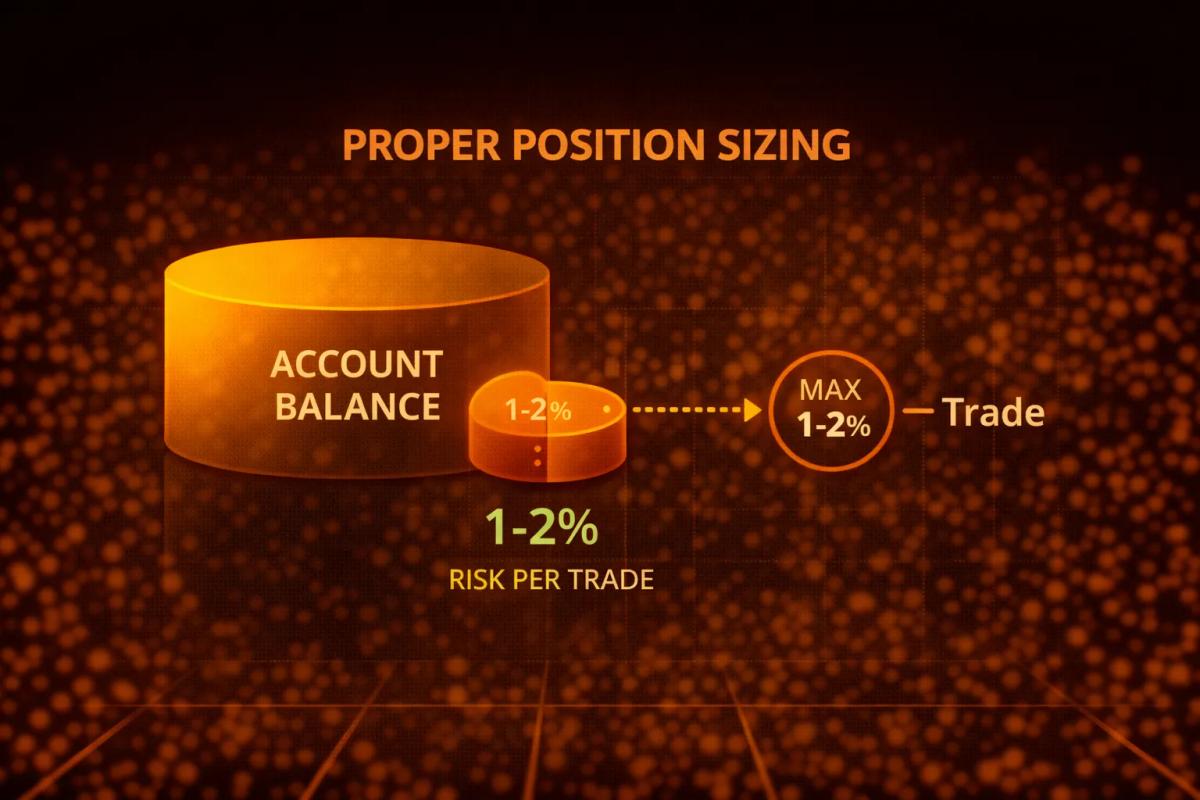
Position sizing determines how much of your capital is exposed on any single trade. Risking too much means that a normal losing streak (which every trader experiences) can devastate your account.
Many experienced traders limit risk to 1-2% of their account per trade. This means a string of 10 consecutive losses would cost 10-20% of capital rather than being catastrophic. The math of recovery matters too: losing 50% of your account requires a 100% gain to recover, while losing 10% requires only about 11%.
Ignoring Position Sizing
Position sizing is related to but distinct from risk percentage. It involves calculating the appropriate number of shares or contracts based on your stop-loss distance and the dollar amount you’re willing to risk.
Traders who ignore proper position sizing often trade arbitrary amounts: the same number of shares regardless of the setup’s risk characteristics. This leads to inconsistent risk exposure, where some trades risk far more than intended while others risk too little to matter.
A consistent position sizing approach ensures your risk is uniform across trades, regardless of price per share or distance to your stop-loss.
Strategy and Planning Errors
Beyond psychology and risk management, many traders struggle with fundamental errors in how they approach the market strategically. These mistakes relate to planning, consistency, and activity levels.
Trading Without a Plan
A trading plan defines what you trade, when you enter, when you exit, how much you risk, and under what conditions you stay out of the market entirely. Trading without one means making decisions in real-time under pressure, which consistently produces poor results.
Your plan must exist and be written down. Verbal commitments to yourself are easily abandoned when emotions run high. A written plan creates accountability and allows you to evaluate whether you’re following your rules over time.
Constantly Switching Strategies
No strategy works all the time. Market conditions shift, and even robust approaches experience drawdown periods. Traders who abandon strategies at the first sign of struggle never give any approach enough time to demonstrate its edge.
This constant switching creates a destructive pattern: adopt strategy, experience normal drawdown, abandon strategy, adopt new strategy, repeat. The trader never develops expertise in any single approach and incurs the learning curve costs repeatedly without capturing the benefits.
Committing to a strategy long enough to evaluate it properly (typically months, not days or weeks) is necessary for any meaningful assessment of whether it works for you.
Overtrading
Overtrading takes two forms: trading too frequently and trading positions that are too large. Both stem from a sense that more activity equals more opportunity, or that being in the market constantly is necessary to succeed.
In reality, most traders would improve their results by taking fewer, higher-quality trades. Markets don’t offer good opportunities constantly, and forcing trades during unfavorable conditions guarantees losses. The commissions, spreads, and psychological costs of overtrading compounds quickly.
Quality over quantity applies here as much as anywhere else.
Knowledge and Preparation Gaps
Some mistakes stem not from psychology or poor risk habits, but from insufficient understanding of what you’re trading and how to develop competence safely.
Not Understanding the Market You Trade
Different markets have different characteristics. Forex behaves differently than equities. Commodities have unique drivers. Cryptocurrency markets operate on different schedules and with different volatility profiles.
Traders who jump between markets without understanding these differences are gambling, not trading. Each market requires learning its specific behaviors and cycles, what moves prices, when liquidity is highest, and what external factors matter most.
Specializing in one market until you understand it deeply produces better results than surface-level familiarity with many.
Skipping Backtesting and Paper Trading
Backtesting involves applying your strategy to historical data to see how it would have performed. Paper trading (or demo trading) means practicing your strategy in real-time market conditions without risking actual capital.
Traders who skip these steps and go directly to live trading are essentially paying the market for their education. Every lesson learned with real money could have been learned with simulated capital through proper preparation.
Paper trading also helps develop the mechanical skills of execution and the emotional discipline required when real money is at stake.
Misusing Leverage
Leverage allows traders to control positions larger than their capital would normally permit. While this can amplify gains, it equally amplifies losses. And the psychological pressure of leveraged positions often leads to poor decisions.
Many traders use maximum available leverage without understanding that this dramatically increases the chance of significant losses. A modest adverse move in a highly leveraged position can result in losses exceeding the initial investment in some markets.
Leverage should be used conservatively, if at all, and only after demonstrating consistent profitability without it. Using leverage to overcome insufficient capital is a recipe for accelerated account depletion.
How to Build Habits That Prevent These Mistakes
Understanding mistakes intellectually differs from preventing them in practice. Building habits that protect you from your own worst tendencies requires deliberate structure.
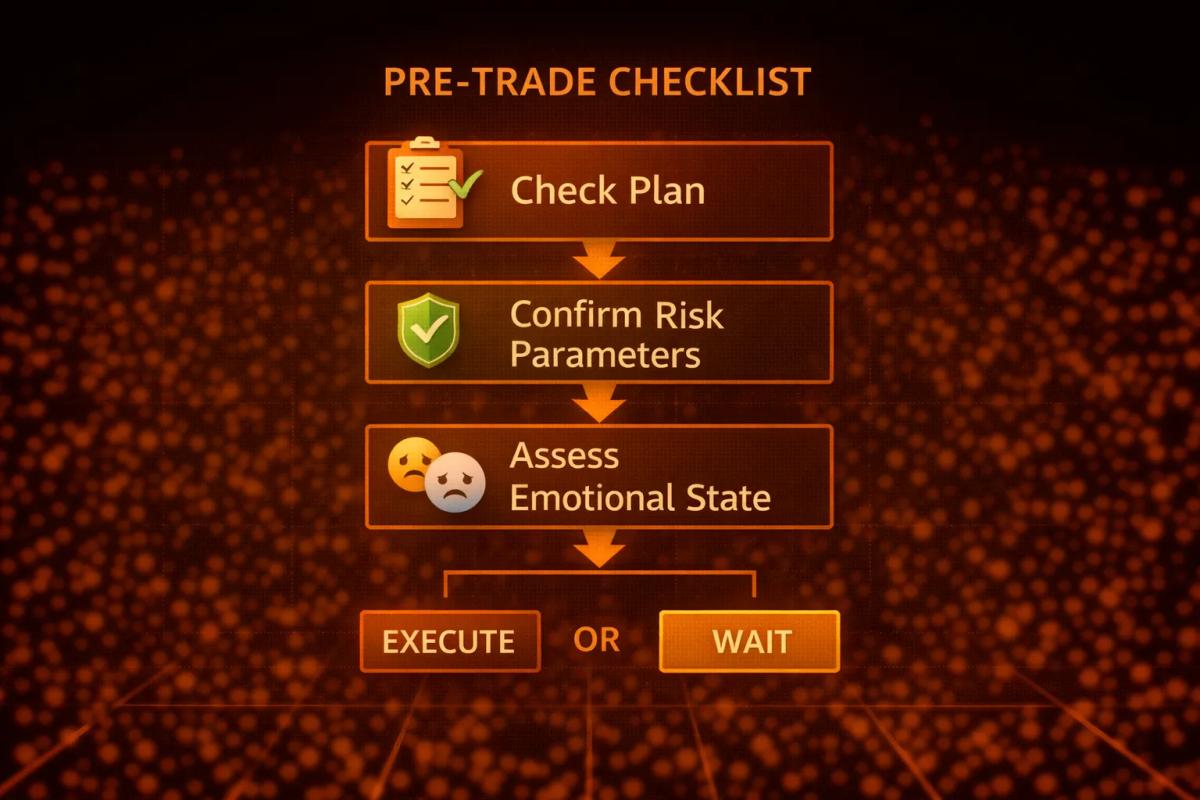
Develop a pre-trade routine. Before entering any trade, run through a brief checklist:
- Does this trade fit my plan’s criteria?
- Have I calculated the proper position size based on my risk parameters?
- Do I have a defined stop-loss and profit target?
- Am I in a calm, focused emotional state?
- Would I be comfortable explaining this trade to another trader?
If any answer is no, don’t take the trade.
Keep a trading journal. Recording your trades, including your emotional state and decision-making process, creates data you can analyze for patterns. Many traders discover that their worst results come from specific circumstances: trading during certain times, after particular events, or when in recognizable emotional states.
Set mandatory breaks after losses. Define in advance how many consecutive losses or what percentage drawdown triggers a mandatory break from trading. This removes the decision from the moment when you’re least equipped to make it well.
Review regularly. Weekly or monthly reviews of your trading allow you to spot patterns invisible in real-time. Are you following your plan? Are certain setups consistently unprofitable? Is your position sizing appropriate? These answers emerge from systematic review, not gut feeling.
Start small. When implementing changes or trying new approaches, reduce position sizes significantly. This allows you to learn with reduced financial and emotional pressure. Size up only after demonstrating consistent execution.
Final Thoughts
The mistakes covered here represent the core errors that derail most traders. Emotional reactions, inadequate risk management, strategic inconsistency, and knowledge gaps. These categories capture where the majority of preventable losses originate.
Improvement requires awareness, honest self-assessment, and incremental change. Identify which patterns affect your trading most significantly and address those first. Track your progress. Expect setbacks and treat them as information rather than failure.
Trading successfully over time is less about finding perfect setups and more about managing yourself and your risk consistently. The traders who survive and eventually thrive are those who take this work seriously and commit to continuous refinement of their process.

About the authors


Put this into practice
Related articles

Forex Risk Management: How to Protect Your Trading Capital
A practical guide to forex risk management: position sizing, stop losses, hedging, FCA leverage caps and the psychology that keeps your rules intact.
Hedging Strategies in Trading: How to Protect Positions
Learn how hedging strategies help traders manage risk. Explore options, pairs trading, and diversification techniques with practical guidance.
How to Create a Risk Management Strategy: A Step-by-Step Guide
Learn how to create a risk management strategy step by step. Build a risk plan with clear rules to protect your trading capital.
0 comments