



Trading Basics · Beginner · 9 min read
Best Trading Books of All Time: A Ranked Guide for Every Trader
The core reads that shaped modern retail trading
A shortlist of classics sits on almost every serious reading list because they combine practical market mechanics with psychological discipline. Read in the right order, they leave you with a mental model that survives changes in platforms, brokers and regulation, and they cover three areas at once:
- How markets actually move on the tape.
- How your own mind interferes with profitable decisions.
- How to size positions so that a bad week does not empty your account.
This guide ranks the top trading books by function, so a curious reader can find where a title fits before buying it. Psychology and mindset come first, because most retail losses are behavioural in origin. From there, the guide moves through interviews with real traders, technical analysis and risk management, before closing on territory the classics never covered, including algorithmic systems, cryptocurrency, trading costs, and the fintech apps that reshaped retail access. You will also see which authors actually traded and which mostly teach, so you can weigh the advice by the track record behind it.
Putting this into practice means opening an account: start with the best forex brokers our team reviewed.
Psychology and mindset: the books that rewire your trading brain
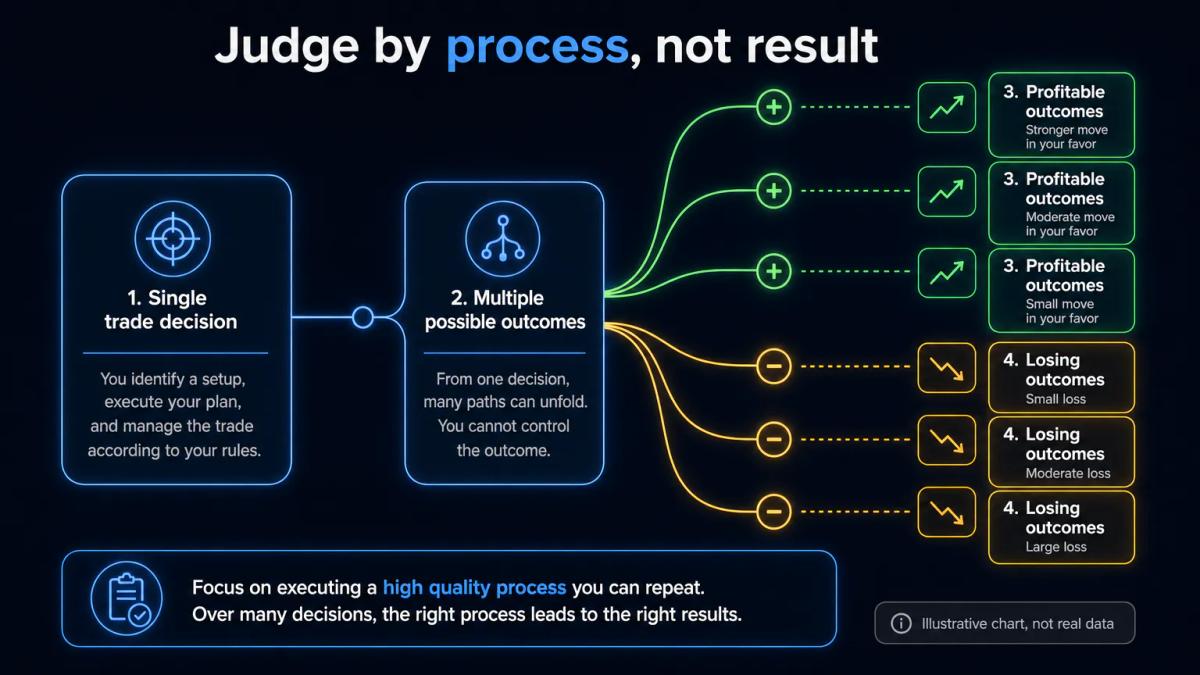
Trading in the Zone by Mark Douglas is the single most recommended psychology book, largely because it teaches you to think in probabilities instead of fixating on outcomes. Thinking in probabilities means accepting that any single trade can lose even when your method is sound, so decisions are judged by the process rather than by the last result. Douglas argues that this shift is what separates professionals from retail traders who chase, freeze or revenge-trade after a loss.
Reminiscences of a Stock Operator, written by Edwin Lefevre as a lightly disguised biography of Jesse Livermore, is the second pillar. Across its pages you see how a trader's psychology can build and dismantle wealth in the same market, as Livermore's discipline made him fortunes and his overconfidence took them back. The book is a century old, and yet the behaviours it describes, including crowd panic, revenge trading and holding losers, are exactly what your broker's execution logs still record today.
A useful third read is The Disciplined Trader, also by Douglas, which sits between the other two in tone: it is more hands-on than Trading in the Zone while keeping some of the narrative flavour of Reminiscences. Together these three books cover the mental scaffolding you need before you touch a chart. If you skip them and jump straight into indicators, you will spend the first year of trading learning the same lessons the expensive way, through your own drawdown (the fall from a capital peak to the trough before a new peak).
Market Wizards and trader interviews: learning from people who made money
Jack Schwager's Market Wizards series captures interviews with traders who have actually moved markets and survived crashes. The original Market Wizards, The New Market Wizards, Stock Market Wizards and Hedge Fund Market Wizards each collect long-form conversations with futures traders, equity managers, systematic funds and discretionary macro traders. You see how different personalities and strategies succeed, and how each interviewee thinks about losing.
The reason these books rank so highly is that they contradict each other on tactics while agreeing on principles. Consider two wizards profiled in the same volume: one trades with the trend while another fades it, and one may hold positions for months whereas the next closes them inside a minute. Every one of them, without exception, talks about cutting losers fast, sizing positions carefully, and separating self-worth from any single trade. That convergence, coming from traders who never met, is the closest thing retail trading has to an evidence base.
A companion read is Hedge Fund Market Wizards, which is worth picking up for anyone curious about how professional risk teams actually operate, including how they measure drawdown tolerance and how they scale capital after a losing streak. A short guide to choosing between them:
- For a single read, start with the original Market Wizards.
- For two, add The New Market Wizards for its systematic and options-focused profiles.
Technical analysis and chart reading fundamentals
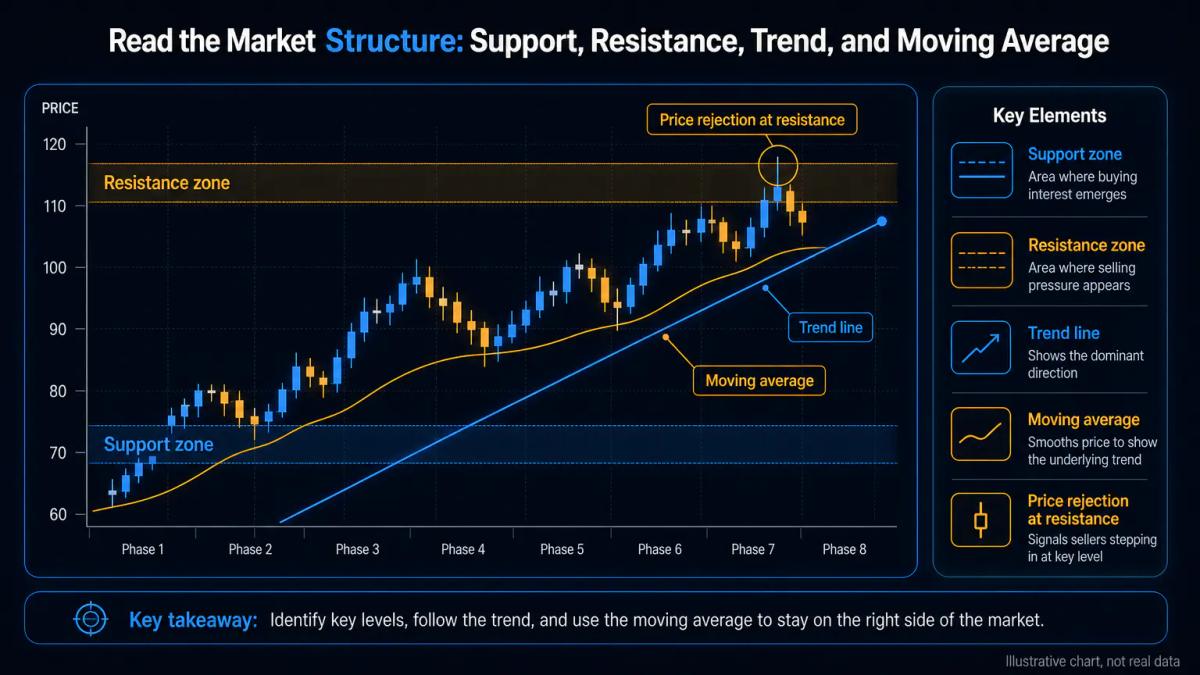
Technical Analysis of the Financial Markets by John Murphy remains the reference textbook for chart reading. It teaches you support and resistance (price zones where buying or selling has historically clustered), trend structure, moving averages, and the main chart patterns.
Japanese Candlestick Charting Techniques by Steve Nison is the companion volume for candlestick reading, which is now the default chart type on MT4, MT5, cTrader and TradingView.
A Random Walk Down Wall Street by Burton Malkiel is the essential counterweight to Murphy and Nison. Malkiel argues that most technical patterns do not predict future price better than chance, and that passive index investing outperforms most active traders after costs. Reading Malkiel alongside the chart-reading classics forces you to hold two ideas at once: patterns are useful for framing risk and entries, while remaining an imperfect guide to what price will do next.
| Book | Focus | Best for |
|---|---|---|
| Technical Analysis of the Financial Markets, John Murphy | Trend, patterns, indicators | Building a full charting toolkit |
| Japanese Candlestick Charting Techniques, Steve Nison | Candlestick patterns | Reading intraday and swing charts |
| A Random Walk Down Wall Street, Burton Malkiel | Market efficiency, passive investing | Stress-testing your belief in charts |
| Encyclopedia of Chart Patterns, Thomas Bulkowski | Statistical pattern outcomes | Traders who want measured, not folkloric, pattern data |
Risk management and position sizing: the books that keep you solvent
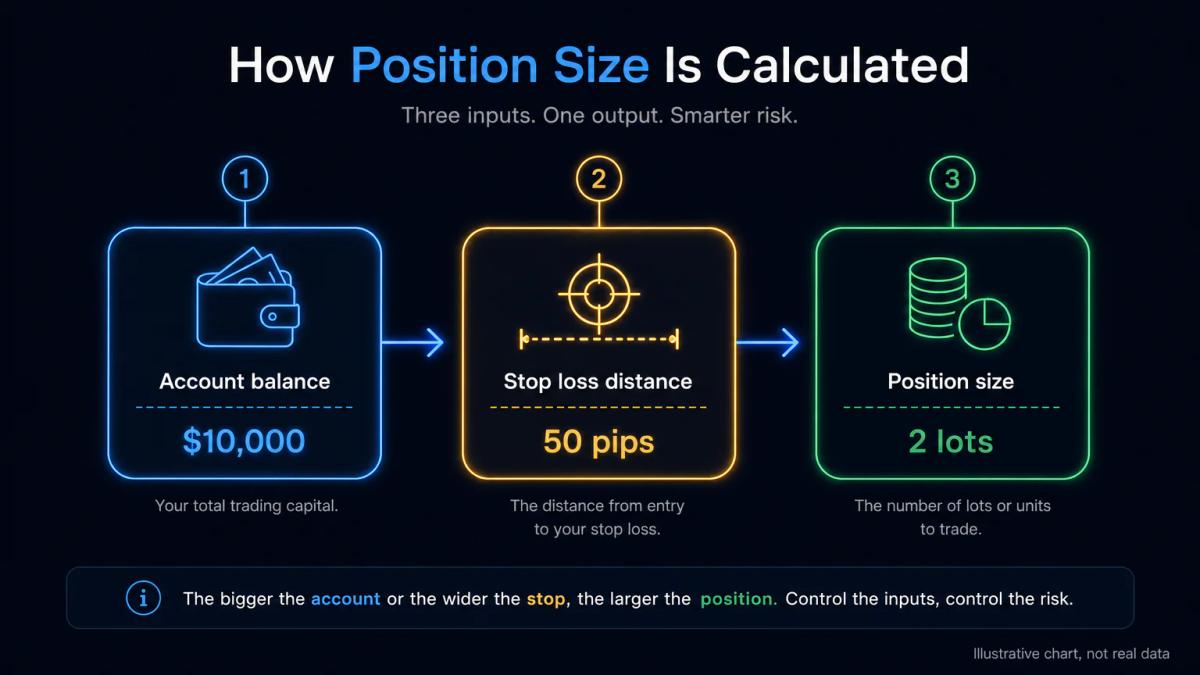
The Intelligent Investor by Benjamin Graham and Money Management Strategies for Futures Traders by Nauzer Balsara both emphasise that the size of your risk per trade weighs far more heavily on results than the specific trade you pick. Position sizing is the calculation that decides how many units, lots or shares you buy given your account size and your stop distance. A lot is the standardised trade size: for example, 100,000 units of the base currency in a standard forex lot.
Graham's book, first published in 1949, teaches margin of safety: commit capital only when the reward heavily outweighs a loss you can define in advance. Balsara translates the same idea into futures maths, with worked examples for fixed fractional sizing, Kelly-style bet sizing and drawdown recovery. Van K. Tharp's Trade Your Way to Financial Freedom is a third strong pick, since Tharp reframes any strategy as an expectancy formula, which pushes you to evaluate a system by average profit per trade over a large sample instead of by its most recent handful of results.
These books converge on a hard lesson about survival. Picture two traders side by side: the first uses a mediocre entry method with disciplined 1% risk per trade, while the second uses a brilliant method and risks 10% of the account on each position. Over enough trades, two consecutive losing streaks are usually enough to force the second trader off any live account, while the first one is still working.
Books organised by trader experience: where to start and where to go next
A useful way to think about sequencing is by experience level:
- Beginners should start with Reminiscences of a Stock Operator and Trading in the Zone to build mental foundations, then add Murphy's Technical Analysis for chart literacy.
- Intermediate traders benefit from Market Wizards, Trade Your Way to Financial Freedom, and Nison on candlesticks.
- Advanced traders often move into specialised books on options, algorithms or sector-specific deep dives.
| Level | Read first | Read next |
|---|---|---|
| Beginner | Reminiscences of a Stock Operator; Trading in the Zone | Technical Analysis of the Financial Markets |
| Intermediate | Market Wizards; The New Market Wizards | Trade Your Way to Financial Freedom; Japanese Candlestick Charting Techniques |
| Advanced | Options, Futures and Other Derivatives (John Hull); Advances in Financial Machine Learning (Marcos Lopez de Prado) | Inside the Black Box (Rishi Narang); Cryptoassets (Burniske and Tatar) |
Sequence has a real effect on outcomes. Skipping psychology to reach algorithms usually produces a well-coded strategy that the trader abandons after the first 15% drawdown.
Beyond the classics: modern and specialised trading books
Newer books fill the gaps the classics never touched. For algorithmic and quantitative retail trading, Ernie Chan's Quantitative Trading and Algorithmic Trading, plus Marcos Lopez de Prado's Advances in Financial Machine Learning, walk you through backtesting, overfitting and machine-learning pitfalls. Inside the Black Box by Rishi Narang explains how professional systematic funds work, which is useful even if you only ever trade discretionarily.
For cryptocurrency, Cryptoassets by Chris Burniske and Jack Tatar covers the valuation frameworks, while Mastering Bitcoin by Andreas Antonopoulos explains the blockchain plumbing that determines fees, settlement and custody risk. On trading costs, taxes and regulatory compliance, Larry Harris's Trading and Exchanges is the definitive text on how spreads, slippage and market structure eat returns; local tax guides (from HMRC in the UK, or your national tax authority) are the only source you should trust for capital gains and CFD tax treatment.
On representation and behavioural bias, Warren Buffett Invests Like a Girl by LouAnn Lofton and Undiversified by Ellen Carr and Katrina Dudley address confidence, community and the industry data on how women invest and manage risk. Modern fintech and app-based trading is best surveyed through The Bogleheads' Guide to Investing for the passive-app side and Flash Boys by Michael Lewis for the market-structure side of retail order flow.
How to choose a trading book that fits your goals
Start by identifying whether you need foundational psychology, specific technical skills, or risk management depth, and then match that need to a single book instead of working through every title on a list. A book that only reinforces what you already believe tends to teach less than one that challenges your current approach and forces you to defend it.
Check the author's track record before you commit. Livermore, Schwager's interviewees, Chan and Lopez de Prado have all traded or built systems for capital at risk. Malkiel and Graham argued from data and long careers in asset management. Some popular authors, by contrast, are primarily educators: their books can still be useful, but you read them for frameworks, not for edge.
Finally, read with a broker account open in demo mode, because every concept becomes concrete once you place the order. Imagine, for instance, that you have just read about candlestick reversals or about a 1% position size on a £5,000 account: sitting down and placing those trades in a simulator will do more for your understanding than five books read passively.
For a concrete example of costs and platform, the Vantage Markets review goes through them line by line.
Frequently Asked Questions
What is the single best trading book for beginners to start with?
Trading in the Zone by Mark Douglas is the most common first recommendation because it builds the mental framework, thinking in probabilities and separating outcome from decision, that every later technique depends on. If you prefer narrative, Reminiscences of a Stock Operator covers the same ground through the career of Jesse Livermore.
Do trading books actually help you make money, or is it just theory?
Books alone do not make money; applied practice does. What the best trading books give you is a framework for risk, position sizing and psychology that shortens the expensive part of the learning curve. Read one book, then test its ideas in demo mode or on very small live size before moving on.
Should I read old trading books like Reminiscences of a Stock Operator, or are they outdated?
The tactics in older books are dated, but the behavioural patterns they describe (panic, revenge trading, overconfidence, holding losers) are exactly what modern brokers still record. The psychology and risk management passages are as current as any book published this year.
Are there trading books that teach you how to trade cryptocurrency or algorithmic systems?
Yes. For algorithms, Ernie Chan's Quantitative Trading and Marcos Lopez de Prado's Advances in Financial Machine Learning are the standard reads. For crypto, Cryptoassets by Burniske and Tatar covers valuation, and Mastering Bitcoin by Andreas Antonopoulos explains the blockchain mechanics that drive fees and custody.
How many trading books do you need to read before you can start trading for real?
Two are enough to start: one on psychology (Trading in the Zone) and one on risk management (Trade Your Way to Financial Freedom or Balsara). Add a chart reference like Murphy when you are choosing setups. Reading more books before opening a demo account usually delays learning rather than accelerating it.
About the authors


Put this into practice
Related articles
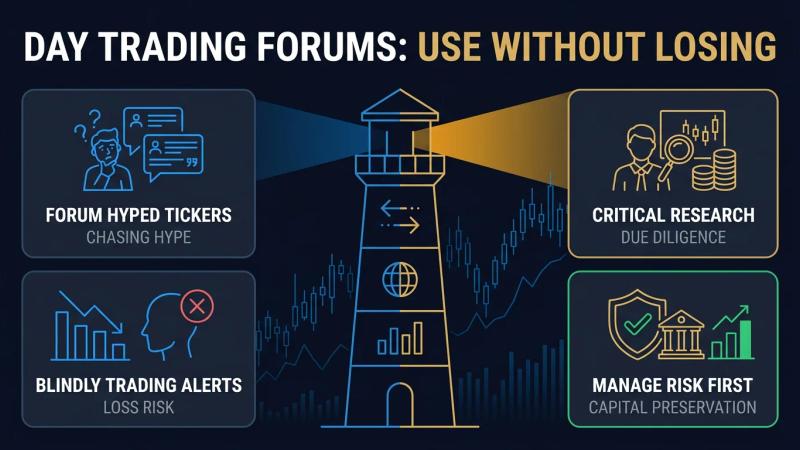
Day Trading Discussion Boards: How to Use Forums Without Losing Money
A practical guide to day trading discussion boards: how they work, what to gain from them, and the risks, regulatory rules and psychological traps to watch for.

ECN vs Market Maker Broker: What the Difference Actually Costs You
ECN vs market maker broker: understand the real cost difference, conflict of interest risks, and which model suits your trading style

Forex Broker Scam Warning Signs: How to Spot a Fake Before You Deposit
Learn the key forex broker scam warning signs before you deposit. Check regulation, spot red flags, and protect your funds with this verification guide.
0 comments