



Handling Trading Failure: How to Recover, Learn, and Trade Better
Disclaimer: This article is for educational purposes only and does not constitute financial or psychological advice. If you are experiencing severe emotional distress related to trading losses, please seek support from a qualified professional.
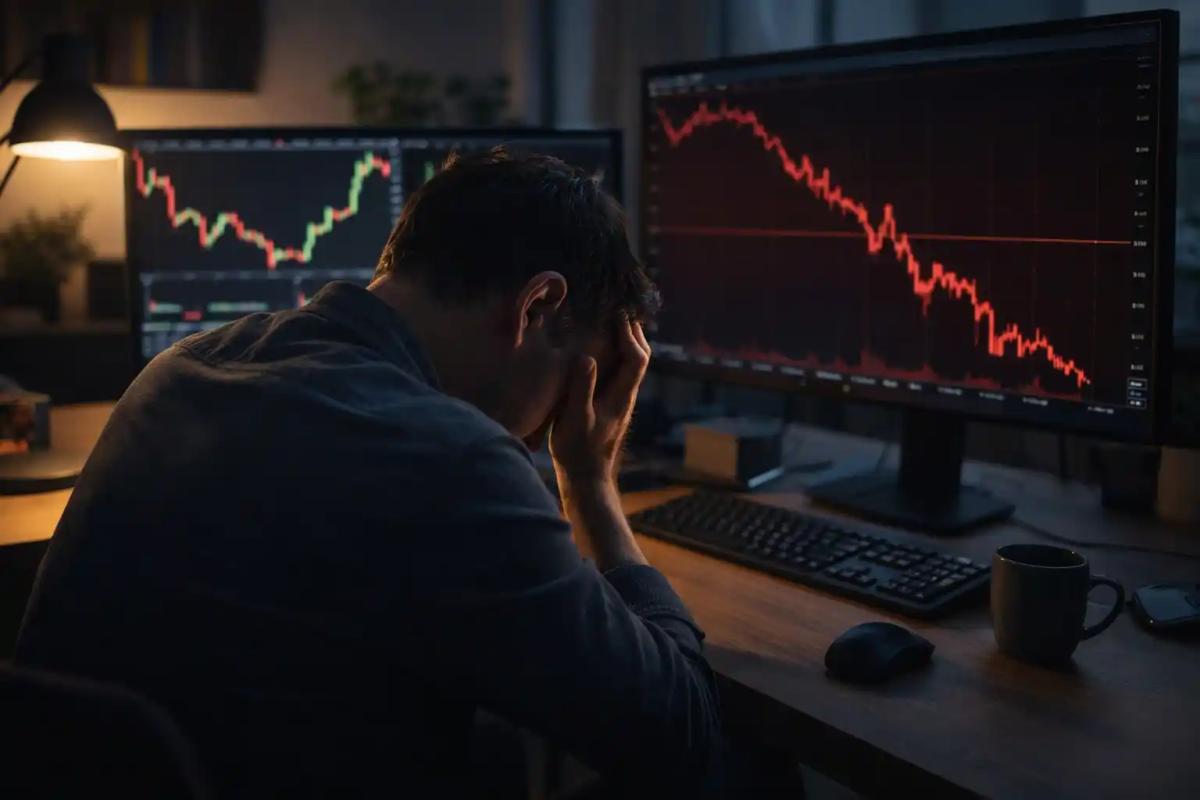
You stared at the screen, watched your position bleed against you, and now you’re sitting with that heavy, hollow feeling lodged in your chest. Handling trading failure is one of the hardest things you’ll face in this game. Not because the mechanics are complicated, but because it cuts somewhere deeper than your account balance.
Every trader who has ever reached consistent profitability has a graveyard of blown setups, stopped-out positions, and stretches of total self-doubt. The difference between those who recover and those who quietly disappear isn’t talent. It’s what they do in the hours and days after a loss.
This guide gives you a structured framework for processing failed trades, extracting real lessons, and rebuilding your confidence on something more solid than hope.
Why Trading Failure Feels So Personal
Most professions let you fail quietly. Trading doesn’t. When you lose money on a trade, you feel it in your gut before your head has time to catch up.
The Emotional Weight of Losing Money
Research on loss aversion shows that humans feel the sting of a loss roughly twice as intensely as the satisfaction of an equivalent gain. A $500 loss hits your brain with the emotional weight of missing a $1,000 win.
Even experienced traders spiral after a bad day because the emotional response isn’t really about the money. It’s about what the money represents: your time, your effort, your belief in yourself.
Identity and Self-Worth Tied to Results
If you’ve spent weeks studying charts and telling yourself you’re building something real, a losing trade doesn’t register as a market event. It lands like a personal verdict. “Am I smart enough for this?” “Was this whole thing a mistake?”
When your identity becomes entangled with your results, every red day turns into evidence that you’re not good enough. Separating your self-worth from your P&L is one of the most important trading psychology skills you can develop.
But before you can fix how you react to failure, you need to understand what failure actually means in trading.
What Counts as Trading Failure (and What Does Not)
Not every losing trade is a failure, and not every profitable trade is a success. If that sounds counterintuitive, it’s because most traders are measuring the wrong thing.
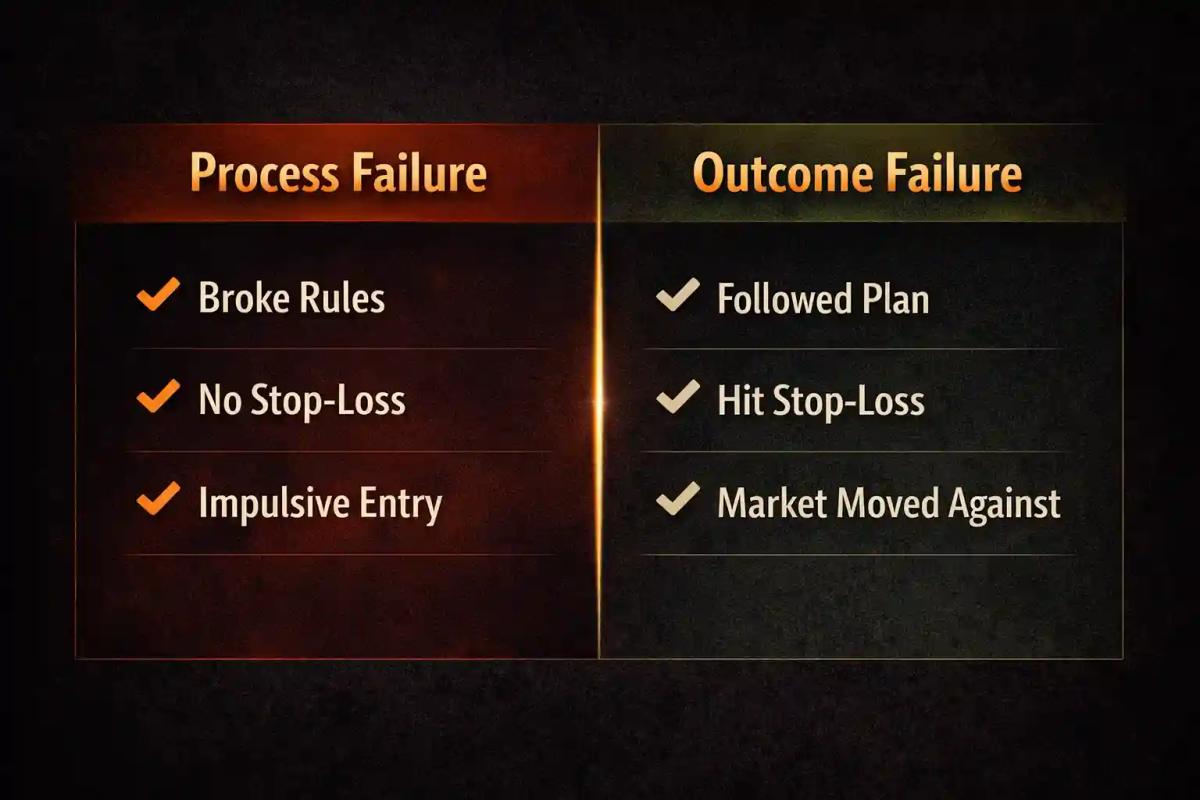
Losing Trades vs. Broken Process
A losing trade is one where the market moved against your position and you took a loss. If you followed your plan, sized correctly, and placed your stop where it belonged, that’s not failure. That’s a cost of doing business.
A failed trade is one where you broke your own rules. You entered impulsively, moved your stop-loss, or sized too big because you “felt confident.”
The lessons you extract from each are completely different:
- Outcome failure (loss on a good process): No behavioral change needed. Review for pattern refinement over a larger sample.
- Process failure (broke your rules): Root cause analysis needed. Something in your decision-making broke down.
When a Loss Is Actually a Good Trade
If you identified a valid setup, entered at the right level, set a stop-loss based on your risk management plan, and sized appropriately, yet the trade hit your stop and you lost 1%, that was a good trade. You executed your process. One loss in isolation tells you almost nothing about the quality of your trading.
So if not every loss is a failure, why do so many traders react to losses as if the sky is falling?
The Most Common Reactions to Failed Trades
Your first reaction after a bad trade usually reveals more about your psychology than the trade itself. These patterns show up almost everywhere.
Revenge Trading
This is the most destructive response, driven by a simple emotional equation: “I lost money, and I need to get it back right now.” Revenge trading almost always involves larger positions, looser criteria, and trades taken from anger rather than analysis. What started as a $300 stop-out becomes a $2,000 hole before you’ve had time to think.
Over-Analyzing and Paralysis
After a loss, you start second-guessing everything. You pile on more indicators, backtest obsessively, and freeze when a valid setup forms. Paralysis feels safer than revenge trading, but you’re quietly losing something else: opportunity, confidence, and the repetitions you need to build real skill.
Quitting Too Early
Some traders interpret a rough patch as proof that trading isn’t for them. Sometimes stepping away genuinely is the right call. But quitting during your first significant drawdown, before you’ve accumulated enough trades to actually learn, is often a decision made from pain rather than clear-eyed assessment.
Which brings us to the part that matters most: how to actually learn from the trades that didn’t work.
A Step-by-Step Framework for Learning from Failure
A repeatable process for reviewing failed trades turns every loss from an emotional wound into a data point.
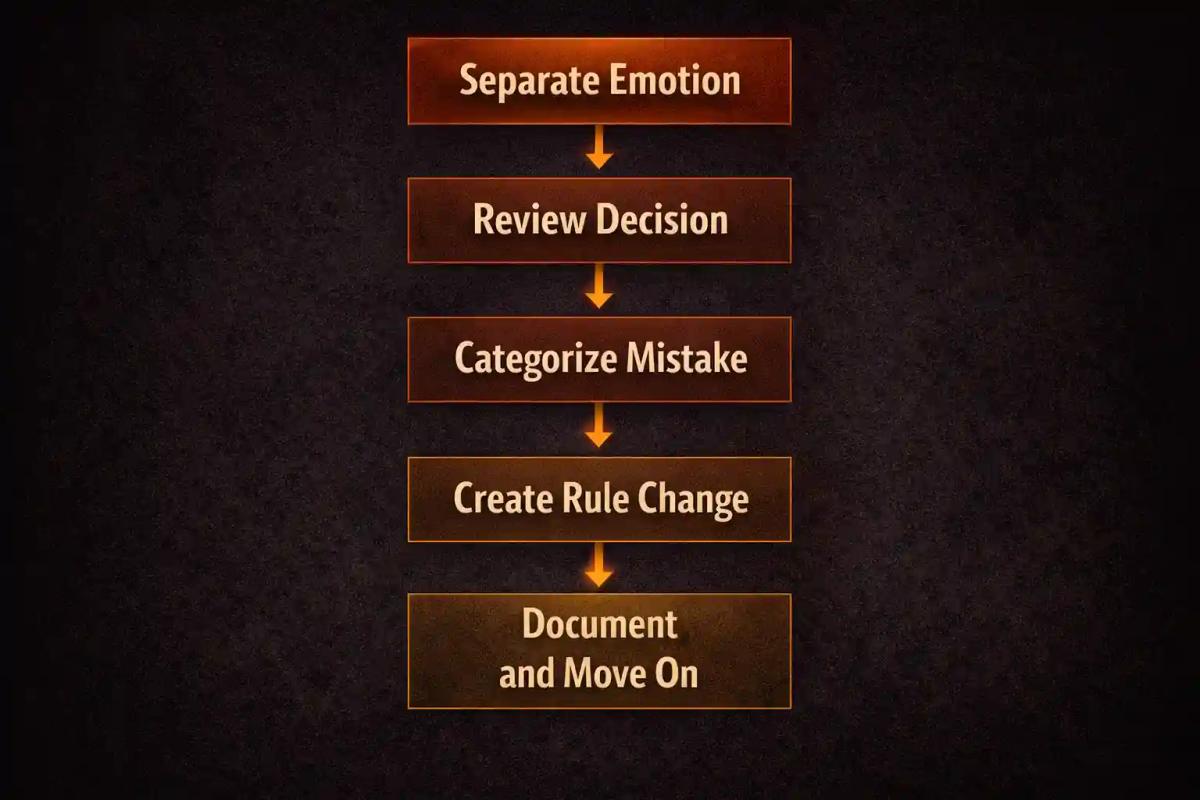
Step 1: Separate Emotion from Event
Don’t review a trade while you’re still feeling the loss. Give yourself at least a few hours, ideally until the next day. Emotional processing and analytical processing compete for the same mental bandwidth, and trying to run both at once produces poor results in each. Let the wave pass first.
Step 2: Review the Decision, Not the Outcome
Reconstruct your decision-making at the moment of entry:
- Did the setup meet your criteria?
- Was entry timing based on your plan or on impulse?
- Did you size according to your rules?
- Was your stop based on structure?
Notice that none of these questions ask whether the trade made money. You’re auditing your process, not your results.
Step 3: Categorize the Mistake
If you find a process error, label it. Most trading mistakes cluster into a small number of categories:
- Entry error: Took a trade that didn’t meet your criteria
- Sizing error: Position too large or small relative to your plan
- Management error: Moved stop-loss, took profit too early, or held too long
- Emotional error: Entered out of FOMO, revenge, boredom, or overconfidence
- No error: Process was followed, outcome was negative
Over time, you may discover that most of your failed trades trace back to the same error type. That pattern is incredibly valuable information.
Step 4: Create One Actionable Rule Change
Identifying a mistake isn’t enough. You need a specific, enforceable rule.
- Bad example: “I need to be more disciplined.”
- Good example: “If I take a loss greater than 2%, I close my platform for the rest of the session.”
One rule. Specific. Testable. Resist the urge to overhaul your system after a single bad trade.
Step 5: Document and Move Forward
Write it down in a trading journal or a simple spreadsheet. Record the trade, the mistake category, the lesson, and the rule change. Once documented, close the review. The trade is processed. Continuing to replay it mentally after this point is rumination, not analysis.
Even with a solid review process in place, you still need to accept something fundamental about how trading actually works.
Accepting Losses as Part of Trading
Every trade is a bet on probabilities, not certainties. Until you truly absorb this, every loss will feel like a surprise.
The Role of Probability in Every Trade
Think of your strategy like a weighted coin. A 55% win rate with a 1:1.5 risk-to-reward ratio is profitable over 1,000 flips. But on any single flip, you still have a 45% chance of losing. A strategy with a 55% win rate will produce 5 consecutive losses roughly 1 in every 55 sequences. That’s not common, but it’s well within expected behavior, not a system breakdown.
Redefining Success as Process Adherence
If outcomes are probabilistic, judging yourself by individual results is like judging a poker player on a single hand. The better metric is process adherence. Did you follow your plan? Did you manage risk correctly? If the answer to both is yes, you had a successful trading day regardless of what your P&L says.
How do the professionals handle it when probability delivers a string of losses?
How Professional Traders Handle Losing Streaks
Professional traders don’t have magical immunity to losing streaks. What they have is protocols.
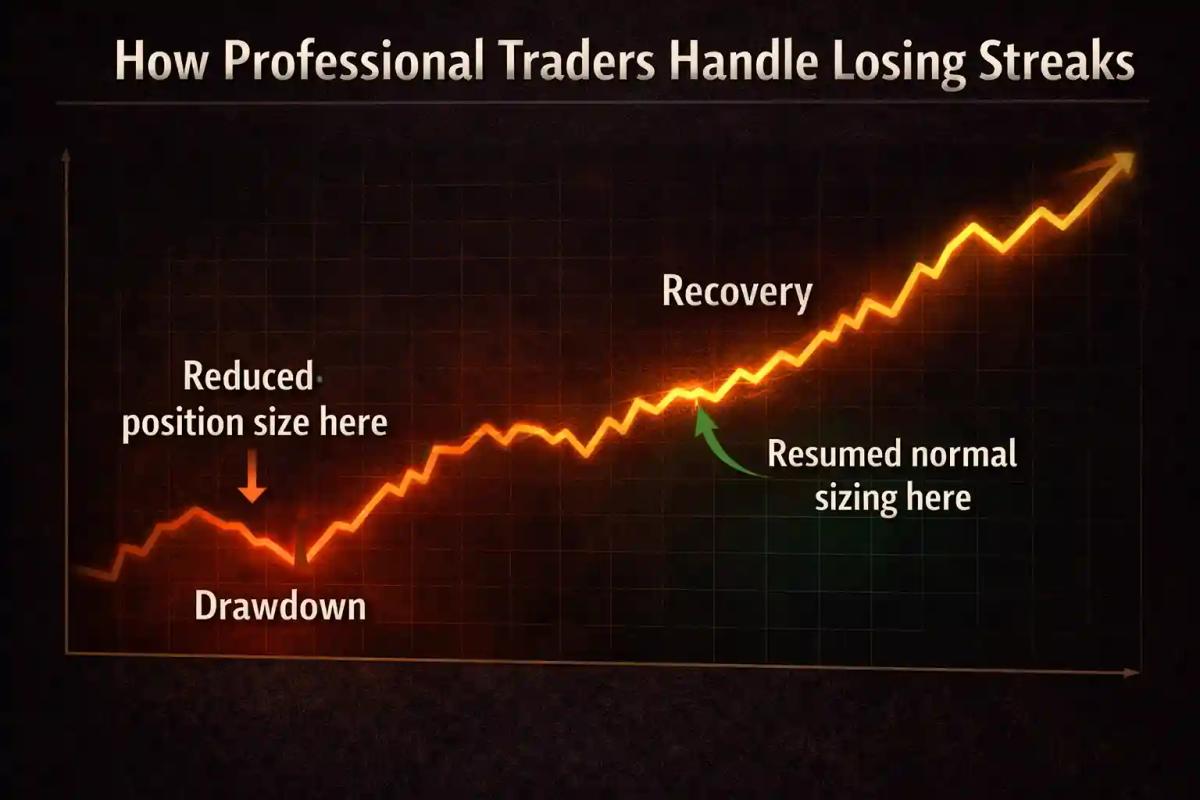
Risk Reduction During Drawdowns
Most professionals have a predefined drawdown rule. Something like: “If my account drops 5% from its equity peak, I cut position size in half until I recover to within 3%.” This caps the damage during cold streaks and creates psychological breathing room by lowering the pressure on each trade.
Scheduled Breaks and Reset Routines
Many professional traders build mandatory break rules into their plans:
- Close the platform after two consecutive losses in a session
- Take one full day off per week
- Reduce screen time after a losing week
These aren’t punishments. They’re circuit breakers designed to prevent emotional contamination from bleeding into the next session.
But what about when it’s more than a streak, and you’ve taken a serious hit to your account?
Bouncing Back After a Major Account Loss
Losing a large portion of your account is disorienting. The path back demands honesty and patience in roughly equal measure.
Honest Account Assessment
Before placing another trade, answer these questions truthfully:
- How much is left?
- Can you afford to lose more?
- Did the loss result from one catastrophic mistake or a slow series of breakdowns?
- Is your plan flawed, or did you fail to follow a sound plan?
If you’re trading with money you can’t afford to lose, the right move may be to stop trading live until your financial situation stabilizes. That’s responsible risk management.
Scaling Down Before Scaling Up
Resist the urge to “trade your way back.” Reduce your position size dramatically. If you were risking 2% per trade, drop to 0.5%. The goal is proving to yourself that you can execute consistently at lower stakes before you earn the right to size up again.
When to Use a Demo Account Again Without Shame
A demo account is a tool, not a demotion. If your confidence is shattered, demo lets you rebuild execution without stacking financial risk on top of emotional stress. Professional athletes return to practice drills after poor performances. Returning to demo is the trading equivalent: a deliberate, strategic choice.
Once you’ve stabilized, how do you build resilience against the next inevitable failure?
Building Long-Term Resilience Against Future Failure
Resilience isn’t something you’re born with. It’s built through habits, systems, and honest self-awareness, often slowly and unglamorously.
Journaling as a Failure-Processing Tool
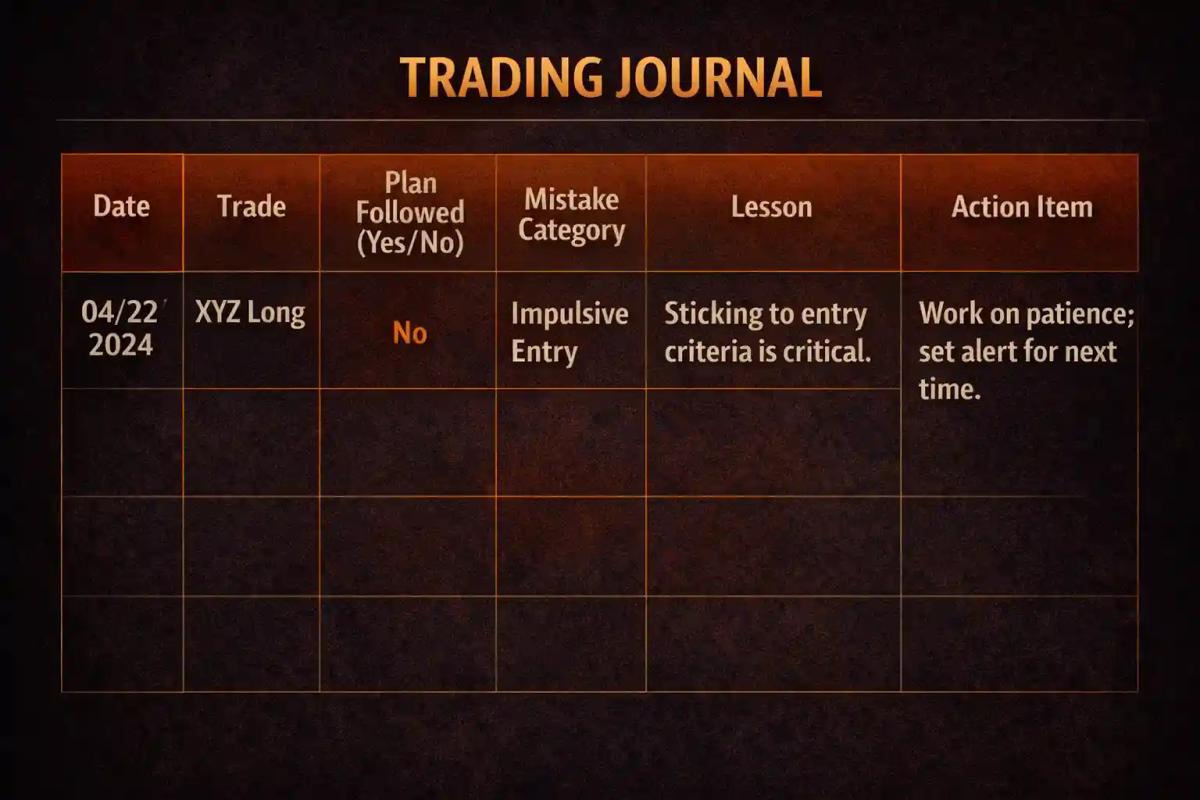
A trading journal is a diagnostic tool. Patterns in your mistakes only become visible when you have enough entries to spot them. A simple spreadsheet works:
The key is consistency. Journal every trade, not just the losers.
Setting Realistic Expectations from the Start
A lot of trading failure hits harder than it needs to because expectations were wildly off. If you expected to double your account in three months, a 10% drawdown feels catastrophic.
Realistic expectations sound more like this: “My goal for the first year is to develop a consistent process while keeping drawdowns manageable. If I’m still learning and improving after 12 months, I’m on track.” Not exciting, but honest. And honest expectations create a psychological buffer that keeps a rough week from turning into an identity crisis.
Finding Accountability Without Toxic Comparison
Trading is isolating, and isolation makes failure harder to process. Finding community helps, but choose carefully. Avoid spaces where everyone posts wins and buries losses. Look for people who talk openly about mistakes and treat trading as a skill to develop.
Good accountability means someone asking, “Did you follow your plan today?” rather than “How much did you make?”
Frequently Asked Questions
Is it normal to lose money when you first start trading?
Yes. Most traders experience net losses during their first months of live trading. What matters is whether you're tracking your mistakes and improving over time, not whether your early trades are profitable.
How do you know the difference between a normal losing streak and a sign you should stop trading?
A normal losing streak happens within the expected parameters of your strategy, where you're following your plan but outcomes are temporarily negative. A sign to pause is when losses stem from repeated process breakdowns, emotional decisions, or when trading causes significant financial or psychological distress that spills into your daily life.
How long does it take to recover emotionally from a big trading loss?
There's no fixed timeline. It depends on the size of the loss relative to your finances and whether you have a structured review process in place. Giving yourself permission to step away, rather than forcing yourself back into the market, usually leads to healthier recovery.
Should you switch strategies after a series of failed trades?
Not immediately. First, determine whether the failures were process errors or outcome failures. If you followed your strategy and the losses fall within expected drawdown ranges, switching would mean abandoning a potentially sound approach during a normal rough patch. Only consider changes after reviewing performance over a statistically meaningful sample size.
How do you stop revenge trading after a loss?
The most effective method is a pre-committed rule: after any loss exceeding your maximum daily limit, close your platform for the rest of the session. Building this rule into your plan before you need it is critical, because in the heat of the moment, willpower alone is rarely enough.
Is going back to a demo account after losses a setback or a smart move?
It's a smart move. Demo lets you rebuild confidence and test adjustments without layering financial risk onto emotional stress. Professional athletes return to practice after poor performances. Returning to demo is a deliberate, strategic choice.
How many losing trades in a row is considered normal?
It depends entirely on your strategy's win rate. A 50% win rate can easily produce 5 to 7 consecutive losses within normal probability. A 40% win rate, which can still be profitable with strong risk-to-reward, might see 8 to 10 in a row. Knowing your strategy's expected losing streak length helps you stay calm when it happens.
About the authors


Put this into practice
Related articles

Happiness and Pride in Trading: How to Stay Grounded After Wins
The emotional high after a winning trade can be more dangerous than a loss. Learn how dopamine, pride, and overconfidence distort your trades.

Herd Mentality Trading: Why Traders Follow the Crowd and How to Stop
Learn why traders follow the crowd, how herd mentality trading forms in markets, and practical strategies to build independent decision-making skills.
Hindsight Bias in Trading: Why “I Knew It All Along” Is Holding You Back
Hindsight bias makes every past trade look obvious. Learn how it distorts your reviews, blocks real learning, and what to do about it.
0 comments