



Mental Resilience in Trading: How to Bounce Back From Losses and Stay Sharp
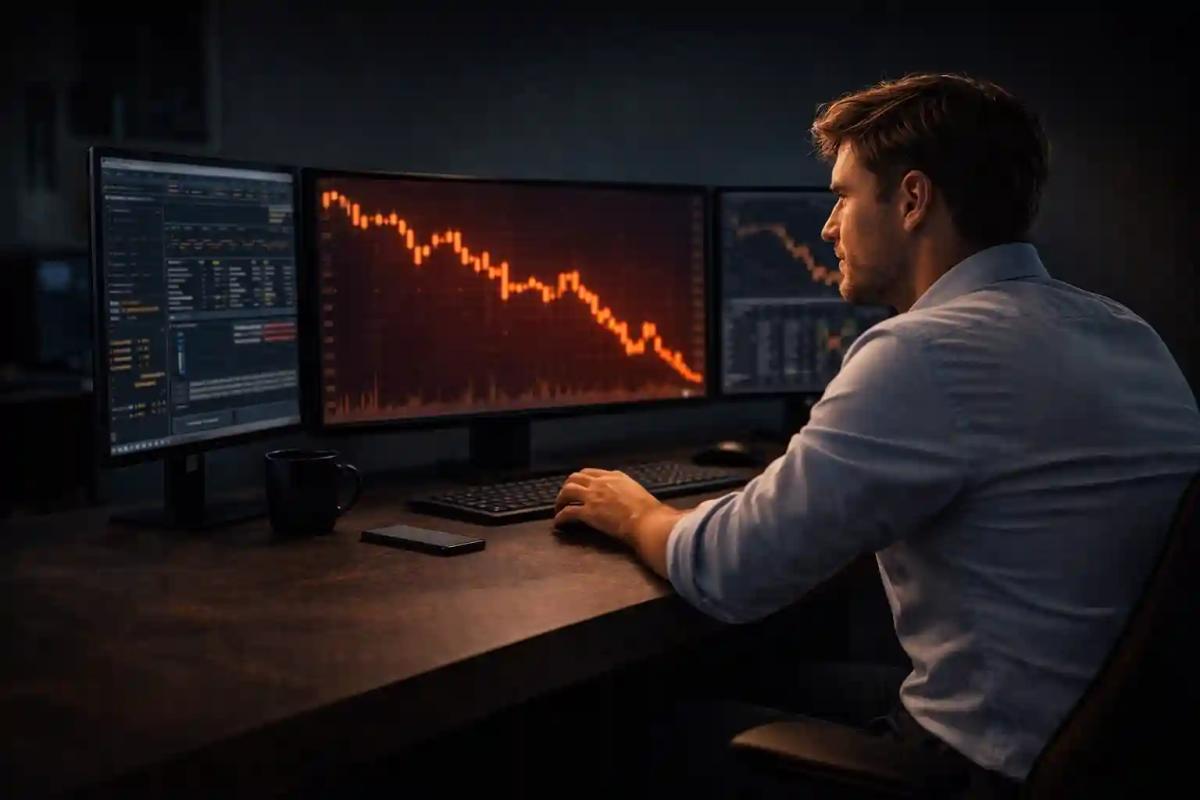
Mental resilience is a concrete, trainable skill that separates traders who survive their worst stretches from those who blow up their accounts in a single afternoon of emotional chaos. Building it does not require you to become a robot or suppress every feeling you have. It requires you to understand how your brain responds to financial loss, recognize when that response is hijacking your decisions, and have a system ready to catch you before you spiral.
This guide gives you that system: a practical framework you can start using the next time you take a hit. Because you will take hits. Every trader does. The only question worth asking is what happens next.
This article is educational content, not a substitute for professional mental health support. Trading involves significant risk of financial loss.
Why Trading Breaks People Mentally (And Why That Is Normal)
Before you can fix what is breaking, you need to understand why trading is so uniquely brutal on your psychology. It is biology working against you in an environment it was never designed for.
The Psychology Behind Loss Aversion in Trading
Your brain does not treat gains and losses equally. Research in behavioral economics, most notably the work of Daniel Kahneman and Amos Tversky, demonstrated that losing $100 feels roughly twice as painful as gaining $100 feels good. This asymmetry is called loss aversion, and it colors every single trade you take.
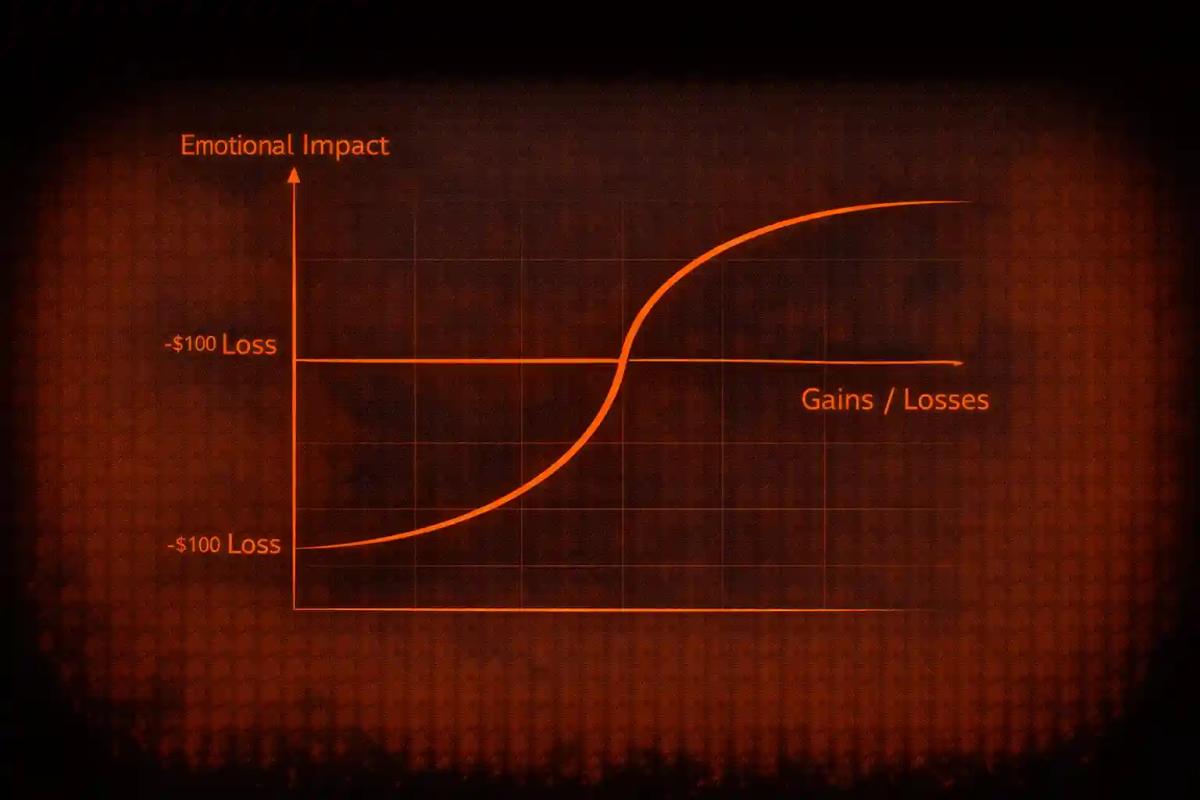
Think about what this means in practice. You take a solid trade with a 2:1 reward-to-risk ratio. You win. You feel good, but not euphoric. The next day, you take the same setup. You lose. The emotional weight of that loss dwarfs the satisfaction of yesterday’s win, even though the dollar amount is smaller.
Now multiply that over weeks of choppy markets. Even a strategy with a genuine edge can produce strings of losses that feel psychologically devastating, while the math says everything is working fine. Your brain is not wired to think in probabilities over hundreds of trades. It is wired to react to each loss as a threat, right now, in this moment.
This is not a flaw in your character. It is a flaw in your operating system for the specific task of trading. Once you see it clearly, you can start building guardrails around it.
How Drawdowns Attack Your Identity as a Trader
Loss aversion is painful enough on its own. But something deeper happens during extended drawdowns: they start eroding your identity.
If you have invested months or years learning to trade, the statement “I am a trader” becomes part of who you are. When you are deep in a drawdown, especially in a prop firm challenge environment where capital is on the line and the clock is ticking, every red day feels like evidence that you are a fraud.
This identity threat triggers defensive responses that have nothing to do with market analysis. You start avoiding setups you know are valid because the pain of being wrong again feels unbearable. Or you double down recklessly, trying to “prove” you still have it. Either way, your decisions stop being about the market and start being about protecting your ego.
So how do you know when this shift has already taken hold?
Signs Your Mental Resilience Is Cracking
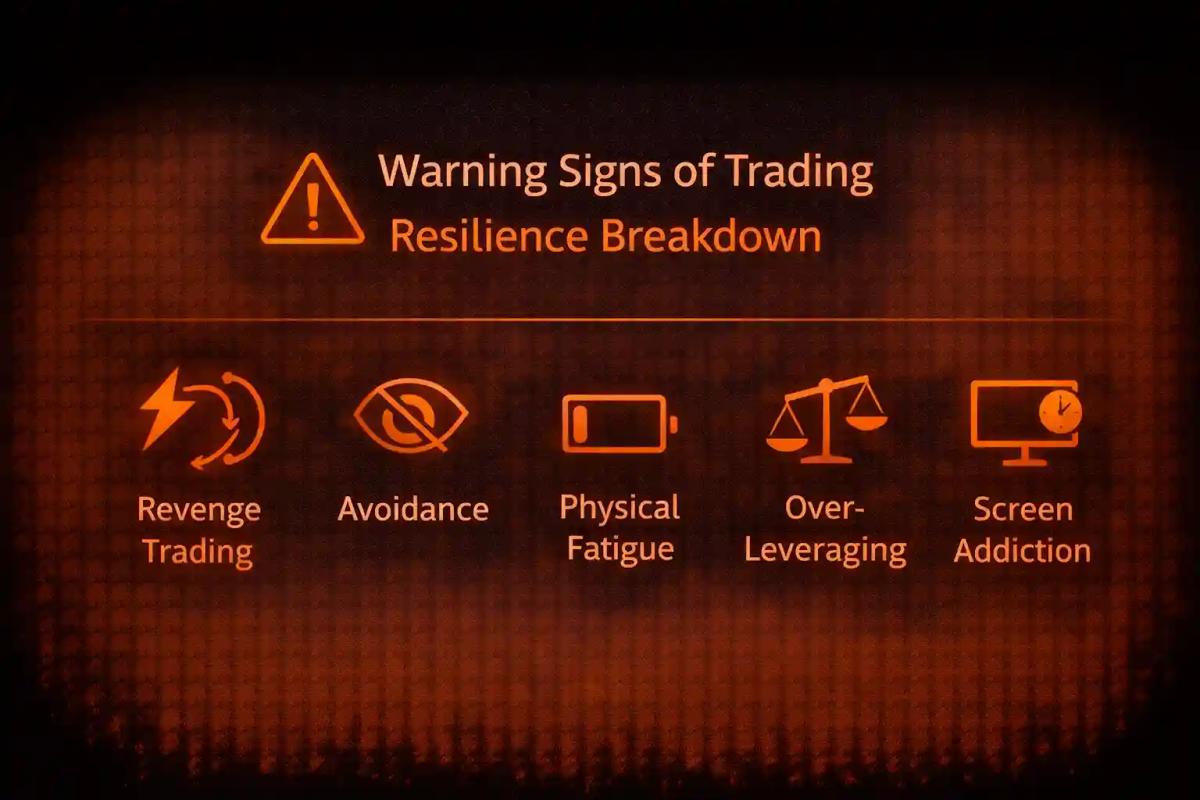
The dangerous thing about psychological breakdown in trading is that it rarely announces itself. It creeps in disguised as “being aggressive” or “taking a break,” and by the time you notice the pattern, the damage is already done.
Revenge Trading and Emotional Spirals
You know revenge trading when you see it in someone else. A trader takes a loss, immediately jumps back in with a bigger position, ignores their setup criteria, and chases the market trying to “get it back.” It looks reckless from the outside.
From the inside, it feels completely rational. Your brain reframes it as “making up for a mistake” or “the market owes me this move.” The emotional urgency is so strong that it overrides your trading plan entirely. You are no longer trading the chart. You are trading your feelings.
The spiral usually follows a predictable pattern:
- A loss triggers frustration or anger
- You take an unplanned trade to recover the loss quickly
- That trade goes against you, amplifying the emotional charge
- Risk management disappears as the only goal becomes “getting back to breakeven”
- The session ends with a loss far larger than the original one
If you have lived through this cycle even once, you do not need convincing that it is destructive. What you need is a protocol to interrupt it before step two. We will get to that.
Avoidance, Hesitation, and Fear of Pulling the Trigger
Revenge trading gets the most attention because it is dramatic. But the opposite reaction, freezing up, does just as much damage over time and is far harder to detect.
After a series of losses, your brain starts associating trade execution with pain. Valid setups appear on your screen, and instead of entering, you hesitate. You wait for “more confirmation.” You find reasons the setup is not quite right. You watch the trade play out exactly as planned, without you in it, and feel a confusing mix of relief and frustration.
This is avoidance behavior, and it erodes your edge just as effectively as revenge trading does. A strategy only works if you execute it consistently. When fear makes you skip the setups that would have been winners, your actual results diverge sharply from your backtested results, and that gap feeds even more self-doubt.
Physical and Cognitive Burnout Signals
Your body keeps score. Resilience breakdown often shows up physically before you consciously recognize the psychological toll. Watch for these warning signs:
- Disrupted sleep patterns, especially racing thoughts about open positions or past losses
- Eye strain, headaches, or jaw tension from prolonged screen time under stress
- Changes in appetite, either stress eating or forgetting to eat during sessions
- Difficulty concentrating on non-trading tasks
- A persistent feeling of dread before the market opens
They are your nervous system telling you it has been running in threat-response mode for too long without adequate recovery. Ignoring them does not make you tougher. It makes you slower, less focused, and more prone to the exact emotional mistakes you are trying to avoid.
Recognizing these warning signs is half the battle. But recognition without a response plan just leaves you aware of the problem while it continues. What you actually need is a framework to rebuild from.
The Core Framework for Building Trading Resilience
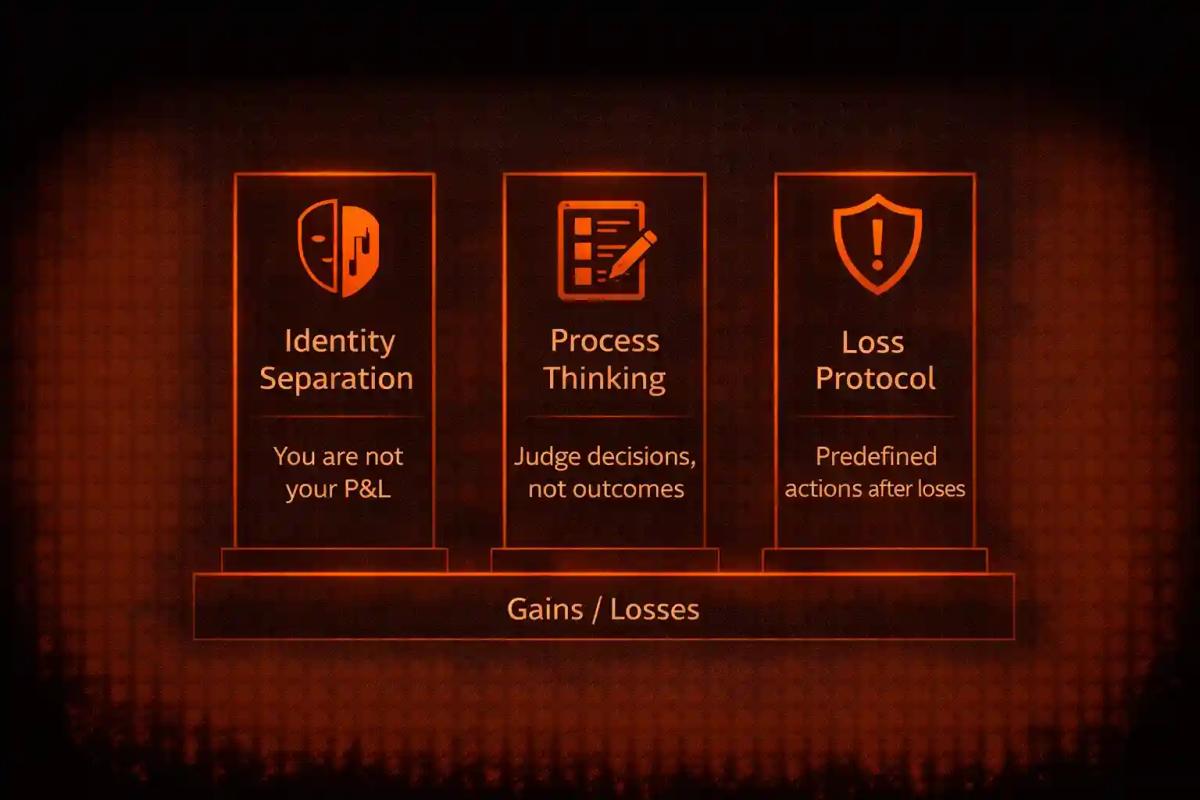
Mental resilience is not a personality trait you either have or you do not. It is a system you build, practice, and reinforce. The framework below rests on three pillars, each addressing a different layer of the psychological challenge.
Separating Your Self-Worth From Your P&L
This is the foundation. If your sense of competence, intelligence, or value as a person rises and falls with your daily P&L, you are building on sand. Every loss becomes a personal failure, every win becomes fragile validation, and your emotional stability is at the mercy of market randomness.
Separating identity from results does not mean not caring. You should care about your performance. But there is a critical difference between “that trade did not work” and “I am a failure.” The first is data. The second is a story your brain tells when it confuses a probabilistic outcome with a judgment of your worth.
Practical steps to create this separation:
- Define your trading identity around behaviors, not outcomes. “I am a disciplined trader” means you followed your plan, regardless of whether the trade won or lost.
- Track process metrics separately from financial results. Monitor plan adherence, risk management, and setup quality. Review both, but anchor your self-assessment to process.
- Reframe “I am” statements into “I did” statements. When you catch yourself thinking “I am terrible at this” after a loss, consciously shift to “I took a trade that did not work out.”
This is not positive thinking or self-deception. It is accurate thinking. A losing trade taken according to your rules is not a mistake. It is a cost of doing business.
Process-Based Thinking vs. Outcome-Based Thinking
Outcome-based thinking asks: “Did I make money today?” Process-based thinking asks: “Did I follow my system today?”
The difference sounds subtle, but it changes everything about how you experience your trading. When you are outcome-focused, a winning trade taken impulsively feels good (it should not), and a losing trade taken perfectly feels bad (it should not). Your feedback loop is corrupted because you are measuring the wrong variable.
Consider how a poker player evaluates their decisions. A professional poker player who goes all-in with pocket aces and loses to a lucky river card does not regret the decision. The decision was correct. The outcome was unlucky. They make the same play next time without hesitation, because they trust the math over a sample size of one.
Your trading should work the same way. When you judge every session by whether you followed your rules, executed your setups cleanly, and managed risk properly, losing days stop being crises. They become normal variance within a system you trust.
Developing a Personal Loss Protocol
This is where theory meets your actual trading day. A loss protocol is a pre-written, specific set of actions you commit to following after any significant loss. You write it when you are calm, so it is ready when you are not.
A solid loss protocol typically includes:
- Immediate pause: Stop trading for a defined period (minimum 15 minutes, potentially the rest of the session depending on severity).
- Physical reset: Step away from your desk. Move your body. Drink water. Change your physical state.
- Written review: Open your journal and write exactly what happened, what you felt, and whether the trade followed your plan.
- Decision gate: Based on your review, decide whether you are in a psychological state to continue trading today.
- Re-entry criteria: If you decide to continue, define the specific conditions under which you will take your next trade (only A+ setups, reduced position size, etc.).
The power of a loss protocol is that it removes decision-making from the moment when you are least equipped to make good decisions. You are not choosing what to do after a loss. You are executing a plan you already made.
Having a framework is one thing, though. Using it when your screen is flashing red and your stomach is in knots requires its own set of techniques.
Practical Techniques for Recovering After a Loss
The Cooling-Off Period and When to Step Away
The simplest and most underused resilience tool in trading is walking away from your screen. This is a deliberate tactical decision to let your nervous system reset before you risk more capital.
Your brain needs roughly 20 to 30 minutes to downregulate from a strong emotional response. During that window, your prefrontal cortex (the part responsible for rational decision-making) is essentially outgunned by your amygdala (the part screaming “do something, now”). Trading during this window is like driving with a fogged windshield. You can technically see the road, but your vision is compromised in exactly the ways that cause accidents.
Set a timer. Physically leave the room. Do something that engages your body or your attention in a completely different context. When the timer goes off, check in with yourself honestly before sitting back down. If the emotional charge is still there, extend the break.
Journaling as a Resilience Tool
Trading journals get recommended so often that most traders either keep a half-hearted spreadsheet or ignore the idea entirely. But a journal built specifically for psychological resilience is a different instrument from a trade log. It is not about recording entries and exits. It is about capturing your internal state.
After each session (or after significant losses), write answers to these questions:
- What was my emotional state before, during, and after the trade?
- Did I follow my plan, or did I deviate? If I deviated, what feeling drove the deviation?
- What story was I telling myself about the market, about my ability, or about what “should” happen?
- On a scale of 1 to 10, how in control did I feel?
- What would I tell a friend who made the exact same trade?
Over time, this journal becomes a map of your psychological patterns. You start to see the warning signs before they escalate. You notice that your worst decisions cluster around specific emotional states, times of day, or market conditions. That pattern recognition is the raw material of resilience.
Reframing Losses as Data
This is not about pretending losses do not hurt. They do. It is about training yourself to extract maximum information from every loss so that the pain is not wasted.
Every loss can answer at least one of these questions: Was the setup valid? Was my execution clean? Was my position size appropriate? Was my stop placement correct? Or was this simply a low-probability outcome of a high-probability setup?
When you approach losses as data points in a larger dataset, they lose some of their emotional charge. Not all of it, but enough that you can analyze them clearly instead of just reacting to them. The trader who reviews 50 losing trades and identifies a pattern is in a fundamentally different position than the trader who just remembers 50 bad feelings.
Reviewing individual losses is manageable, though. What happens when the losses pile up over weeks or months?
How to Handle Extended Drawdowns Without Breaking
A single loss tests your composure. An extended drawdown tests your core beliefs about whether your approach works at all. This is where most traders either quit or do something reckless, and surviving it requires a different set of tools than recovering from a single bad day.
Adjusting Position Size and Risk During Drawdowns
When you are in a drawdown, the temptation is to increase position size to “make back” the losses faster. This is almost always a catastrophic decision. It turns a recoverable drawdown into a terminal one.
Consider doing the opposite. Reducing your position size during drawdowns accomplishes several things at once:
- It slows the rate of capital loss, giving you more time and more trades to work through the rough patch
- It lowers the emotional stakes of each individual trade, making it easier to execute your plan cleanly
- It preserves capital for when market conditions shift back in your favor
- It proves to yourself that you can stay disciplined under pressure
A common approach is to drop to 50% of your normal position size after reaching a predefined drawdown threshold (say, 5% of your account), and to 25% if the drawdown deepens further. The specific numbers depend on your strategy and risk tolerance, but the principle holds across the board: trade smaller when you are losing, not bigger.
Setting Circuit Breakers for Yourself
Professional trading desks and prop firms use circuit breakers for a reason. They know that no risk management system works if the person operating it is emotionally compromised. You need the equivalent for your own trading.
Define your circuit breakers before you need them:
- Daily loss limit: A fixed dollar or percentage amount after which you stop trading for the day, no exceptions.
- Weekly loss limit: A threshold that triggers reduced size and a mandatory strategy review.
- Consecutive loss limit: A number of losses in a row (regardless of dollar amount) that triggers a cooling-off period.
- Behavioral triggers: Specific actions (like moving a stop loss, adding to a losing position, or trading outside your setup criteria) that signal you need to pause immediately.
Write these down. Post them next to your screen. The point is to make the decision automatic, not dependent on your judgment in the moment, because your judgment in the moment is exactly what these rules exist to protect.
When to Seek External Support
There is a line between normal trading stress and something deeper, and knowing where that line falls matters. If you are experiencing persistent anxiety that extends well beyond market hours, if your sleep is chronically disrupted, if trading losses are affecting your relationships or daily functioning, or if you find yourself unable to stop trading despite knowing you should, these are signals that self-help techniques alone may not be sufficient.
Talking to a therapist, particularly one with experience in performance psychology or financial stress, is not a sign of failure. It is the same step elite athletes take when the mental game becomes the bottleneck. Many professional traders and portfolio managers work with psychologists as a routine part of their performance process, not as a last resort.
If cost is a barrier, look into online therapy platforms, community mental health resources, or peer support groups for traders. The important thing is not to wait until you are in crisis.
Building resilience is not only about surviving the bad stretches, though. It is about creating a daily foundation that makes you harder to break in the first place.
Building Long-Term Psychological Toughness
Short-term recovery techniques keep you in the game. Long-term habits determine whether you thrive in it. The traders who last for years and decades are not the ones with the highest pain tolerance. They are the ones who built systems, routines, and environments that reduce unnecessary psychological strain before it accumulates.
Daily Habits That Strengthen Mental Resilience
Resilience is not built in the moments of crisis. It is built in the hours between them. Small daily practices compound over time into significant psychological durability:
- Pre-session preparation: Spend 10 to 15 minutes before each session reviewing your plan, checking your emotional state, and setting clear intentions for the day. Going into the market without a plan is like walking into a negotiation without knowing what you want.
- Post-session review: Even on days when nothing significant happens, take five minutes to note what you did well and what you could improve. This builds the habit of reflection so it is automatic when you need it most.
- Gratitude or perspective practice: This is not about toxic positivity. It is about reminding yourself of the bigger picture. You have the opportunity to trade. You are learning a valuable skill. Today’s loss does not define your trajectory.
- Skill development outside of live trading: Backtesting, studying market structure, and reviewing educational content all count. When your only engagement with trading is live execution, every session carries the full weight of your progress. Diversifying your learning eases that pressure.
The Role of Physical Health in Trading Performance
Your brain is a biological organ, and it performs according to how you treat it. This is not a wellness lecture. It is a performance reality that most traders underestimate.
Sleep deprivation measurably impairs decision-making, emotional regulation, and risk assessment. Studies show that even moderate sleep restriction (six hours instead of eight) degrades cognitive performance in ways comparable to mild intoxication. If you are trading on poor sleep, you are trading impaired. Period.
Regular physical exercise has been shown to reduce anxiety, improve mood stability, and enhance cognitive flexibility. That last point matters more than it sounds: cognitive flexibility is what you need when the market does something unexpected and you need to adapt quickly rather than freeze or panic.
Nutrition matters too, though you do not need a perfect diet. Stable blood sugar supports stable focus. Caffeine can sharpen alertness but may amplify anxiety in stressful moments. Staying hydrated sounds basic, but dehydration directly affects concentration.
None of this is complicated. But it is easy to neglect when you are deep in the markets, skipping meals, sleeping poorly, and spending twelve hours a day in front of screens. Your body is your trading infrastructure. Maintain it accordingly.
Creating an Environment That Supports Consistency
Your physical and social environment either supports your resilience or quietly undermines it. Take an honest look at what surrounds you when you trade:
- Physical workspace: A clean, organized trading space with proper lighting, a comfortable chair, and minimal distractions reduces cognitive load. Your environment should help you focus, not compete for your attention.
- Information diet: Constant exposure to social media traders posting massive gains (and hiding their losses) distorts your sense of what is normal. Curate your feeds ruthlessly. Follow traders who discuss process, risk management, and psychology, not just results.
- Social support: Trading is isolating by nature, and isolation amplifies negative psychological spirals. Having even one person you can talk to honestly about your trading, whether a fellow trader, a mentor, or a partner who understands, provides a release valve that keeps pressure from building to dangerous levels.
- Routine and structure: Unstructured trading days tend to produce impulsive decisions. A defined schedule for when you trade, when you review, and when you step away creates a rhythm that supports discipline even when motivation runs low.
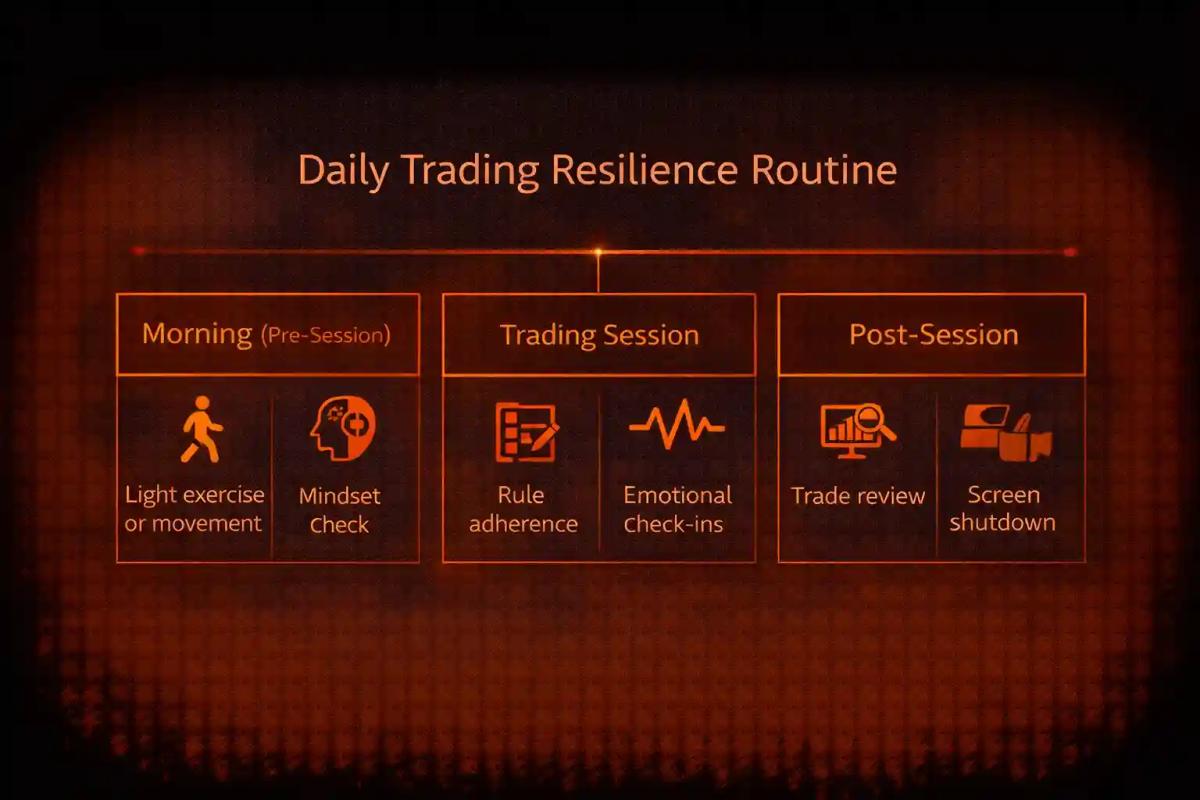
Building this kind of environment is not glamorous work. Nobody posts about their organized desk or their sleep schedule on social media. But these are the invisible foundations that allow you to stay consistent through the periods that break everyone else.
Frequently Asked Questions
How long does it take to build mental resilience as a trader?
There is no fixed timeline, and anyone who gives you one is oversimplifying. Most traders report noticeable improvement in emotional regulation within two to three months of consistent practice (journaling, using a loss protocol, focusing on process). That said, resilience is not a destination you arrive at. It is an ongoing practice that deepens over years. The goal is not to eliminate emotional responses but to shorten your recovery time from them.
Are some traders naturally more resilient than others?
Temperament plays a role, but it is a much smaller factor than most people assume. Some individuals may have a higher baseline tolerance for uncertainty, but the skills that matter most in trading resilience, such as self-awareness, emotional regulation, and disciplined decision-making, are all trainable. The traders who seem "naturally tough" have usually just been practicing longer, often without realizing it.
What should I do immediately after a large unexpected loss?
Stop trading. This is not optional. Step away from your screen, physically move your body, and give yourself at least 20 to 30 minutes before making any decisions. Then open your journal and write down exactly what happened and what you are feeling. Do not try to analyze the trade yet. Just capture the raw experience. Once the emotional intensity has dropped, review whether the trade followed your plan. If it did, the loss is variance. If it did not, identify exactly where you deviated and why.
How do I tell the difference between a normal drawdown and a sign I should stop trading?
A normal drawdown occurs within the expected parameters of your strategy. If you have backtested your approach, you should have a sense of its historical maximum drawdown and typical losing streaks. When your live results fall within those ranges, the drawdown is likely normal even though it feels terrible. A warning sign is when your drawdown exceeds historical norms, when you have deviated significantly from your trading plan, or when your emotional state is consistently preventing clean execution over a period of weeks.
Do trading journals actually help with psychological recovery?
Yes, but only if you use them to track your internal state, not just your entries and exits. A journal that only records price, direction, and profit is a trade log. A psychological journal captures your emotional state, decision-making process, and the stories you tell yourself about your trades. This second type is what builds self-awareness over time, allowing you to recognize destructive patterns before they fully play out. Consistency matters more than detail. A brief daily entry done every day beats an elaborate review done once a month.
How does physical exercise affect my trading decisions?
Exercise directly impacts the neurochemistry involved in emotional regulation and cognitive performance. Regular physical activity increases serotonin and endorphin levels, which stabilize mood and reduce anxiety. It also improves sleep quality, which is critical for the prefrontal cortex functioning you rely on for disciplined decision-making. You do not need intense workouts. Even 20 to 30 minutes of moderate activity (walking, cycling, swimming) on most days produces measurable cognitive benefits.
When should a trader consider getting professional psychological support?
Consider seeking professional help if trading-related stress is consistently spilling into your personal life, if you are experiencing persistent anxiety or depression symptoms, if you find yourself unable to follow your own rules despite knowing better, or if you have experienced a significant financial loss that is affecting your daily functioning. A psychologist specializing in performance psychology or financial therapy can offer tools and perspectives that self-guided practice cannot. There is no threshold you need to cross before it is "bad enough" to justify getting help. Earlier is almost always better.
About the authors


Put this into practice
Related articles

Mindfulness in Trading: Practical Techniques to Trade With Clarity
Learn practical mindfulness techniques for trading. Build pre-session routines, manage tilt, and improve decision-making with concrete tools for your next session. |
Overconfidence in Trading: How to Spot It and Stop It Before It Costs You
Overconfidence in trading disguises itself as skill. Learn to spot the warning signs, understand the psychology behind it, and build systems to protect your capital.
Overtrading: Causes, Warning Signs, and How to Stop
Learn what overtrading is, the psychological triggers behind it, warning signs in your behavior and account, and practical steps to stop overtrading for good.
0 comments