



Sleep for Traders: How Rest Impacts Your Trading Performance
Sleep is a performance variable, sitting right alongside your strategy, risk management, and emotional discipline. The link between how you sleep and how you trade is supported by decades of cognitive research, and it maps directly onto the mental functions you depend on every single session.
This article breaks down what happens to your trading brain when you’re under-rested, why certain trading errors keep surfacing on bad-sleep days, and offers a practical framework you can start using tonight to protect your edge. Now, better sleep alone won’t make you profitable. But if you’re leaving performance on the table because of something you can control for free, it’s worth understanding how.
Why Sleep Is a Trading Performance Variable
Most traders treat sleep like background noise, something that just happens (or doesn’t) between sessions. But the cognitive science paints a different picture. Sleep is the foundation your entire decision-making architecture rests on.
Think about it this way: you wouldn’t trade on a platform with a laggy data feed and broken order execution. Trading on a sleep-deprived brain is the same problem wearing different clothes. The lag lives in your judgment. The broken execution lives in your impulse control.
What Happens to Your Brain When You Trade Sleep-Deprived
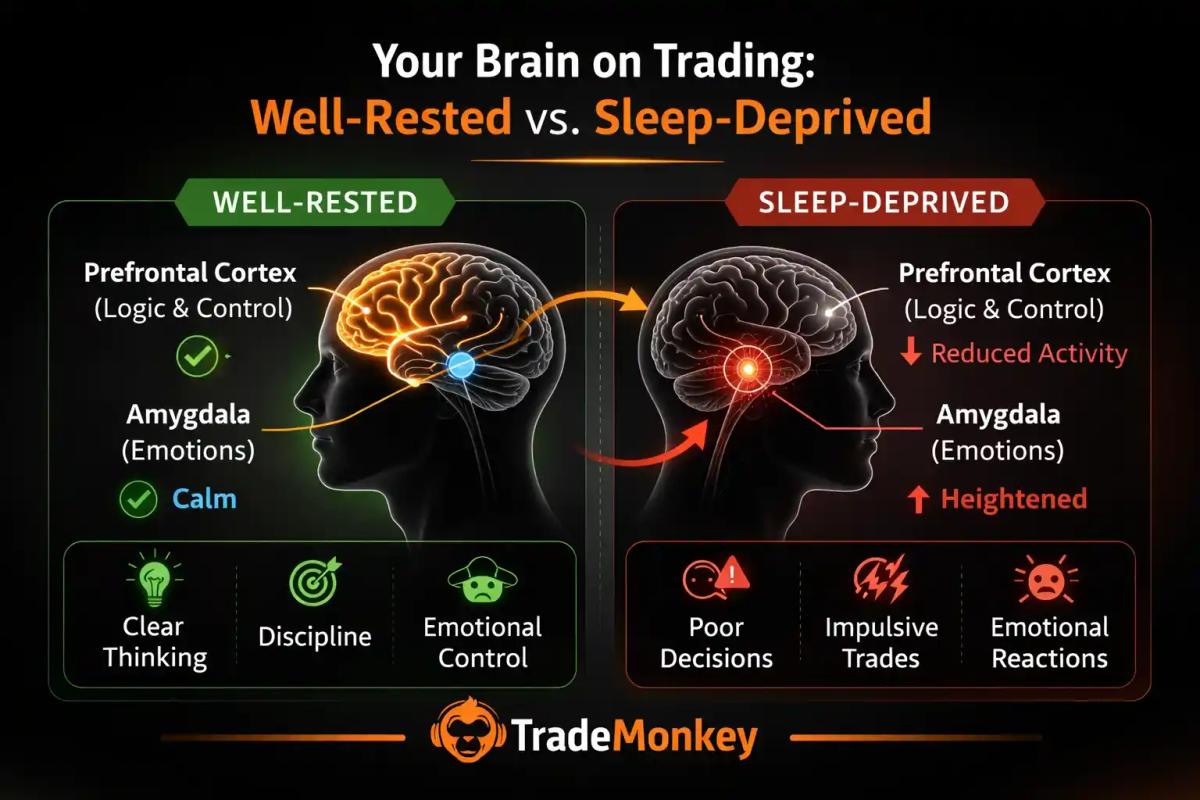
Your brain’s prefrontal cortex handles planning, logical reasoning, and weighing consequences. Think of it as your brain’s risk manager. When you’re well-rested, it works alongside your amygdala, the emotional response center, to help you evaluate threats and opportunities with a balanced perspective.
When you’re sleep-deprived, that balance collapses. Cognitive neuroscience research consistently shows that even moderate sleep restriction (six hours or less for most adults) dampens prefrontal cortex activity while cranking up amygdala reactivity. In plain terms: your risk manager checks out while your emotional alarm system gets louder.
What follows is predictable. You become more reactive, less analytical, and measurably worse at evaluating probabilities. Cortisol levels climb, stress sensitivity sharpens, and your ability to distinguish a genuine setup from a fear-driven or greed-driven impulse drops in a way that shows up in the data.
The Cognitive Functions Traders Rely on Most
Trading is, at its core, a cognitive performance activity. The mental functions you lean on hardest during a session include:
- Working memory – holding multiple data points (price levels, news context, position sizes) in your head at once
- Executive function – sticking to your trading plan even when emotions pull you sideways
- Pattern recognition – spotting familiar setups in real time across charts and timeframes
- Impulse inhibition – resisting the urge to overtrade, chase, or abandon your stop loss
- Emotional regulation – staying level after a loss or a big win
Every one of these functions is housed in or heavily dependent on the prefrontal cortex. And every one degrades under sleep deprivation. That’s the mechanism behind your worst trading days: a brain running on fumes.
So if your discipline seems to evaporate on certain days for no clear reason, your sleep the night before might be the variable you’re not tracking.
How Poor Sleep Destroys Trading Decisions
You don’t need to be running on zero sleep to feel the effects. Even a modest sleep debt, built up over several nights of five or six hours, is enough to meaningfully impair the cognitive skills that keep your trading sharp.
Risk Assessment and Impulse Control
When your prefrontal cortex is underperforming, objective risk assessment takes a direct hit. Studies on sleep-deprived decision-making show a consistent pattern: people underestimate downside risk and overestimate potential rewards when they’re tired. For a trader, that translates into oversized positions, ignored stop losses, and entries that don’t meet your own criteria.
Impulse control erodes alongside it. That internal voice saying “this doesn’t fit the plan, skip it” grows quieter, while the one whispering “just take the trade, it looks good enough” gets louder. If you’ve ever entered a position and immediately wondered “why did I do that?”, the answer might have less to do with your strategy and more to do with what happened between midnight and your alarm.
Pattern Recognition and Reaction Time
Pattern recognition separates experienced traders from beginners: the ability to quickly identify setups, read price action, and respond to changing conditions. Sleep deprivation slows this entire process. Your brain takes longer to process visual information, longer to connect what it sees to stored patterns, and longer to act.
Reaction time drops too. Research on cognitive performance after sleep restriction shows measurable declines in both response speed and accuracy. In fast-moving markets, even a slight delay in recognition or execution can mean the difference between a clean fill and a missed opportunity, or catching the wrong side of a move entirely.
Emotional Regulation and Revenge Trading
This is where sleep deprivation does its worst damage. When your amygdala runs hot and your prefrontal cortex runs cold, emotional regulation crumbles. Losses sting harder. Wins feel more intoxicating. And the urge to “make it back” after a losing trade becomes almost impossible to resist.
Revenge trading, one of the most destructive patterns in active trading, is fundamentally a failure of emotional regulation and discipline. Your rational brain knows the rules. A tired brain simply lacks the braking power to enforce them. If your revenge trading episodes cluster around stretches of poor sleep, pay attention.
Recognizing the damage, though, is only half the equation. What makes sleep particularly challenging for traders is that the trading lifestyle itself works against good rest.
Sleep Challenges Unique to Traders
Most sleep advice assumes a 9-to-5 schedule and a reasonable wind-down hour. Traders rarely have that luxury. Financial markets create specific obstacles that generic sleep hygiene tips simply don’t address.
Pre-Market and Overnight Session Schedules
If you trade U.S. equities pre-market, your alarm might go off at 4:00 AM. Forex or crypto traders may monitor positions across Asian, European, and American sessions. Futures traders regularly deal with overnight moves that demand attention at unpredictable hours.
This kind of schedule chips away at your circadian rhythm, the internal clock that regulates when your body expects to sleep and wake. Shift-work research, which is the closest analogue to multi-session trading, consistently shows that irregular schedules lead to accumulated sleep debt, reduced sleep quality, and impaired cognitive performance, even when total sleep hours look adequate on paper.
You can’t always control when markets are open. But you can control how you structure your trading schedule around your sleep, rather than bending your sleep around the markets.
Screen Exposure and Stimulation Before Bed
Traders spend their working hours staring at high-contrast screens packed with rapidly changing data. That combination of blue light exposure and cognitive stimulation is potent: both delay sleep onset (the time it takes you to fall asleep) and reduce overall sleep quality.
If you’re reviewing charts, scanning for setups, or reading market news right up until you turn the lights off, your brain is still in analysis mode when it needs to be shifting into rest mode. That transition doesn’t happen instantly. For many traders, this gap between screens-off and sleep-ready is the single biggest barrier to falling asleep on time.
Post-Loss Anxiety and Racing Thoughts
A bad trading day doesn’t end when you close your platform. Losses can trigger a loop of replaying trades, second-guessing decisions, and worrying about tomorrow’s session. This kind of rumination ranks among the most common causes of difficulty falling and staying asleep.
The cycle is punishing: poor sleep leads to worse decisions, worse decisions lead to more losses, more losses fuel anxiety, and anxiety sabotages the next night’s sleep. Breaking that loop takes deliberate intervention, not just a vague intention to “try to relax.”
What does a realistic sleep optimization approach actually look like when you trade for a living?
A Practical Sleep Optimization Framework for Traders
A few targeted adjustments that account for the specific demands of your trading schedule can make a real difference. Think of this as building a pre-trade routine, except it starts the night before.
Building a Pre-Sleep Wind-Down Routine
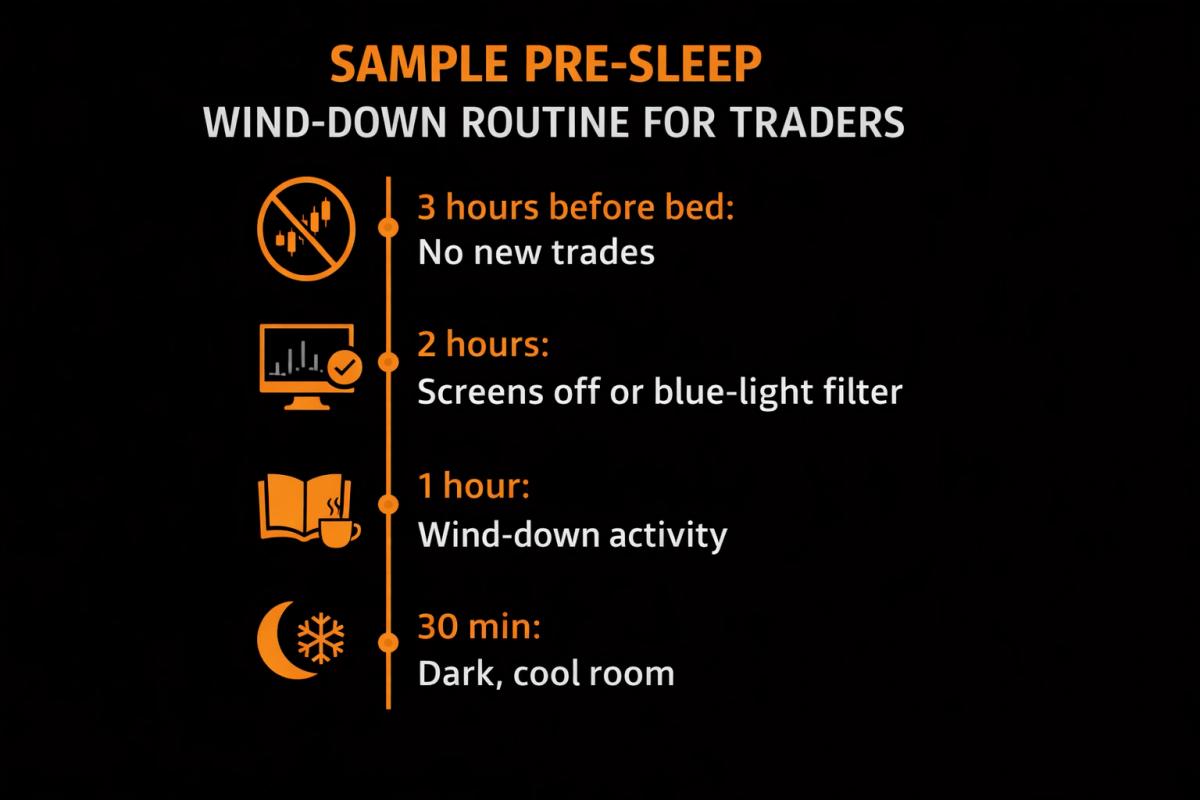
The goal is to create a buffer zone between your trading brain and your sleeping brain. A practical wind-down timeline might look like this:
- 3 hours before bed: Close all active trades or set automated stops. No new positions. Your trading day is over.
- 2 hours before bed: Step away from trading screens. If you need screen time, use a blue-light filter and switch to non-market content.
- 1 hour before bed: Shift to a low-stimulation activity. Reading (not about markets), light stretching, or briefly journaling your trading day without spiraling into analysis.
- 30 minutes before bed: Dim the lights, cool the room, and let your body begin winding down physiologically.
This is about giving your brain a clear, consistent signal that the high-stakes part of your day is finished.
Structuring Your Trading Schedule Around Sleep
If your current trading schedule consistently eats into your sleep, ask yourself an honest question: are those extra hours of screen time actually profitable, or are they costing you more in impaired decision-making than they generate in returns?
Some practical adjustments worth considering:
- Pick your sessions deliberately. If you trade forex across multiple sessions, choose one or two that align with your natural sleep window and commit to them.
- Set hard stop times. Decide in advance when your trading day ends, and hold that boundary with the same discipline you’d apply to a stop loss or risk management rule.
- Protect your sleep window. Aim for a consistent 7-to-9-hour sleep opportunity. Not every night will be perfect, but consistency matters more than any individual night.
Environment, Light, and Temperature Basics
Your sleep environment plays a larger role than most traders realize. A few high-impact, low-effort changes:
- Light: Make your bedroom as dark as possible. Blackout curtains are worth the investment, especially if you need to sleep during daylight hours.
- Temperature: Most sleep research points to a cool room (around 65-68°F / 18-20°C) as optimal. Your body temperature naturally drops during sleep, and a cool environment supports that process.
- Noise: If you live in a noisy environment or share a space with someone on a different schedule, consider a white noise machine or earplugs.
- Screens out of the bedroom: If your trading setup is in your bedroom, that’s a real disadvantage. Your brain associates the environment with alertness and analysis. If relocating isn’t an option, at minimum cover or power off monitors before bed.
These changes remove friction. And in trading, removing friction from a positive-expectancy process is always worthwhile.
The next question is: how do you know if sleep deprivation is affecting your results right now?
How to Tell If Sleep Deprivation Is Hurting Your Results
The tricky part about sleep deprivation is that it undermines your ability to recognize you’re impaired.
Warning Signs in Your Trading Journal
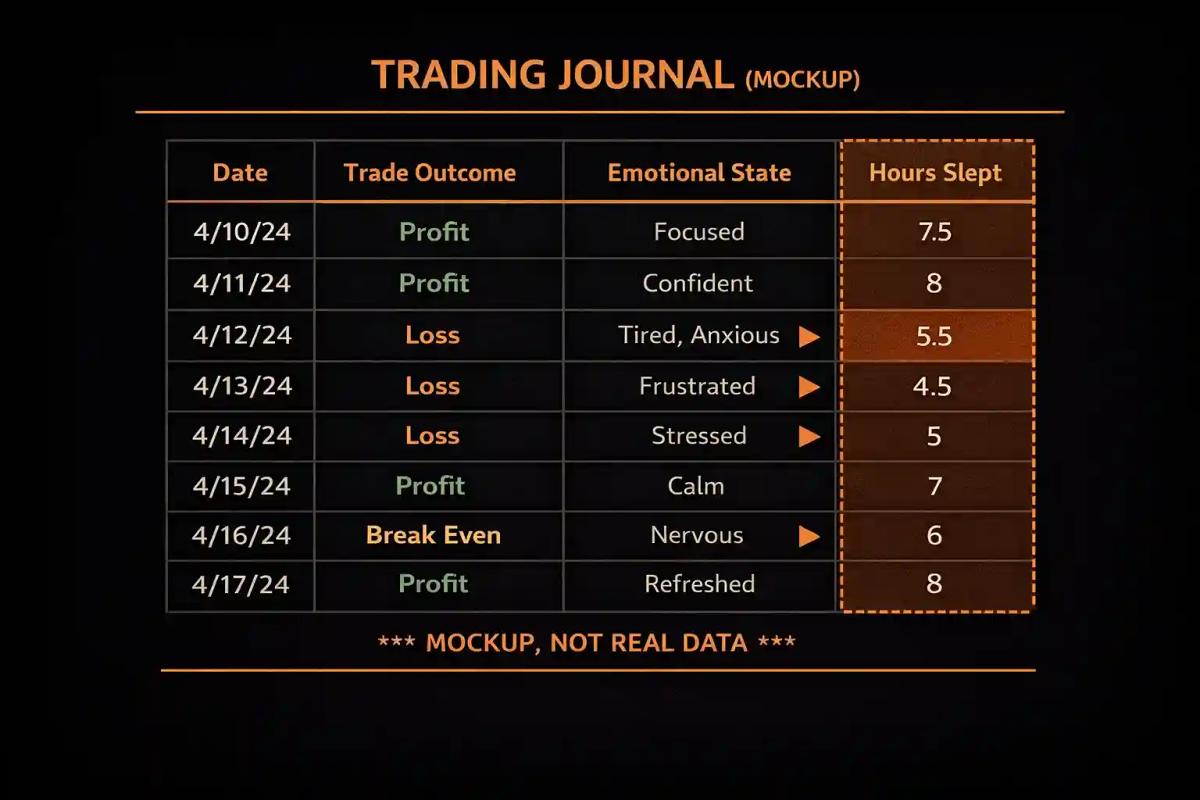
If you keep a trading journal (and you should), adding a sleep column is one of the highest-value, lowest-effort improvements available. Track hours slept and a simple sleep quality rating (1-5) alongside your standard entries.
Over time, look for patterns:
- Do your largest drawdown days cluster around nights with fewer than six hours of sleep?
- Are impulsive or off-plan trades more frequent after poor rest?
- Does your emotional state column (if you track one) correlate with sleep quality?
Here, you’re looking for patterns strong enough to change your behavior.
Simple Self-Assessment Indicators
Beyond your journal, pay attention to these day-of signals that suggest your cognitive function may be compromised:
- You’re reaching for extra caffeine or stimulants just to feel baseline alert
- You catch yourself re-reading the same chart or data point multiple times without actually processing it
- Your patience for waiting on setups is noticeably thinner than usual
- You feel irritable, reactive, or emotionally flat before the session even starts
- You struggle to recall your pre-session plan or key levels without checking your notes
Any one of these alone can simply mean a rough day. But when several appear together, especially after a poor night of sleep, ask yourself honestly whether today is a day to trade at all, or whether stepping away is the higher-expectancy decision.
Trading discipline is about whether you showed up in a condition that gives your discipline a fighting chance.
Frequently Asked Questions
How many hours of sleep do I need before a trading session?
Most cognitive performance research points to seven to nine hours as the range where decision-making, reaction time, and emotional regulation function best. There's no single magic number, and individual needs vary. The key is finding the amount that leaves you consistently alert and focused during sessions, then protecting that window.
Can a nap make up for a short night of sleep before I trade?
A brief nap (20-30 minutes) can temporarily boost alertness and reaction time, which may help if you're heading into a session after a poor night. However, naps don't fully restore the deeper cognitive functions like impulse control and complex pattern recognition that depend on sustained, quality sleep.
I trade across multiple time zones or overnight sessions. How do I manage sleep?
The most important principle is consistency. Pick a sleep window and protect it as much as possible, even if it doesn't match a conventional schedule. Traders who work irregular hours benefit from treating their sleep anchor (the time they go to bed and wake up) as non-negotiable on most days. Rotating your entire schedule every few days does far more damage than keeping an unconventional but stable rhythm.
How quickly will better sleep habits improve my trading performance?
Most people notice improvements in mood, focus, and patience within a few days of consistent, adequate sleep. If you've been carrying significant sleep debt, though, it can take one to two weeks of steady recovery before cognitive functions like risk assessment and impulse control fully normalize. Track your journal data and look for trends over weeks, not days.
Is caffeine or an energy drink a viable substitute for sleep when I need to trade?
Caffeine can mask the feeling of sleepiness, but it does not restore the cognitive functions that sleep deprivation impairs. You might feel more alert after a coffee, yet your risk assessment, emotional regulation, and pattern recognition remain degraded underneath that alertness. There's also a timing factor: caffeine consumed within six to eight hours of your intended bedtime can significantly disrupt your next night's sleep, feeding a cycle that compounds the original problem. This article is for educational purposes only and does not constitute medical advice. If you have persistent sleep difficulties, consult a healthcare professional. Trading involves risk, and no single lifestyle factor guarantees improved results.
About the authors


Put this into practice
Related articles

Survivorship Bias in Trading: Why You Only See the Winners
Learn how survivorship bias distorts your view of trading success, where it hides in social media and backtests, and how to protect yourself from its effects.
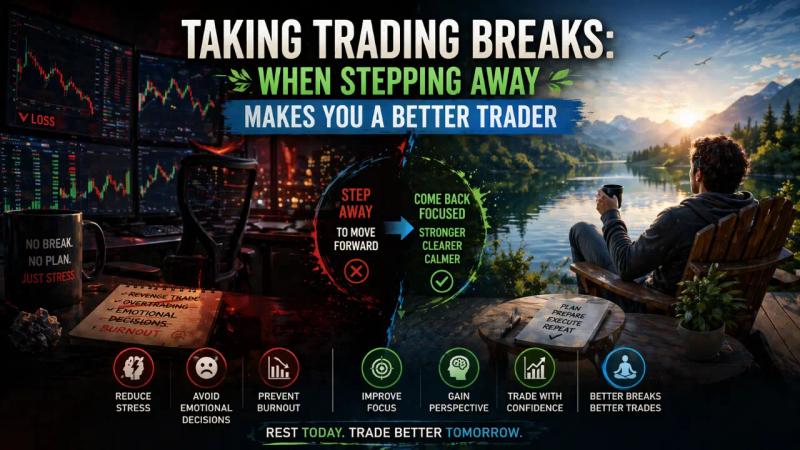
Taking Trading Breaks: When Stepping Away Makes You a Better Trader
Learn when and how taking trading breaks improves your performance. A step-by-step guide to stepping away, resetting, and returning stronger.
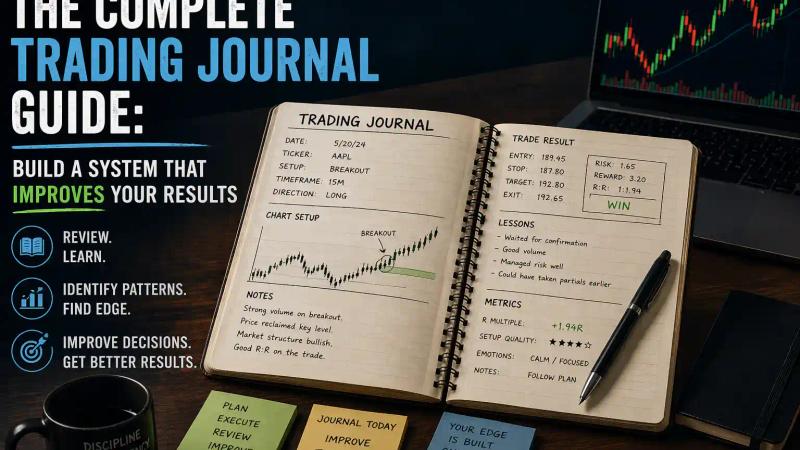
The Complete Trading Journal Guide: Build a System That Improves Your Results
Learn how to build a trading journal that works. What to record, which format to use, and how to run reviews that turn raw data into real performance gains.
0 comments