



Survivorship Bias in Trading: Why You Only See the Winners
For every trader flashing profits, there are dozens, sometimes hundreds, who quietly blew their accounts, closed their apps, and never posted again. What you see on social media is a highlight reel filtered through one of the most powerful cognitive distortions in finance: survivorship bias.
This bias acts like an invisible lens, warping how you perceive trading success, strategy effectiveness, and your own potential. It’s the reason you overestimate how easy profitable trading is and underestimate how common failure really is. Until you learn to spot it, survivorship bias will keep quietly steering your decisions without you ever realizing it.
This article breaks down exactly what survivorship bias is, where it lurks in the trading world, what it costs you when you ignore it, and how to protect yourself from its distortion. This is educational content only and does not constitute financial advice.

What Is Survivorship Bias?
The Classic Definition
Survivorship bias is a logical error that occurs when you draw conclusions from an incomplete dataset, specifically one where the failures have been removed or simply disappeared from view. You end up analyzing only the “survivors” and mistakenly treating their outcomes as representative of the whole group.
The most famous example comes from World War II. Mathematician Abraham Wald was asked to help the military figure out where to add armor to bomber aircraft. Engineers had been studying the bullet holes on returning planes and wanted to reinforce those damaged areas. Wald spotted the critical flaw: the planes they were studying had survived. The holes that actually mattered were on the planes that never came back. That single insight flipped the entire analysis on its head.
The same logic maps almost perfectly to how you consume information about trading.
How It Applies Specifically to Trading and Financial Markets
In trading, survivorship bias surfaces every time you evaluate performance, study strategies, or look for role models based only on the people and data that are still visible. The traders who failed aren’t posting. The strategies that blew up aren’t in the backtest results. The funds that collapsed aren’t in the index anymore.
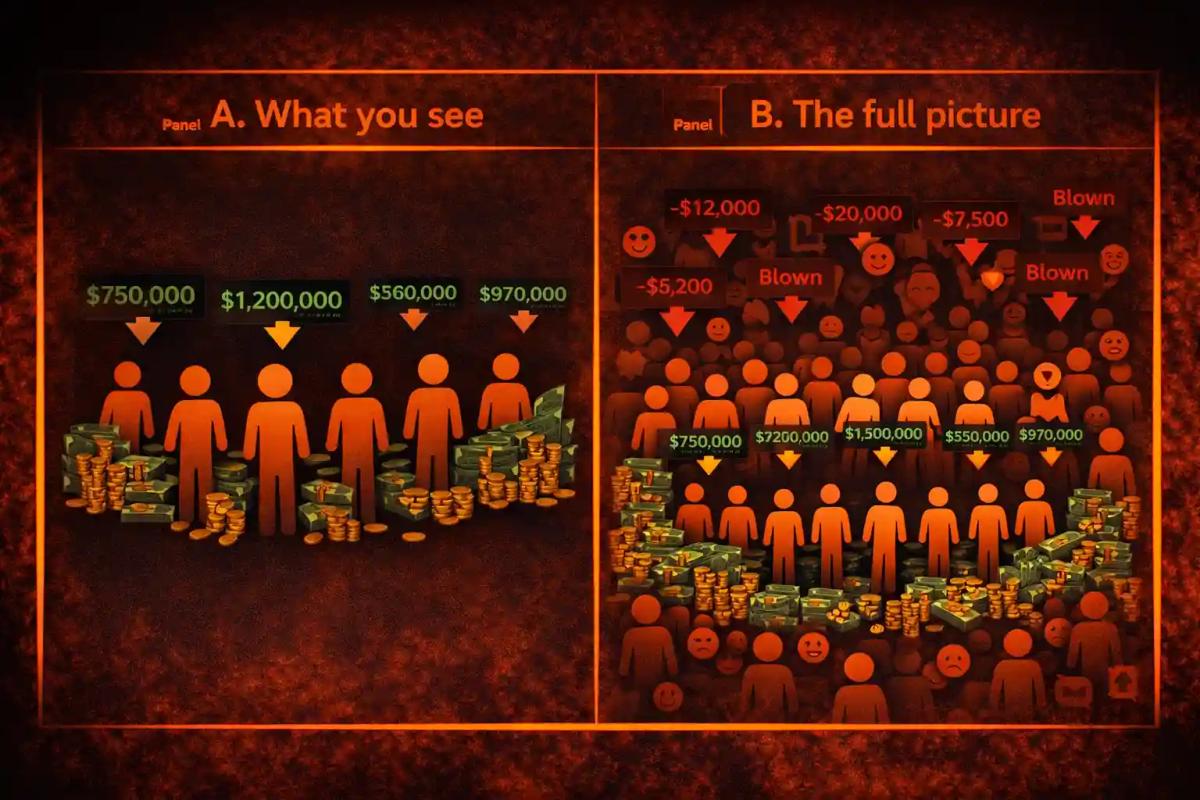
Think of it this way: imagine walking into a poker tournament and only being allowed to watch the final table. You’d assume everyone sitting there was brilliantly skilled. But you wouldn’t see the 500 players who busted out in the first hour, many of whom played the exact same hands and simply got unlucky or made one mistake at the wrong moment.
Trading works the same way. The information environment you operate in has already been filtered. If you don’t account for that filter, every conclusion you draw about what works, who succeeds, and how hard it really is will be skewed.
So where exactly does this filtering happen? It’s more pervasive than you might expect.
Where Survivorship Bias Hides in Trading
Social Media and Trading Influencers
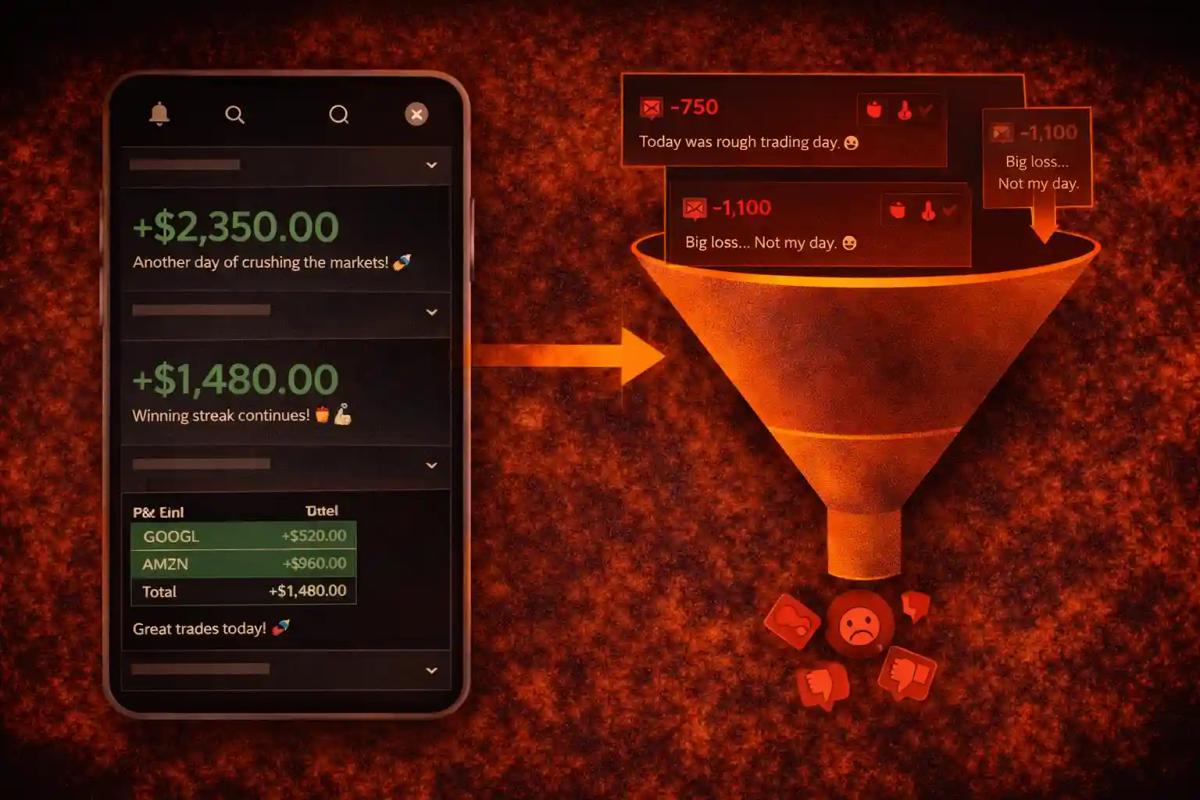
Your social media feed is the single biggest survivorship bias machine you interact with daily. The mechanics are simple: traders who are winning post their results. Traders who are losing go quiet. Over time, your feed becomes a nonstop stream of gains, and the losses just vanish from your perception.
But it runs deeper than self-selection. Think about what actually gets shared and amplified:
- Profit screenshots with large green numbers
- “How I turned $500 into $50,000” threads
- Lifestyle content tied to trading income
- Bold predictions that happened to be correct
What you almost never see:
- The same trader’s losing months
- The full account history including drawdowns
- The five blown accounts before the one that worked
- The fact that the $50,000 account was funded with $200,000 in total deposits over time
You’re not seeing a representative sample of trading outcomes. You’re seeing the far end of a distribution that’s been aggressively pruned of anything that doesn’t look impressive.
Strategy Backtesting and Performance Data
This one catches even experienced traders off guard. When you backtest a strategy using historical data on stocks, ETFs, or indices, the dataset you’re working with often only includes assets that still exist today. Companies that went bankrupt, got delisted, or collapsed are quietly scrubbed from the historical data.
What that means: your backtest is running on a pre-filtered universe of survivors. The strategy looks better than it would have performed in real time because the worst-performing assets have been erased from the test. A momentum strategy, for instance, might look phenomenal in backtests partly because the stocks that lost all their momentum and disappeared aren’t dragging down the results anymore.
Research has shown that survivorship bias in stock databases can inflate perceived annual returns by a meaningful margin, sometimes by over a full percentage point per year.
Fund and Index Performance Reporting
Mutual fund and hedge fund performance data is one of the most well-documented examples of survivorship bias in finance. Funds that underperform tend to close or merge into other funds. When they disappear, their poor track records vanish with them.
The result: the “average” mutual fund return you see reported in industry data is actually the average return of funds that survived long enough to still be reporting. The true average, including all the funds that folded, is meaningfully lower. This paints a distorted picture where professional money management looks more consistently successful than it actually is.
If even institutional performance data is contaminated by this bias, consider how much more distorted informal, self-reported data from individual traders must be.
Prop Firm Success Stories
Proprietary trading firms have become enormously popular, and their marketing often features testimonials and success stories from funded traders. You’ll see payouts, account milestones, and interviews with traders who passed their evaluations and are now trading with the firm’s capital.
What you typically won’t find prominently displayed is the pass rate for evaluations, how many funded traders actually maintain their accounts long-term, or the total number of people who paid for evaluations and never passed at all. The success stories are real, but they represent a very specific slice of the total experience.
When you’re evaluating a prop firm, it’s worth asking what percentage of participants those success stories actually represent.
Knowing where the bias hides is only half the equation, though. Why does it persist so effectively? The answer has as much to do with human nature as it does with algorithms.
Why Failed Traders Stay Invisible
The Silence of Losses
Think about your own behavior for a moment. When was the last time you saw someone voluntarily post about blowing an account? About a strategy that failed for six months straight? About quietly walking away from trading after losing money they couldn’t afford to lose?
Losses carry shame, embarrassment, and social cost. People naturally go silent when things go wrong. The result is a massive asymmetry in what gets shared:
- Wins are broadcast loudly and widely
- Losses are absorbed privately and quietly
- Quitting happens in silence, with no farewell post
This creates an information vacuum where failure data simply doesn’t exist in public spaces. And that vacuum fills itself with more success stories, reinforcing the distortion further.
Platform and Algorithm Incentives That Amplify Winners
Social media platforms are engineered to maximize engagement. Content that sparks excitement, aspiration, and emotional reactions gets amplified. Trading wins check every one of those boxes. A screenshot of a 500% gain will always outperform a thoughtful post about why most strategies fail.
The algorithm doesn’t penalize failure content deliberately. It simply rewards what people engage with. And people engage with wins. The outcome is a self-reinforcing feedback loop:
- Winners post gains
- Platforms amplify high-engagement content
- More people see wins, fewer see losses
- New traders form expectations based on this filtered reality
- The cycle repeats
From the platform’s perspective, this is the system working exactly as designed. But for you as a trader trying to form realistic expectations, it’s a trap.
And that trap carries real consequences. What does it actually cost you to operate inside this distorted view?
The Real Cost of Ignoring Survivorship Bias
Unrealistic Expectations and Overleveraging
When your mental model of “normal” trading success is built entirely on survivor stories, your expectations become dangerously inflated. You start believing that doubling an account in a month is standard, that consistent 10% monthly returns are achievable, that the only thing standing between you and those screenshots is effort or a better strategy.
Those inflated expectations lead directly to overleveraging. If you believe massive returns are normal, you size your positions accordingly. And when the results don’t match, you increase risk further, chasing the outcomes you’ve been conditioned to expect.
Commonly cited figures from broker-reported data suggest that somewhere between 70% and 90% of retail traders lose money. Those numbers come with caveats around methodology and time periods, but the general direction is consistent across multiple sources. That’s a very different picture from what your feed suggests.
Copying Strategies Without Full Context
Survivorship bias warps your understanding of what works. When you see a trader sharing a strategy that produced huge returns, you’re seeing the strategy after it worked. You’re not seeing the dozens of variations that failed, the market conditions that made it click at that specific time, or the risk management rules that kept the trader alive long enough for the strategy to pay off.
Copying a strategy from a survivor without understanding the full context is like copying the final answer on a math test without learning the formula. It might work once. It probably won’t work consistently. And when it fails, you won’t know why or how to adapt.
Emotional Damage From Unfair Comparisons
This might be the most underestimated cost of all. When you constantly measure your results against a filtered stream of winners, you start to internalize the gap as personal failure. “Everyone else is making money. What’s wrong with me?”
You’re comparing your full, unfiltered experience, including every loss, every flat month, every moment of doubt, to someone else’s carefully curated highlight reel. That comparison was never fair to begin with.
This kind of unfair benchmarking erodes confidence, feeds impulsive decisions driven by frustration and FOMO, and can push traders to abandon sound approaches simply because they feel inadequate by comparison. Building a healthier trading mindset starts with recognizing when the comparison itself is broken.
So how do you actually break free from this distortion and start seeing trading more clearly?
How to Build a Balanced View of Trading Success
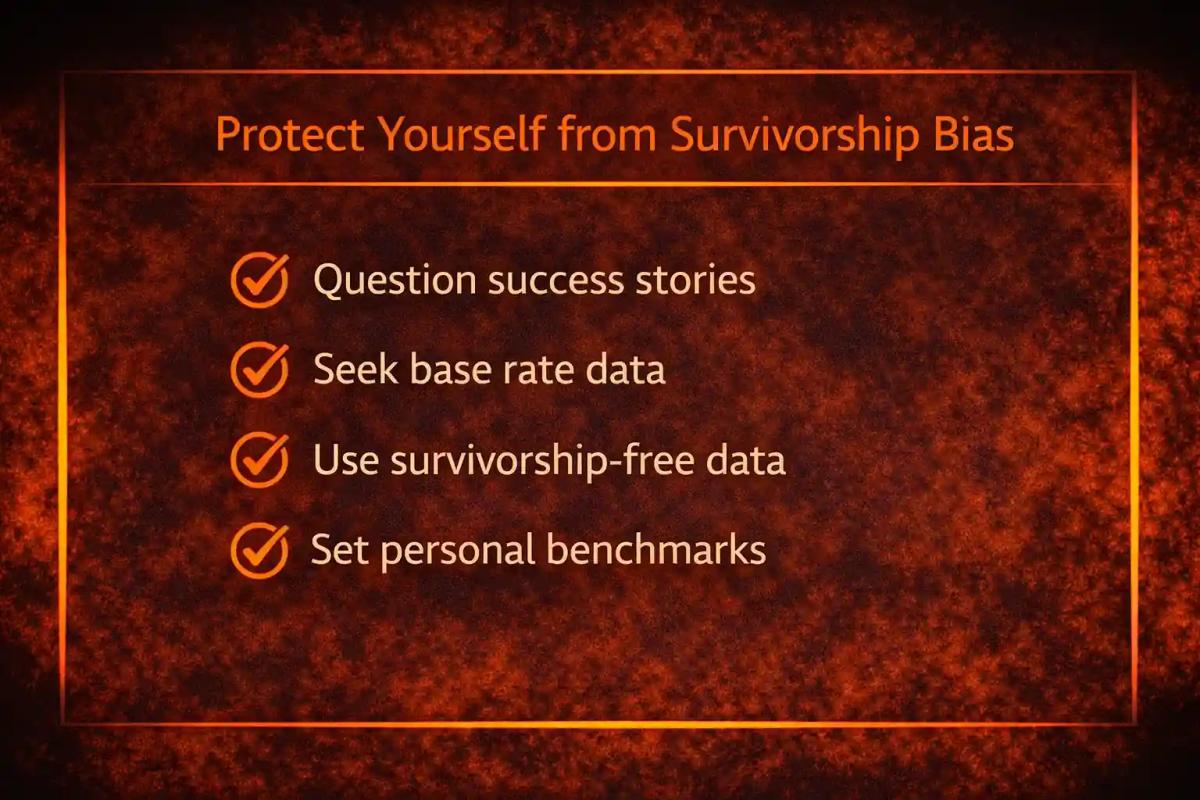
Question Every Success Story You See
Develop the habit of asking a few pointed questions every time you encounter a trading success story:
- What time period does this cover? (A few great months can look like consistent success.)
- What’s the full account history? (Starting capital, total deposits, drawdowns.)
- How many attempts came before this one?
- What’s missing from this story?
You don’t need to investigate every post forensically. Just training yourself to pause and ask “what am I not seeing here?” is often enough to interrupt the bias.
Seek Out Base Rate Data and Failure Statistics
One of the most effective antidotes to survivorship bias is exposing yourself to base rate data: the overall statistics about outcomes in a given population. For trading, this means actively seeking out information about failure rates, average returns, and realistic timelines.
Broker-disclosed data (often required by regulators in various jurisdictions) that shows the percentage of retail accounts that lose money is a solid starting point. Industry research on fund closure rates, strategy decay, and average trader longevity also helps fill in the picture.
The goal is to calibrate your expectations so that your decisions are grounded in reality rather than in a distorted sample.
Evaluate Strategies With Survivorship-Free Data
If you’re backtesting strategies or evaluating historical performance, take the extra step to find out whether the data you’re using includes delisted or failed assets. Some data providers explicitly offer survivorship-bias-free datasets. Others don’t, and you need to ask.
Even if you can’t access perfectly clean data, simply being aware that your backtest results might be inflated by survivorship bias changes how you interpret them. Add a mental discount to any backtest result. Assume real-world performance will fall short of what the historical data suggests.
Set Realistic Personal Benchmarks
Stop measuring your progress against social media highlights. Instead, build your own benchmarks based on where you actually are:
- Track your own equity curve over meaningful time periods (months, not days)
- Compare your results to your own past performance, not to strangers online
- Define success in terms of process (following your plan, managing risk) rather than outcomes alone
- Accept that consistent, modest returns compounding over time is how most sustainable trading wealth is actually built
The traders who last in this game aren’t the ones chasing the biggest single-month returns. They’re the ones who developed realistic expectations, stuck to a process, and survived long enough to compound.
Frequently Asked Questions
What is survivorship bias in simple terms?
Survivorship bias is the tendency to focus on the people or things that "made it" while overlooking all the ones that didn't. In trading, it means you mostly see and hear from winners, which makes success look far more common than it actually is. The failures quietly disappear from view, leaving you with a distorted picture of what's normal.
How does survivorship bias affect which trading strategies I choose?
When you evaluate strategies based on the ones still being talked about or shared, you're only seeing strategies that happened to work, at least for someone, at some point. The strategies that failed aren't being promoted or discussed, so your pool of options is pre-filtered toward apparent winners. This can lead you to adopt approaches that look better on paper than they actually perform in live markets.
Are the statistics about most traders losing money actually reliable?
The commonly cited figures (70-90% of retail traders lose money) come primarily from broker-reported data, often disclosed as part of regulatory requirements. While these numbers are directionally consistent across multiple sources and jurisdictions, they do come with limitations around how "losing" is defined, over what time period, and which account types are included. They're useful as a general reality check, but treat them as approximate ranges rather than precise facts.
How can I tell if a trading success story is influenced by survivorship bias?
Look for what's missing. If a success story only shows recent profits without full account history, doesn't mention previous failures or blown accounts, covers a very short time period, or comes without any discussion of risk or drawdowns, survivorship bias is likely at play. The most credible success stories tend to include the messy parts, not just the wins.
Does survivorship bias exist in prop firm marketing?
Yes. Prop firms naturally highlight their successful funded traders in marketing materials. These stories are typically genuine, but they represent a small fraction of total participants. Pass rates for evaluations, long-term retention rates of funded traders, and the total number of failed attempts rarely receive equal visibility. When evaluating a prop firm, look for transparent data on overall participant outcomes, not just featured testimonials.
What's the connection between survivorship bias and FOMO in trading?
Survivorship bias creates an environment where success looks easy and common. When you're constantly exposed to that distorted view, it triggers fear of missing out. You feel like everyone else is profiting from opportunities you're not taking, which pushes you toward impulsive trades, oversized positions, or jumping into strategies you haven't properly evaluated. Recognizing the bias is one of the most effective ways to reduce FOMO-driven decisions.
What's one thing I can do today to start protecting myself from survivorship bias?
Start with the simplest habit: every time you see a trading success post or performance claim, ask yourself "what am I not seeing?" That single question activates critical thinking and interrupts the automatic assumption that what you're seeing is representative. Over time, it builds into a natural filter that helps you evaluate trading information far more accurately. This article is for educational purposes only and does not constitute financial advice. Trading involves significant risk of loss. Statistics cited regarding trader performance are approximate figures from publicly available broker and regulatory disclosures, and should be understood as general indicators rather than precise measurements.
About the authors


Put this into practice
Related articles
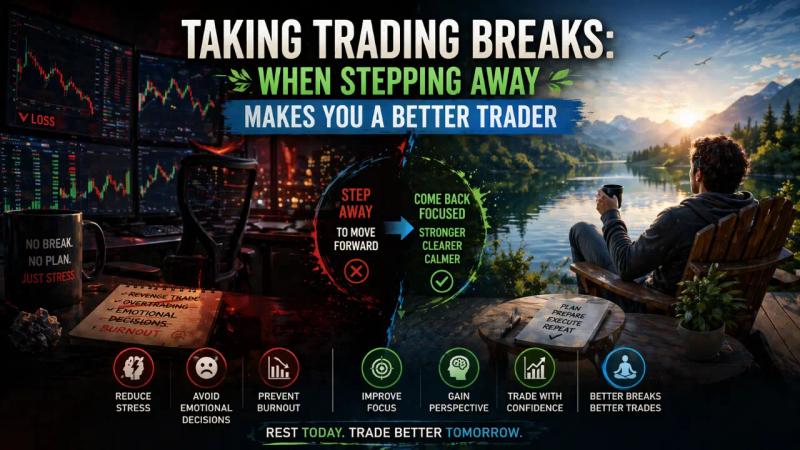
Taking Trading Breaks: When Stepping Away Makes You a Better Trader
Learn when and how taking trading breaks improves your performance. A step-by-step guide to stepping away, resetting, and returning stronger.
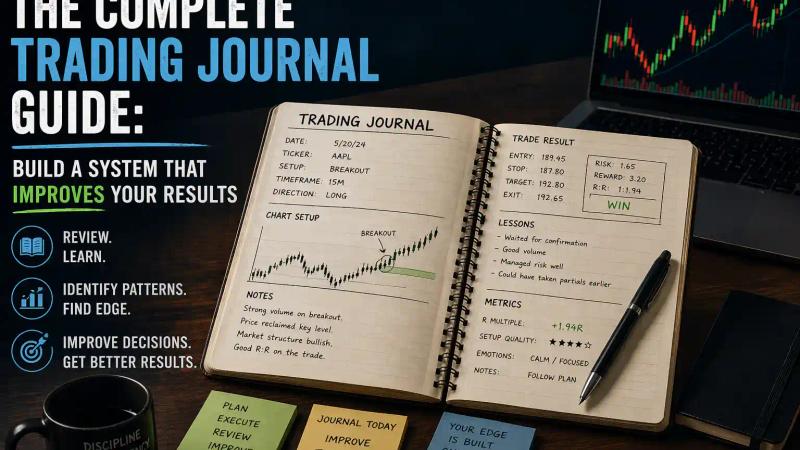
The Complete Trading Journal Guide: Build a System That Improves Your Results
Learn how to build a trading journal that works. What to record, which format to use, and how to run reviews that turn raw data into real performance gains.
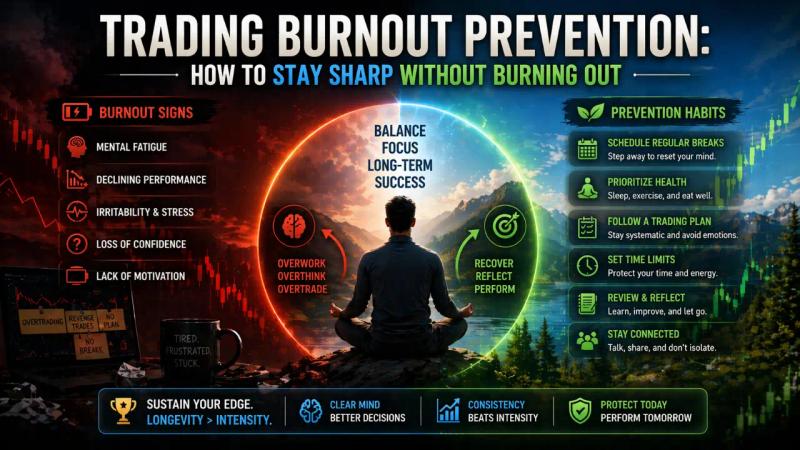
Trading Burnout Prevention: How to Stay Sharp Without Burning Out
Spot trading burnout early, prevent it with proven daily habits, and recover if you're already in the fog. A practical guide for traders at every level.
0 comments