



Why Most Broker Review Sites Can't Be Trusted (And How to Spot the Ones That Can)
Broker review sites have a financial relationship with the brokers they rank, and that relationship shapes results whether they disclose it or not. This article explains exactly how that works, what to watch for when evaluating any review site, and how MonkeyTrade's methodology is built to prevent it.
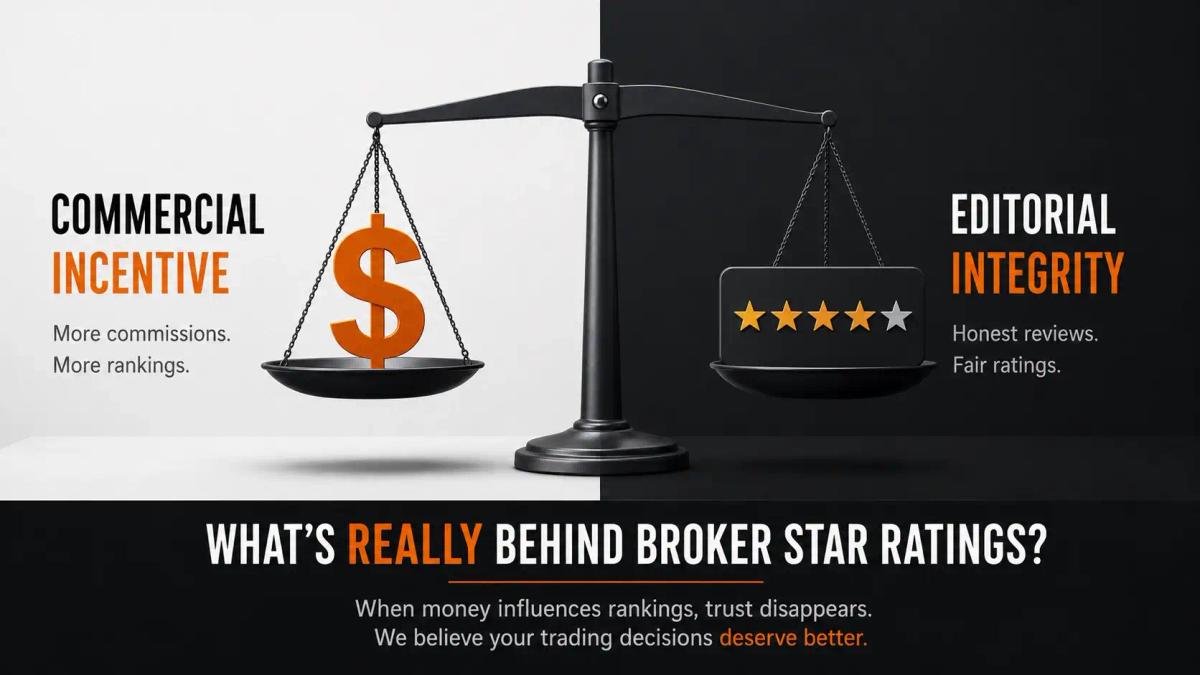
The Business Model Most Review Sites Don't Want to Explain
Most broker review sites make money through affiliate marketing. The model is widespread, and what it does to rankings is the real issue.
How Affiliate Commissions Distort Rankings
When you click a broker link on a review site and open an account, the site typically earns a commission. This is called a CPA (cost per acquisition), and in the forex space, those commissions can be substantial. The broker pays every time the site delivers a new funded trader.
That creates a straightforward incentive problem. The review site's income depends on how many readers click through and convert. The broker paying the highest commission becomes, almost inevitably, the broker the site is most motivated to recommend, regardless of whether it's actually the best option for you.
Affiliate bias doesn't require anyone to make a conscious decision to mislead. A site that consistently ranks a low-paying but excellent broker above a high-paying but mediocre one is leaving money on the table every single day. Most sites, over time, stop doing that.
Pay-to-Rank: When Placement Is Sold as a Score
Some sites go further and operate outright pay-to-rank arrangements. A broker can buy a higher position in a "Best Brokers" list, and the score displayed next to their name reflects what they paid rather than how they performed.
This is different from clearly labelled advertising, which is legitimate. The problem arises when paid placement is presented as independent evaluation: a broker carries a 4.8/5 rating with no indication that the rating was purchased.
The Undisclosed Relationship Problem
The least visible form of affiliate bias is the undisclosed relationship. A site reviews a broker it has a partnership with, assigns a high score, and publishes nothing that tells you a financial relationship exists.
This is where disclosure practices matter most. A site that doesn't tell you which brokers it earns revenue from has made a deliberate choice about what to withhold. That choice is itself informative.
So how do you identify these patterns before you've already acted on a recommendation?
Trade CFDs with a regulated provider from our best forex & CFD brokers list.
Five Red Flags That Signal a Biased Broker Review Site
These five patterns appear consistently wherever commercial relationships are driving the results.
Every Broker Gets 4.5 Stars
Scroll through a site's broker listings. If every single rating sits between 4.3 and 4.8, you're looking at a marketing catalogue with a star filter on top.
In genuinely independent evaluation, some brokers score poorly. Weak platforms, high fees, and slow withdrawals produce low scores, not diplomatic hedging. A site where nothing ever falls below four stars has probably made a policy decision not to publish anything that would upset its commercial partners.
No Methodology Page (or a Vague One)
Any site claiming to produce independent broker ratings should be able to tell you exactly how those ratings are calculated.
- What factors are assessed?
- What weight does each factor carry?
- How many people tested the platform, and for how long?
If a site can't answer those questions in writing, it has an editorial opinion dressed up as data. A methodology page that mentions "fees, platforms, and reputation" without further specifics is functionally equivalent to no methodology page at all.
"Our Top Pick" Rotates by Commission Rate
This one is harder to catch in a single visit, but worth watching over time. If the broker in the top recommended position changes regularly and those changes aren't explained by new testing or data, you're likely watching commission negotiations play out in the rankings.
The top slot on a major review site generates significant traffic. That position has a price, and when the price changes hands, the recommendation tends to follow.
No Negative Reviews Published
Every major broker operating in global retail markets has meaningful weaknesses: spreads that widen around news events, support that's easy to reach but hard to get resolution from, platforms that suit one trading style and frustrate another.
A review site that doesn't surface those weaknesses either hasn't looked hard enough or has looked and chosen not to publish. Neither is reassuring.
Live Account Testing Is Never Mentioned
Reading a broker's own documentation and summarising the features is closer to transcription than evaluation. Real assessment means opening a live account, depositing real funds, executing trades, testing withdrawals, and contacting support with a genuine problem.
If a site's reviews make no reference to live account testing, treat them as marketing copy, because that's largely what they are.
If several of these flags are present on a site you've been relying on, it's worth understanding what a different approach actually looks like.
How MonkeyTrade Reviews Brokers
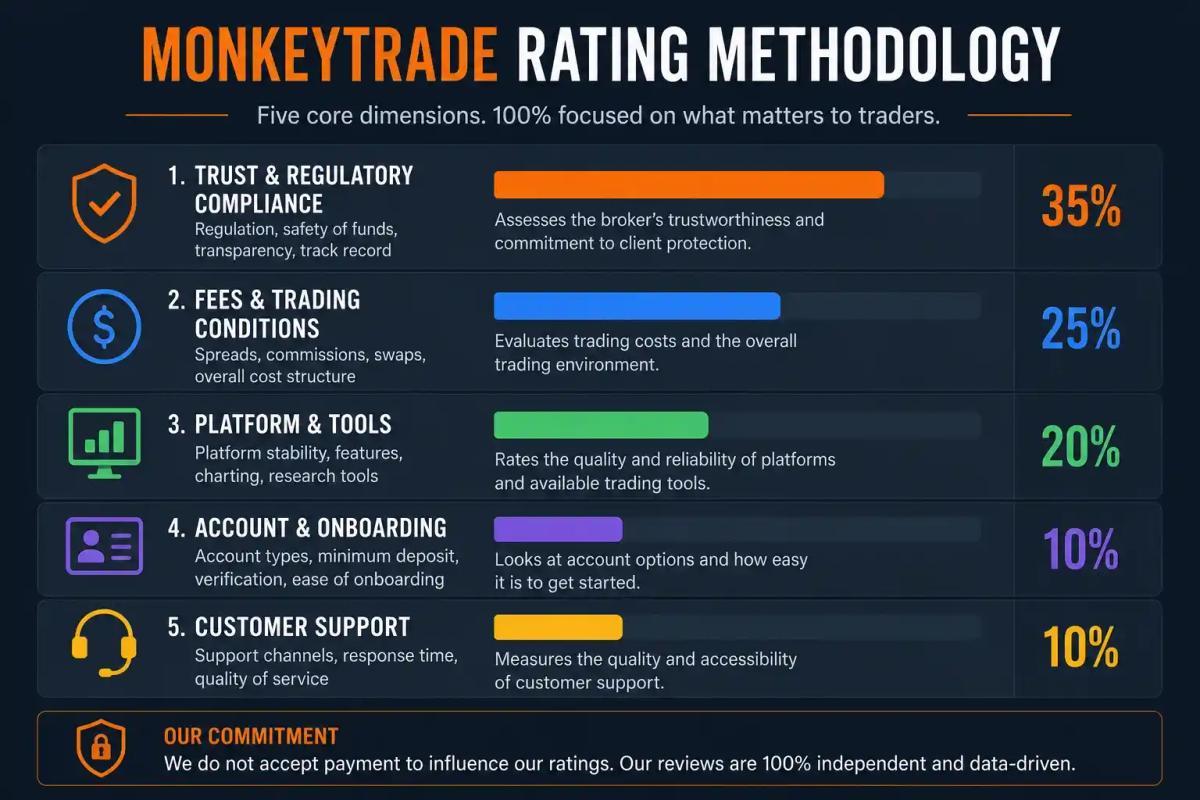
MonkeyTrade's review process runs across two tiers and five rating dimensions. The methodology is published in full, and the weights assigned to each dimension are fixed and not subject to commercial negotiation.
Two Review Tiers: Research and Hands-On
Research Reviews cover brokers where a live account test isn't currently available. These draw on regulatory filings, published fee schedules, platform documentation, and publicly available user data. They're clearly labelled as research-based so you know exactly what you're reading.
Hands-On Reviews involve opening a live account with real funds. The reviewer executes trades, tests platform performance under real market conditions, contacts customer support with genuine queries, and works through the withdrawal process end to end. This is where the meaningful differences between brokers become visible, differences that don't appear in a broker's own marketing materials.
Five Rating Dimensions with Published Weights
Every broker rated by MonkeyTrade is scored across five dimensions:
- Trust and Regulatory Compliance: 35%
- Fees and Trading Conditions: 25%
- Platform and Tools: 20%
- Account and Onboarding: 10%
- Customer Support: 10%
The weighting reflects what matters most to traders making real decisions. Regulatory compliance carries the highest weight because a broker that fails on trust makes every other dimension irrelevant. The weightings are published, applied consistently, and don't change because a broker pays MonkeyTrade.
Commercial Partners Are Listed, Never Scored by Fee
MonkeyTrade has commercial partnerships with some of the brokers it reviews. Clicks and conversions generate revenue. That's the operating reality, and it's disclosed on every listing where it applies.
Broker scores are calculated before any commercial consideration enters the picture. Paid placement, where a partner broker appears higher in a list than their score alone would place them, is labelled on-page as a commercial placement. The distinction between a broker that ranked there editorially and one that paid to be there is always visible.
MonkeyTrade also reviews and rates brokers with no commercial relationship at all. Non-partner brokers appear in rankings based entirely on their scores. If the data says a non-partner broker is the best option for a particular trading style, that's what the ranking reflects.
What Happens When a Partner Gets a Bad Score
This question comes up often enough to deserve a direct answer: a partner broker that scores poorly gets a low rating published. The commercial relationship affects whether they appear in a sponsored placement; it has no bearing on what their score is. A partner with a 3.1 rating doesn't become a 4.4 because they pay MonkeyTrade. If that ever stopped being true, the entire model would stop being worth anything, including to the partners.
How to Verify MonkeyTrade's Independence
Here's how to check MonkeyTrade's methodology against what this article describes.
Check MonkeyTrade's Methodology Page
The methodology page sets out every dimension, every weight, and the process used to generate scores. If anything described in this article contradicts what you find there, that's information worth acting on.
Compare MonkeyTrade's Scores Against Sites You Already Distrust
Take a broker you've seen ranked near the top on a site you've grown sceptical of. Look up MonkeyTrade's score for the same broker. If MonkeyTrade rates them highly too, that's a signal worth weighing. If MonkeyTrade rates them significantly lower, look at the dimension breakdown to understand why, and decide which account you find more credible.
Look for the Labels
On any MonkeyTrade broker listing, paid placements carry a disclosure label. It's there on the page, not buried in a footer. If you're looking at a top-ranked broker and want to know whether that position was earned editorially or purchased commercially, the label tells you.
The Honest Caveat: What No Review Site Can Fully Eliminate
A few genuine limitations worth keeping in mind:
- Snapshot problem. A broker's performance at the time of review may not reflect current conditions. Spreads change, platforms get updated, and support quality shifts. MonkeyTrade re-reviews brokers on a regular schedule, but there will always be a gap between review and reality.
- Sample size. A single live account test, however rigorous, produces one data point. It captures what one reviewer experienced in one market environment. Systematic issues may not surface in every test.
- Commercial gravity. Even with strong structural controls, the presence of commercial partnerships creates ongoing pressure. MonkeyTrade's disclosed model manages that pressure; it doesn't make it disappear. Healthy scepticism, applied even to sources that appear trustworthy, is a reasonable default.
Broker reviews are informational. Nothing on MonkeyTrade constitutes financial advice. A high rating means a broker performed well against the stated criteria. It doesn't mean that broker is the right choice for your specific situation, capital level, or trading approach.
No review site can give you certainty. What a well-structured one can give you is better information than you'd have otherwise, and a methodology transparent enough that you can evaluate it yourself.
About the authors


Put this into practice
Related articles

Why Offshore Forex Brokers Keep Winning Despite the Risks
Regulators warn against offshore brokers. Millions of traders use them anyway. This article breaks down the structural reasons behind their appeal, the protections you forfeit, and how to make an informed decision before you deposit.

Why Tight Spreads Are No Longer Enough to Judge a Forex Broker
Tight spreads are only part of what you pay per trade. Learn how to evaluate forex broker execution quality: fill speed, slippage, routing, and true cost.
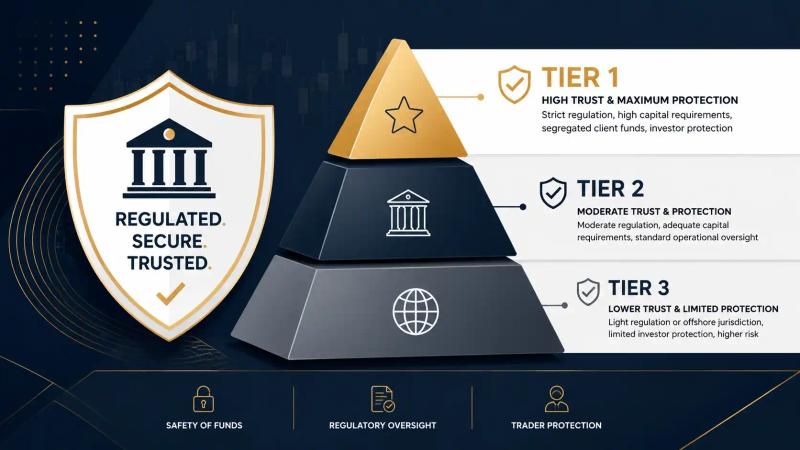
Why Your Broker's Regulation Tier Matters More Than You Think
Learn what Tier 1, Tier 2, and Tier 3 forex broker regulation actually means for your fund protection, compensation rights, and trading safety.
0 comments