



CFD Trading · Beginner · 14 min read
Best Day Trading Platforms: Features, Fees, and Execution Speed Compared
The best day trading platforms combine sub-second order execution, real-time Level 2 data, deep charting, and a regulator you trust. For UK retail traders, that means an FCA-authorised broker capping leverage at 1:30 on major forex, 1:20 on indices, and 1:5 on equities, with crypto CFDs prohibited. Your ideal platform depends on your asset class, jurisdiction, and whether you value desktop depth or mobile speed.
What makes a day trading platform the best fit for your strategy
The right day trading platform is the one that matches your asset class, your jurisdiction, and your typical trade duration. A scalper holding positions for 30 seconds cares about tick data, one-click order entry, and slippage; a swing-intraday trader closing by the London or New York bell cares more about charting depth, alerts, and clean risk management. Before comparing brand names, define what you actually trade and how often, because that filters the platform shortlist far more than any marketing sheet.
Regulation is the second filter, and it is not negotiable. If you live in the UK, the Financial Conduct Authority (FCA) sets binding leverage caps for retail clients: 1:30 on major currency pairs, 1:20 on major indices, 1:10 on commodities other than gold, 1:5 on individual equities, and a prohibition on crypto CFDs. According to the FCA (Policy Statement PS20/10), CFDs on cryptoassets are banned for UK retail consumers. Trading through an offshore entity of the same group to escape those caps is legal for you personally, but it removes Financial Services Compensation Scheme (FSCS) protection.
Speed is the third filter. A 100-millisecond delay between your click and the broker's matching engine is invisible on a daily chart and catastrophic on a one-minute breakout. Direct market access (DMA) platforms and ECN routes (electronic communication network, a system that matches your order against other participants without dealer intervention) generally beat market-maker desks on latency, but they charge commission per side. Understanding the true cost of trading across different execution models helps you weigh latency against commission structure. If your edge relies on capturing the first few pips of a move, latency and slippage matter more than headline spreads.
In short, there isn't one perfect day trading platform. It depends on your preferences and trading style. Find your best-fit day trading platform in under 2 minutes with MonkeyTrade's matchmaking tool.
Compare spreads and regulation across the best CFD brokers.
Platform features day traders rely on: execution, data, and tools
Three features separate a serious day trading platform from a retail app: execution quality, real-time market data, and charting depth.
Execution quality is the combination of latency (the delay between your order and its receipt at the venue), fill quality (whether you get the price you clicked), and slippage on stops. MetaTrader 4 and 5 (MT4, MT5) dominate forex and CFDs because of familiarity and the MQL scripting language for automated strategies. cTrader is a rival platform designed around ECN routing and depth of market visualisation, generally preferred by scalpers and algo traders.
Real-time market data means Level 1 (best bid and offer) as a baseline, but day traders often need Level 2 (the full order book showing size at each price level) and time and sales (a running tape of every executed trade). Level 2 is standard on equity-focused platforms like Interactive Brokers Trader Workstation and IG's ProRealTime, and available as a paid add-on on many CFD platforms. For pure forex, Level 2 is less useful because the market is fragmented across liquidity providers; VWAP (volume-weighted average price, the average price weighted by traded volume) and tick charts substitute for it.
Charting is where platforms diverge sharply. Technical analysis tools like TradingView, embedded in many broker front-ends, offer over 100 built-in indicators, a Pine Script language for custom studies, and multi-timeframe layouts. MT5 provides its own indicator library and the MQL5 marketplace. Native broker terminals from IG, Saxo, and Interactive Brokers typically bundle proprietary charting that is functional but less extensible.
| Platform | Typical use | Strength | Weakness |
|---|---|---|---|
| MT4 | Forex, CFDs | Ubiquitous, huge EA library | Aging interface, limited timeframes |
| MT5 | Forex, CFDs, futures | Modern, more timeframes, MQL5 | Fewer third-party indicators than MT4 |
| cTrader | Forex ECN, scalping | Depth of market, low latency | Smaller broker roster |
| TradingView | Charting layer | Best-in-class charts, community scripts | Broker integration varies |
| Trader Workstation | Multi-asset pros | Level 2, global markets, DMA | Steep learning curve |
Risk tools are the fourth pillar. Stop loss (an order that closes your position at a preset adverse price), take profit (the mirror at a favourable price), trailing stops, and one-cancels-the-other (OCO) brackets should all be available at order entry, not buried in menus. Position sizing and stop placement are core to managing risk per trade; if you have to click three times to attach a stop, you will forget once, and that once will be expensive.
Regulatory compliance and leverage caps by jurisdiction
Regulation dictates which platforms you can legally use, what leverage you can access, and what recourse you have when something breaks. In the United Kingdom, the FCA regulates retail CFD and forex brokers under conduct rules that align closely with the European Securities and Markets Authority (ESMA) 2018 product intervention measures. According to the FCA, retail clients receive leverage caps of 30:1 on major forex pairs, 20:1 on major indices and gold, 10:1 on other commodities, 5:1 on individual equities, and 2:1 on cryptoassets (which are separately banned as CFDs for UK retail).
FCA, 2020: The FCA prohibited the sale, marketing and distribution of CFDs referencing cryptoassets to retail consumers in the UK from 6 January 2021, citing extreme price volatility and inadequate valuation basis.
In the United States, day trading equities is governed by the Financial Industry Regulatory Authority (FINRA) pattern day trader rule. According to FINRA Rule 4210, an account executing four or more day trades within five business days is flagged as a pattern day trader and must maintain a minimum equity of $25,000 at all times in a margin account. Fall below and the account is restricted to closing trades only until the balance is restored. US forex is separately regulated by the Commodity Futures Trading Commission (CFTC) and the National Futures Association (NFA), with a 50:1 cap on major pairs and 20:1 on minors.
Offshore entities in Cyprus, Mauritius, Saint Vincent, or Seychelles offer higher leverage, sometimes 1:500 or 1:1000, but the trade-off is real. An offshore licence typically does not carry deposit compensation (the FSCS in the UK covers eligible claims up to £85,000 per person per firm; the equivalent Cyprus Investor Compensation Fund covers up to €20,000). Counterparty risk means if the broker becomes insolvent or freezes withdrawals, your legal route runs through a jurisdiction that may be slow, costly, or effectively closed to overseas claimants. Note which group entity onboards you: an FCA-authorised UK entity is the gold tier; a Mauritius or Seychelles entity of the same brand is flagged.
Fee structure: commissions, spreads, and overnight holding costs

Day trading costs fall into three buckets, and comparing only one of them will mislead you. Commissions are direct charges per trade, ranging from £0 on many CFD accounts to around £5 to £10 per round-turn on equity trades with full-service brokers. Spreads are the difference between the bid and offer price, expressed in pips (a pip is the fourth decimal on most currency pairs, or the second decimal on JPY pairs). Overnight financing, also called swap or rollover, is charged when you hold a position past 22:00 UK time, based on the interest rate differential between the two currencies or the underlying asset's benchmark rate.
The honest comparison is total cost per round-turn, at your typical position size. A zero-commission CFD platform quoting 1.4 pips on EUR/USD costs you $14 on a standard lot ($100,000 notional). A commission-based ECN account charging $7 round-turn but delivering a 0.2 pip spread costs $2 in spread plus $7 in commission, so $9 total. The commission account is cheaper if you trade major pairs at London or New York liquidity; the fixed-spread account may win on exotic pairs or during illiquid Asian hours. Test on a demo account with your actual strategy, not on the front-page marketing example.
| Cost component | Typical CFD platform | Typical ECN forex | Equity DMA broker |
|---|---|---|---|
| Commission per round-turn (major forex) | $0 | $6 to $8 per standard lot | Not applicable |
| EUR/USD typical spread | 0.8 to 1.5 pips | 0.0 to 0.3 pips | Not applicable |
| UK equity commission | £0 to £10 per trade | Not applicable | £3 to £8 per trade |
| Overnight swap (long EUR/USD) | Variable, often 2 to 4% p.a. | Variable, tighter | Margin interest, benchmark plus spread |
| Inactivity fee | £10 to £18 per month after 6 to 12 months idle | Rare | Sometimes |
Overnight financing is the silent killer of longer-hold intraday positions. If you occasionally let a trade run into the evening rollover, a 3% annualised swap on a $100,000 position is roughly $8 per night: negligible once, corrosive if it becomes habit. Understanding leverage trading mistakes including swap costs and over-leveraging helps you avoid the compounding cost of holding positions overnight. Some platforms publish transparent swap rates per instrument; others bury them in contract specifications. Read them before you fund the account.
Beginner-friendly platforms versus professional-grade terminals
Beginner-oriented platforms optimise for one thing: getting you to your first trade without confusion. eToro, Plus500, Trading 212, and Revolut offer stripped-down interfaces with one-click entry, preset stop and target templates, and mobile-first design. The trade-off is control: you often cannot set custom order types, cannot see the full order book, and cannot script automated strategies. For a trader in the first three months, that constraint is a feature, not a bug: fewer knobs to turn means fewer catastrophic clicks.
Professional-grade terminals demand a learning investment measured in weeks, not hours. Interactive Brokers Trader Workstation exposes global market access, dozens of order types (including adaptive algos that split large orders across venues), Level 2 depth, and a Python API for custom automation. MetaTrader 5 offers built-in strategy testing, the MQL5 language for expert advisors (EAs, automated trading programs), and multi-asset support. cTrader Automate provides a C# algorithmic framework. The day trading complete guide covers how to validate an edge and reduce execution friction; these platforms reward the trader who has already done that work and punish the trader who is still guessing entry rules.
A sensible progression is to start on a demo account with a beginner platform to learn order mechanics, then open a small live account on the same platform to feel real slippage and psychological pressure, and only migrate to a professional terminal once your strategy is written down and back-tested. Skipping the middle step, going from demo directly to Trader Workstation live, is the most common expensive error.
The best day trading platform for you will depend on your preferences and trading style. Find your best-fit day trading platform in under 2 minutes with MonkeyTrade's matchmaking tool.
Mobile and desktop availability: trading on the go versus stationary setup
Every credible day trading platform offers both a desktop client and a mobile app, but they are rarely equivalent. Desktop remains the workhorse for structured intraday work: multiple monitors for charts, news, and depth; hotkeys for order entry; and stable network conditions. Mobile is optimised for monitoring open positions, adjusting stops, and taking a single high-conviction setup when you are away from your desk. Treating mobile as your primary day trading environment is the trap: the small screen encourages truncated analysis and one-tap impulsive entries.
Execution quality can differ between the two. Some brokers route mobile orders through a separate gateway with slightly higher latency; others use the same infrastructure. Ask, or test by placing identical demo orders from each and comparing time stamps. Push notification reliability is worth checking too: a price alert that arrives four minutes late is worse than no alert at all, because it teaches you to trust something unreliable.
| Task | Desktop | Mobile |
|---|---|---|
| Multi-timeframe chart analysis | Strong | Weak |
| One-click entry with preset stops | Strong | Strong |
| Scanning multiple instruments | Strong | Limited |
| Adjusting existing positions | Strong | Strong |
| Backtesting and strategy replay | Strong | Absent on most apps |
| Fast reaction to news alerts | Strong | Strong |
If your day trading window overlaps with commuting or work commitments, use mobile for defensive adjustments (moving a stop to break-even, closing on a target) and reserve fresh entries for desktop sessions. That single rule prevents most mobile-driven losses.
Risk management tools and demo accounts: practice before you trade live
Every serious platform provides a demo account with virtual capital that mirrors live pricing and execution. Use it to answer three questions before funding real money: does the platform execute in the way you expect, does your strategy survive real-time volatility rather than backtest averages, and can you follow your own rules under simulated pressure. A demo cannot replicate the emotional weight of real losses, but it does expose interface friction that will cost you when it matters.
Core risk tools should include hard stop losses (executed when price touches the level), guaranteed stops (which fill at your exact price for an extra premium, useful around scheduled news), OCO brackets, and position size calculators that translate a percentage account risk into a lot size given your stop distance. A drawdown (the peak-to-trough decline in your equity curve before a new peak) alert that pings you when you hit a preset daily loss limit is one of the most underrated features on any platform: it externalises a discipline rule that you will otherwise talk yourself out of enforcing.
Backtesting is the next layer. MT5 Strategy Tester, cTrader's back-testing engine, and TradingView's Strategy Tester let you replay a coded strategy against historical data. The output includes win rate, profit factor, maximum drawdown, and Sharpe ratio (a risk-adjusted return metric). Two warnings apply. First, backtest results assume ideal execution; live slippage and spread widening will degrade them, sometimes by 30% or more. Second, over-optimising parameters to fit historical data (curve fitting) produces a strategy that looks brilliant in the past and fails immediately in live trading. Cross-validate on out-of-sample data and, if possible, forward-test on a demo for at least a month before going live.
Psychological discipline and emotional control in day trading
The best day trading platform in the world cannot save a trader who cannot control their own behaviour, and this is the gap most platform comparisons ignore. Overtrading after a loss, revenge trading to "win back" money, abandoning a written plan mid-session, and doubling position size after a winning streak are the four behaviours that empty accounts. According to ESMA (2018 product intervention analysis), between 74 and 89% of retail investor accounts lose money when trading CFDs, and post-intervention updates from national regulators including the FCA continue to report loss rates in a similar band. The platform is a small factor; the trader's process is a large one.
Platform design can either support or undermine discipline. Features that support it include: mandatory bracket orders (stop and target set at entry, not later), maximum daily loss limits that auto-disable trading, cooling-off timers after a loss, and trade journals that log entry rationale next to outcome. Features that undermine it include: infinite one-click re-entry, dark patterns that surface leverage sliders on every order screen, and gamified interfaces with confetti animations on winning trades. If a platform feels like a mobile game, it is designed to maximise your activity, not your outcome.
A practical discipline stack looks like this. Write a one-page trading plan specifying instruments, session times, setup criteria, position sizing rule, daily loss limit, and daily profit target. Configure the platform to enforce the daily loss limit automatically where possible. Journal every trade with entry reason, exit reason, and emotional state in three words. Review the journal weekly for patterns: are your losses concentrated on Fridays, after news, or during the first hour. This is the work that separates the traders who last twelve months from the ones who don't, and it happens outside the platform's charting window.
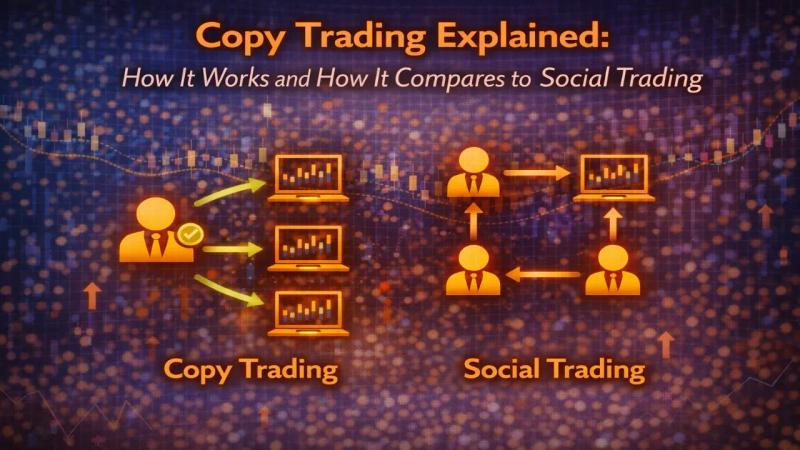
Community features can help or harm depending on how you use them. Copy trading and social feeds encourage herd behaviour and short-horizon thinking; structured mentorship or peer accountability groups, where you commit to sharing your journal weekly, tend to improve discipline. Choose intentionally.
Find your best-fit day trading platform in under 2 minutes with MonkeyTrade's matchmaking tool.
Frequently Asked Questions
What is the minimum account balance required to day trade on the best platforms?
In the United States, FINRA Rule 4210 requires a minimum equity of $25,000 in a margin account for pattern day traders (four or more day trades within five business days). In the UK and EU there is no equivalent statutory minimum, and CFD accounts can be opened with £100 or less, but a realistic working capital floor for day trading with proper 1% per-trade risk is closer to £2,000 to £5,000.
Can I day trade on a UK-regulated platform with leverage, and what are the FCA limits?
Yes. FCA-authorised brokers offer leverage to UK retail clients within capped ranges: 30:1 on major forex pairs, 20:1 on major indices and gold, 10:1 on other commodities and minor indices, 5:1 on individual equities, and 2:1 on non-major cryptoassets, though CFDs on cryptoassets are prohibited for UK retail entirely. Professional client status unlocks higher leverage but requires meeting FCA qualification criteria and forfeits certain retail protections.
Which day trading platform has the fastest execution and lowest latency?
Latency depends more on the broker's infrastructure and your connection than on the platform brand. That said, cTrader with an ECN broker and Interactive Brokers Trader Workstation are widely regarded as low-latency options for retail traders. MT4 and MT5 latency is dominated by the broker's server location and dealer intervention model. If latency is critical, ask the broker for their average execution speed disclosure and test on a demo before funding.
Do I need to pay tax on day trading profits, and does my platform report to HMRC?
For UK residents, day trading profits are generally taxable. HMRC typically treats CFD and forex profits as capital gains (subject to the annual CGT allowance and prevailing CGT rates), but frequent, systematic trading can be reassessed as trading income taxed at income tax rates. Spread betting is currently tax-free for UK residents but is not available to professional traders in all cases. UK brokers do not usually withhold tax but may report account information under CRS. Consult a qualified tax adviser for your specific circumstances.
How do I backtest and validate a day trading strategy before risking real capital?
Use the platform's built-in tester (MT5 Strategy Tester, cTrader back-testing, TradingView Strategy Tester) to run your coded rules against historical data, then evaluate win rate, profit factor, and maximum drawdown. Cross-validate on out-of-sample data (a period the strategy was not optimised on) to detect curve fitting. Finally, forward-test on a demo account for at least four weeks under live market conditions before committing real capital, because backtest results routinely overstate live performance by 20 to 40%.
About the authors


Put this into practice
Brokers we have reviewed
Scored on the same five dimensions. Here are three of them — the full list is on the brokers page.



Related articles
Copy Trading Explained: How It Works and How It Compares to Social Trading
Copy trading explained: learn how copy trading works, how it compares to social trading, and which model fits your goals. Real risks and honest trade-offs.

Day Trading Complete Guide: Strategies, Indicators, and Tips for Beginners
Day Trading Complete Guide: Learn how day trading works with proven strategies, key indicators, stock screening and risk management tips for beginners.

Forex Broker Comparison Metrics to Look Out For
0 comments