



Trading Basics · Beginner · 10 min read
Leverage Trading Mistakes: How to Avoid Blowing Your Account
Leverage trading mistakes happen when you use borrowed capital to inflate position size beyond your risk tolerance, your strategy edge or the regulator's caps, leading to rapid drawdowns and forced liquidation. The core error is treating leverage as a profit multiplier rather than what it is: a two-way amplifier of gains and losses. Fix them and leverage becomes a tool you control.
What Are Leverage Trading Mistakes and Why They Matter
Leverage (borrowed capital that lets you control a position larger than your deposit) is neutral: your errors around it are what damage the account.
Leverage trading mistakes cluster into four groups: sizing positions too large for the stop distance, ignoring regulatory caps set for retail protection, misunderstanding how margin calls trigger forced liquidation, and letting emotion override the plan after a win or loss streak. According to the FCA's 2022 CFD market review, the majority of UK retail CFD clients lost money over the period studied, and losses concentrated in accounts using the highest available leverage.
Getting leverage wrong is the single fastest way to convert a viable strategy into a blown account. This guide breaks each mistake into the mechanic behind it, the numbers that matter, and the concrete fix a retail trader can apply on MT4, MT5 or cTrader today.
FCA, 2022: A review of the UK CFD market found that most retail clients using leveraged CFDs lost money over the period examined, with losses concentrated in accounts trading at the highest permitted leverage.
Before your first trade, choose a regulated broker from our best forex brokers list.
Overleveraging: The Most Common Mistake
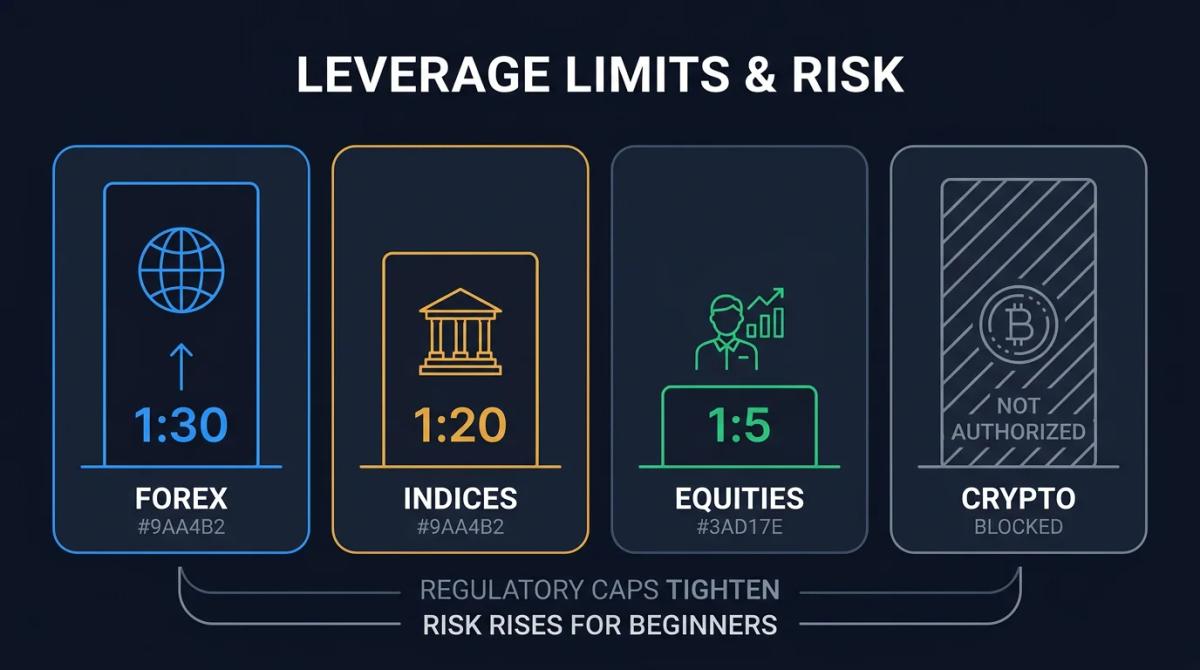
Overleveraging means committing more borrowed capital than your account size, strategy edge or emotional bandwidth can sustain. It is usually driven by a specific fantasy: turning a $500 deposit into a $5,000 account in a few weeks.
If you open a position with 1:30 leverage on a major forex pair and the market moves 1% against you, the loss on the notional is 30% of your margin. Two such moves in a row and half the account is gone before the strategy has had time to prove itself.
The error is in failing to calculate position size from the stop-loss distance backwards. Professional risk sizing starts with 'how much am I willing to lose on this trade' (typically 1-2% of equity), then derives lot size from the pip distance to the stop. Retail traders reverse this: they pick a lot size that looks profitable, then set a stop wherever leaves room to breathe. The result is oversized positions that cannot survive normal market noise.
| Account size | Risk per trade (1%) | Stop distance | Correct position size |
|---|---|---|---|
| $1,000 | $10 | 20 pips | 0.05 lots (mini) |
| $5,000 | $50 | 30 pips | 0.16 lots |
| $10,000 | $100 | 25 pips | 0.40 lots |
| $25,000 | $250 | 40 pips | 0.62 lots |
The table shows what a disciplined 1% risk model actually looks like at retail account sizes. The lots are smaller than most beginners expect, which is precisely the point.
Ignoring Regulatory Leverage Caps by Asset Class
Regulatory leverage caps exist because retail traders consistently used higher leverage than they could handle. For UK retail clients, the FCA aligns with the ESMA framework introduced in 2018 and enforces the following maximum leverage by asset class: 1:30 on major forex pairs, 1:20 on major indices and gold, 1:10 on non-major indices and commodities, 1:5 on individual equities, and 1:2 on cryptocurrencies. The FCA went further than ESMA on crypto: since January 2021, the sale of crypto derivatives (including CFDs) to UK retail consumers is prohibited.
Jurisdiction matters. ASIC in Australia adopted similar caps in 2021, while the US CFTC and NFA limit retail forex leverage to 1:50 on majors and 1:20 on minors. A broker offering UK residents 1:500 on forex is almost certainly onboarding you through an offshore entity outside FCA supervision, which strips away the Financial Services Compensation Scheme cover and the FCA's client money rules. Understanding the regulatory landscape for crypto trading is especially important for UK retail clients, since CFDs on crypto are prohibited.
| Regulator | Major forex | Indices | Equities | Crypto (retail) |
|---|---|---|---|---|
| FCA (UK) | 1:30 | 1:20 | 1:5 | Prohibited |
| ESMA (EU) | 1:30 | 1:20 | 1:5 | 1:2 |
| ASIC (AU) | 1:30 | 1:20 | 1:5 | 1:2 |
| CFTC/NFA (US) | 1:50 | n/a (SEC) | Reg T 1:2 | Restricted |
Before opening an account, check the entity on the contract, not the marketing site.
Failing to Use Stop-Loss Orders and Position Sizing
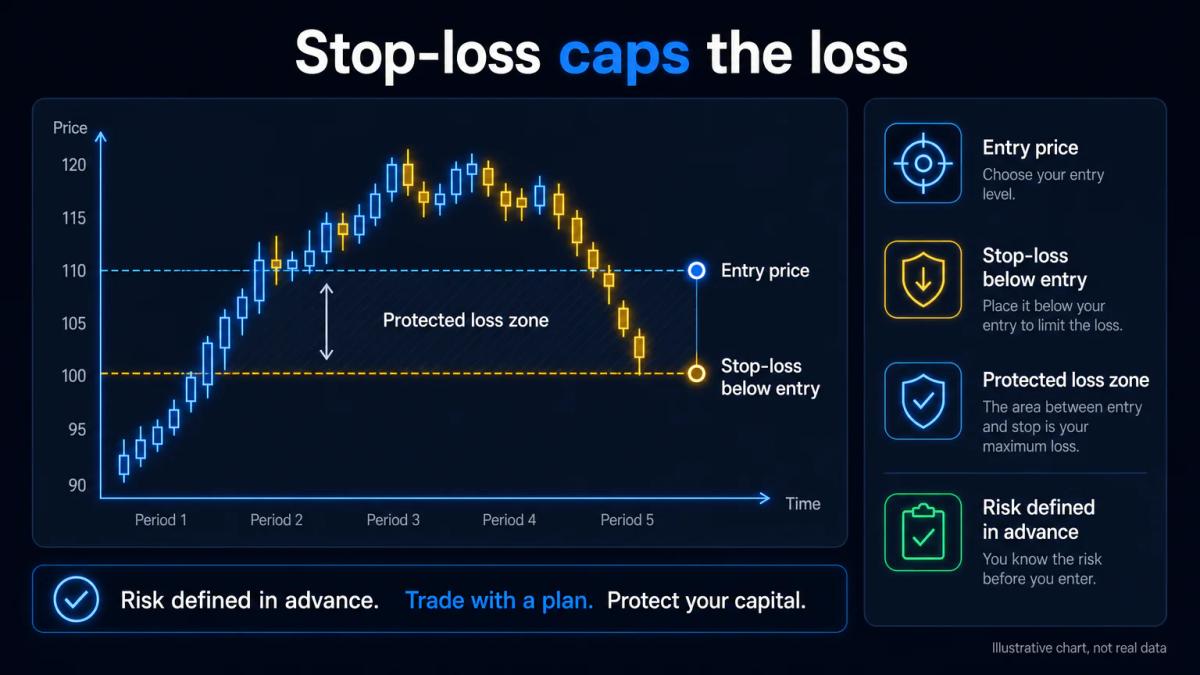
A stop-loss (an instruction that closes the position automatically once price reaches a preset level) is the single mechanical defence against catastrophic loss on a leveraged trade. Without one, an adverse gap can burn through your margin and, on some accounts without negative balance protection, leave you owing the broker. The FCA requires negative balance protection for UK retail clients on CFDs, but that is a floor, not a strategy.
Proper position sizing derives lot size from three inputs: account equity, percentage risk per trade (1% is conservative, 2% is aggressive) and the distance from entry to stop. If your $5,000 account risks 1% per trade ($50) and your stop is 25 pips away on EUR/USD (where one pip on a standard lot is roughly $10), your position size is $50 / (25 × $10 per lot) = 0.20 lots. Anything larger is overleveraging by definition, regardless of what the broker's maximum leverage allows.
A common failure mode: retail traders place the stop at a round number, or 'where it looks safe', rather than at a level derived from market structure (below a swing low, beyond a volatility band measured by the ATR indicator). The stop then either triggers on noise or sits too far away to size the trade properly. Fix the stop logic first; position size follows.
Margin Calls and Forced Liquidation: How They Happen
A margin call is triggered when your account equity falls below the maintenance margin requirement, which is the minimum equity your broker demands to keep positions open. Most retail brokers under FCA and ESMA rules apply a 50% margin close-out rule: when equity drops to 50% of the initial margin required to open your positions, the broker automatically closes trades until equity is restored. Under ESMA's 2018 measures this close-out is applied on a per-account basis for retail clients.
The sequence matters. You open a position; the broker locks initial margin. As price moves against you, unrealised losses reduce equity. When equity divided by used margin (the margin level, expressed as a percentage) hits the close-out threshold, positions are liquidated at market, often at the worst possible price during a volatile move. You do not choose which trade closes first: the broker's engine does.
Avoiding forced liquidation is procedural. Monitor margin level in the platform's account panel (MT4, MT5 and cTrader all display it live). Set alerts at 200% and 150% so you act before the 50% threshold. Never fund an account at exactly the initial margin: keep at least 3x the margin required as buffer, so normal drawdowns do not trigger close-out.
Emotional Decision-Making and Overconfidence with Leverage
Leverage amplifies emotion because it amplifies the pound value of every price tick. A 20-pip move on a 0.10 lot EUR/USD trade is roughly $20; the same move on 1.0 lot is $200. The chart is identical, but the second trader's heart rate is not. Fear closes winning trades too early; greed holds losers past the stop; overconfidence after three wins in a row pushes the next lot size up beyond the risk plan.
The overconfidence cycle is well documented in behavioural finance. Kahneman and Tversky's work on prospect theory (1979) shows that traders weight losses roughly twice as heavily as equivalent gains, which explains why leveraged losers hold and leveraged winners get cut. The retail-specific twist: after a winning streak, traders often silently increase leverage without updating the risk plan, so the next loss is arithmetically larger than any previous one.
Countermeasures are procedural. Pre-commit position size in a written trade plan before the session. Use fixed-fractional sizing (always 1% of current equity) so wins increase size linearly rather than exponentially. And log every trade with the emotion you felt at entry and exit: patterns of fear-cut and greed-hold become obvious within thirty trades.
Backtesting and Paper Trading to Prevent Leverage Mistakes
Backtesting (running your strategy over historical price data to measure how it would have performed) and paper trading (executing the strategy in real time on a demo account) are the two cheapest ways to catch leverage mistakes before real money is at risk. Most retail traders skip both because live trading feels more exciting; the cost of that impatience shows up in the first month of the funded account.
A useful backtest for leverage decisions is not 'did the strategy make money'. It is 'what was the maximum drawdown, and would my leverage and margin buffer have survived it'. Run at least 200 historical trades on your strategy at the exact position sizing rule you intend to use live. If the worst peak-to-trough drawdown exceeds 20% of the demo balance, either the strategy or the leverage is too aggressive for real capital. Learning day trading strategies and how to execute them can help you understand the mechanics of position management under real-time conditions.
Paper trading adds the missing ingredient: execution friction. Slippage (the difference between expected and filled price), spread widening around news, and platform latency all erode the theoretical edge. Run the demo for at least a month at realistic leverage (whatever cap the FCA entity you plan to use imposes), and treat the demo balance as if it were funded. Traders who cannot follow the rules on a demo will not follow them on live capital.
Recovery and Risk Management After Losses
After a leveraged loss, the dangerous impulse is revenge trading: doubling position size to recover in one trade what took five to lose. It compounds the damage because the recovery trade is placed under emotional load, without a plan, and usually with leverage nudged up. The pattern is so consistent that experienced trading coaches treat it as a defining marker of an under-managed account.
Effective recovery is boring and slow. Stop trading for at least 24 hours after any loss that exceeds 2x your normal per-trade risk. Open the trade log and classify the loss: was it a strategy failure (the setup was wrong), an execution failure (you sized it wrong or moved the stop), or a market event (news gap). Only execution failures require behaviour change; strategy failures require research, and market events require better filters.
When you return, halve position size for the next ten trades regardless of confidence. This is a rebuild of the feedback loop between plan and execution. Once the ten trades close with the sizing rule intact, return to normal size. The traders who survive their first serious drawdown are almost always the ones who accepted a slow recovery instead of forcing a fast one.
ESMA, 2018: The product intervention measures for CFDs introduced leverage caps by asset class, a 50% margin close-out rule per account, negative balance protection for retail clients, and standardised risk warnings across the EU.
Frequently Asked Questions
What is the safest leverage ratio for a retail trader starting out?
For a beginner on an FCA-regulated account, effective leverage of 1:5 to 1:10 on major forex pairs is a defensible starting point, well below the 1:30 regulatory cap. The safe ratio is not a fixed number but the one that keeps risk per trade at 1% of equity given your typical stop distance. Start smaller than the cap allows and scale up only after 100 logged trades show consistent discipline.
How do I calculate the correct position size to avoid overleveraging?
Take your account equity, multiply by your risk percentage (1-2%), then divide by the pip distance to your stop times the pip value per lot. For a $5,000 account risking 1% ($50) with a 25 pip stop on EUR/USD, position size is $50 / (25 x $10) = 0.20 lots. Never size up because leverage lets you; size from the stop backwards.
What happens if my broker goes bankrupt while I have a leveraged position open?
If the broker is FCA-authorised and holds client money in segregated accounts, the Financial Services Compensation Scheme (FSCS) covers eligible claims up to £85,000 per person. Open positions are typically closed by an administrator at prevailing market prices. Offshore-regulated brokers usually offer no equivalent cover, which is one of the strongest arguments for using an FCA-authorised entity.
Can I recover from a margin call, and how long does it take?
Yes, if the account still holds equity after forced liquidation. Recovery time depends on remaining capital and strategy realism; halving position size for the next ten trades is the standard rebuild protocol. Traders often recover the account within three to six months if they identify the execution error and enforce discipline. Traders who revenge-trade rarely recover at all.
Which asset classes allow the highest leverage under FCA rules for UK traders?
Under FCA rules, major forex pairs allow the highest retail leverage at 1:30. Major indices and gold are capped at 1:20, non-major indices and commodities at 1:10, individual equities at 1:5, and cryptocurrency CFDs are prohibited entirely for UK retail clients since January 2021. Professional clients (a separate FCA classification with strict criteria) can access higher leverage.
About the authors


Put this into practice
Brokers we have reviewed
Scored on the same five dimensions. Here are three of them — the full list is on the brokers page.



Related articles

MT4 vs MT5: Which Platform Should You Actually Use?
MT4 vs MT5: compare platforms by trading style, EA compatibility, and asset class to choose the right MetaTrader for you.
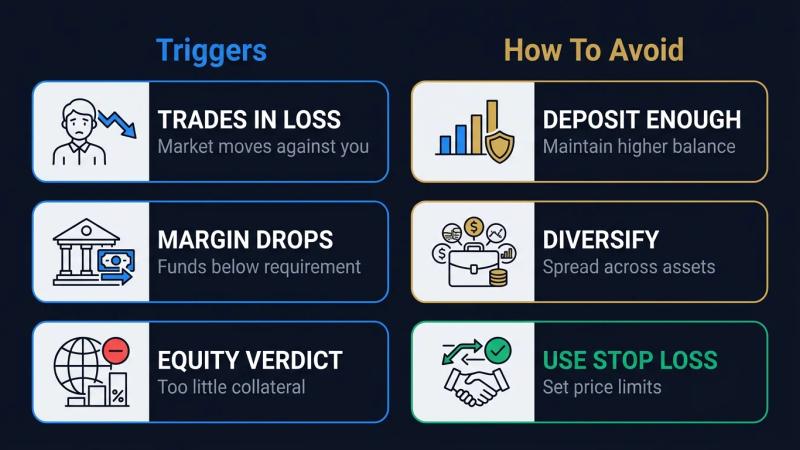
Margin Call Explained: What Triggers It and How to Avoid It
A margin call is your broker's demand for more equity when leveraged losses eat into your account. Here is how it works, why it happens, and how to avoid one.
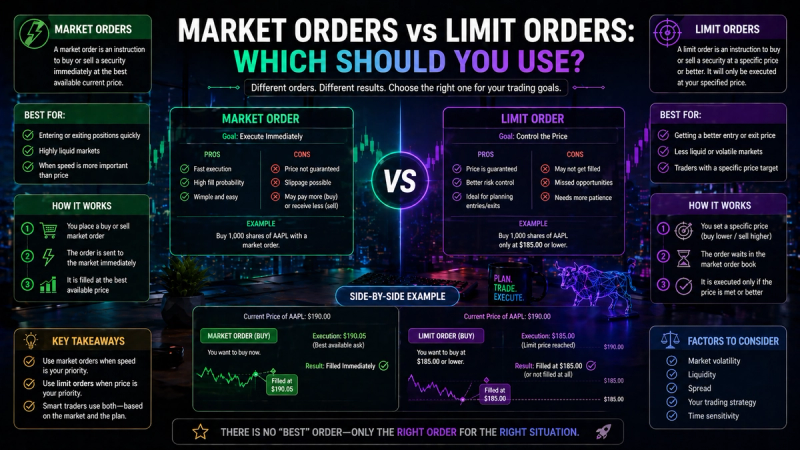
Market Orders vs Limit Orders: Which Should You Use?
Learn the key differences between market orders vs limit orders, when to use each, and how to avoid common mistakes that cost beginners real money
0 comments