



Trading Basics · Beginner · 11 min read
Margin Call Explained: What Triggers It and How to Avoid It
A margin call is a formal demand from your broker to deposit additional funds or close positions because your account equity has dropped below the maintenance margin requirement. It happens when leveraged losses erode the cushion the broker requires you to hold. If you ignore it, positions are liquidated automatically to protect the broker from further loss.
What is a margin call and how does it work
A margin call is triggered when your account equity, the cash plus or minus open profit and loss, falls below the maintenance margin, the minimum percentage of the position value your broker requires you to keep as collateral. When you trade on leverage, borrowed capital used to control a larger position, the broker effectively lends you exposure and holds your deposit as security. The moment losses shrink your equity below that threshold, the broker asks you to top up or reduce risk.
Mechanically, most retail platforms track two numbers in real time: used margin (locked collateral) and free margin (equity minus used margin). Margin level, expressed as equity divided by used margin, is the ratio you should watch. A common convention across MT4, MT5 and cTrader is a margin call at 100% margin level and a stop out, the forced closure of positions, between 20% and 50%. Different brokers publish different thresholds, and offshore venues often run tighter or looser rules than FCA-regulated firms.
Here is the key mental model: your broker is not your partner in the trade. It is a counterparty whose priority is that your losses do not exceed your deposit. The margin call is the mechanism that keeps that promise. Understanding this framing changes how you size positions, because the broker's tolerance for your drawdown is finite and mechanical, not judgemental.
Ready to start? See our pick of the best forex brokers for beginners.
What triggers a margin call
A margin call is triggered when your used margin exceeds your available equity, or when equity falls below the broker's stated maintenance threshold. Three practical drivers dominate: sharp adverse price moves, overnight gaps that jump past your stop loss, and a widening spread (the gap between bid and ask prices) that inflates the mark-to-market loss on your open positions. Any one of them can push margin level below 100%.
Leverage amplifies each driver. A 1:30 position on GBP/USD moves 30 times faster against your equity than an unleveraged one, so a 1% currency swing becomes a 30% equity swing. Illiquid sessions, such as the Asian open for European indices, tend to produce wider spreads and thin order books, which raises the risk of an unexpected margin trigger. Holding multiple correlated positions, three long CFDs on FTSE 100 stocks, for example, concentrates that risk further.
Corporate events and macro releases are recurring flashpoints. Central bank decisions, non-farm payrolls, unexpected regulator statements and single-stock earnings can gap prices past the level where a stop loss would have exited. The stop is a price-triggered instruction, not a guarantee. When liquidity vanishes, the fill is worse than the trigger and the loss deeper, which is exactly the mechanism that turns a bad trade into a margin call.
Margin call examples with real numbers
Concrete numbers show how quickly leverage exhausts equity. Imagine you deposit £1,000 with an FCA-authorised broker and open a long position on the UK 100 index CFD at 1:20 leverage. Your notional exposure is £20,000. Maintenance margin at 5% is £1,000, exactly your deposit. A 2% adverse move against the index costs £400, cutting equity to £600 and pushing margin level to 60%. That is already well inside stop-out territory at most brokers.
Extend the scenario. Suppose the index gaps down 4% overnight on a surprise Bank of England statement. Your paper loss is £800, equity is £200, and margin level is 20%. The broker's system flags a margin call the moment the market opens, and if you do not act within the platform's tolerance, positions are closed. You walk away with roughly £200 of your original £1,000, an 80% drawdown from a single 4% market move.
| Scenario | Deposit | Leverage | Notional | Adverse move | Equity after | Margin level |
|---|---|---|---|---|---|---|
| A: EUR/USD major forex | £1,000 | 1:30 | £30,000 | 2% | £400 | 40% |
| B: UK 100 index | £1,000 | 1:20 | £20,000 | 3% | £400 | 40% |
| C: Individual UK equity | £1,000 | 1:5 | £5,000 | 15% | £250 | 25% |
| D: Offshore crypto CFD (non-UK) | $1,000 | 1:50 | $50,000 | 2% | $0 | 0% |
The table underlines the point: at higher leverage, the percentage move needed to trigger a call shrinks to a fraction of a normal daily range. Offshore leverage on volatile assets can wipe out an account in a single session.
How to satisfy or resolve a margin call
You resolve a margin call in one of three ways: deposit additional cash to restore equity, close losing positions to free up used margin, or hedge existing exposure to freeze the mark-to-market loss. Most retail brokers give you a short window, sometimes hours, sometimes minutes, before the platform starts closing positions automatically at the stop-out level. The window is a courtesy, not a right.
Depositing more cash is the slowest option because bank transfers and card payments do not always credit instantly, particularly outside London banking hours. Closing positions is the fastest and usually the correct choice, since it removes the source of the problem rather than throwing more capital at a losing thesis. Hedging, opening an offsetting position on the same or a correlated instrument, is a tool professionals use, but it doubles commissions and complicates unwinding.
One trap to avoid: reducing size by closing the winning leg of a paired position and keeping the loser. Traders do this because closing a losing trade feels like admitting a mistake. The disciplined move is the opposite. Cut what is losing, keep what is working, and accept that a margin call is the market's price for miscalibrated size.
Maintenance margin and leverage caps across brokers
Maintenance margin is the minimum equity percentage you must hold as a share of the notional position value, and it varies by asset and by regulator. Under FCA rules, UK retail clients face fixed leverage caps that translate into minimum margin requirements: 1:30 (3.33% margin) on major forex pairs, 1:20 (5%) on non-major pairs, gold and major indices, 1:10 on other commodities and minor indices, 1:5 on individual equities, and CFDs on cryptoassets are prohibited for UK retail. ESMA imposes equivalent caps across the EU.
| Asset class | FCA UK retail cap | Minimum margin | ESMA EU cap | Typical offshore cap |
|---|---|---|---|---|
| Major forex | 1:30 | 3.33% | 1:30 | 1:500 or higher |
| Major indices | 1:20 | 5% | 1:20 | 1:200 |
| Gold | 1:20 | 5% | 1:20 | 1:200 |
| Other commodities | 1:10 | 10% | 1:10 | 1:100 |
| Individual equities | 1:5 | 20% | 1:5 | 1:20 |
| Crypto CFDs | Prohibited | n/a | 1:2 | 1:100+ |
When you compare brokers, check which group entity onboards you. A firm may advertise an FCA licence for its UK arm while routing non-UK clients through an offshore entity in St Vincent, Seychelles or Mauritius under different leverage and margin rules. The offshore ceiling is higher, but so is the speed at which a margin call arrives.
Psychological impact and recovery after a margin call
Margin calls hit harder than ordinary losses because they combine financial pain with a loss of control. The broker closes the position. Behavioural finance research repeatedly documents loss aversion, the tendency to feel losses roughly twice as intensely as equivalent gains. A forced liquidation activates that response at full strength and typically pushes traders into one of two errors: revenge trading to recover the loss, or paralysed avoidance for weeks afterwards.
Revenge trading is the more expensive mistake. It usually involves oversizing the next position to make back the drawdown quickly, which reinstates the exact conditions that produced the margin call. The alternative, freezing entirely, is less immediately damaging but corrodes the analytical work you have already done: the strategy you tested, the journal you kept, the setups you learned to recognise. Both responses stem from treating the margin call as an identity event rather than a mechanical outcome of size.
Recovery starts with a written review, not a new trade. Reconstruct the position that failed: entry, stop, size, leverage, margin level at open, drawdown path. Ask what you would need to change so the same market move would not trigger a call. In practice, the answer is almost always smaller position size and lower leverage than the broker permits. Give yourself a fixed cooling-off period, one to four weeks, before trading live again, and use that time on a demo account or in a written journal. The goal is not to prove anything to the market. It is to rebuild the process that survives it.
Risk management strategies to prevent margin calls
Preventing margin calls comes down to position sizing so that a normal adverse move never brings margin level near the stop-out threshold. The industry heuristic used by many retail educators is to risk no more than 1% to 2% of account equity per trade, defined as the distance from entry to stop multiplied by position size. A £1,000 account risking 1% loses £10 if the stop hits, not £400.
Four concrete rules keep you clear of forced liquidation.
- First, calculate position size from the stop distance, not from the maximum leverage the broker offers.
- Second, place a stop loss on every trade at the point where your thesis is invalidated, not at a round number.
- Third, keep a cash buffer of at least 30% of account equity unallocated, so a surprise move does not consume your entire margin cushion.
- Fourth, avoid stacking correlated positions: three long index CFDs on FTSE 100, DAX and CAC 40 behave like one oversized position during a European sell-off.
Leverage should be treated as a ceiling, not a target. Trading at 1:5 on an account authorised for 1:30 gives you six times the cushion against adverse moves and dramatically reduces the probability that any single event, an economic release, a gap, a spike in the spread, produces a margin call.
Margin call timing and broker notification procedures
Brokers notify you in stages, and knowing the sequence helps you act before the platform does. On MT4 and MT5, the terminal typically colours open positions red and displays margin level in the account footer once usage climbs above 80%. Many brokers add an automated email or push notification at 100% margin level, the formal margin call, warning that further adverse moves will trigger closures.
The stop out itself is algorithmic and instantaneous. When margin level touches the broker's stop-out value, commonly 50% at FCA-regulated firms and as low as 20% at some offshore venues, the platform closes positions in order, usually starting with the largest losing trade, until margin level recovers above the threshold. There is no human review. The fill price is whatever the order book offers, which during a fast market can be well below the trigger.
The timing gap between the first warning and the stop out is often only minutes during volatile sessions. Waiting for the broker's email is not a strategy. If you hold leveraged positions, keep the platform open during scheduled economic releases, set price alerts at margin level 150% rather than 100%, and treat any notification above 80% as a signal to reduce size rather than to hope for a reversal. The trader who acts at 150% keeps the trade alive; the trader who waits for the broker at 100% is already negotiating from the losing side.
Frequently Asked Questions
Can you get a margin call on a demo account or only on a live account?
Demo accounts simulate margin calls and stop outs using the same mechanics as live accounts, which is one of their main training uses. The difference is that no real money is at stake, so the psychological pressure that drives poor decisions on a live account is largely absent. Traders who never see a demo margin call are usually running unrealistic position sizes on unlimited virtual balances, and that habit transfers badly to a funded account.
What is the difference between a margin call and a stop out?
A margin call is a warning: your equity has fallen below the maintenance margin and the broker is asking you to deposit funds or reduce positions. A stop out is the enforcement action that follows if you do not respond: the broker's platform automatically closes positions, usually starting with the largest losing trade, once margin level touches the stop-out threshold. On many retail platforms the call fires at 100% margin level and the stop out at 50%.
How long do you have to respond to a margin call before your broker liquidates positions?
There is no universal window. During volatile sessions, the gap between the margin call at 100% margin level and the stop out at 50% can be minutes or even seconds. In quiet markets it can extend for hours. Broker terms of business typically state that closure is at the firm's discretion and can occur without further notice. Treat any margin call as immediate: act on the platform yourself rather than waiting for an email confirmation.
Does a margin call affect your credit score or appear on your financial record?
A margin call on a standard retail CFD or forex account does not touch your credit file, because you are trading with your own deposited funds and the broker liquidates positions rather than pursuing you for a debt. The exception is negative balance: if losses exceed your deposit and the account goes negative, some jurisdictions allow the broker to pursue the shortfall. FCA and ESMA rules require negative balance protection for retail clients, which caps your loss at the deposit.
Can you trade forex without margin and avoid margin calls entirely?
Spot forex is inherently a margin product for retail traders, so trading without leverage on a standard CFD or spread bet account is not offered. You can, however, size positions so small that leverage is effectively neutralised, for example holding 0.01 lots on a well-funded account. Alternatives include buying currency ETFs on a stock broker or holding physical currency, both of which involve no margin and therefore no margin call, but also give up the intraday flexibility of a leveraged account.
About the authors


Put this into practice
Brokers we have reviewed
Scored on the same five dimensions. Here are three of them — the full list is on the brokers page.



Related articles
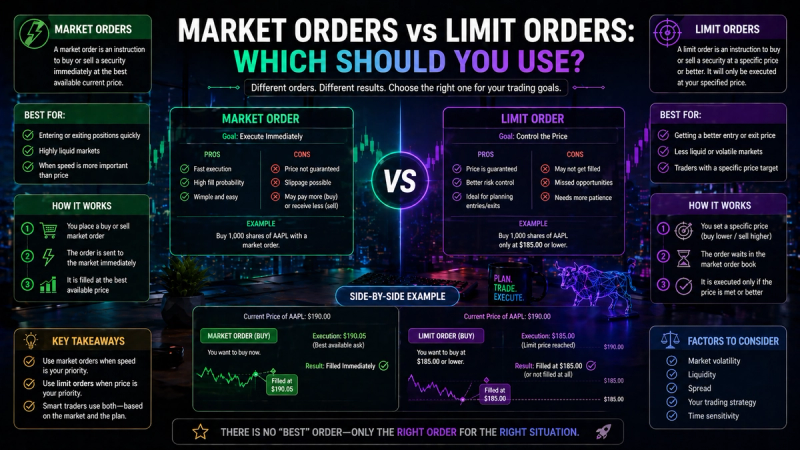
Market Orders vs Limit Orders: Which Should You Use?
Learn the key differences between market orders vs limit orders, when to use each, and how to avoid common mistakes that cost beginners real money
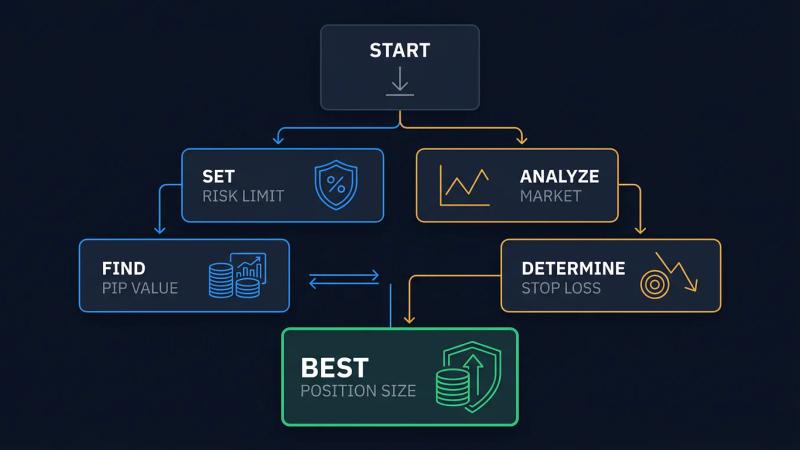
Position Sizing in Trading: How to Calculate Risk Per Trade
A practical guide to position sizing: the fixed fractional method, the Kelly Criterion, the 1-2% rule, and how to adjust size during drawdowns and volatility.
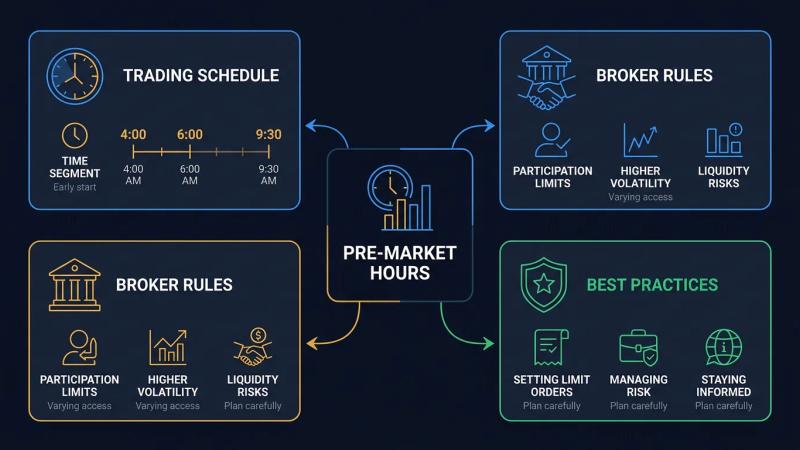
Pre-Market Trading Hours: Schedule and Broker Rules
Pre-market trading hours run from 8:00 a.m. to 9:30 a.m. ET. Here is how the session works, how it compares with after-hours, and what your broker needs to offer.
0 comments