



What Is Fundamental Analysis? How Economic Data Moves Currency Markets
Fundamental analysis is the study of how economic data and central bank policy drive currency prices, and understanding it lets you see why a pair moves the way it does around major news.
This guide connects each key indicator directly to its effect on a currency, so you can anticipate the likely direction of a reaction instead of being caught off guard. Data reactions are never fully predictable, your capital is at risk, and news volatility can be sharp, so treat this as a framework for reading the market rather than a crystal ball.
Fundamental Analysis vs Technical Analysis
Most traders fall into one camp early and then wonder what the other side sees, so it helps to be clear on the difference. Technical analysis studies price itself, its charts, patterns, and levels, while fundamental analysis studies the forces behind the price.
Fundamental analysis asks why a currency should strengthen or weaken based on the underlying economy: geopolitics, interest rates, inflation, growth, and policy. Technical analysis asks where price is likely to go based on its own historical behaviour. The two are really just different lenses on the same market, and many traders use fundamentals to decide direction and technicals to time entries. To use the fundamental lens well, you first need the one idea that makes currencies move on data at all.
Ready to start? See our pick of the best forex brokers for beginners.
Why Currencies Move on Economic Data
A currency is essentially a claim on an economy, so when that economy looks stronger, its currency tends to gain. Money flows toward returns and safety, and economic data is how the market measures both.
When data suggests an economy is growing and likely to offer higher returns, capital tends to flow in, and demand for that currency rises. When data disappoints, the opposite happens. There is a crucial second layer, though. Markets price in expectations ahead of time, so a currency often reacts to whether the data beat or missed what the market already anticipated, far more than to whether the number was strong or weak on its own. A strong figure that everyone saw coming can produce little movement, while a small surprise can move price sharply. That gap between expectation and reality is the engine behind most data-driven moves, and nowhere is it more powerful than with interest rates.
Interest Rates: The Primary Driver
If you only ever learned one fundamental driver, this would be it, because interest rates sit at the centre of currency valuation. Higher rates tend to attract capital seeking better returns, which lifts demand for a currency.
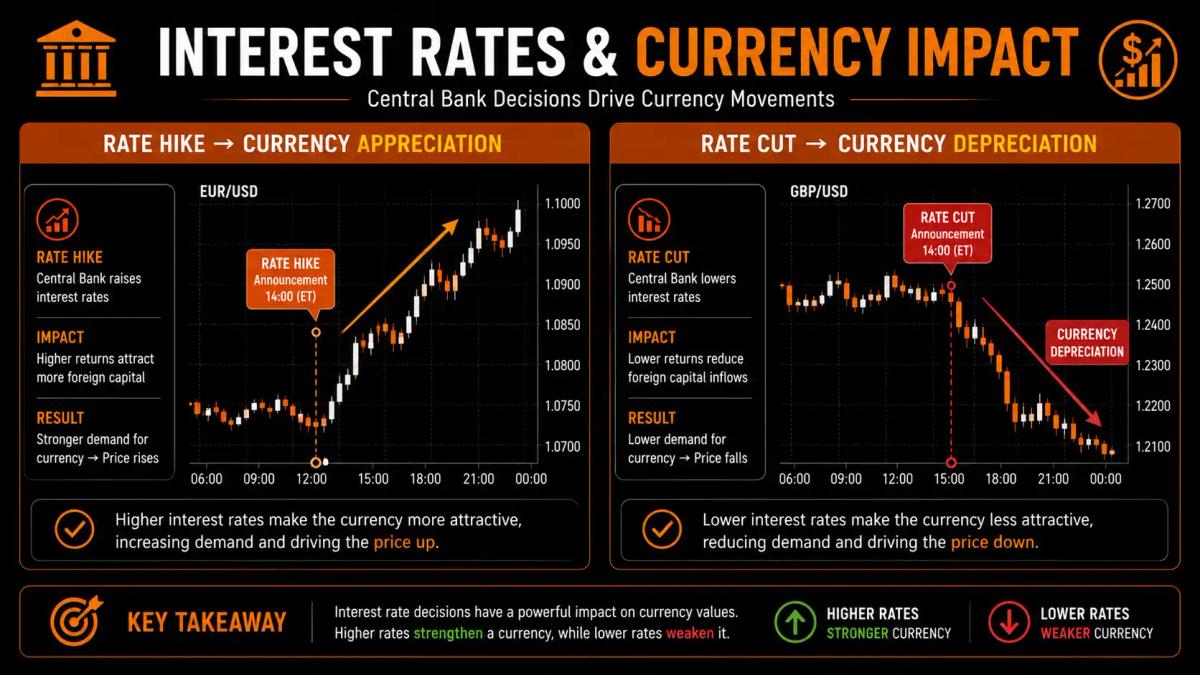
How Rate Decisions Move Currencies
When a central bank raises interest rates, holding that currency typically becomes more attractive because it offers a higher return, and that demand tends to push the currency higher. When a central bank cuts rates, the currency tends to weaken as the yield advantage shrinks.
The relationship is neither mechanical nor instant, since other forces are always at play, but the direction of pull is consistent enough to anchor your analysis. The size of the reaction depends heavily on what the market expected, which is the part traders most often overlook.
Rate Expectations and Forward Guidance
Markets move on the future, not just the present, so a rate decision that was fully expected can pass with barely a ripple. What often moves price more is forward guidance, the signals a central bank gives about where rates are heading next.
A hawkish tone, hinting at tighter policy and higher rates ahead, can strengthen a currency even with no immediate change. A dovish tone, hinting at looser policy and lower rates, can weaken it. Reading the tone alongside the actual decision is what separates traders who understand the data from those who only see the headline number. Rates are the headline, but several other indicators fill in the picture.
The Key Economic Indicators
Dozens of data points hit the calendar each month, but a handful move currencies far more than the rest. Knowing which ones matter saves you from drowning in noise.
| Indicator | What it measures | Typical currency impact |
|---|---|---|
| CPI (inflation) | The rate at which prices are rising | Higher-than-expected inflation can raise rate-hike expectations and support the currency |
| NFP and unemployment | The health of the labour market | A strong labour market can support the currency by reinforcing the case for tighter policy |
| GDP | The overall pace of economic growth | Stronger growth tends to support the currency, weaker growth tends to weigh on it |
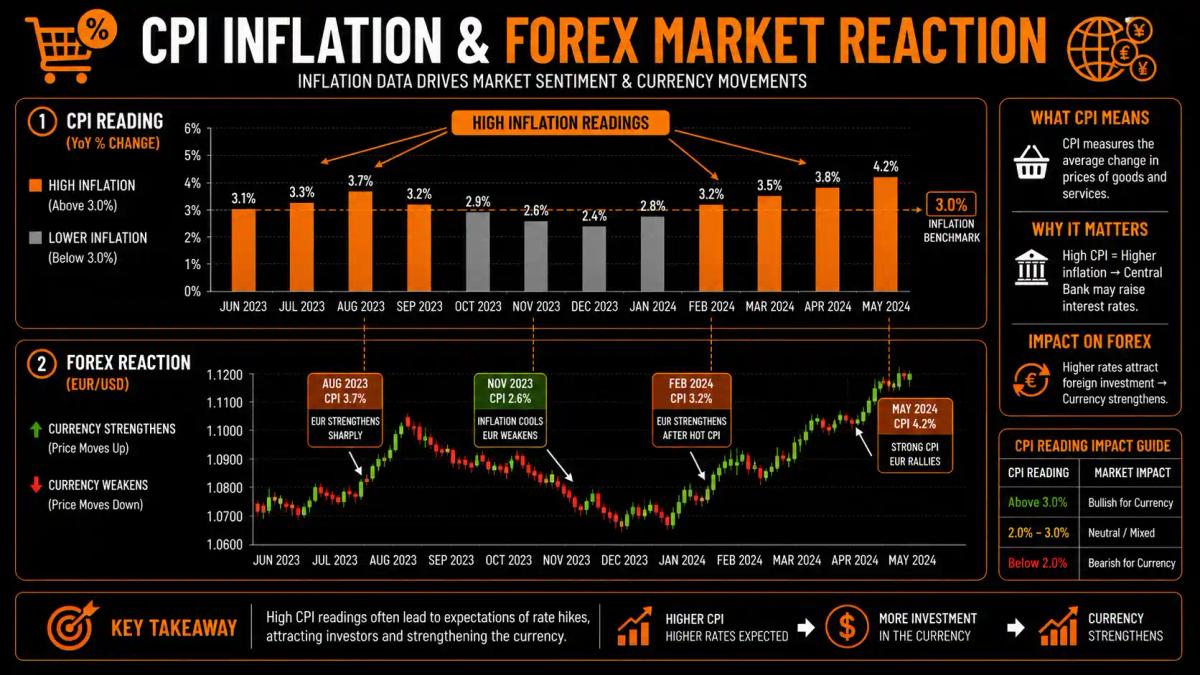
Inflation (CPI)
Inflation data is watched closely because it shapes what central banks do next. When inflation runs hotter than expected, markets often anticipate higher interest rates to cool it, and that expectation can lift the currency. Cooler inflation can do the reverse. The reaction is really about what the data implies for future rate policy.
Employment (NFP and Unemployment)
Employment figures, with the US non-farm payrolls (NFP) report among the most market-moving, signal the strength of an economy. A robust labour market supports the case for tighter policy and can strengthen a currency, while weak employment data can undermine it. NFP in particular tends to produce sharp, fast moves, so it commands a lot of attention.
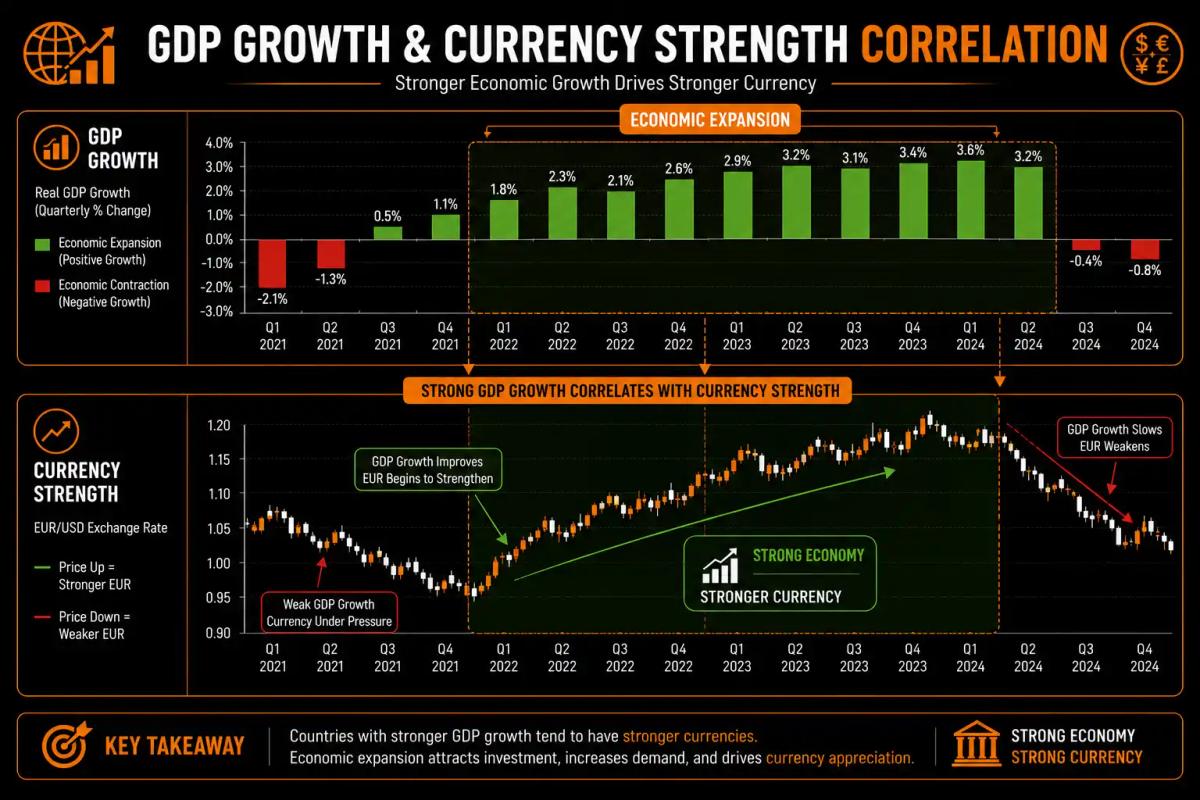
Growth (GDP)
Gross domestic product (GDP) measures the overall size and growth of an economy. Stronger-than-expected growth generally supports a currency, since a healthy economy attracts investment and may justify tighter policy, while weak growth tends to weigh on it. GDP is released less frequently than inflation or employment, but it offers a broad read on the economic backdrop. Behind all of these numbers sits the institution that interprets them and acts.
Central Banks and Monetary Policy
Central banks are the most powerful single force in any currency, because they set the price of money itself. Every major data release ultimately matters for how it might shape their decisions.
A central bank manages monetary policy with the goal of keeping inflation stable and supporting the economy, mainly by adjusting interest rates and other policy tools. The market hangs on their statements, meeting minutes, and speeches, parsing every word for clues about future direction. A central bank described as hawkish is leaning toward tighter policy and higher rates, which tends to support its currency. One described as dovish is leaning toward looser policy and lower rates, which tends to weaken it. Following the major central banks and their tone gives you the backbone of fundamental analysis. To act on any of it, you need to know what is coming and when.
How to Read the Economic Calendar
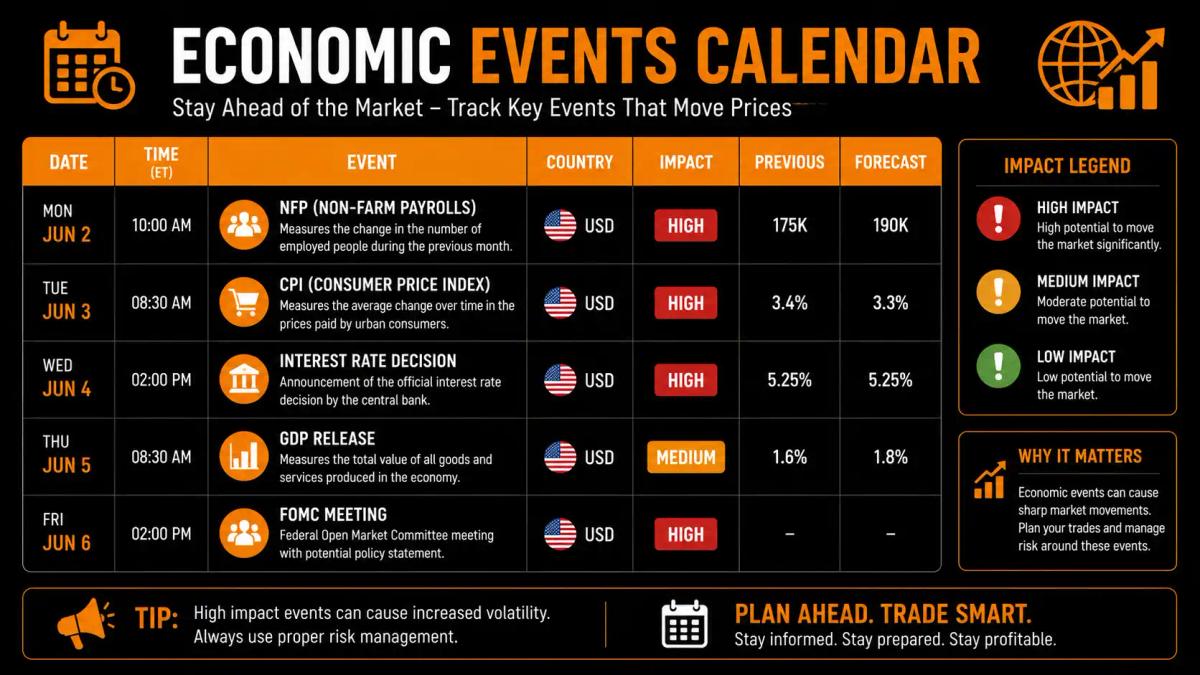
The economic calendar is the single most useful tool in fundamental analysis, and it is free. It tells you exactly when market-moving data is due, so nothing should ever surprise you simply because you were not looking.
A typical economic calendar shows several columns for each release:
- Impact level: how strongly the release tends to move markets, often shown as low, medium, or high
- Forecast: what the market expects the number to be
- Previous: the figure from the prior release
- Actual: the real number, published at release time
The skill is in the comparison. Price tends to react to the gap between the actual figure and the forecast, not to the raw number alone. Checking the calendar at the start of your trading day, and knowing which high-impact releases are due, lets you prepare instead of react. With the calendar in hand, the final step is fitting fundamentals into the way you actually trade.
Combining Fundamentals With Your Trading
Fundamentals tell you which way the wind is blowing, but they rarely hand you a precise entry, which is why most traders pair them with technical analysis. The two together are stronger than either alone.
A practical approach is to use fundamentals to form a directional bias, an expectation of whether a currency is more likely to strengthen or weaken, and then use technical levels to time your entries and exits. Around high-impact releases, spreads can widen and price can whip violently in both directions before settling, so many traders reduce size or stand aside during the initial reaction. A dedicated news trading guide covers the timing strategies in more detail. Fundamental analysis is a long game of building context, and over time it helps you read the market's story rather than just the candles on your screen.
Frequently Asked Questions
What is the difference between fundamental and technical analysis?
Fundamental analysis studies the economic forces behind a currency, such as interest rates, inflation, and growth, to judge whether it should strengthen or weaken. Technical analysis studies price action and chart patterns to judge where price is likely to go. Many traders combine both, using fundamentals for direction and technicals for timing.
Which is the most important indicator for forex?
Interest rates and the central bank policy behind them are generally considered the most influential driver of currency value. Inflation and employment data matter largely because of how they shape expectations for future interest rate decisions.
Do beginners need to learn fundamental analysis?
You can begin trading with technical analysis alone, but a basic grasp of fundamentals helps you understand why sharp moves happen around news. Even knowing when major releases are due, so you are not caught in a sudden spike, is valuable from the start.
How can I trade around news more safely?
Many traders reduce position size or avoid opening new trades right before high-impact releases, because spreads can widen and price can move violently in both directions. Checking the economic calendar in advance lets you prepare for these events rather than being surprised by them.
How often should I check the economic calendar?
Checking it at the start of each trading day is a sensible habit, so you know which high-impact releases are scheduled and when. Some traders also review it for the week ahead to plan around major central bank meetings and key data.
About the authors


Put this into practice
Related articles
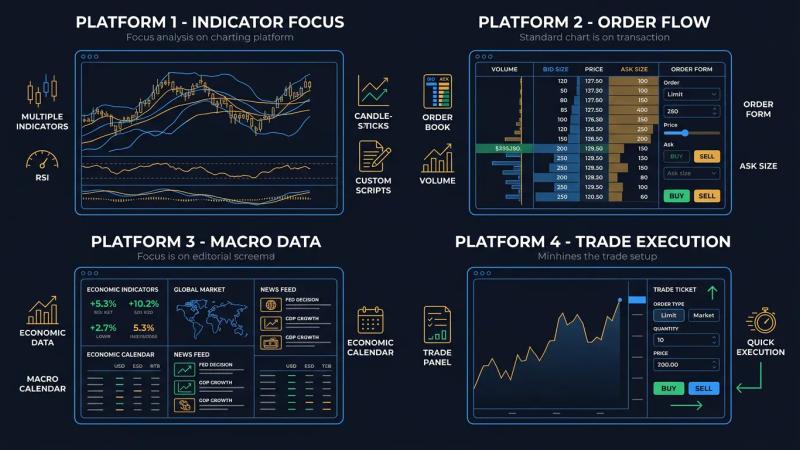
Alternatives to TradingView: Charting Platforms Compared for Retail Traders
A practical comparison of the main alternatives to TradingView across charting, execution, pricing, backtesting and mobile trading, so you can match a platform to how you actually work.
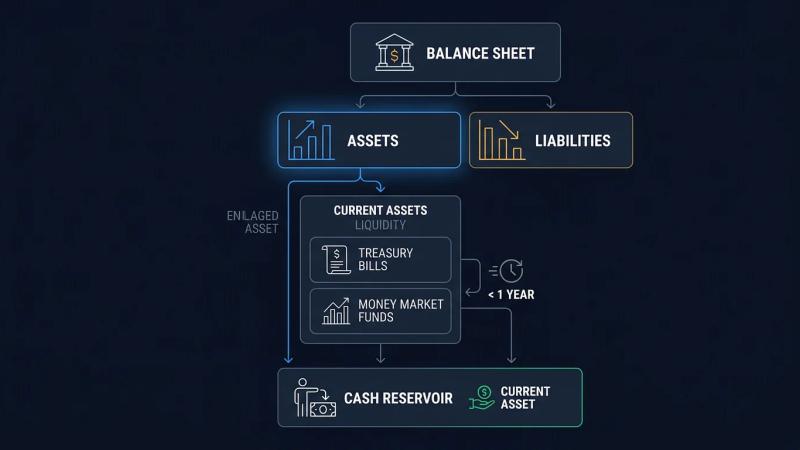
Are Short-Term Investments Assets or Liabilities? A Plain-English Answer
A clear guide to how short-term investments sit on the balance sheet, why they count as current assets, and what that means for tax, treasury and real returns.
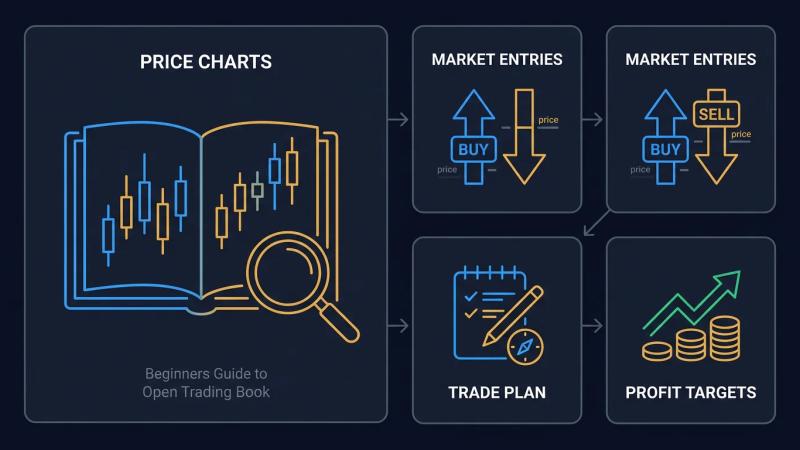
Best Trading Books of All Time: A Ranked Guide for Every Trader
A curated guide to the best trading books of all time: psychology, risk, technical analysis, algorithmic systems, crypto, taxes and how to pick the right one.
0 comments