



Which Forex Brokers Have the Most Complaints? What Regulatory Records Actually Show
If you want to know whether a forex broker has a history of problems, review sites are the wrong place to start. Regulatory databases give you verified, documented, legally significant records, and most traders never check them. This guide shows you exactly where to look and what to look for.
Why Regulatory Complaint Data Is More Reliable Than Review Sites
The problem with star ratings and forum posts
A four-star broker on a popular review site could have a pattern of withdrawal delays stretching back three years. A two-star rating might trace entirely to one frustrated trader who lost money on their own bad call and blamed the broker. Star ratings collapse too much complexity into a single number.
Forum posts carry the same problem, plus a few extras. Posts can be planted, incentivised, or the product of coordinated campaigns, positive and negative alike. A competitor can seed a forum with bad reviews. A broker's affiliate team can flood it with praise. There is no verification layer, no standardised format, and no accountability for false claims.
The result is noise. Useful sometimes, but noise all the same.
What official regulatory records contain
Regulatory records are different in kind, not just degree. When the FCA or ASIC documents a complaint or takes enforcement action, they are recording something that went through a formal process: investigated, assessed, and ruled on.
Official records typically include:
- Formal complaints submitted by consumers to the regulator or via dispute resolution schemes
- Enforcement actions taken against brokers (fines, public censures, licence conditions)
- Sanctions and bans on individuals within a firm
- Licence suspensions and revocations
- Warnings issued about specific firms or individuals
None of that exists on Trustpilot.
Before your first trade, choose a regulated broker from our best forex brokers list.
Where to Find Official Forex Broker Complaint Data
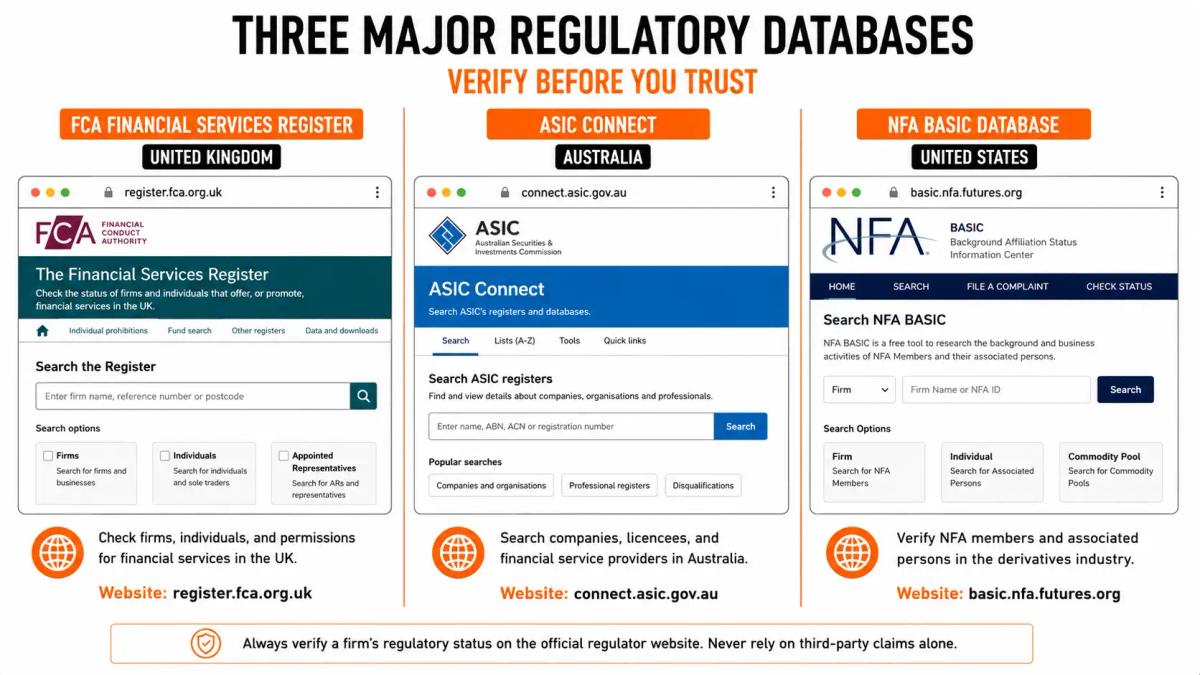
FCA (UK): Financial Services Register and complaints data
The Financial Conduct Authority is one of the most transparent regulators in the world when it comes to public records.
Start at the Financial Services Register (register.fca.org.uk). Enter the broker's name or registration number. You will see:
- Whether the firm is currently authorised
- What activities it is permitted to carry out
- Any past or current requirements placed on its permission
- Whether individuals associated with the firm have been banned or sanctioned
For complaints data specifically, the FCA publishes aggregate complaints statistics twice a year, broken down by firm. These reports show how many complaints each firm received, how many were upheld, and how quickly they were resolved. Firms with more than 500 complaints per reporting period are required to publish their own complaints data.
The FCA's Enforcement Actions page covers fines, public censures, and cases referred for criminal prosecution.
ASIC (Australia): MoneySmart and enforcement actions
ASIC's consumer-facing portal is MoneySmart (moneysmart.gov.au), which includes a professional register and a warning list of unlicensed or problematic operators. For deeper records, the ASIC Connect search tool lets you look up Australian Financial Services (AFS) licence holders and their history.
ASIC publishes enforcement outcomes publicly, including court-ordered penalties, licence cancellations, and banning orders. These are searchable through the media releases section of asic.gov.au. If a broker operating in Australia has faced formal action, it will be documented there.
CFTC and NFA (United States): BASIC database
US retail forex is tightly regulated, and the NFA makes it straightforward to check.
The BASIC database (nfa.futures.org/basicnet) is your primary tool. Search any NFA member by name or ID and see:
- Current registration status
- Disciplinary history including arbitration cases
- Any pending or completed regulatory actions
- Background information on firm principals
The CFTC (cftc.gov) publishes enforcement actions, orders, and litigation releases separately. If a firm has been fined or prosecuted at the federal level, it will appear there. The CFTC also maintains a RED List of foreign entities that have solicited US customers without proper registration.
CySEC (Cyprus/EU): Decisions and sanctions register
Many brokers operating in Europe are licensed through Cyprus, where CySEC is the regulator. Their Decisions and Measures page (cysec.gov.cy) lists:
- Administrative fines issued
- Licence suspensions and revocations
- Public censures and warnings
CySEC licensing gives a broker passporting rights across the EU, so this register covers a significant portion of the European retail broker market. Records go back years and are searchable by firm name.
What to do if your broker is offshore or unregulated
If the broker you are researching does not appear in any of the above registers, that itself is meaningful information. Offshore brokers (those licensed in jurisdictions like St. Vincent and the Grenadines, Vanuatu, or Belize) operate outside serious regulatory oversight. There are no complaint registers to check because there are no meaningful complaint processes to populate them.
For offshore operators, the best available signals are:
- Appearance on FCA, ASIC, SEC, or CFTC warning lists
- Reports on ScamAdviser or similar aggregators (lower reliability, but better than nothing)
- Community-sourced records on forums like Forex Peace Army (treat with appropriate scepticism)
If the broker is unregulated and does not appear on any warning list, that absence is not a clean bill of health. It means they have not been caught yet, or have not attracted enough attention.
How to Read Regulatory Records Without a Law Degree
Complaints vs. enforcement actions: the key distinction
These are two separate categories of information, and they mean very different things.
Complaints are submitted by consumers. They may or may not reflect genuine wrongdoing. High complaint volume warrants attention but does not, by itself, mean the broker acted improperly.
Enforcement actions are initiated by the regulator. They represent a formal finding, usually after investigation, that the firm violated specific rules. A fine, a sanction, or a licence condition is the regulator saying: we looked at this, we found a problem, and here is the consequence. That carries far more weight than any volume of consumer complaints.
When you find a record, ask: is this a complaint (an unresolved allegation) or an enforcement action (a resolved finding)?
Volume vs. rate: why broker size matters when reading complaint numbers
A broker with 200 complaints sounds worse than one with 20. But if the first broker has 500,000 active clients and the second has 8,000, the complaint rate is completely different.
Always contextualise complaint volume against client base. The FCA's aggregate data is particularly useful here because it shows complaints per 1,000 accounts for larger firms, enabling meaningful comparisons.
A large broker with a high absolute complaint count but a low rate per customer is likely performing better operationally than a small broker with fewer total complaints but a much higher rate.
What types of violations appear most frequently
Across regulatory records globally, the violations that surface most often include:
- Withdrawal delays or refusals: the most common consumer complaint category by volume
- Misleading marketing: especially around leverage, bonus offers, and profitability claims
- Best execution failures: where brokers do not act in the client's best interest on order execution
- Inadequate client categorisation: treating retail clients as professional to circumvent protections
- AML and KYC failures: including poor identity verification and anti-money-laundering controls
- Segregation of client funds violations: where client money is mixed with firm money (a serious violation)
The more serious the category, the more forcefully regulators tend to act. A firm fined for misleading marketing is a concern. A firm found to have mixed client funds is a significant red flag.
Which Broker Categories Attract the Most Complaints
Withdrawal issues and account restrictions
Withdrawal problems are consistently the highest-volume complaint category across all regulators. The patterns tend to cluster around:
- Requests for excessive documentation at withdrawal that was not required at deposit
- Arbitrary account freezes pending verification that drags on indefinitely
- Minimum withdrawal thresholds that make small balances effectively inaccessible
- Bonus terms that lock funds unless volume requirements are met
Some of these stem from legitimate AML compliance. Many do not. The distinguishing factor is usually timing: genuine identity checks happen at account opening, not when you try to take your money out.
Misleading promotions and bonus terms
Bonus complaints are the second most common category. The typical structure is a deposit bonus with turnover requirements so high they cannot practically be met, meaning the bonus functions less as a reward than as a trading condition on your own capital.
Regulators have cracked down heavily on this. The FCA and ESMA banned deposit bonuses for retail clients outright, which is why brokers in stricter jurisdictions do not offer them to retail customers while offshore brokers continue using them as acquisition tools.
Execution complaints and slippage disputes
These are harder to resolve because they are harder to verify. A trader who believes they experienced excessive slippage faces the challenge of proving what normal execution should have looked like.
Regulators take execution complaints seriously at the pattern level. If a firm receives a high volume of execution complaints, it warrants investigation. Individual cases are more difficult to adjudicate without access to the firm's order routing data.
Offshore and unlicensed operators
The highest concentration of serious complaints (fraud, total loss of funds, complete unresponsiveness) sits with unlicensed or offshore operators. These do not appear in mainstream regulatory databases because they are not members of those systems. They often surface on warning lists after the damage is done.
The complaint mechanism in these cases is to report to the relevant national authority (Action Fraud in the UK, CFTC in the US) and to your local financial ombudsman. Recovery prospects are generally poor.
Red Flags in a Broker's Regulatory Record
Sanctions and fines: how serious is serious
A small fine for a technical reporting failure is qualitatively different from a large fine for misleading clients or misappropriating funds.
When assessing a fine, consider:
- The reason: what specific rule was broken
- The size: relative to the firm's scale and revenues
- Whether it was contested: did the firm appeal, and what was the outcome
- Whether it is isolated: one fine in ten years is different from three in three years
Repeat enforcement actions, or findings involving client harm rather than technical violations, deserve serious weight in your assessment.
Licence conditions and restrictions
Sometimes a regulator restricts a licence rather than removing it. A broker might be prohibited from taking on new retail clients, required to hold more capital, or barred from certain product categories. These conditions are publicly disclosed and signal that the regulator has concerns it has not fully resolved.
A broker operating under licence conditions warrants further investigation before you deposit money.
Revoked or lapsed licences
A revoked licence means the regulator withdrew authorisation, either as a penalty or because the firm failed to meet ongoing requirements. A lapsed licence means the firm stopped maintaining it, which sometimes happens when a broker exits a market and sometimes happens because they can no longer meet the requirements.
If a broker is presenting themselves as regulated under a licence that has been revoked or has lapsed, that is misrepresentation. Check the register date and current status, not just whether a registration number exists.
How to Use This Data Before Choosing a Broker
Checking regulatory records before opening an account takes about 15 minutes. A practical workflow:
- Identify the broker's regulatory licences. This should be disclosed clearly on their website, usually in the footer. Note the regulator and registration number.
- Search the relevant register (FCA Register, NFA BASIC, ASIC Connect, CySEC decisions page) and confirm the licence is current and in good standing.
- Check for enforcement actions. Search the regulator's enforcement database and media releases for the firm's name.
- Check aggregate complaints data. Where available (FCA, NFA), look at complaints volume and rate relative to firm size.
- Cross-check against warning lists. Search the broker's name across FCA, ASIC, CFTC, and SEC warning lists.
- Contextualise what you find. A minor fine from five years ago is not the same as an active licence restriction today. Weight recent and serious findings more heavily.
Regulatory records will not tell you whether a broker's spreads are competitive or their platform is well-designed. But they will tell you whether the firm has a documented history of treating clients poorly, and that is the most important question you can answer before handing over your money.
This article is for informational purposes only and does not constitute financial or legal advice. Always conduct your own due diligence before opening a trading account.
Frequently Asked Questions
Where is the best place to start checking a forex broker's regulatory record?
Start with the register of the regulator listed on the broker's website. If they claim FCA regulation, go to register.fca.org.uk. If they claim NFA membership, use nfa.futures.org/basicnet. Verify the registration number matches and that the licence is currently active.
Does a regulatory fine mean I should avoid a broker?
A single fine does not automatically disqualify a broker, particularly if it was for a technical or administrative violation rather than client harm. Look at what the fine was for, how long ago it occurred, and whether there are repeat actions. A pattern of enforcement activity, or any finding involving misuse of client funds, warrants serious concern.
What does it mean if a broker appears on the FCA warning list?
The FCA warning list contains firms operating without authorisation or about which the FCA has concerns. Appearing on this list is a serious red flag. It does not necessarily mean the firm is fraudulent, but it does mean they are operating outside the regulatory framework that protects UK consumers.
Can I get my money back if a regulated broker goes under?
It depends on the regulator and the circumstances. FCA-regulated investment firms in the UK participate in the Financial Services Compensation Scheme (FSCS), which covers eligible investment claims up to £85,000 per person in the event of firm failure. This limit applies specifically to investment claims and is separate from the FSCS deposit protection limit that applies to banks. Other regulators have similar but varying compensation schemes. Offshore brokers typically have no equivalent protection.
What is the difference between a complaint and an enforcement action?
A complaint is an allegation submitted by a consumer. It may or may not be upheld, and filing one does not mean wrongdoing occurred. An enforcement action is initiated by the regulator after an investigation and represents a formal finding that rules were broken. Enforcement actions carry far more evidential weight than complaint counts alone.
Are complaint records available for all brokers globally?
No. Meaningful complaint and enforcement records only exist for brokers regulated by reputable jurisdictions. Brokers licensed in offshore or lightly regulated jurisdictions have no equivalent public record system, which is itself a reason to be cautious about any broker whose only licence comes from a jurisdiction you have never heard of.
How often are regulatory databases updated?
It varies by regulator. The FCA Register is updated regularly and generally reflects current status. Enforcement databases are typically updated when actions conclude. For the most current picture, check the regulator's main website for recent press releases and announcements, which often publish before the formal database is updated.
About the authors


Put this into practice
Brokers we have reviewed
Scored on the same five dimensions. Here are three of them — the full list is on the brokers page.



Related articles
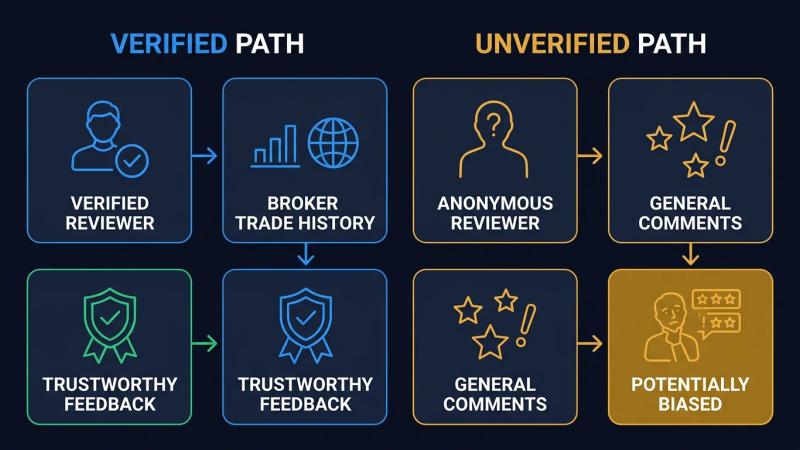
Verified vs Unverified Forex Broker Reviews: What the Difference Actually Means
What "verified" actually means on broker review platforms, how to spot fake review campaigns, and how to build a credibility framework that surfaces genuine signal before you open an account.
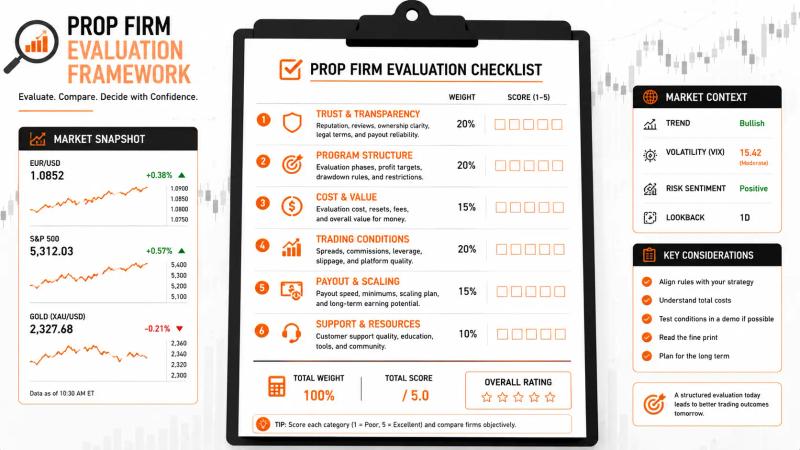
Questions to Ask Before Opening a Trading Account
A structured checklist of key questions to ask any broker before you deposit -- covering regulation, fund safety, fees, execution, and red flags.
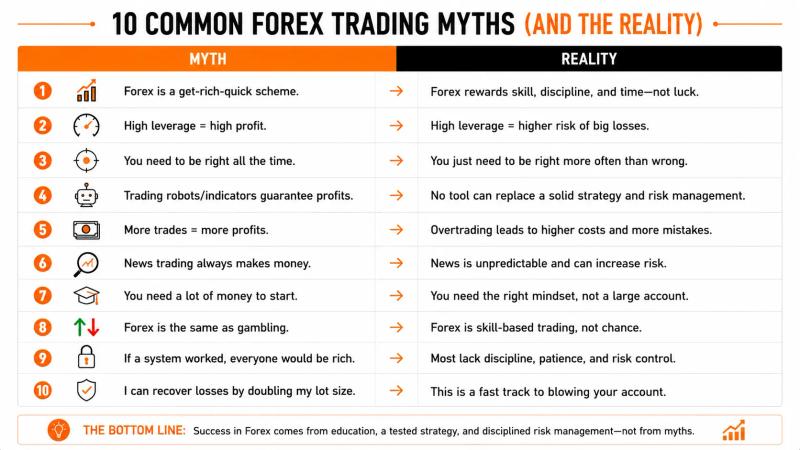
10 Forex Trading Myths That Are Costing You Money
From leverage to signal services, these 10 forex trading myths cost retail traders real money. Here's what the evidence actually shows.
0 comments