



Verified vs Unverified Forex Broker Reviews: What the Difference Actually Means
When you are researching a forex broker, you will encounter reviews labelled verified and ones that are not. Knowing what that distinction actually means (and what it doesn't) determines whether you are reading useful information or well-formatted noise.
This article breaks down both categories, explains how to read them critically, and shows you how to build a review-reading framework that actually works.

What Makes a Review "Verified" in the First Place
The word "verified" can mean meaningfully different things depending on where it appears. There are two main contexts: platform-level verification and editorial or methodology-based verification.
To put this into practice you need an account — compare the best forex & CFD brokers.
Platform verification (Trustpilot, Google)
On consumer review platforms like Trustpilot, verified typically means one thing: the reviewer received an invitation to leave a review directly from the company being reviewed.
The verification process on these platforms is lightweight. It confirms that a real email transaction occurred between the company and the reviewer. It does not verify that the reviewer used the service in the way they claim, that their experience is accurately described, or that the review was written without incentive.
A broker can send bulk review invitations to their most satisfied customers, skewing the verified cohort toward positive outcomes. The verification marker tells you the reviewer had some documented contact with the company, and nothing more.
Google's review system is even lighter. It verifies that a Google account exists, not that any transaction or experience occurred.
Editorial and methodology-based verification
The second use of verified is more meaningful but less standardised. In the broker review context, some publishers (including specialist finance media) apply the term to reviews that have gone through their own verification process. This means the reviewer conducted hands-on testing with a real funded account, documented their experience against a defined methodology, and had their findings reviewed by an editor before publication.
This type of verification addresses the core weakness of crowd-sourced reviews: it substitutes a single, methodology-driven, accountable assessment for an aggregation of anonymous opinions of uncertain provenance. The limitation is that the output is only as good as the methodology. A well-designed editorial verification process produces genuinely useful output; a poorly designed one just adds a badge to the same surface-level observations.
What unverified covers
Unverified reviews are any reviews submitted without a verification mechanism. This includes:
- Anonymous forum posts and thread comments
- Review platform submissions without an invitation trigger
- Broker comparison site ratings based on undisclosed criteria
- Social media comments and community posts
Unverified does not mean false. The majority of unverified reviews are genuine experiences from real traders. It means you have no mechanism to assess the review's provenance, no documentation of what was actually experienced, and no accountability for false or exaggerated claims.
How Verified and Unverified Reviews Differ in Practice
Claims they tend to make
Verified broker reviews (platform-type) tend to cluster around transactional experiences: deposit processing, customer service responsiveness, withdrawal speed. These are the moments that trigger the review invitation, often a customer service interaction or a completed transaction. They rarely cover trading execution quality or long-term platform reliability, because review invitations typically do not span a six-month trading experience.
Editorial-verified reviews tend to cover broader ground: platform functionality, execution quality, cost structure, regulatory standing, and customer service across a defined testing period with a funded account.
Unverified reviews tend to be more emotionally polarised. Traders who have had strongly positive or strongly negative experiences are more likely to seek out a place to express them. The unverified pool contains more extremes than the verified pool.
Experiences they tend to reflect
Verified platform reviews over-represent recent and transactional experiences. They under-represent the trader who has been with a broker for two years and has no strong feelings either way, as that trader is not sending in a review.
Unverified reviews often capture the experiences that do not generate formal review invitations: withdrawal disputes, platform outages, slippage complaints. These are valuable precisely because the broker's invitation process would never surface them.
Where each breaks down
Verified platform reviews break down when brokers game the invitation process, timing invitations after positive interactions and withholding them after negative ones. The resulting pool can reflect deliberate selection bias rather than representative experience.
Unverified reviews break down when they are fabricated or represent misattributed grievances, such as a trader who lost money on their own decisions blaming the broker for the outcome. The lack of accountability in unverified submissions makes both genuine and false reviews equally easy to submit.
Why Unverified Reviews Still Contain Useful Signal
Volume patterns and timing clusters
A single unverified review tells you almost nothing. A hundred unverified reviews with a consistent theme, written over an extended period, starts telling you something real.
The most reliable signal in unverified review data is pattern consistency: multiple independent reviews, written months apart, describing the same specific issue in similar terms. Withdrawal delays during a particular period, slippage on specific news events, customer service becoming unreachable after a certain account balance is reached. Independent reports of the same specific problem, with consistent detail, are hard to manufacture and hard to explain away.
Timing clusters are also significant. A sudden spike in negative reviews within a short window often indicates a real event: a broker withdrawing a promotion, a policy change affecting withdrawals, or a platform outage. A sudden spike in five-star reviews with generic language and newly-created accounts is the opposite signal.
Identifying fake review campaigns
The signature of a fake review campaign is recognisable if you know what to look for:
- Multiple reviews posted within a short window (days, not months)
- Generic positive language with no specific detail (great platform, excellent service, highly recommend)
- Reviewer profiles with no history beyond the single review
- Unnatural similarity in phrasing across supposedly independent reviews
- A sudden reversal of a prior negative rating trend
Fake review campaigns often achieve the aesthetic goal (a higher star rating) while failing at the believability goal. Real experiences contain specific, idiosyncratic detail that is difficult to replicate at scale. A useful test: can you replace the broker's name in the review with any other broker's name and have it still make perfect sense? If yes, the review contains no real information.
When the crowd is actually right
Large volumes of consistent unverified feedback on a specific issue, particularly withdrawal problems, account restrictions, or communication failures, tend to accurately reflect genuine operational problems.
The crowd may not always be right about why something happened, but a persistent pattern of the same complaint usually means something is happening. Regulatory records often confirm what high-volume complaint patterns in unverified reviews were signalling months earlier.
How MonkeyTrade Approaches Broker Review Credibility
Research review vs hands-on review
MonkeyTrade produces two distinct types of broker review, and the distinction matters.
Research Reviews are based on extensive investigation of publicly available information: regulatory filings, official broker disclosures, published cost structures, regulatory history, and complaint data. They do not involve a funded trading account but apply rigorous external analysis to the documented record.
Hands-On Reviews involve opening a real funded account, executing trades across multiple instruments and conditions, testing deposit and withdrawal processes, and engaging with customer service over an extended period. The reviewer documents their experience against a defined methodology.
Both types are clearly labelled. The hands-on review carries more weight on execution and operational dimensions; the research review carries more weight on regulatory and compliance dimensions. Reading both, where both exist, gives you the most complete picture.
The five-dimension rating framework
Every MonkeyTrade broker assessment is structured around five dimensions:
- Regulation and safety: quality of regulatory oversight, compensation scheme access, licence jurisdiction, client fund segregation
- Trading costs: all-in cost per round-turn lot across key instruments, inclusive of spreads, commissions, and overnight financing
- Platform and execution: platform quality, execution speed, slippage behaviour, available instruments
- Account conditions: minimum deposit, leverage options, account types, deposit and withdrawal process
- Customer service: response times, quality of support, dispute handling
Each dimension is scored independently and combined into an overall rating. The five-dimension structure means a broker cannot compensate for a serious weakness in one area (such as poor regulation) with strength in another (attractive spreads).
What editorial verification looks like
An editorially verified MonkeyTrade review goes through the following before publication:
- Hands-on testing with a funded account for a minimum defined period
- Documentation of key metrics (spreads, execution times, slippage instances) with supporting evidence
- Cross-reference of findings against regulatory records
- Editorial review for factual accuracy, methodology adherence, and disclosure of any limitations
- Clear disclosure of the review methodology in the published piece
The goal is to provide a documented, reproducible assessment that another reviewer following the same methodology would reach broadly similar conclusions on.
How to Build Your Own Review Credibility Framework
Cross-referencing signals
No single review source is sufficient. A useful credibility framework combines:
- Regulatory records (FCA register, ASIC Connect, NFA BASIC): for hard documented facts about enforcement history and licence status
- Editorial-verified reviews from methodology-driven publishers: for structured comparative assessments
- High-volume unverified review patterns: for operational signals, particularly around withdrawals and customer service
- Community sources (Forex Peace Army, forums): for specific, detailed trader experiences, treated as anecdote rather than data
When these sources agree, the signal is strong. When they disagree, the discrepancy itself is worth investigating.
Red flags regardless of verification status
Some patterns are warning signs whether they appear in verified or unverified reviews:
- Consistent reports of withdrawal delays or refusals across multiple independent sources
- Multiple accounts of bonus terms being used to restrict withdrawal access
- Customer service becoming unreachable after a problem arises
- Pressure to deposit more money, especially after losses
- Accounts being closed or restricted without clear explanation
These patterns surface in regulatory records when they are serious enough. Finding them in reviews before they reach the regulatory stage is a useful early warning.
What to look for before opening an account
Before depositing at any broker, a minimum credibility check involves:
- Confirming the broker's regulatory status on the official register (not just their website claim)
- Searching for enforcement actions in the relevant regulatory database
- Reading at least one methodology-based editorial review from a publisher with a defined framework
- Scanning high-volume review patterns on Trustpilot or Google for persistent complaint themes
- Checking community sources like Forex Peace Army specifically for withdrawal experience reports
This process takes 20–30 minutes and addresses the most common failure modes in broker selection. The broker that looks cheapest on spreads and scores five stars on a review platform they are inviting customers to use may look quite different under this level of scrutiny.
Frequently Asked Questions
Are verified reviews more accurate than unverified ones?
Not necessarily more accurate, but more accountable. A verified review confirms that a transaction occurred between the reviewer and the company; it does not guarantee the review is accurate or unbiased. A large volume of consistent unverified reviews from independent sources can be more reliable evidence of an operational pattern than a curated set of verified reviews.
Can brokers manipulate their Trustpilot ratings?
Yes, and this is well-documented. Brokers can time review invitations to coincide with positive interactions, send bulk invitations during promotional periods, and use affiliate or partner networks to generate reviews. Trustpilot has fraud detection systems, but they do not eliminate gaming entirely. Reviewing the Trustpilot profile for sudden rating spikes, short-burst review clusters, and generic language is worthwhile.
What is the most reliable source for broker reviews?
No single source is most reliable — the combination is. Regulatory records provide the most authoritative documentation of compliance history. Editorial-verified reviews from methodology-driven publishers provide the best structured assessment. High-volume unverified patterns provide the best signal on operational issues. Using all three produces a more complete picture than relying on any one alone.
How do I spot a fake review campaign on a broker's profile?
Look for: a sudden cluster of five-star reviews within a short timeframe, generic language with no specific details, reviewer accounts with no prior review history, and unusual similarity in phrasing across supposedly independent reviews. Genuine reviews contain idiosyncratic detail. Fake campaigns tend toward legible but generic positivity.
Does a broker's star rating actually predict my experience?
Weakly. Aggregate star ratings are affected by selection bias, gaming, and the fact that most rating distributions are bimodal (very happy and very unhappy). The star rating is less informative than the content of reviews, specifically whether there is a consistent pattern of the same type of problem appearing across multiple independent reports.
What does MonkeyTrade's five-dimension framework measure?
Regulation and safety, trading costs, platform and execution, account conditions, and customer service. Each is assessed independently so that a high score in one dimension does not mask a weakness in another. The framework is designed to give a structured, comparable view of brokers across the dimensions that matter most to retail traders.
Should I trust a broker with no online reviews?
Treat the absence of reviews as an information gap, not a positive signal. A new broker may have limited reviews simply because it is new. An established broker with no reviews may be operating in a way that keeps its user base limited or fragmented. In either case, apply extra scrutiny to regulatory status and regulatory jurisdiction quality before depositing.
About the authors


Put this into practice
Brokers we have reviewed
Scored on the same five dimensions. Here are three of them — the full list is on the brokers page.



Related articles
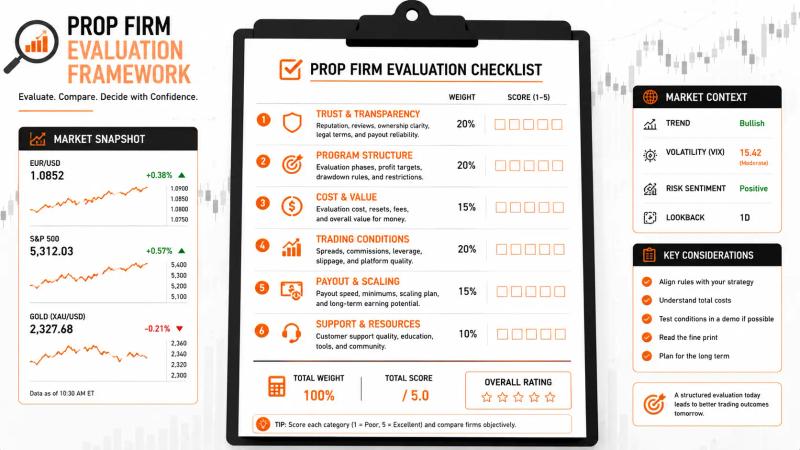
Questions to Ask Before Opening a Trading Account
A structured checklist of key questions to ask any broker before you deposit -- covering regulation, fund safety, fees, execution, and red flags.
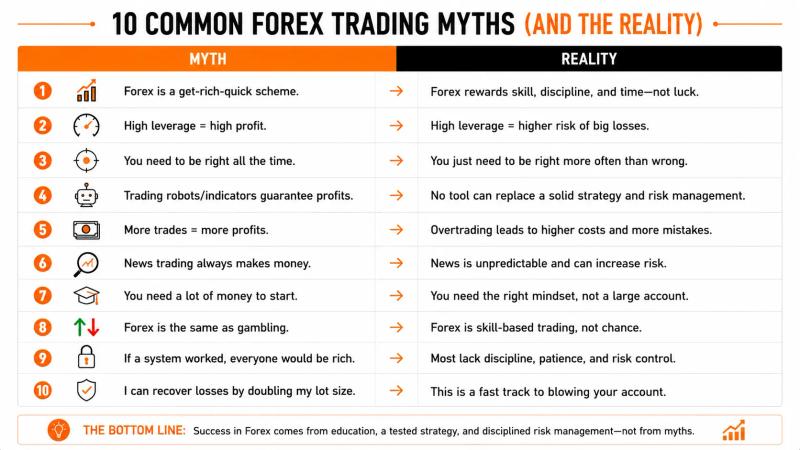
10 Forex Trading Myths That Are Costing You Money
From leverage to signal services, these 10 forex trading myths cost retail traders real money. Here's what the evidence actually shows.
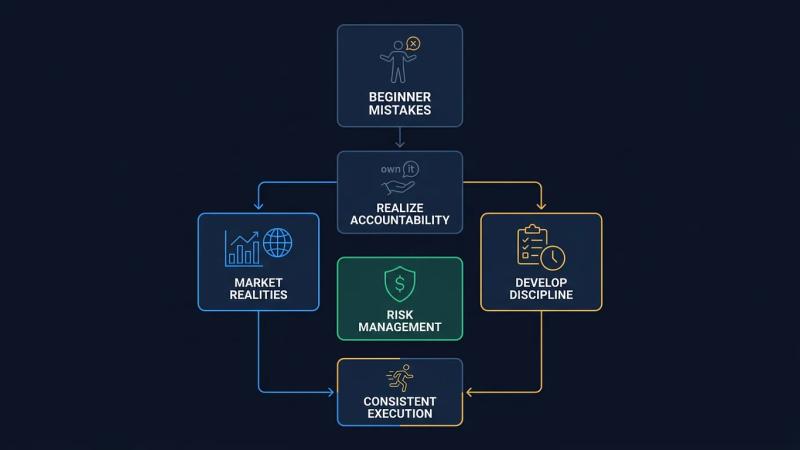
Beginner Trading Lessons: What 10 Years in the Markets Actually Taught Me
Ten years of trading, condensed into the lessons that actually cost something to learn. What beginners need to know before they fund a first account.
0 comments