



Beginner Trading Lessons: What 10 Years in the Markets Actually Taught Me
Ten years in the markets teaches you things no course, book, or forum thread covers adequately, because the lessons that stick are the ones that cost you something first. This article is the summary of those lessons: what they were, when they showed up, and what you should do differently because of them.
You Will Lose Money Before You Make It
Every trader loses money in the early stages. This is a baseline expectation you should plan around financially and psychologically before you fund your first account. The real variable is how expensive those losing months are.
Traders who treat early losses as tuition and keep them at a manageable scale preserve both their capital and their psychological capacity to continue learning. Traders who absorb large early losses often compound the problem by chasing recovery through larger position sizes.
To put this into practice you need an account — compare the best forex & CFD brokers.
Why Early Losses Are Expensive When They Did Not Have to Be
The first year or two of trading is characterised by genuine uncertainty about what's actually driving results. You don't yet know whether a losing trade reflects a flawed strategy, poor execution, or random market variance. Without that clarity, it's extremely difficult to learn from individual losses in a meaningful way.
What makes early losses especially expensive is the combination of account damage and psychological damage. Blow up a significant portion of your starting capital and you're trading from a state of impaired confidence, increased pressure, and often altered risk behaviour, swinging between excessive caution and overcompensation.
The practical implication is to keep your initial account small enough that the losses are affordable.
The Demo Account Gap Nobody Talks About
Demo trading has a specific and limited value. It teaches you platform mechanics, order types, and the basic rhythm of your strategy.
The first time you watch a live position move against you by a meaningful amount of real capital, something shifts. Risk management rules that seemed obvious in demo mode become harder to apply when real money is attached to the outcome. Stop-losses you'd execute without thought in a demo become decisions you question, delay, and sometimes override.
This is a normal cognitive response to real consequences. The gap between demo and live performance is well-documented, and it affects almost every trader making the transition. The way to manage it is to transition with a very small live account: small enough that the real money is present, but losses in any individual trade don't materially affect your financial situation. That small live account will teach you more than six months of demo trading.
Choosing the Wrong Broker Costs More Than Bad Trades
A broker is the infrastructure your trading runs on. Get the infrastructure wrong and everything built on top of it is compromised. Most beginners make this decision quickly and casually, and it costs them in ways that are hard to trace back to the source.
What to Check Before Funding an Account
This is the due diligence list that matters. Not the website copy, not the promotional bonuses:
- Regulation: Is the broker regulated by a credible authority (FCA, ASIC, CySEC, CFTC)? Regulation doesn't guarantee a perfect experience, but it establishes minimum standards and provides recourse if something goes wrong. Offshore brokers with no meaningful regulation have no accountability.
- Execution model: Does the broker operate as an ECN/STP (passing orders to liquidity providers) or as a market maker (taking the other side of your trades)? Neither is inherently dishonest, but you should know which you're dealing with.
- Client fund protection: Are client funds segregated from the broker's operating capital? What compensation scheme applies if the broker becomes insolvent?
- Withdrawal process: Can you find independent reviews of whether the broker processes withdrawals promptly and without friction? This is where many problematic brokers reveal themselves.
Regulation, Spreads, and the Hidden Costs Beginners Ignore
Spreads and commissions are the visible trading costs. The hidden costs are what new traders consistently underestimate.
Overnight swap rates on leveraged positions can erode a trade held for days or weeks. On some instruments and in some directions, the swap cost is meaningful relative to the potential gain. Know what your broker charges before you hold positions overnight.
Platform stability during high-volatility periods is another cost that never appears in any fee schedule. A platform that lags, freezes, or disconnects during NFP or a central bank announcement can cost you a clean execution or, worse, trap you in a position you couldn't exit at the intended price.
Requotes, where the broker re-quotes a different price at your moment of execution, are common with some market maker models, especially at busy times. They almost always disadvantage you.
These are routine operational costs that accumulate across hundreds of trades.
Risk Management Is a Necessary Habit
The single most consistent difference between traders who survive and those who don't is risk management.
Framing it as a habit rather than a system is intentional. Systems can be overridden under pressure. Habits are harder to break because they become behavioural defaults. The goal is to make proper risk management the path of least resistance: the thing you do automatically, without a deliberate decision at every trade.
Position Sizing: The Lesson That Takes Too Long to Learn
Most beginning traders size positions based on what feels right or what the leverage allows. The correct process is mechanical and precedes the trade entry:
- Determine the maximum percentage of your account you're willing to lose on this trade (typically 1-2%)
- Identify where your stop-loss goes based on chart logic
- Calculate the position size that makes that stop equal your risk amount
Although simple in theory, it's genuinely difficult to execute consistently when a trade looks compelling and the mechanical calculation gives you a smaller position than you wanted. The temptation to override the calculation is real, and it grows with conviction about the trade. High conviction and a large position size is not a reward for good analysis; it's how traders produce catastrophic single-trade losses.
What a Stop-Loss Does (and Does Not Do)
A stop-loss limits your loss on a trade if the market moves against you. It does not guarantee execution at that price: in fast-moving markets, price can gap through a stop and execute at a significantly worse level. It does not protect you from being stopped out of valid setups repeatedly if your stop is too tight relative to market noise. And it does not compensate for an oversized position; a stop-loss on a position sized at 10% account risk is still a 10% loss when it triggers.
A stop-loss is a mechanical tool for limiting single-trade damage. It's necessary but not sufficient for risk management.
The Market Does Not Care About Your System
This is the lesson that stings most when it lands. You've built a strategy, tested it, refined it, traded it through various conditions, and then the market goes through a period that makes your system look broken.
The obvious question is whether the strategy has stopped working.
Why Strategy-Hopping Destroys Progress
Switching strategies after a losing streak is one of the most expensive responses available to a trader. Losing streaks are a normal statistical feature of any trading system. Even a strategy with genuine positive expected value will produce clusters of losses. A small sample, ten to twenty trades, is essentially random noise and tells you almost nothing meaningful about whether the underlying edge is intact.
When traders switch strategies after a losing stretch, they abandon a tested system at the point of a normal statistical outcome, replace it with an untested system, and then potentially do the same thing again when the new system encounters its own losing cluster. The result is an endlessly fragmented performance record that never compounds into anything.
The alternative is harder psychologically but simpler analytically: define in advance how many consecutive losses or what drawdown level would genuinely indicate the strategy has stopped working, and only make changes if you breach that defined threshold. Within normal variance, keep executing.
The Difference Between a Bad Trade and a Bad Trader
A well-executed trade on a solid setup that loses money is the expected outcome some percentage of the time. Criticising yourself for a loss that resulted from proper process is both psychologically damaging and analytically incorrect.
A bad trade is one where you violated your rules: you entered without a defined stop, sized the position outside your risk parameters, chased a move after missing the intended entry, or exited early because of fear rather than because your signal was invalidated.
A bad trader is someone who consistently makes bad trades. Someone who occasionally loses on a good trade is just a trader.
Trading Psychology Is Not a Soft Skill
The decisions that create the largest account damage, oversized positions, removed stops, revenge trades, almost never come from lack of technical knowledge. They come from emotional states overriding analytical judgment.
Fear, Greed, and the Specific Moments They Appear
Fear shows up at predictable points:
- The moment you've placed a trade and it immediately moves against you
- The moment a profitable trade starts retracing toward breakeven
- The period immediately after a significant loss, when normal risk looks excessive
Greed shows up at equally predictable points:
- When a trade is running well and targets feel too conservative
- After a strong winning streak, when confidence has crossed into overconfidence
- When a missed entry creates urgency to get into the next trade at a worse price
Neither emotion announces itself clearly. You don't think "I'm feeling greedy right now." You think: "this trade looks so strong, it makes sense to let it run a bit further." The rationalisation comes first. The emotional driver is underneath it.
Recognising the specific conditions under which these states arise, not the emotions themselves, but the market situations that trigger them, is the beginning of managing them.
How to Build Discipline Before You Need It
Discipline under pressure is built during quiet periods through routine. A trading journal is the most useful tool for this: recording not just what you traded but why, what you felt before and during the trade, and whether your behaviour matched your plan.
After thirty to fifty trades with genuine journal entries, you will have a clear picture of where your execution breaks down. Most traders have one or two specific failure modes that recur across many trades. Finding those patterns in writing is more valuable than any new technical analysis approach.
What the First Year Should Look Like
Expectations shape experience. Walking into your first year expecting to generate a second income produces one set of behaviours. Walking in expecting to learn an expensive, slow-developing skill produces another. The second produces better outcomes.
Realistic Benchmarks for New Traders
The honest benchmarks for year one:
- Capital preservation: Finishing your first year with more than 50% of your starting capital puts you ahead of most new traders.
- Process development: Do you have a written trading plan? Do you follow it most of the time? Do you have a trade journal with at least fifty entries? These are more meaningful than P&L in year one.
- Understanding of your strategy: Can you articulate exactly what constitutes a valid setup, where your stop goes, where your target goes, and what makes a trade invalid? If yes, you've built something compoundable.
Returning a profit in year one is a bonus. Setting profitability as the primary year-one benchmark creates pressure that degrades decision-making.
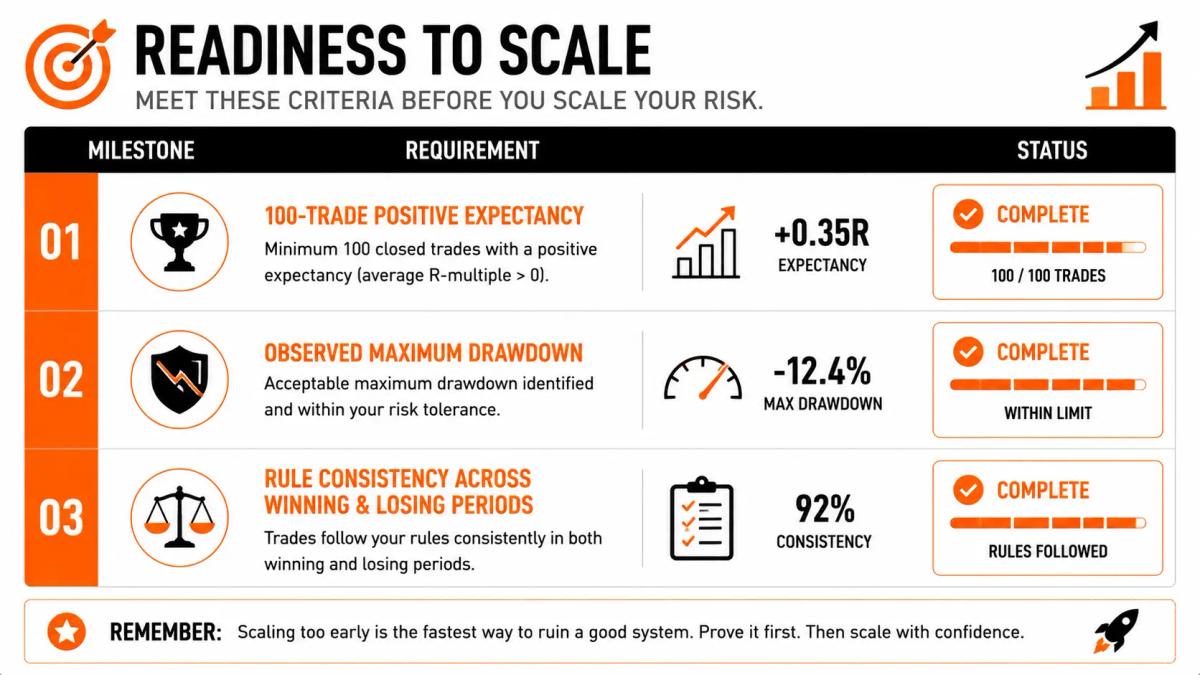
When to Know You Are Ready to Scale
Scaling position sizes before your performance data supports it is one of the most common ways traders damage accounts that were moving in the right direction. The conditions worth waiting for:
- Positive expectancy across a minimum of 100 trades
- A maximum drawdown figure you've observed and can sustain at the larger scale
- Consistency in executing your rules across both winning and losing periods
Scale into larger positions gradually, 25% to 50% increases at a time. Give each scale-up enough trades to generate meaningful data before deciding whether to continue.
The Shortcut That Is Not a Shortcut: Education Done Right
There is no shortcut in trading. There are, however, more and less efficient paths through the learning curve.
The expensive route is the one most traders take: buy a course, try a strategy, lose money, buy another course, try another strategy. Each cycle costs time, money, and confidence. The problem isn't the courses themselves; it's the absence of a framework for evaluating and applying what's learned.
Education works when it's applied to a specific problem you've already identified. If your exits are inconsistent, study exit strategies with focus. If you can't read momentum correctly, study momentum. Broad education without application is expensive entertainment.
The free resources available now, YouTube channels from legitimate traders, broker webinars, peer-reviewed academic papers on market microstructure, are genuinely high quality. The issue has never been access to information. It's always been application, consistency, and patience.
Trading is one of the few fields where the feedback loop between learning and result is long enough that impatience consistently wins over competence. The traders who make it are almost always the ones who understood that from the start.
Frequently Asked Questions
How much money do I need to start trading?
You can open accounts with some brokers for as little as $100 to $500. Very small accounts create a practical problem, though: proper position sizing at 1-2% risk per trade produces positions too small for some instruments. A more workable starting range is $500 to $2,000 for micro-lot trading with properly sized risk. The more important question is: can you afford to lose this amount without it affecting your financial stability? If not, the amount is too large.
Is demo trading actually worth doing?
Yes, but with a clear understanding of its limits. Demo trading is valuable for learning platform mechanics, testing strategy logic, and developing a feel for order flow. It does not replicate the psychological experience of live trading. Use demo to learn the mechanics and test the strategy, then transition to a small live account for the behavioural development.
How do I know if my trading strategy is actually working?
Statistical significance requires a minimum sample, generally 50 to 100 trades, across varied market conditions. Track your win rate, average win size, average loss size, and calculate expected value (win rate multiplied by average win, minus loss rate multiplied by average loss). If the expected value is positive across a sufficiently large sample, the strategy has an edge. Month-to-month P&L is too noisy to be meaningful in isolation.
Should I trade full-time from the start?
For most people, no. Trading full-time creates financial pressure that deteriorates decision-making. The income need creates urgency that's incompatible with patient, rule-based execution. Most consistently profitable traders developed their approach while managing another income source, then transitioned to full-time once their trading P&L was sustainably positive across multiple years, not months.
What's the most common reason beginner traders fail?
Undercapitalisation combined with oversized positions is the mechanical cause. Poor risk management in general. The underlying driver is usually unrealistic expectations: treating trading as a fast income source rather than a skill that develops slowly. That expectation creates the pressure that produces the oversized positions, the removal of stops, and the strategy-hopping that make consistent learning impossible.
How important is choosing the right market to trade?
More important than most beginners appreciate. Different markets suit different personalities and schedules. Forex suits traders available during active sessions (London/New York overlap for majors). Futures and indices may suit different volatility profiles. Starting with one well-understood market and building expertise there is significantly more effective than spreading attention across multiple markets simultaneously. Depth beats breadth in the early stages.
About the authors


Put this into practice
Brokers we have reviewed
Scored on the same five dimensions. Here are three of them — the full list is on the brokers page.



Related articles
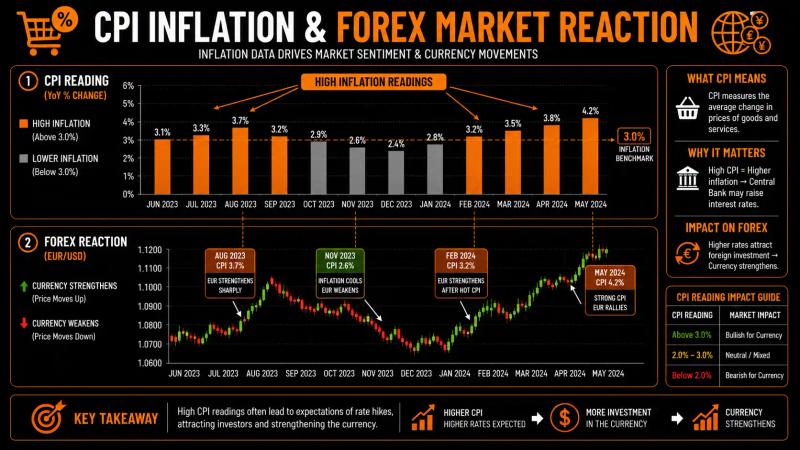
What Is Fundamental Analysis? How Economic Data Moves Currency Markets
Learn how fundamental analysis works in forex: how interest rates, inflation, jobs, and GDP data move currencies, and how to read the economic calendar.
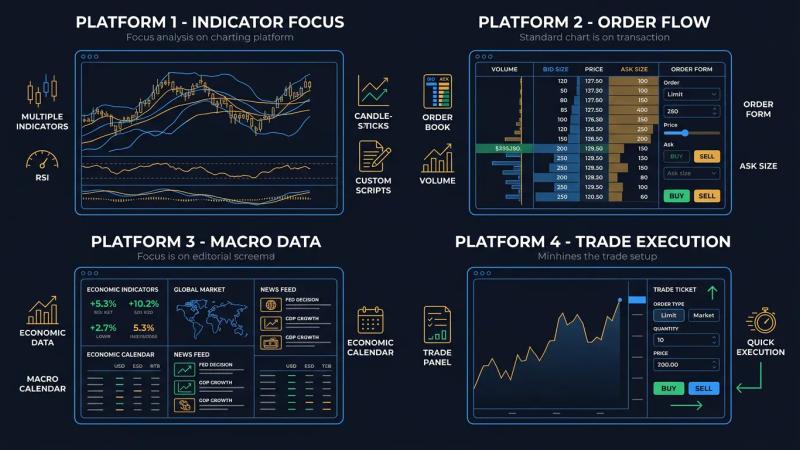
Alternatives to TradingView: Charting Platforms Compared for Retail Traders
A practical comparison of the main alternatives to TradingView across charting, execution, pricing, backtesting and mobile trading, so you can match a platform to how you actually work.
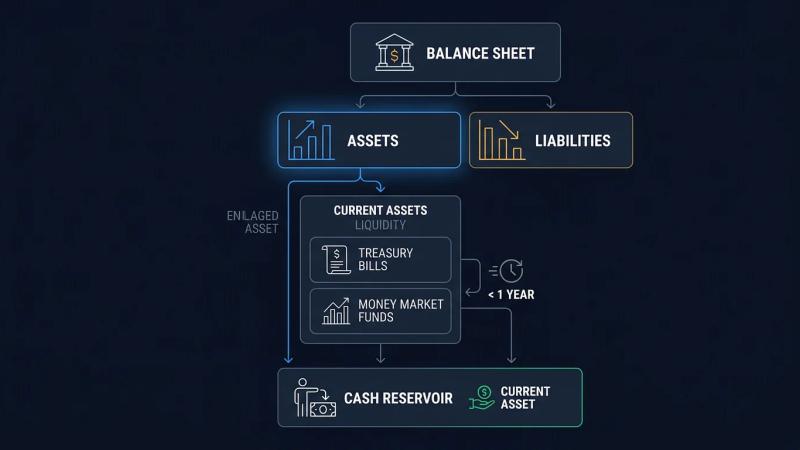
Are Short-Term Investments Assets or Liabilities? A Plain-English Answer
A clear guide to how short-term investments sit on the balance sheet, why they count as current assets, and what that means for tax, treasury and real returns.
0 comments