



How Much Do Forex Traders Actually Make? A Realistic Income Breakdown
This article is for informational purposes only and does not constitute financial advice.
The Question Everyone Asks (and the Answer Nobody Wants to Give)
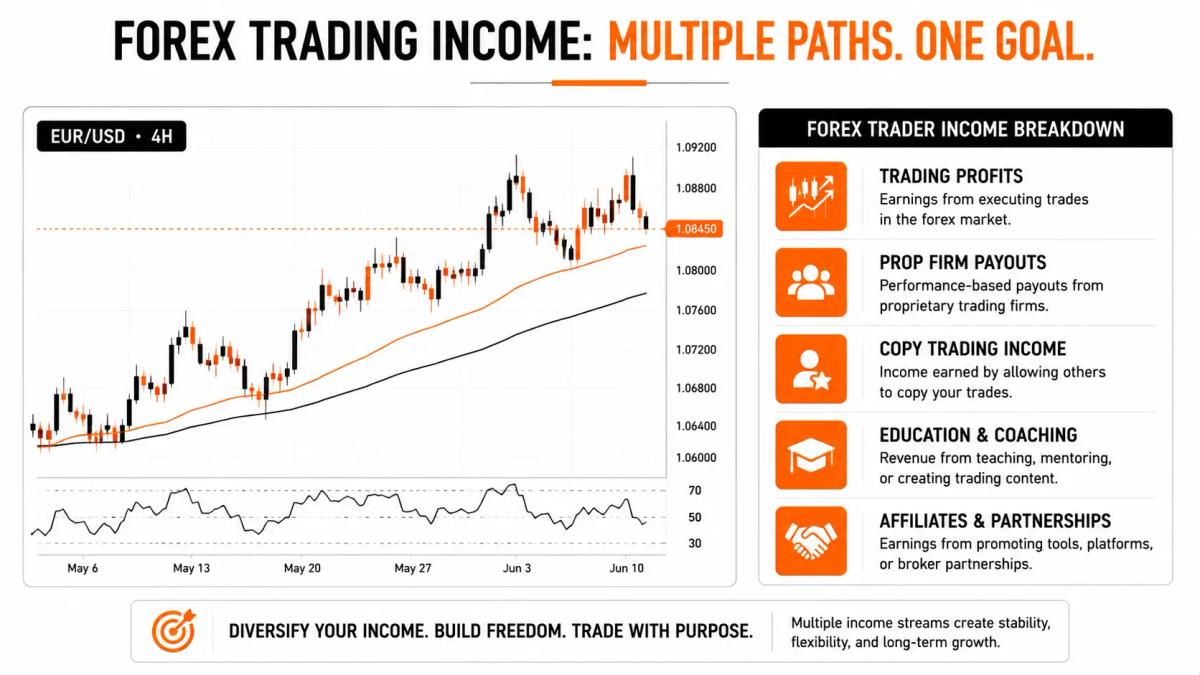
Forex trader income is one of the most searched and most distorted topics in trading. This article gives you a realistic, data-grounded breakdown of what traders at different levels actually earn, across four distinct trader types, so you can assess your own situation honestly.
The short answer is that it depends enormously on your account size, your trader type, and whether you're in the profitable minority at all. The longer answer is what follows.
Ready to start? See our pick of the best forex brokers for beginners.
Why Most Income Figures You See Online Are Misleading
The income figures circulating on social media and trading forums have roughly the same relationship to reality as a highlight reel has to an average Tuesday.
The Survivorship Bias Problem
You hear from traders who made money. You rarely hear from the much larger group who lost it and moved on. This is called survivorship bias, and it happens in every field where failures quietly disappear. In forex, it's particularly acute because the barrier to entry is low, the pool of participants is enormous, and the winners are disproportionately visible and vocal.
The result is a skewed picture. The traders dominating online spaces are often either genuinely exceptional, operating in conditions most people can't replicate, or presenting a winning run stripped of its surrounding context.
Demo Account Performance vs. Live Account Reality
Demo account success is nearly universal. Live account success is not. The gap exists because real money changes behavior: risk tolerance, emotional response to drawdown, and decision-making under pressure. A trader who runs a clean demo account for three months and then opens a live account is not the same trader in any psychologically meaningful sense.
Retail Trader Income: What the Data Actually Shows
Regulatory disclosure requirements in major jurisdictions have made the profitability picture for retail traders about as clear as it's going to get, and it's not flattering.
The Profitability Statistics
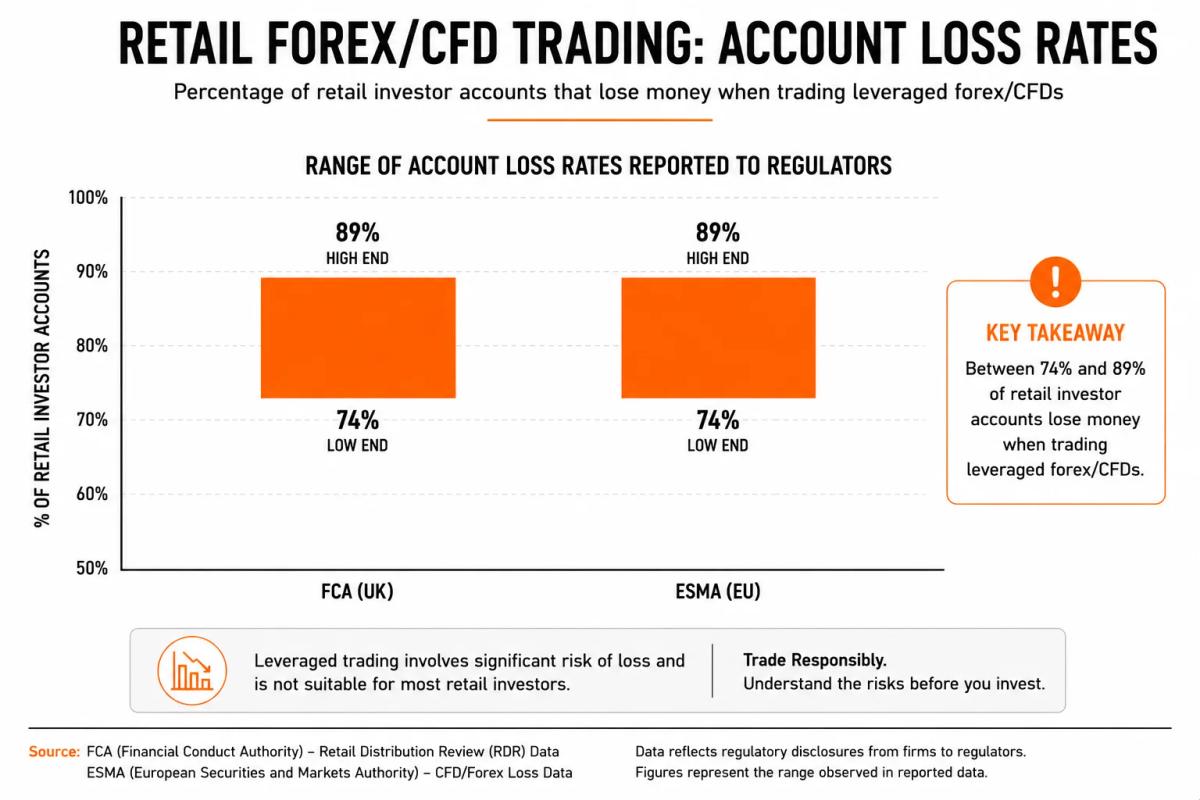
Regulators in major jurisdictions require brokers to disclose what percentage of their retail clients lose money on CFD and leveraged forex products. In the UK, the FCA's permanent rules (in effect since 2019) mandate this disclosure; in the EU, ESMA's product intervention measures apply to brokers regulated there. Across brokers and reporting periods covered by these regimes, the figures have ranged from approximately 74% to 89% of retail accounts losing money, with many brokers reporting figures toward the higher end of that range.
The profitable minority is exactly that: a minority. Starting from that baseline is the only honest way to approach the income question.
What Consistently Profitable Retail Traders Earn
Among traders who are consistently profitable, returns vary widely. Annual returns in the range of 10% to 30% are considered strong and sustainable by professional standards. Returns above 50% annually are possible but carry substantially higher risk and are difficult to sustain over multiple years.
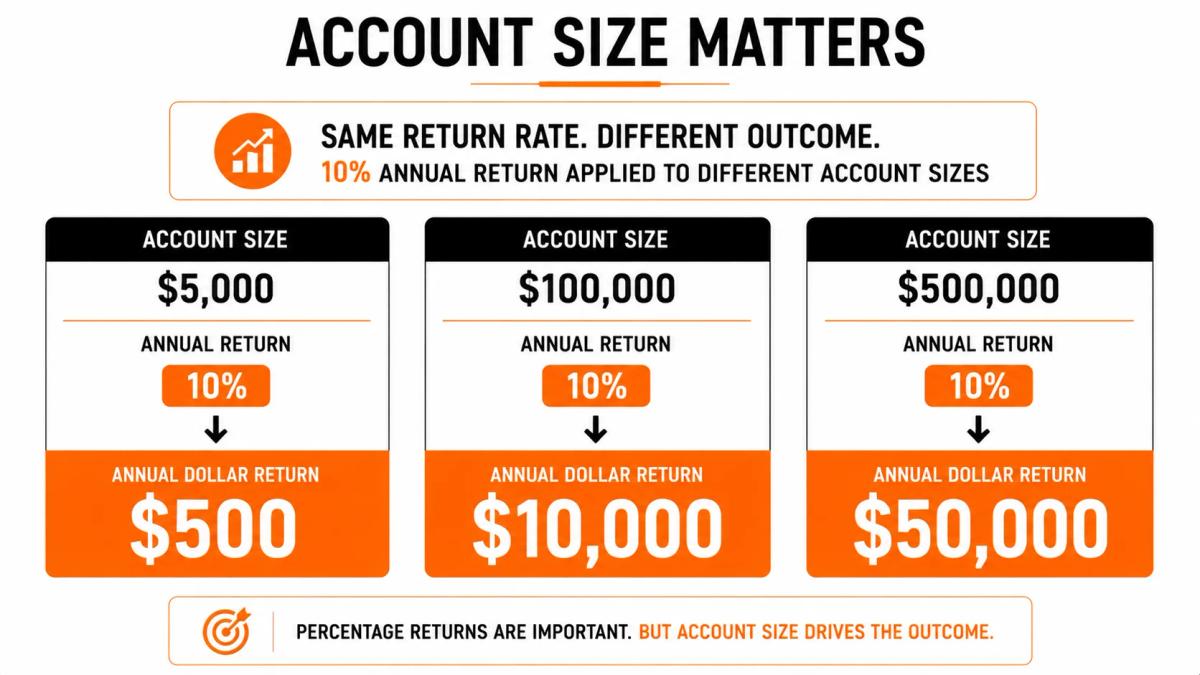
Account size determines what a percentage return actually produces:
- 20% annual return on a $5,000 account = $1,000
- 20% annual return on a $50,000 account = $10,000
- 20% annual return on a $500,000 account = $100,000
Same skill. Same strategy. Radically different income. That relationship between account size and absolute income is the most important concept in this article.
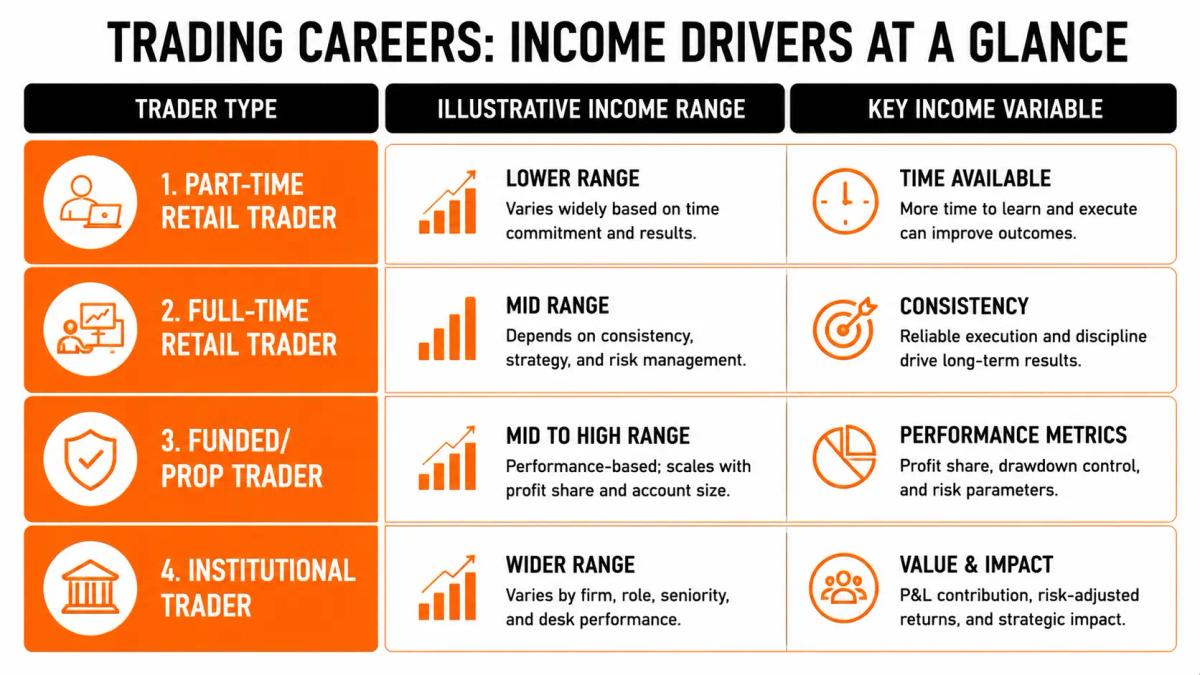
So what does this mean for different types of traders? The breakdown by trader type makes it concrete.
Income by Trader Type: A Realistic Breakdown
Part-Time Retail Trader
The part-time retail trader is typically working with a smaller account, trading around other commitments, and focused on supplementing income rather than replacing it. Capital in the range of $1,000 to $10,000 is common.
At realistic return expectations of 15% to 25% annually, that produces $150 to $2,500 per year on the lower end of that capital range. Supplementary income, at best. At this stage, the primary value is building skill and consistency, not generating meaningful income. The account size simply doesn't support it yet.
Full-Time Self-Funded Retail Trader
The full-time retail trader is putting real capital to work and genuinely trying to generate a living wage from trading. Account size becomes the central variable.
To replace a modest annual salary of $40,000 to $60,000 at a 20% return, you need a trading account of $200,000 to $300,000. Most people don't have that. Those who do are taking on significant concentration risk by placing it all in a trading account. Full-time retail trading is viable for a small number of people with substantial capital, strong discipline, and the ability to weather drawdown periods without needing to withdraw funds. It's not a typical outcome.
Considering a broker for a self-funded account? Our broker comparison page breaks down trading conditions across major retail platforms.
Funded/Prop Trader
Prop trading firms offer a route around the capital problem. You pass an evaluation, demonstrate consistent profitability within defined risk parameters, and trade the firm's capital. In return, you take a percentage of the profits, typically 70% to 90% of what you generate.
The income picture depends on the allocation you receive and the returns you produce. A trader with a $100,000 funded account generating 8% monthly returns and keeping 80% of profits is earning around $6,400 in a strong month. Those returns are not guaranteed, drawdown limits can result in the account being pulled, and trading someone else's capital under strict rules is a different experience from managing your own.
For traders without large personal capital, prop firms represent the most realistic path to accessing account sizes where trading income becomes meaningful. Our [prop firm reviews hub] covers the major funded account programs in detail.
Institutional/Professional Trader
Professional traders at banks, hedge funds, or proprietary trading firms operate in a different category entirely. Compensation at institutional level varies considerably by role, firm type, and geography, and reliable figures for the full range are difficult to generalise. Front-office trading roles at major banks and hedge funds in leading financial centres tend to be well-compensated at junior level, with performance bonuses that can significantly exceed base salary in strong years. Senior traders and portfolio managers earn substantially more.
These roles require formal qualifications, competitive hiring processes, and a demonstrable track record. They are not an entry point to the industry; they're the destination for a small percentage of traders who demonstrate elite-level skill and find their way into institutional structures.
The Variables That Determine Your Actual Income
Even within the same trader type, income varies enormously. These are the factors that determine where in the range you fall.
Account Size
Percentage returns and monetary income are separate things, and the distinction is worth stating plainly. A percentage return tells you how efficient your strategy is. Your account size tells you how much money that efficiency actually produces.
A trader generating 15% annual returns is doing well by professional standards. On $10,000, that's $1,500. A good result. Not a living.
Strategy and Win Rate
Win rate is not the same as profitability. A trader who wins 40% of their trades can be more profitable than one who wins 70%, depending on the risk-reward ratio on each trade. What matters is mathematical expectancy: the average outcome per trade when you account for both win rate and the size of wins versus losses.
High win rate strategies often produce small wins while exposing the trader to large losses. Low win rate strategies with strong risk-reward ratios can be highly profitable over time, but they require tolerating losing streaks, which most traders find genuinely difficult in practice.
Risk Per Trade
Position sizing and risk per trade directly control how much capital is at stake on each position. Traders who risk 5% to 10% of their account per trade can recover from a bad run and compound gains meaningfully. Traders who risk too little stay safe but produce negligible returns.
Finding a risk level that matches both your strategy's statistical properties and your actual emotional tolerance under drawdown is a key determinant of long-term income. Our risk management guide covers position sizing and drawdown management in practical detail.
Consistency and Drawdown Management
Two traders can produce the same average annual return with very different income experiences depending on drawdown depth. A trader who generates 20% annually but experiences a 30% drawdown at some point faces a very different psychological and practical challenge than one who generates 15% with a maximum drawdown of 8%.
For traders on funded accounts, drawdown management isn't optional; it's the primary survival criterion. For self-funded traders, large drawdowns can force withdrawals at the worst possible time or damage the capital base that income depends on.
What Separates the Traders Who Make Money from Those Who Don't
The profitability statistics are clear: the majority of retail traders lose money. What's less commonly discussed is why the profitable minority gets different results.
A few consistent patterns emerge from the available data and from what professional traders report:
- Risk management is non-negotiable. Profitable traders rarely blow up because they don't take the kinds of risks that make blowing up possible. The unprofitable majority frequently does.
- Consistency outperforms brilliance. A strategy producing a modest but reliable positive expectancy over hundreds of trades generates income. A strategy built on occasional high-conviction large bets generates stories, and more often than not, not the good kind.
- Drawdown recovery is harder than it looks. A 50% drawdown requires a 100% return to reach breakeven. Profitable traders treat drawdown management as a primary objective, not an afterthought.
- Capital preservation during losing runs determines survival. Every trader loses. The ones who stay in the game long enough to capture their winning periods are the ones who protected their capital when the losing periods came.
- Execution consistency is often the deciding factor. Edge and technique matter, but the gap between what traders know and what they actually do under pressure is where most losses originate.
Is Forex Trading a Realistic Income Source for You?
Here's a framework for answering that question honestly.
Forex trading as a supplementary income source is realistic for a small percentage of disciplined, well-capitalised retail traders who approach it with appropriate risk management and realistic return expectations.
Forex trading as a primary income source requires one of the following:
- Substantial personal capital ($200,000 or more to generate meaningful annual income at sustainable return rates)
- Access to funded capital through a prop firm structure
- A pathway into institutional trading, which is competitive and not directly accessible to most beginners
The traders who generate reliable income from forex are real. They are also a minority of everyone who tries.
If you're evaluating forex as an income source, start with the capital you actually have access to, apply a realistic and sustainable return expectation, and calculate the absolute income that produces. If the number doesn't work for your situation, the question becomes whether a funded trading pathway could change that picture, or whether supplementary income while building toward something larger is the more realistic near-term goal.
Frequently Asked Questions
What percentage return do professional forex traders typically aim for annually?
Professional traders and fund managers typically target annual returns in the range of 15% to 30%, adjusted for risk. Returns above that threshold are achievable but generally require higher risk, which increases drawdown exposure. Anything consistently above 50% annually over multiple years is exceptional and uncommon.
Can forex trading replace a full-time salary?
For most traders, particularly at the retail level, replacing a salary through forex requires a large capital base. To generate $50,000 annually at a 20% return, you need a $250,000 trading account. Traders without that capital either need to grow a smaller account over time or pursue funded and prop firm structures that provide access to larger capital.
How does account size affect how much a forex trader can realistically earn?
Account size is the primary determinant of absolute income. The same strategy producing a 20% annual return generates $1,000 on a $5,000 account and $100,000 on a $500,000 account. Percentage returns measure efficiency; account size determines what that efficiency actually pays.
What is a prop firm and how does it change the income picture for traders without large capital?
A prop firm (proprietary trading firm) provides capital to traders who pass a performance evaluation. The trader earns a share of profits, commonly 70% to 90%, without risking their own capital beyond the evaluation fee. This allows traders without substantial personal funds to access account sizes where trading income becomes meaningful. The trade-off is operating under strict drawdown and risk rules set by the firm.
How long does it typically take to become consistently profitable in forex trading?
There is no standard timeline, and the profitability data suggests many traders never reach consistent profitability at all. Traders who do tend to report that it took anywhere from one to three years of active, structured learning and live trading before consistent results emerged. The timeline is highly individual and depends on how deliberately someone approaches the learning process.
Do forex traders pay tax on their earnings?
Tax treatment varies significantly by jurisdiction. In some countries, trading profits are treated as capital gains; in others, as income. The legal structure through which you trade can also affect your tax position. This article cannot provide tax advice for any specific country, and a qualified tax professional in your jurisdiction is the appropriate source for this question.
What is the difference between a funded trader's income and a retail trader's income?
A retail trader earns the full return on their own capital. A funded trader earns a percentage of profits generated on capital provided by a firm, typically 70% to 90%. The funded trader's income depends on the allocation size, the returns produced, and whether they maintain their account within the firm's risk parameters. The funded model can produce higher absolute income than self-funded retail trading for traders with limited personal capital, but it comes with stricter rules and no guarantee of continued access to the capital.
About the authors


Put this into practice
Brokers we have reviewed
Scored on the same five dimensions. Here are three of them — the full list is on the brokers page.



Related articles
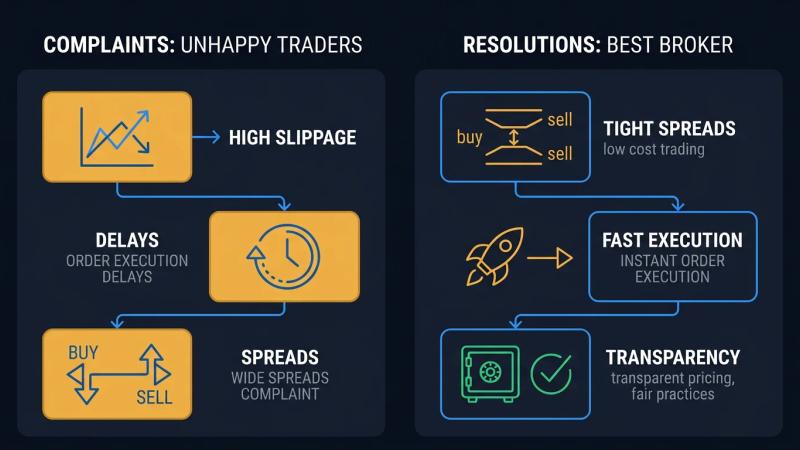
Which Forex Brokers Have the Most Complaints? What Regulatory Records Actually Show
Learn how to check forex broker complaint records across FCA, ASIC, NFA, and CySEC databases; and what those records actually tell you before you open an account.
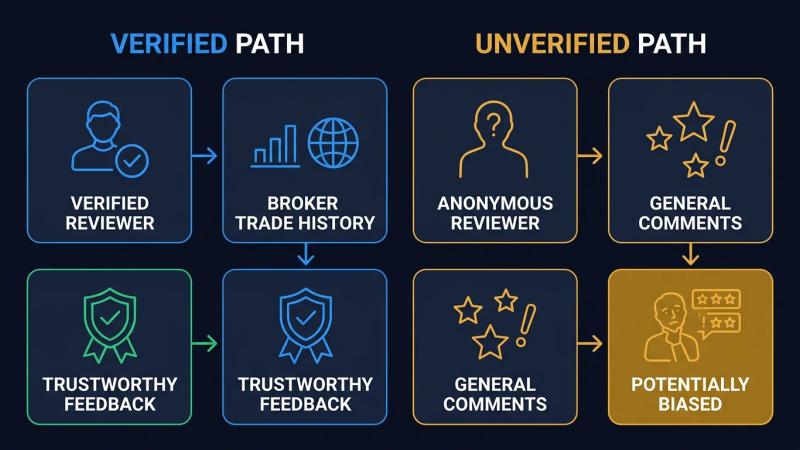
Verified vs Unverified Forex Broker Reviews: What the Difference Actually Means
What "verified" actually means on broker review platforms, how to spot fake review campaigns, and how to build a credibility framework that surfaces genuine signal before you open an account.
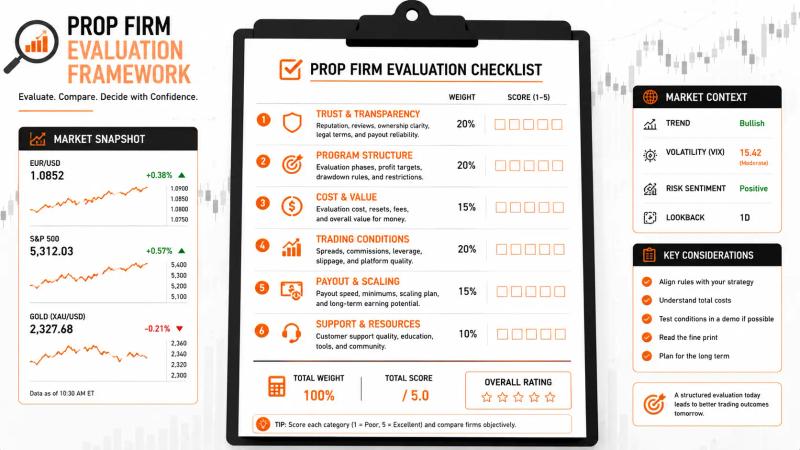
Questions to Ask Before Opening a Trading Account
A structured checklist of key questions to ask any broker before you deposit -- covering regulation, fund safety, fees, execution, and red flags.
0 comments