



Financial Markets · Beginner · 3 min read
Forex brokers for Iranian residents: eligibility, sanctions and practical access
Why the best forex brokers for Iranians are hard to find
Opening a forex account from Tehran or Shiraz feels different from opening one in Frankfurt or London, and the reason sits in international sanctions rather than in market access. Choosing among the best forex brokers for Iranians therefore starts with eligibility, not spreads: under OFAC sanctions rules, a large share of mainstream brokers will decline the application at the residency check, since their licences oblige them to keep out of jurisdictions their regulator flags as high risk. The practical starting point is to read the terms of service and the restricted-countries list of any broker on your shortlist, and to confirm which specific group entity would hold your account, before you fill in a single form or move any money.
The rules behind this come straight from public guidance. According to OFAC (the U.S. Treasury's Office of Foreign Assets Control), Iranian sanctions prohibit the export of goods or services to Iran, and U.S. banks operating accounts for individuals in Iran would be in breach of the Iranian Transactions Regulations. OFAC also notes that U-Turn payments for Iran have not been permitted since November 10, 2008, which closed a common dollar-clearing route that used to help Iranian-linked transfers move through the U.S. banking system.
Regulation and licensing: what to check as an Iranian client
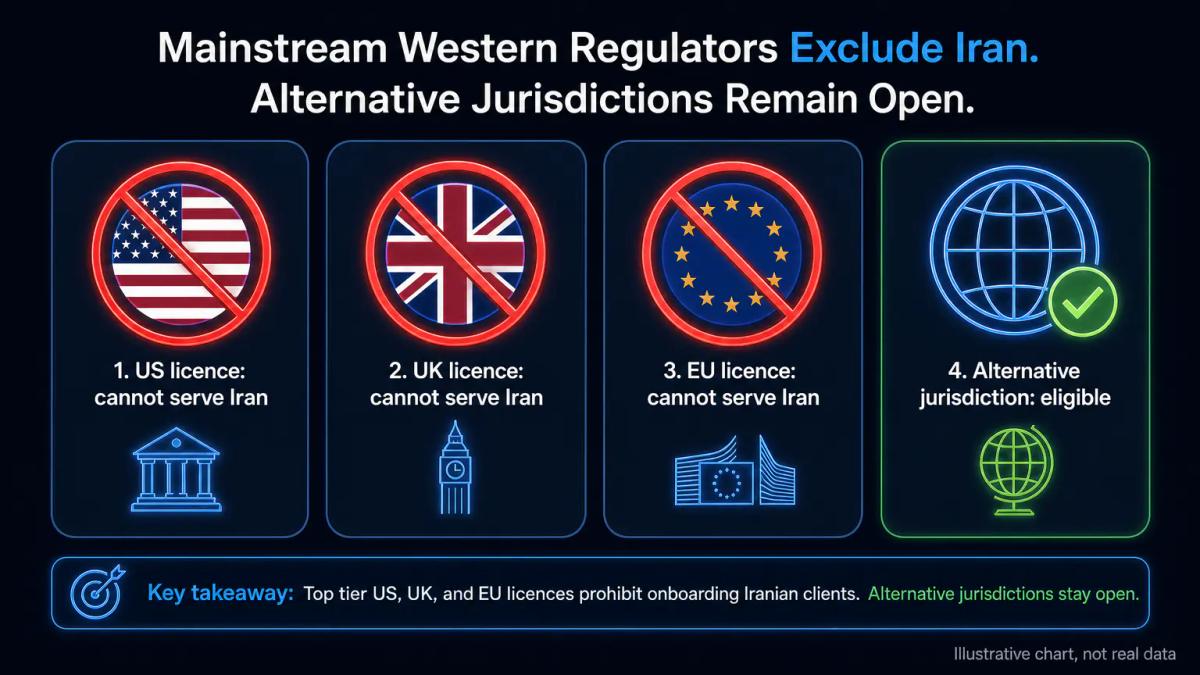
A broker's regulation (the licence it holds from a financial authority) determines which residents it can legally onboard. According to OFAC, brokers authorised in the United States, the United Kingdom or the European Union cannot accept Iranian residents under sanctions law, so a realistic shortlist will centre on entities licensed in jurisdictions with lighter sanctions exposure. Terms of service repay careful reading, because a broker's group often holds several licences and only one of the group entities may accept Iranian residents. Confirm which entity would hold your account, and check the restricted-countries list before you start the application.
Payment methods and deposit limits for Iranian traders
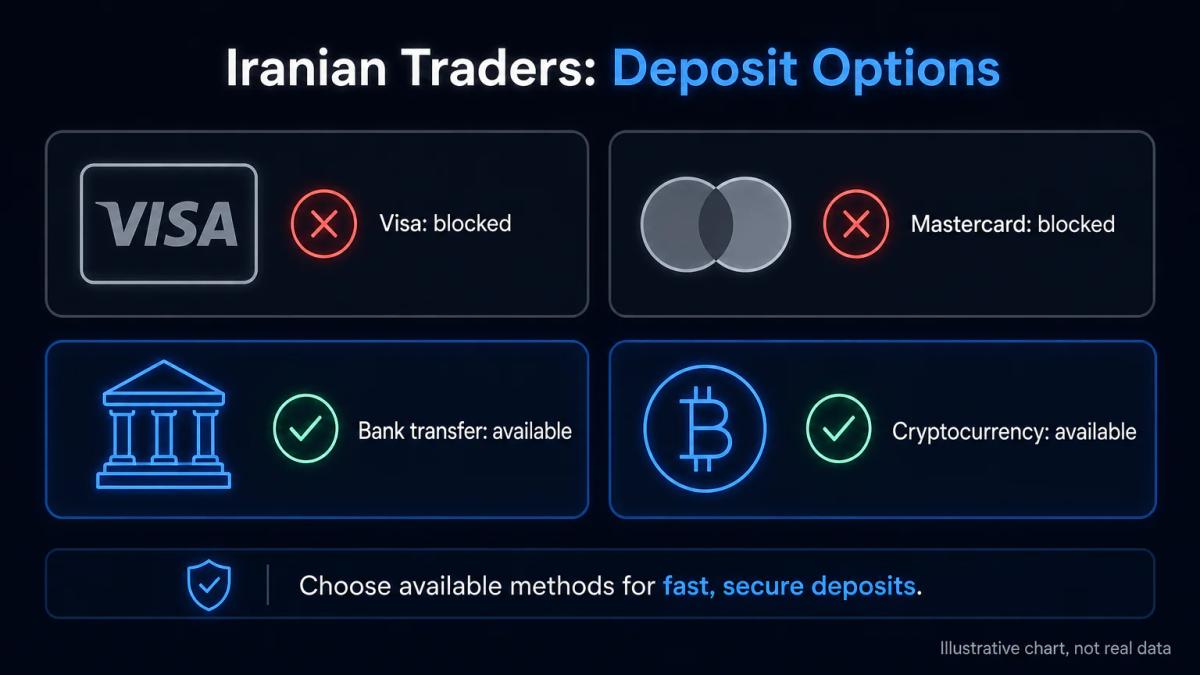
Payments are usually the tightest constraint of the whole setup. Card rails from Visa and Mastercard, and correspondent U.S. dollar clearing, are effectively closed for Iranian residents, so brokers that do onboard you tend to route funds through bank transfers in non-sanctioned currencies, local payment gateways or cryptocurrency deposits. Processing times run longer than for other regions because compliance teams verify each transfer manually, and minimum deposits, per-transaction caps and withdrawal limits vary widely from one broker to another. Ask the broker in writing for the exact figures that apply to your account currency and payment method before you commit.
Islamic swap-free accounts and trading conditions
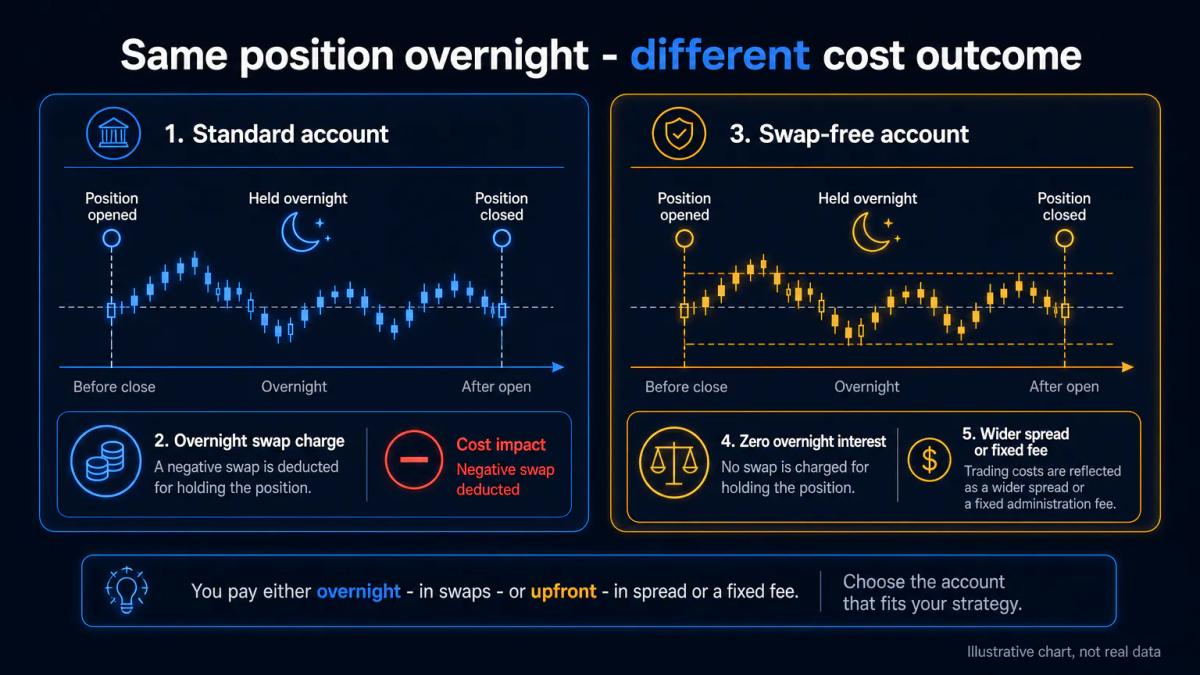
A swap is the overnight interest a broker charges or pays when you hold a leveraged position past the daily rollover. Swap-free accounts, sometimes labelled Islamic accounts, remove that overnight interest to comply with Sharia principles, and many brokers that accept Iranian clients now offer them. Conditions vary from one broker to the next in three usual ways:
- Some brokers widen the spreads (the gap between the buy and sell price) on swap-free accounts.
- Some add a fixed administration fee after a set number of nights that the position stays open.
- Some restrict the instruments that can be traded on the swap-free version of the account.
When you compare the swap-free spread across a shortlist, weigh any admin fee, execution speed and the list of tradable pairs together, so the label alone does not decide the choice.
Account verification and documentation for Iranian residents
Brokers that onboard Iranian residents apply standard know-your-customer checks, and in practice tighter source-of-funds scrutiny on top. The paperwork typically covers three items:
- A valid identity document, for example a passport or national ID card.
- A recent proof of address issued within the last three months, for example a utility bill or a bank statement.
- Evidence of where your trading capital comes from, for example salary slips or a bank statement covering several months.
Verification can take longer than the broker's advertised turnaround, because compliance reviews are manual for higher-risk jurisdictions. Read the onboarding checklist before you start and prepare clear scans, so you avoid resubmissions later.
Frequently Asked Questions
Can I trade forex as an Iranian resident?
You can, though your choice of broker is narrow. According to OFAC, firms regulated in the United States, the United Kingdom and the European Union are prohibited from onboarding Iranian residents under sanctions rules, so a realistic shortlist sits outside those jurisdictions. Before applying anywhere, read the terms of service and the restricted-countries list to confirm which specific entity of the broker group will accept your residency.
What payment methods do brokers accept for Iranian clients?
Visa and Mastercard rails, along with U.S. dollar clearing, are effectively closed. Brokers that onboard Iranian residents therefore tend to accept three routes: bank transfers in non-sanctioned currencies, local payment gateways, and cryptocurrency deposits. Ask the broker in writing for the exact deposit and withdrawal limits, processing times and any conversion fees that apply to your account currency before you fund the account.
Are swap-free accounts available to Iranian traders?
Yes, many brokers that accept Iranian residents offer swap-free, Sharia-compliant accounts that remove the overnight interest charged or paid on leveraged positions. Conditions vary between brokers, so compare the swap-free spread, any fixed admin fee applied after a set number of nights, and any restriction on tradable instruments. The swap-free label alone should not decide the choice.
How do I verify a broker accepts Iranian clients before signing up?
Open the broker's terms of service and look for the restricted or prohibited countries clause; under OFAC sanctions rules, Iran is often listed explicitly. Check which entity of the group would hold your account and under which regulator, since a group may hold several licences and only one entity may accept your residency. If either the structure or the list is unclear, contact support in writing and keep the reply before you deposit.
About the authors


Put this into practice
Related articles

Forex vs Stocks Trading: Key Differences for Retail Traders
A direct comparison of forex vs stocks trading for UK retail traders: hours, leverage caps, costs, tax treatment, and platform differences.

Geopolitical Risk Trading: What Trump’s War Policy Means for Your Positions
Learn how Trump's war policy affects forex, gold, and indices. A practical geopolitical risk trading guide for retail traders.

How to Evaluate a Prop Firm Before You Buy a Challenge
Learn how to evaluate a prop firm before buying a challenge. Use this due diligence framework to vet payouts, rules, and red flags.
0 comments