



What Is Commodity Trading? A Beginner’s Guide to Trading Commodities
Did you know you can trade a lot more than just financial assets?
Commodity trading involves buying and selling raw materials and primary goods on financial markets, from energy products like oil and natural gas to precious metals like gold and silver, including agricultural staples such as wheat and coffee. For centuries, commodities have formed the backbone of global trade. Today, they represent one of the largest and most actively traded asset classes worldwide.
This guide explains what commodities are, how commodity markets operate, and the different methods available for trading them. If you ever thought about investing in gold, trading oil, or simply want to understand how these markets function, you’ll find a clear foundation here.
Disclaimer: This article is for educational purposes only and does not constitute financial advice. Trading commodities, particularly leveraged products like futures and CFDs, carries significant risk, including the potential to lose more than your initial investment.
What Are Commodities?
Commodities are basic goods that are interchangeable with other goods of the same type. A barrel of crude oil from one producer is essentially identical to a barrel from another. This fungibility allows commodities to be standardized and traded on exchanges worldwide.
Unlike stocks, which represent ownership in a company, or bonds, which represent debt, commodities are tangible, physical goods. Their prices respond primarily to supply and demand dynamics rather than company performance or interest rate movements.
Hard Commodities vs. Soft Commodities
Commodities fall into two broad categories based on how they’re obtained.
Hard commodities are natural resources mined or extracted from the earth. These include metals like gold, silver, copper, and platinum, as well as energy products such as crude oil and natural gas.
Soft commodities are agricultural products that are grown rather than mined. Examples include wheat, corn, soybeans, coffee, sugar, and cotton. Their prices tend to be more susceptible to weather conditions and seasonal patterns than hard commodities, though this varies by crop and region.
Major Commodity Categories
Commodity markets are typically organized into four main categories:
Energy encompasses crude oil (including Brent and WTI benchmarks), natural gas, heating oil, and gasoline. Energy commodities rank among the most heavily traded due to their essential role in the global economy.
Metals include precious metals like gold, silver, and platinum, as well as industrial metals such as copper, aluminum, and zinc. Precious metals often attract traders during periods of economic uncertainty, as many investors see them as a store of value.
Agriculture covers grains (wheat, corn, rice), softs (coffee, sugar, cocoa), and livestock (cattle, hogs). Weather, growing seasons, and shifting global food demand all influence these markets.
Livestock and Meat includes live cattle, feeder cattle, and lean hogs. These commodities are particularly sensitive to feed costs, disease outbreaks, and consumer demand patterns.
How Commodity Markets Work
Commodity trading takes place through organized exchanges and over-the-counter (OTC) markets. Understanding the difference between spot and futures markets is essential for anyone looking to trade commodities.
Spot Markets vs. Futures Markets
The spot market (also called the cash market) involves the immediate exchange of commodities at current market prices. Buying on the spot market means purchasing the actual physical commodity for delivery now or within a very short timeframe. Spot prices reflect what buyers will pay for immediate delivery.
The futures market involves contracts to buy or sell a specific quantity of a commodity at a predetermined price on a future date. Futures contracts are standardized agreements traded on exchanges. Most futures traders never take physical delivery: they close their positions before expiration or settle in cash.
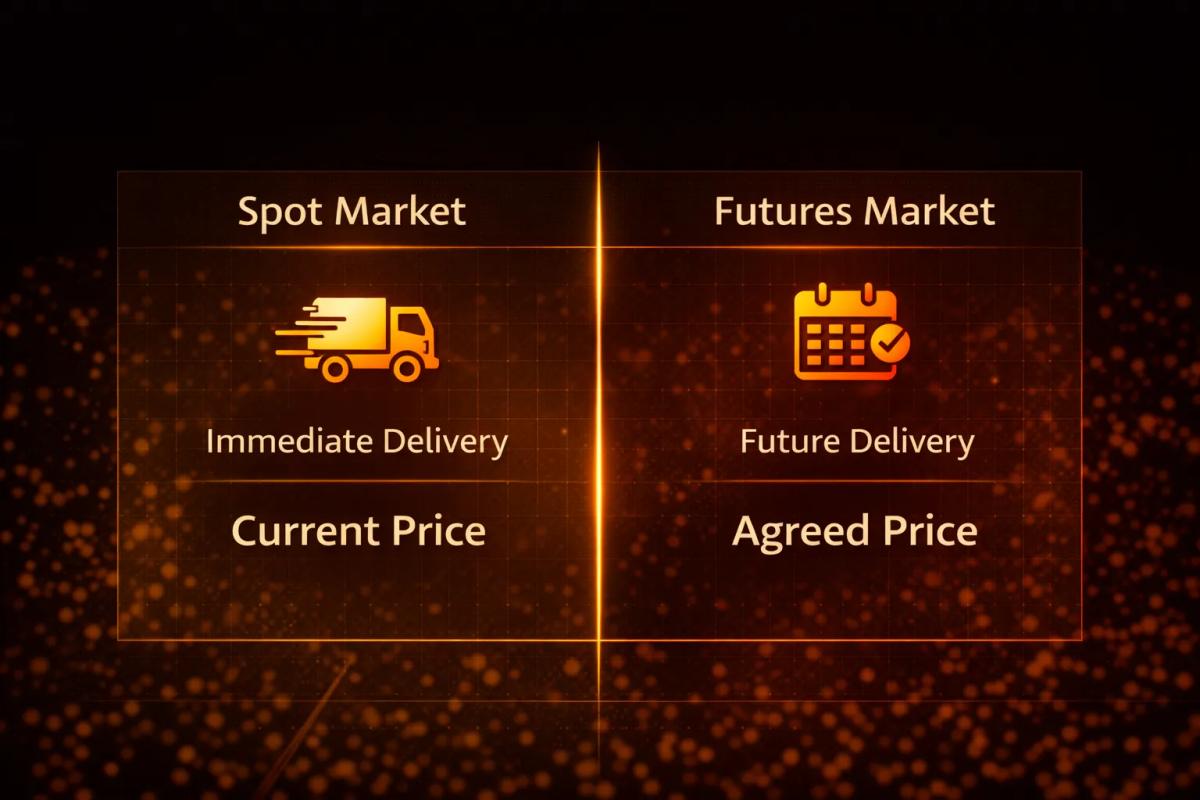
The relationship between spot and futures prices can often provide useful market information. When futures prices exceed spot prices (contango), this may reflect expectations of rising prices, storage costs, or both. When futures trade below spot prices (backwardation), it can indicate near-term supply concerns or strong immediate demand.
Key Commodity Exchanges
Commodity trading is centralized through major exchanges that provide standardization, transparency, and liquidity.
CME Group operates several of the world’s largest commodity exchanges, including the Chicago Mercantile Exchange and the New York Mercantile Exchange (NYMEX). NYMEX is particularly important for energy commodities like WTI crude oil and natural gas.
COMEX, a division of CME Group, serves as the primary exchange for trading precious metals including gold, silver, copper, and platinum.
Intercontinental Exchange (ICE) handles significant volumes of energy trading, including the Brent crude oil benchmark, as well as agricultural commodities like coffee, sugar, and cotton.
London Metal Exchange (LME) specializes in industrial metals such as aluminum, copper, zinc, and nickel.
These exchanges set contract specifications, margin requirements, and settlement procedures that bring order to commodity markets globally.
Ways to Trade Commodities
If you want to dive into commodity trading, you have several options to get started. Each comes with different characteristics, capital requirements, and risk profiles. Let’s go over them.
Futures Contracts
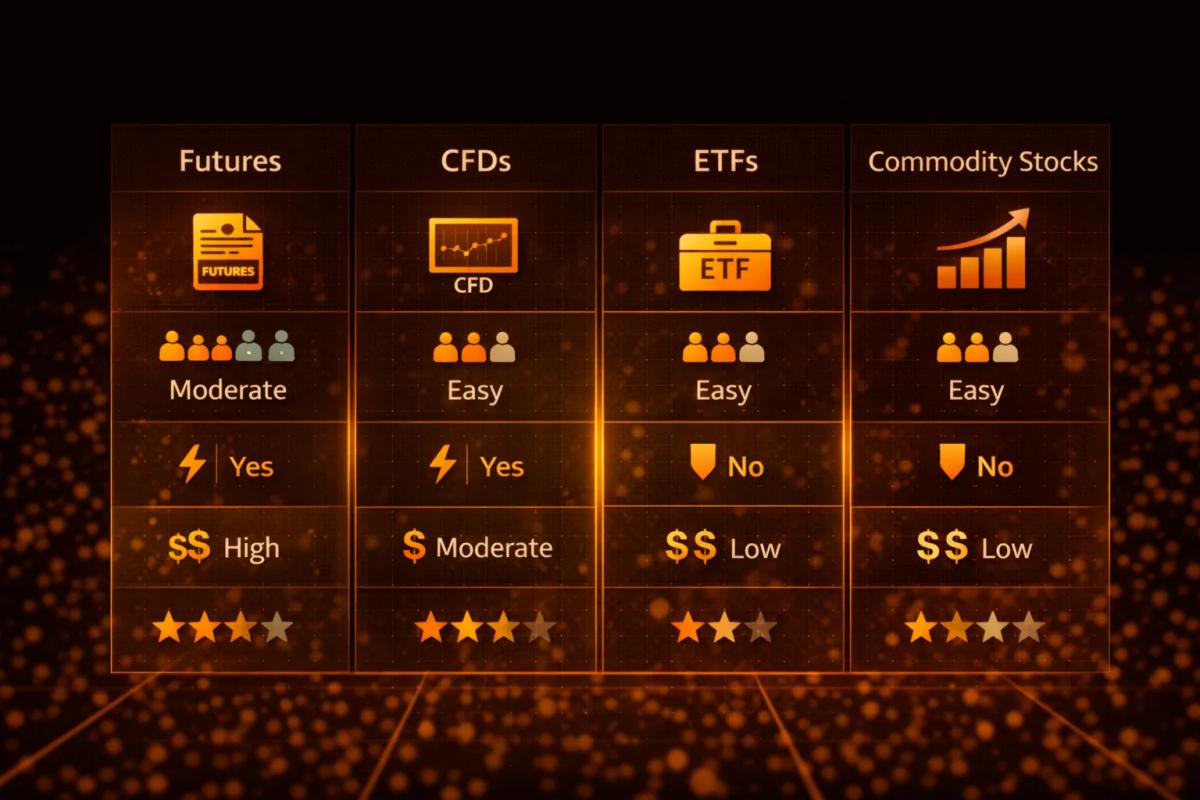
Futures contracts are standardized agreements to buy or sell a specific quantity of a commodity at a set price on a future date. Trading futures provides direct exposure to commodity prices and is the method commercial producers and consumers use to hedge their risk.
Futures trading requires an account with a broker that provides access to futures exchanges. Traders must maintain margin (a deposit that acts as collateral) which is typically a fraction of the contract’s full value. Remember, using leverage means relatively small price movements can result in significant gains or losses.
Futures contracts have expiration dates. Before expiration, traders must either close their position, roll it to a later contract, or arrange for physical delivery. Most retail traders close positions well before expiration to either secure their profits or cut their losses.
Contracts for Difference (CFDs)
Contracts for difference allow traders to speculate on commodity price movements without owning the underlying asset. When you trade a CFD, you enter an agreement with a broker to exchange the difference in price between when you open and close the position.
CFDs offer flexibility: you can trade in smaller sizes than standard futures contracts and go long or short with equal ease. However, CFDs are leveraged products, which amplifies both potential profits and losses. Depending on your jurisdiction, CFD trading may be restricted or unavailable entirely.
Commodity ETFs and ETNs
Exchange-traded funds (ETFs) and exchange-traded notes (ETNs) provide exposure to commodities through products that trade on stock exchanges like regular shares.
Some commodity ETFs hold physical commodities (common with precious metals), while others use futures contracts to track commodity prices. ETNs are debt instruments whose value is linked to a commodity index.
These products offer accessibility: you can buy them through a standard brokerage account and don’t require managing futures contract expirations. However, ETFs and ETNs may not perfectly track spot prices, especially those using futures, due to contango or backwardation effects. They also carry management fees that affect returns over time.
Commodity Stocks
Another indirect approach involves investing in the stocks of companies involved in commodity production: mining companies, oil producers, or agricultural firms.
This method provides exposure to commodity price trends while incorporating company-specific factors like management quality, production costs, and balance sheet strength. Commodity stocks can outperform or underperform the underlying commodity substantially due to these additional variables.
Popular Commodities to Trade
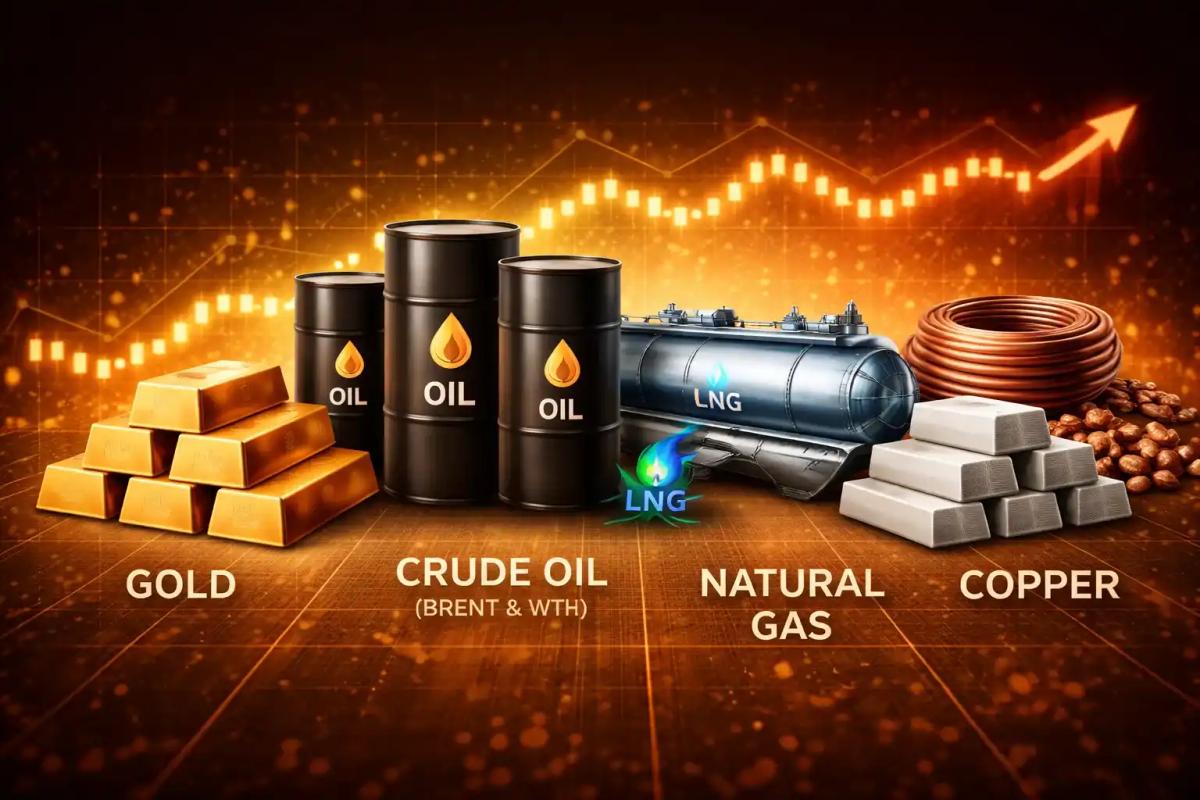
Certain commodities attract more trading activity due to their economic importance, liquidity, and price volatility. Here are the superstars of commodity trading.
Gold Trading
Gold is one of the most widely traded commodities and holds a distinctive position in financial markets. Beyond its industrial uses in electronics and jewelry, many investors view gold as a store of value during economic uncertainty.
Gold prices respond to interest rates, inflation expectations, currency movements (particularly the US dollar), central bank policies, and geopolitical tensions. The metal trades around the clock across global markets, with COMEX serving as a primary exchange for futures trading.
Traders can access gold through futures, CFDs, ETFs (including those backed by physical gold), mining stocks, or physical bullion.
Oil Trading
Crude oil is arguably the world’s most economically significant commodity, powering global industries like transportation, manufacturing, and heating. Oil trading is highly liquid and draws considerable attention from traders and institutions alike.
Two main benchmarks dominate oil trading: West Texas Intermediate (WTI), priced at Cushing, Oklahoma, trading primarily on NYMEX; and Brent crude, sourced from the North Sea, which serves as the global benchmark and trades on ICE.
Oil prices respond to supply decisions from major producers (including OPEC), geopolitical events in oil-producing regions, global economic growth, inventory data, and refinery capacity. The market’s volatility creates opportunities but also carries significant risk.
Other Precious Metals
Beyond gold, several precious metals attract active trading interest.
Silver shares some characteristics with gold as a perceived store of value but also has substantial industrial demand in electronics, solar panels, and medical applications. Silver tends to be more volatile than gold, and some traders monitor the gold-to-silver price ratio as a potential signal.
Additionally, Platinum and palladium are primarily industrial metals used in automotive catalytic converters, jewelry, and electronics. Their prices can be heavily influenced by automotive industry demand and supply constraints from major producing countries like South Africa and Russia.
Factors To Look Out for in Commodity Trading
When you’re trading commodities, prices are constantly fluctuating, driven by a complex interplay of factors that you’ll have to monitor closely.
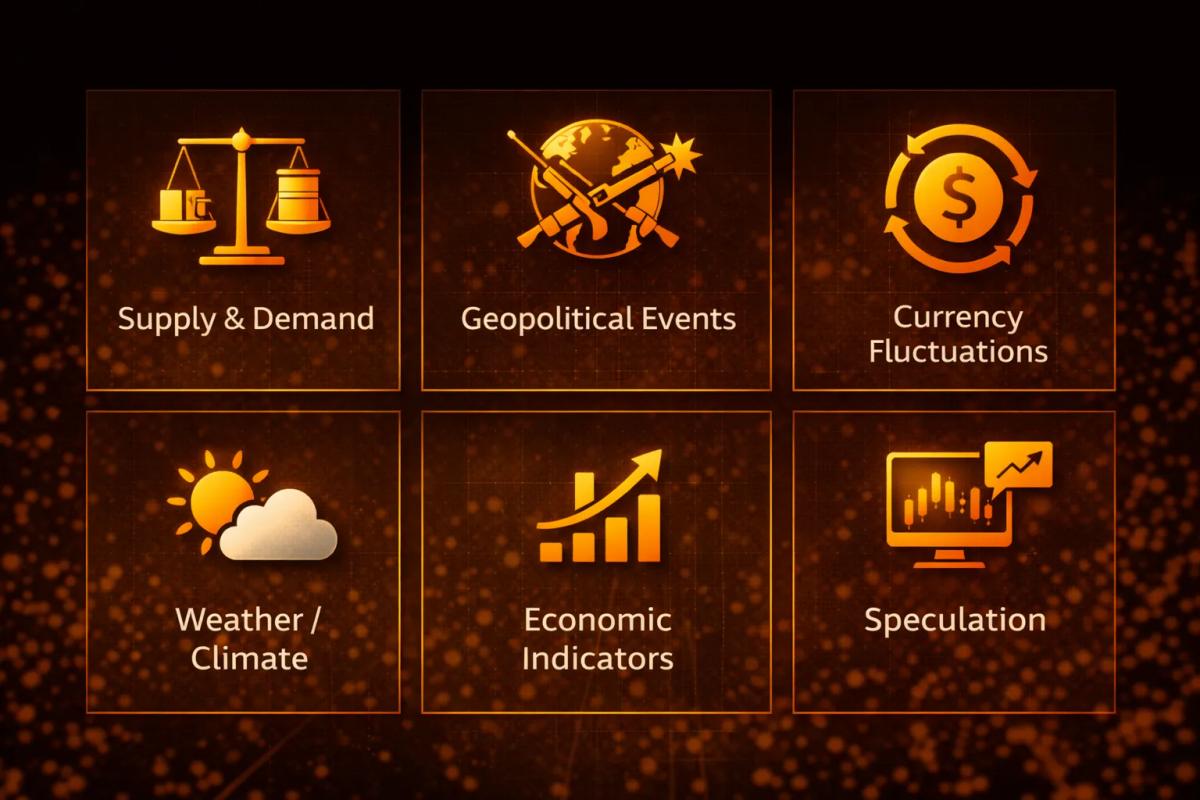
Supply and demand form the fundamental basis of commodity pricing. Disruptions to supply (mine closures, crop failures, production cuts) tend to push prices higher, while demand changes from economic growth or contraction shift prices accordingly. The balance between current production and consumption, along with inventory levels, shapes price expectations.
Geopolitical events can produce immediate and dramatic price effects. Conflicts in oil-producing regions, trade disputes, sanctions, and political instability all create uncertainty that typically increases volatility. Energy commodities and certain metals are particularly sensitive to geopolitical developments.
Currency fluctuations matter because most commodities are priced in US dollars on international markets. When the dollar strengthens, commodities become more expensive for buyers using other currencies, which can dampen demand and pressure prices lower. A weaker dollar tends to have the opposite effect, though the relationship isn’t mechanical.
Weather and climate play a crucial role, especially for agricultural commodities. Droughts, floods, frosts, and other weather events can devastate crop yields and drive prices sharply higher. Energy demand also fluctuates with temperature extremes affecting heating and cooling needs.
Economic indicators such as GDP growth, manufacturing output, employment data, and inflation figures signal overall economic health and influence expected commodity demand. Strong economic growth generally supports commodity prices, while recession fears tend to weigh on them.
Finally, speculation and market sentiment also move prices. Large trading volumes from hedge funds, institutional investors, and retail traders can amplify price trends or create short-term dislocations from fundamental values.
Risks of Commodity Trading
Commodity trading carries substantial risks that you should understand before participating.
Price volatility is inherent in commodity markets. Prices can move sharply and unexpectedly in response to weather events, geopolitical developments, or shifts in supply and demand. This volatility can generate large losses quickly, especially for leveraged positions.
Leverage risk is significant when trading futures or CFDs. While leverage allows traders to control large positions with relatively small capital, it also means losses can exceed your initial investment. A modest adverse price move can wipe out your entire margin, and potentially more.
Liquidity risk exists in some commodity markets, particularly less-traded contracts or during off-peak hours. Illiquid markets may have wider spreads between buying and selling prices, making it difficult to exit positions at desired levels.
Contango and roll costs affect traders holding futures-based positions over time. In contango markets, rolling from an expiring contract to the next one can erode returns even if the spot price remains unchanged.
Regulatory and operational risks include changes in margin requirements, exchange rules, or trading restrictions that can affect your ability to trade or hold positions. Broker insolvency is another consideration worth evaluating.
Last but not least, knowledge gaps pose particular risk for beginners. Commodity markets respond to specialized factors: weather patterns, extraction costs, storage economics, geopolitical dynamics and other aspects that require ongoing attention to understand properly.
Warning: Consider whether commodity trading aligns with your financial situation, investment objectives, and risk tolerance. Never trade with money you cannot afford to lose.
How to Start Trading Commodities
If you’ve decided commodity trading fits your goals and risk tolerance, here are practical steps to begin.
Choosing a Broker or Platform
Selecting an appropriate broker is a critical first step. Consider the following when evaluating options:
Regulation should be a priority. Choose a broker regulated by reputable financial authorities in your jurisdiction. Regulation provides certain protections and ensures the broker meets specific operational standards.
Available instruments vary by broker. Some offer futures trading, others specialize in CFDs, and many provide access to commodity ETFs and stocks. Confirm the broker offers the products you want to trade.
Costs and fees include spreads, commissions, overnight financing charges (for CFDs), and any account maintenance fees. Compare these across brokers, they directly affect your trading profitability.
Trading platform quality matters for execution speed, charting tools, and overall usability. Many brokers offer demo accounts where you can test their platforms before committing real money.
Finally, educational resources and customer support can prove valuable, especially when learning to navigate commodity markets.
Building a Trading Plan
Successful trading requires discipline and preparation. Before placing your first trade, develop a plan that addresses:
Your objectives should be realistic and specific. Are you looking to speculate on short-term price movements, hedge existing exposure, or build long-term positions? Different goals call for different approaches.
Risk management rules are essential. Determine how much capital you’re willing to risk per trade and overall. Many experienced traders limit individual trade risk to a small percentage of their total trading capital. Decide in advance where you’ll place stop-loss orders to limit potential losses.
Market selection means choosing which commodities to focus on initially. Starting with one or two markets allows you to develop deeper understanding rather than spreading your attention too thin.
Analysis approach involves deciding how you’ll evaluate trading opportunities. Some traders focus on fundamental analysis (supply, demand, and macroeconomic factors) while others use technical analysis, studying price charts and patterns. Many combine both approaches.
Record keeping helps you learn from successes and mistakes alike. Track your trades, your reasoning behind them, and the outcomes to identify patterns in your decision-making.
Beginning with a demo account lets you practice your trading plan with virtual money before risking real capital. Once you’re consistently executing your plan and managing risk appropriately in simulation, you can consider transitioning to live trading with amounts you can afford to lose.
Risk Warning: Commodity trading offers opportunities to participate in markets that power the global economy, from energy and metals to agricultural products. These markets also carry meaningful risks that require education, preparation, and disciplined risk management. This guide provides a starting point. Continue learning, stay informed about the factors driving your chosen markets, and trade within your means.

About the authors


Put this into practice
Related articles
What Is Forex Trading and How Does It Work?
Learn what forex trading is, how the currency market works, and the essential concepts you need to understand before placing your first trade.
What Is ROI and How to Calculate It
Learn what ROI means, how to calculate return on investment step by step, and what your results reveal about trading and portfolio performance.

What is Trading in Finance? A Complete Beginner’s Guide
Learn what trading means in finance, how markets work, different types of trading, and what you need to start. A clear guide for beginners to get started.
0 comments