



What is Trading in Finance? A Complete Beginner’s Guide
Every second, somewhere in the world, a trade happens. A pension fund in London buys tech stocks. A farmer in Brazil locks in next season’s coffee prices. A student in Singapore sells her first cryptocurrency. Together, these individual trading activities around the world move trillions of dollars daily and power the global economy.
Yet, most people still struggle with the very basics of trading: what does it actually mean to trade, and how does it work in practice?
This guide will give you a clear definition and break down the core mechanics of financial trading. If you’ve ever felt curious after reading the term in news headlines or overhearing friends discussing the stock market, this guide is for you.
Don’t worry, you don’t need any prior financial knowledge to understand it. Let’s dive in.
Trading Definition: What Does Trading Mean?
Trading, in finance, refers to buying and selling financial assets with the goal of making a profit. These assets include stocks, currencies, commodities, cryptocurrencies, and various financial contracts.
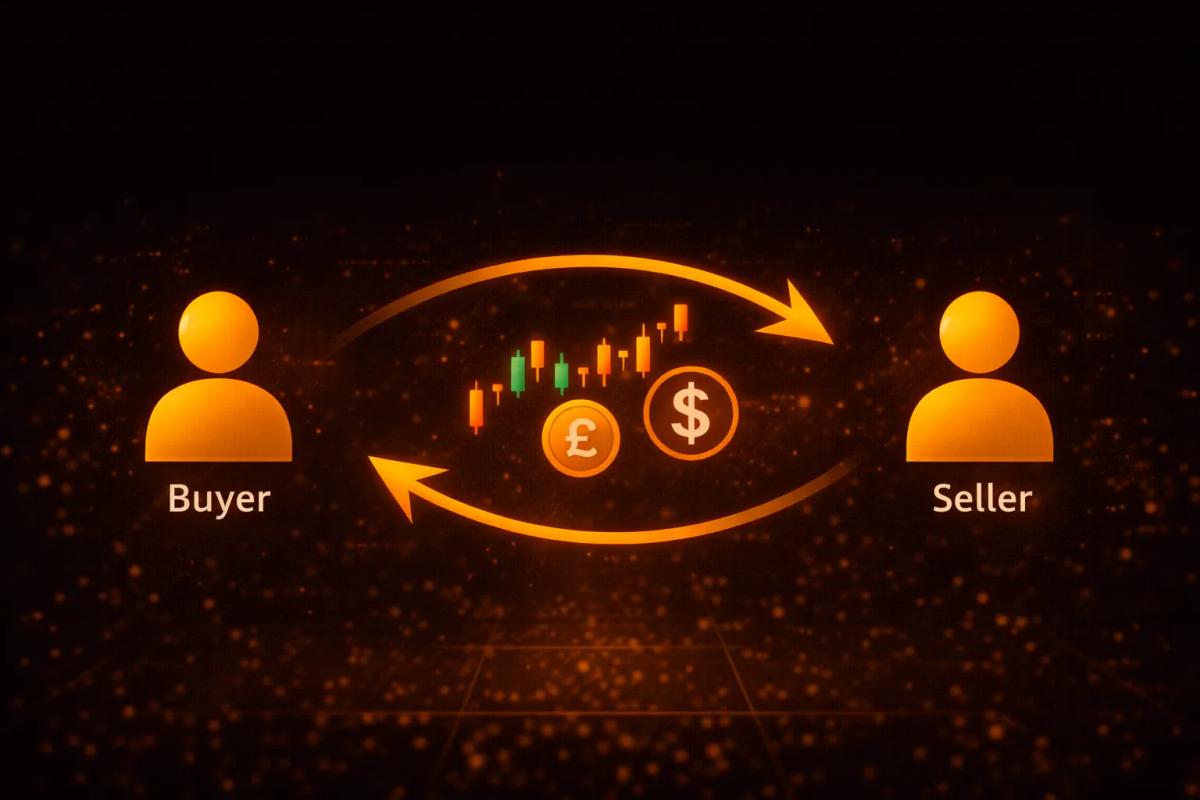
In every trade, there is a buyer who wants to acquire an asset and a seller looking to dispose of it. When both agree on a price, a trade occurs. Your objective as a trader is typically to buy assets at a lower price and sell them higher, keeping the difference as a profit. However, in some cases, the sequence reverses: sell first, then buy back later at a lower price.
Unlike buying goods for personal use, trading treats financial assets as instruments for generating returns. A trader might buy shares of a company because they expect the share price to rise in the near future.
Trading vs. Investing: Key Differences
Although these terms are often used as a synonym, they are two separate activities. Both trading and investing involve buying financial assets, but they differ substantially in approach, time horizon, and mindset.
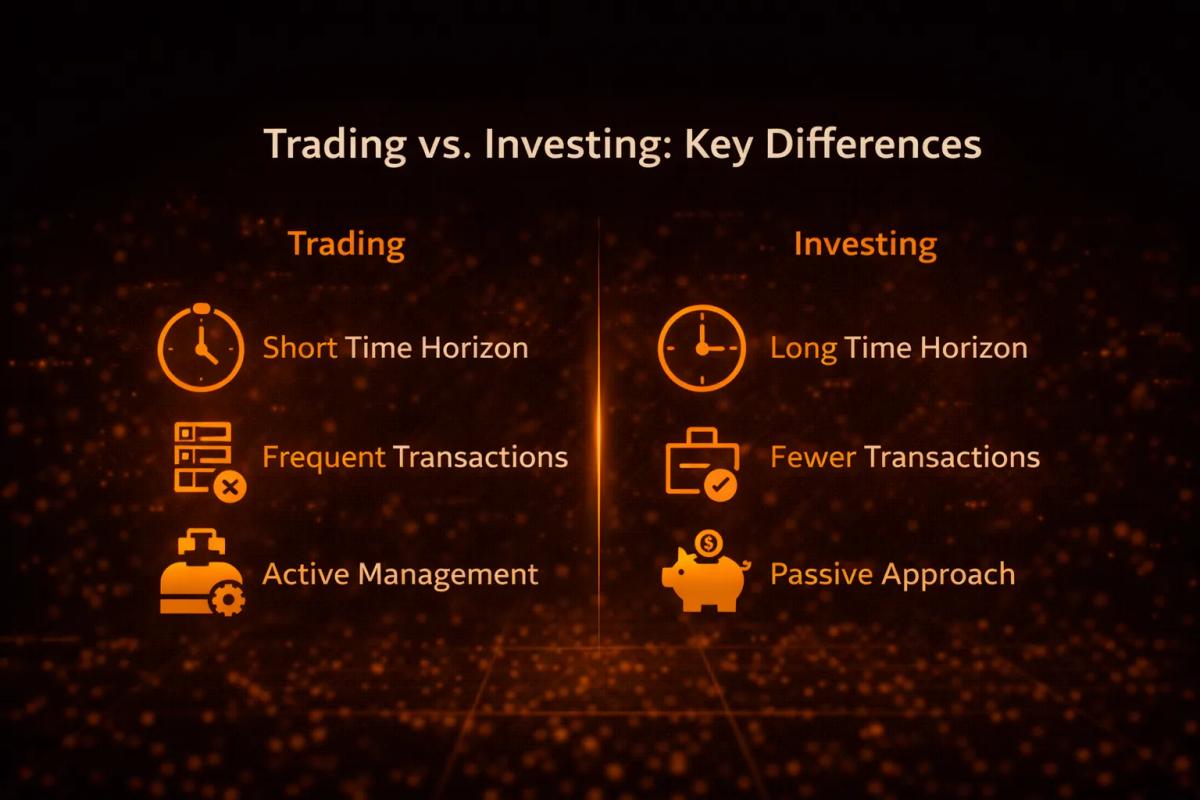
Time horizon marks the most significant distinction. Traders typically hold assets for short periods (can be minutes, days, or weeks) seeking to profit from short-term price movements. Investors generally hold assets for months or years, focusing on long-term growth and often collecting dividends or interest along the way.
Transaction frequency varies too. Traders may execute dozens or even hundreds of trades monthly, actively monitoring markets and responding to price changes. On the other hand, investors typically make fewer transactions, buying assets they intend to hold regardless of short-term market noise.
Analytical focus is another critical difference. Traders often concentrate on price patterns, market momentum, and short-term catalysts. Investors tend to emphasize fundamental factors: company earnings, industry trends, broader economic conditions.
It’s critical to note that neither approach is inherently superior. They serve different financial goals and suit different temperaments.
For now, let’s focus on the trading.
How Does Trading Work?
Let’s say you create an account on a trading platform, you fund your account, and find a stock you like. You click on the ‘Buy’ button and suddenly, you’re holding a piece of a company. But what happens in the background once you click on that button?
To understand how trading works, we need to examine the basic mechanics of financial markets.
The Role of Buyers and Sellers
For a trade to happen, there have to be two parties with opposing views. A buyer, who believes an asset is worth acquiring at the current price; and a seller, who believes it’s worth parting with at that price.
Imagine you’re selling homemade jam. You’re asking $10 per jar because you think that’s fair for your time and ingredients. A customer walks up who thinks $10 is a great deal for quality jam. You shake hands and exchange money for jam. Congratulations! You just executed a trade.
But what if you wanted $10 and every customer only wanted to pay $8? You haven’t reached an agreement, so the buyer walks out with his money and you keep your jam waiting for someone else to acquire it. A transaction only happens when a buyer and seller agree on the same price.
Financial markets work the same way, just faster and with millions of participants.
When you place an order to buy an asset, it enters the market alongside orders from countless other participants. When your buy order matches an opposite sell order for the same price, the market matches them, executing the transaction. The price at which this match occurs becomes the transaction price.
Say you place an order to buy Apple stock at $180 per share. The moment your buy order finds their sell order at the same price, the trade executes.
This difference of opinion (one person thinks “good time to buy” while another thinks “good time to sell”) is precisely what makes markets move.
The gap between the highest price a buyer will pay (the bid) and the lowest price a seller will accept (the ask) is called the bid-ask spread. This spread represents a cost of trading and varies based on how actively an asset changes hands.
How you submit an order matters too. A market order executes immediately at the best available price, and is designed for simplicity and immediacy. On the other hand, a limit order only fills at your specified price or better, giving you more control but no guarantee of execution. This type of orders are better for accuracy and precision.
Understanding Markets and Exchanges
Financial markets are the venues where trading occurs. Some are centralized exchanges: physical or digital platforms where buyers and sellers meet under standardized rules. Stock exchanges like the New York Stock Exchange or the London Stock Exchange operate this way.
Other markets function in a decentralized manner, where the parties interact directly or through networks of dealers. This is often the case of the foreign exchange market, where traders buy and sell currencies from around the world.
Exchanges serve several important functions. First, they enable price discovery: the process of determining an asset’s market value through the interaction of buyers and sellers. They also provide liquidity, meaning enough participants exist to allow trades without significant delays or sharp price disruptions.
Modern trading occurs almost entirely through electronic systems. When you submit a trade through your computer or phone, your order travels through networks to reach the market. Then, matching engines pair it with a corresponding opposite order, often in milliseconds, completing the trade.
Types of Trading in Finance
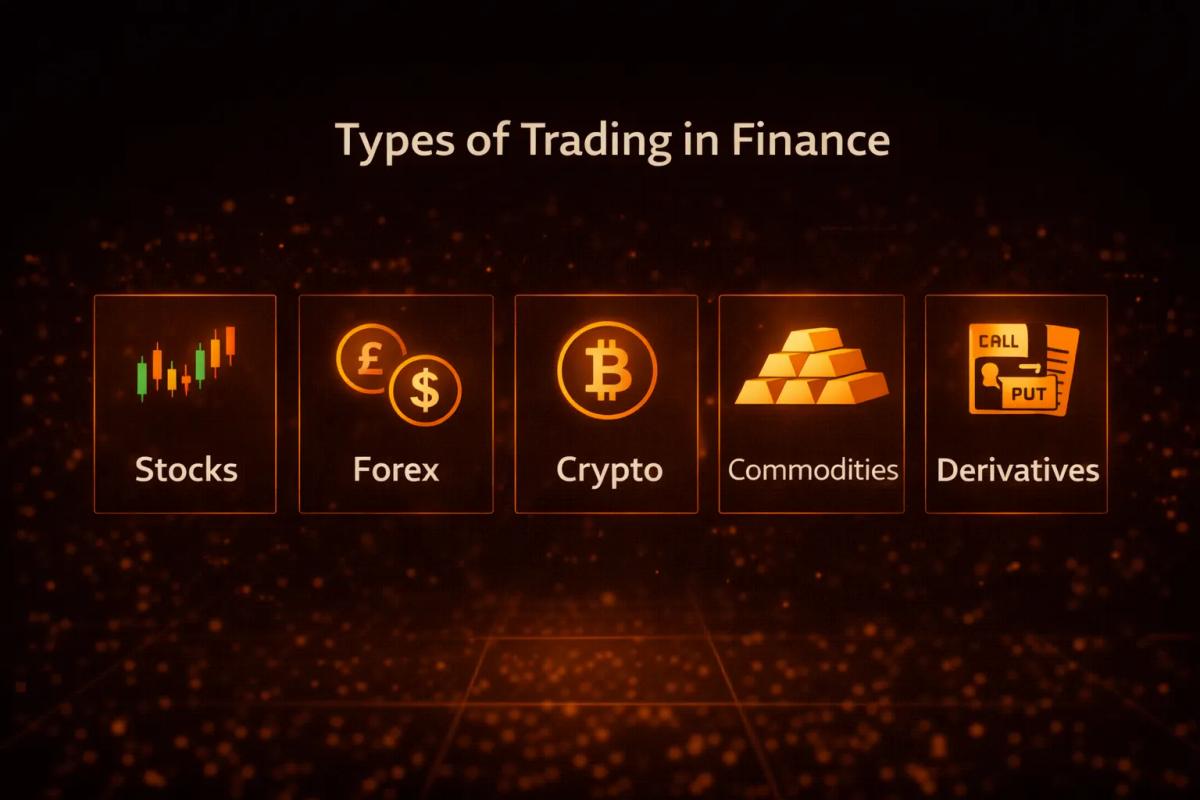
Trading encompasses various asset classes, each with distinct characteristics. Depending on the asset being traded, we can distinguish various trading categories.
Stock Trading
Stock trading involves buying and selling shares of publicly listed companies. Purchasing a stock means acquiring a small ownership stake in that company. Stock prices fluctuate based on that company’s performance, industry conditions, economic factors, and market sentiment.
Stock markets operate during set hours on business days, though some platforms offer extended trading sessions. Some of the world’s biggest exchanges are in global financial centers like New York, London, Tokyo, and Hong Kong.
Forex Trading
Forex (foreign exchange) trading involves exchanging one currency for another. The forex market is the largest financial market globally by trading volume, with participants including banks, corporations, governments, and individual traders.
Currencies trade in pairs. EUR/USD, for example, represents the euro against the US dollar. Forex markets operate 24 hours a day during the business week.
Cryptocurrency Trading
Cryptocurrency trading involves buying and selling digital currencies like Bitcoin, Ethereum, and thousands of other tokens. Unlike traditional financial markets, cryptocurrency markets operate continuously (including weekends and holidays).
Cryptocurrency prices can be highly volatile, with significant swings occurring within short periods, which makes them riskier than other markets. This market remains relatively young compared to traditional financial markets and continues evolving rapidly.
Commodities Trading
Commodities trading focuses on raw materials and primary goods: energy products (oil, natural gas), precious metals (gold, silver), agricultural products (wheat, coffee, cotton), and industrial metals (copper, aluminum).
Traders often buy and sell commodities through various instruments, like futures contracts that lock in prices for future delivery on a specific date. Prices respond to supply and demand dynamics, weather conditions, geopolitical events, and economic cycles.
Derivatives Trading
Derivatives are financial contracts whose value derives from an underlying asset. Common derivatives include options (contracts granting the right to buy or sell at a specific price) and futures (agreements to transact at a predetermined future date and price).
Derivatives serve multiple purposes. Some traders use them to speculate on price movements; others use them to hedge against potential losses in existing positions. Derivatives markets can be complex, and these instruments often carry substantial risk.
Trading Styles by Time Horizon
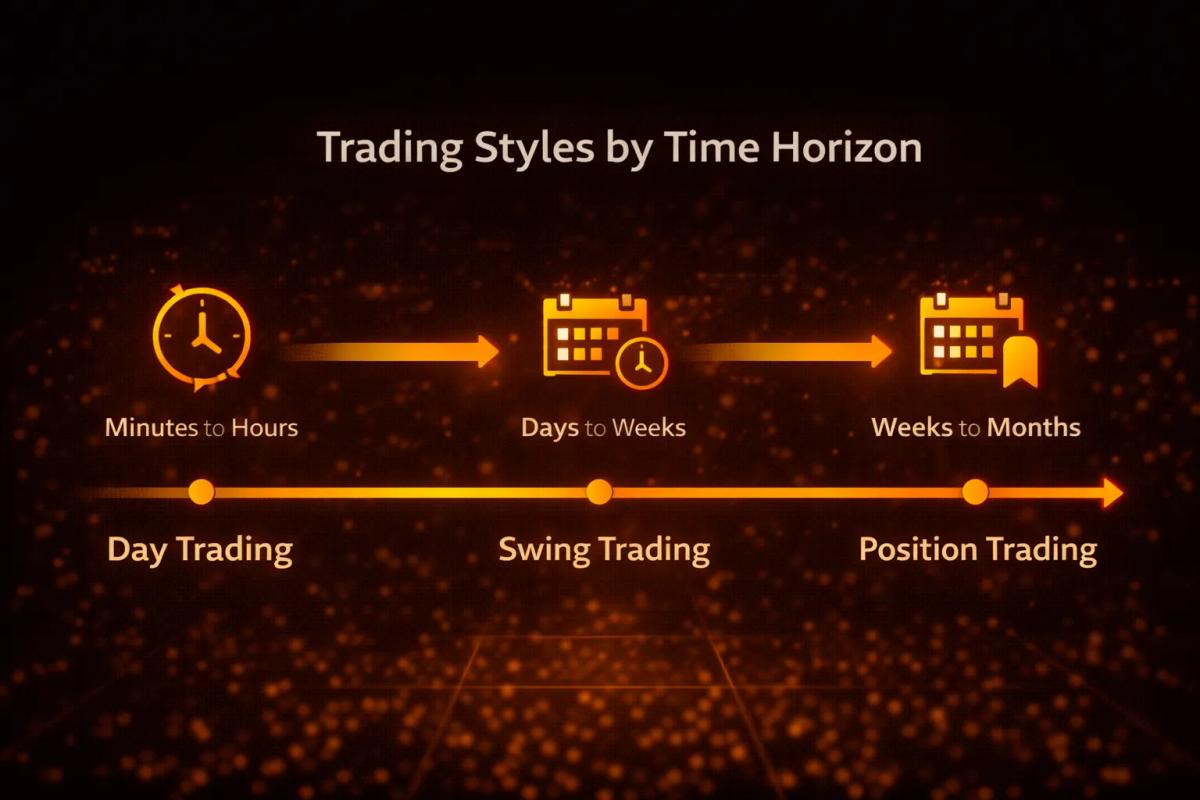
Traders adopt different approaches based on how long they intend to hold positions. We often distinguish between different trading styles depending on these time horizons. Let’s go over them.
Day Trading
Day traders open and close all positions within a single trading day, never holding overnight. This approach attempts to profit from intraday price movements and demands constant attention to markets during trading hours.
Day trading requires significant time commitment, understanding of market dynamics, and often involves numerous transactions daily. The fast pace and frequency of decisions make it one of the more demanding trading styles.
Swing Trading
Swing traders hold positions for several days to several weeks, aiming to capture price movements (or “swings,” hence the name) within a broader trend. This style doesn’t require constant market monitoring but does involve regular analysis and position management.
Swing trading attempts to balance the opportunity to capture meaningful price moves with a more manageable time commitment than day trading requires.
Position Trading
Position traders hold assets for weeks to months, sometimes longer. This approach sits closer to investing on the spectrum but maintains a trading mindset: positions remain based on expected price movements rather than long-term ownership goals.
Position trading requires patience and the ability to withstand short-term price fluctuations while waiting for anticipated moves to materialize.
What Do You Need to Start Trading?
Before you get started, you should be aware that entering financial markets requires some basic preparations.
Broker Accounts and Platforms
Let’s say you’re ready to start trading. You’ve done your research, decided what stock you want to buy, and have saved enough money to do it. All you have to do now is place an order. Where do you do it?
To interact with the market, we use platforms called brokers.
Brokers are intermediaries that execute trades on your behalf and provide platforms where you place orders, monitor positions, and manage your account. In most jurisdictions, brokers operate under regulatory oversight, which provides certain protections for client funds and establishes standards for how firms must conduct business.
Brokerage platforms vary widely in features, fees, available markets, and user experience. Some cater to beginners with simplified interfaces; others offer advanced tools for experienced traders. Many brokers also offer demo or paper trading accounts, which let you practice with simulated money before risking real capital. This is a useful way to learn platform mechanics and test strategies while avoiding risk.
Selecting an appropriate broker depends on what you plan to trade, your experience level, and your specific needs. If you need help choosing the right platform to start trading, use MonkeyTrades’ matchmaking tool to find the best broker for you.
Capital and Risk Considerations
You can’t buy assets without money! Trading requires capital: funds committed to your trading account. The amount needed varies significantly based on what you trade and your broker’s requirements. Some markets and brokers allow starting with relatively modest amounts; others require substantial minimum deposits.
Many brokers also offer leverage: a tool that allows you to enter positions that exceed your current account balance by borrowing funds. But be careful: leverage amplifies potential gains, but also potential losses: a position that moves against you can lose money faster than the capital you deposited.
Trading using leverage is called margin trading, and it carries specific risks and requirements, including the possibility of owing more than your initial deposit if markets move sharply.
In all cases, risk management deserves serious attention. Markets can move against your positions, and losses are a normal part of trading. Many traders lose money, particularly when starting out.
That’s why it’s vital to trade only with funds you can afford to lose and understand the risks specific to your chosen markets.
Is Trading Right for You?
Trading appeals to some people and suits certain circumstances better than others. Remember: there are many different types of trading, as well as other approaches to interacting with financial markets. Before you begin, make sure you understand both trading and your own mindset and psychology to make the right decision.
Here’s some aspects to take into account:
First of all, consider your available time. Active trading styles demand significant hours for market analysis and monitoring. Limited time may make longer-term approaches (or even passive investing) more realistic and suitable for you.
Temperament is also a critical aspect to evaluate. Trading involves uncertainty, and even well-reasoned decisions can result in losses. Emotional reactions to market movements, like panic selling during downturns or overconfidence during winning streaks, can be catastrophic for your portfolio.
Another question you should ask yourself is: Do you have money to spare? Trading should involve only money not needed for essential expenses or near-term goals. The potential for loss is real, and financial stress tends to compound emotional decision-making.
Finally, you should acknowledge the learning curve. Developing competence takes time, study, and often costly mistakes. Many beginners underestimate how much there is to learn about markets, analysis, and their own psychological responses.
Common early errors include overtrading (making too many transactions, often driven by impatience or excitement), chasing losses by increasing position sizes after setbacks, and abandoning a strategy after a few losing trades rather than evaluating it over a meaningful sample.
Getting Started: Your Next Steps
Trading offers a way to participate in global financial markets and potentially grow your capital. But if you want to be a successful trader, you will need preparation, discipline, and realistic expectations.
If you’re ready to begin, start small. Open a demo account and practice with simulated money until you’re comfortable with platform mechanics and order types. Use this time to develop a simple strategy and test it without financial risk. When you do commit real capital, start with amounts you can genuinely afford to lose while you learn.
One thing you must understand is that with trading, education never ends. Markets evolve, and so should your understanding. Study one asset class thoroughly before diversifying. Learn from both winning and losing trades. Keep a trading journal to track decisions and identify patterns in your behavior.
Most importantly, approach trading with patience and humility. The traders who survive long-term are the ones who manage risk carefully, control their emotions, and treat trading as a skill to develop rather than a shortcut to wealth.
The markets will be here tomorrow, next week, and next year. There’s no need to rush. Take the time to prepare properly, and you’ll be far better positioned for whatever journey you choose in financial markets.
Ready to find the right platform to begin? Use MonkeyTrades’ matchmaking tool to discover a broker that fits your goals and experience level.
Warning: Trading involves risk, including the potential loss of principal. This content is educational and informational. It does not constitute financial advice. Consider your circumstances carefully and consult qualified professionals before making financial decisions.
Key Takeaways
- Trading means buying and selling financial assets with the goal of profiting from price changes.
- Trading differs from investing primarily in time horizon, transaction frequency, and analytical focus.
- Markets function through the interaction of buyers and sellers, with prices determined by supply and demand.
- Major tradable asset classes include stocks, forex, cryptocurrencies, commodities, and derivatives.
- Trading styles range from day trading (positions held for hours) to position trading (positions held for weeks or months).
- Starting to trade requires a brokerage account, capital, and awareness of the risks involved.
- Trading isn’t suitable for everyone. Time availability, temperament, and financial circumstances all matter.

About the authors


Put this into practice
Related articles

When Does the Market Open? Hours by Exchange, Asset Class, and Time Zone
A plain-English guide to US and global market opening times, extended hours, holiday closures, and the best windows to trade across asset classes.
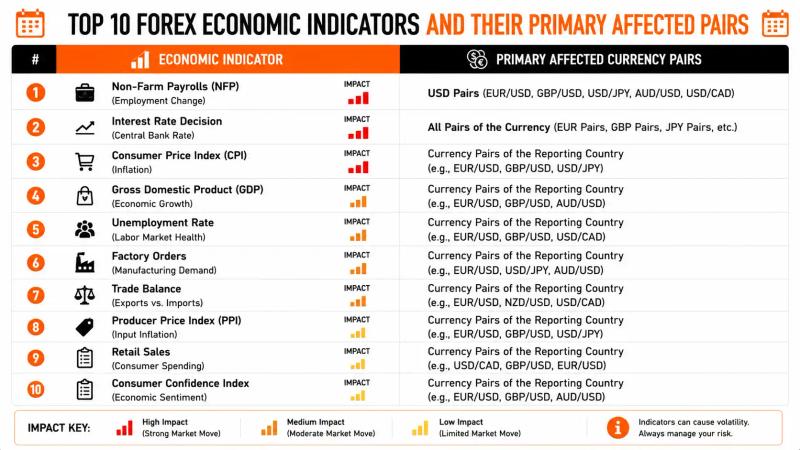
10 Economic Indicators Every Forex Trader Should Track
Learn which 10 economic indicators move forex markets, why each one matters, and how to use an economic calendar to trade smarter.
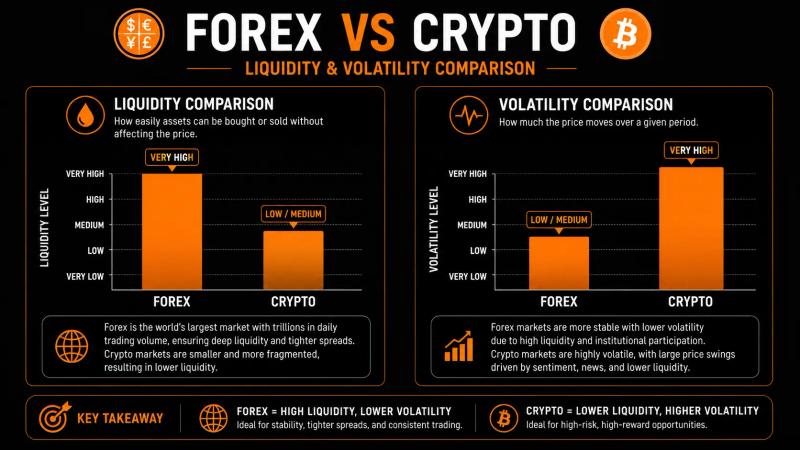
Forex vs Crypto: Which Market Has Better Risk-Adjusted Opportunities for Retail Traders?
Compare forex vs crypto on volatility, liquidity, regulation, and cost to find which market offers better risk-adjusted opportunities for you.
0 comments