


SpaceX is already public: SPCX on Nasdaq
As of October 2026, SpaceX trades on Nasdaq and Nasdaq Texas under the ticker SPCX. According to its final prospectus filed with the SEC, the company priced its initial public offering at $135 per Class A share on June 11, 2026, and began trading the next day on June 12, 2026. SpaceX filed its Form S-1 registration statement with the SEC on May 20, 2026 (Registration No. 333-296070), then amended it twice in early June before pricing the deal. Shares settled on or about June 15, 2026.
From S-1 filing to Nasdaq debut: the IPO timeline
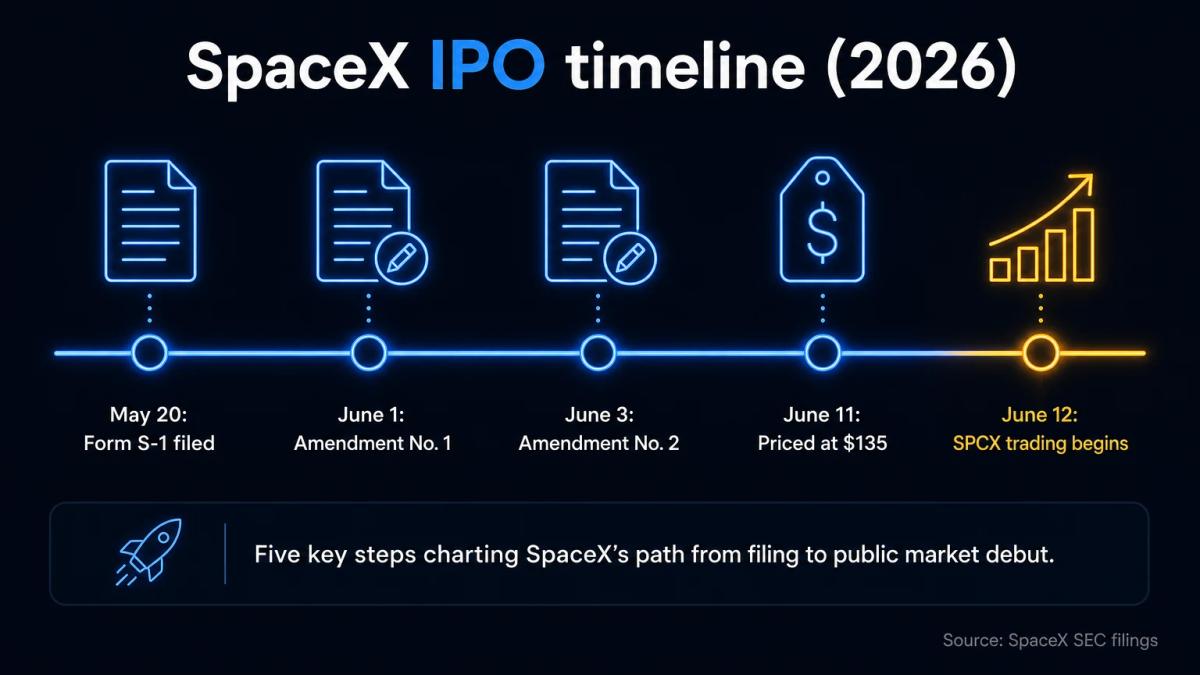
The path from private company to listed stock compressed into roughly three weeks of public process. SpaceX submitted its Form S-1 to the SEC on May 20, 2026, amended it on June 1 and June 3, 2026, and priced the deal on June 11, 2026. Two corporate actions had already set the stage: the xAI Merger closed on February 2, 2026, folding X.AI Holdings and X into the group, and a five-for-one stock split took effect on May 4, 2026. A Form S-1 is the registration document a US issuer files with the SEC before selling shares to the public.
IPO price, size and how much SpaceX raised
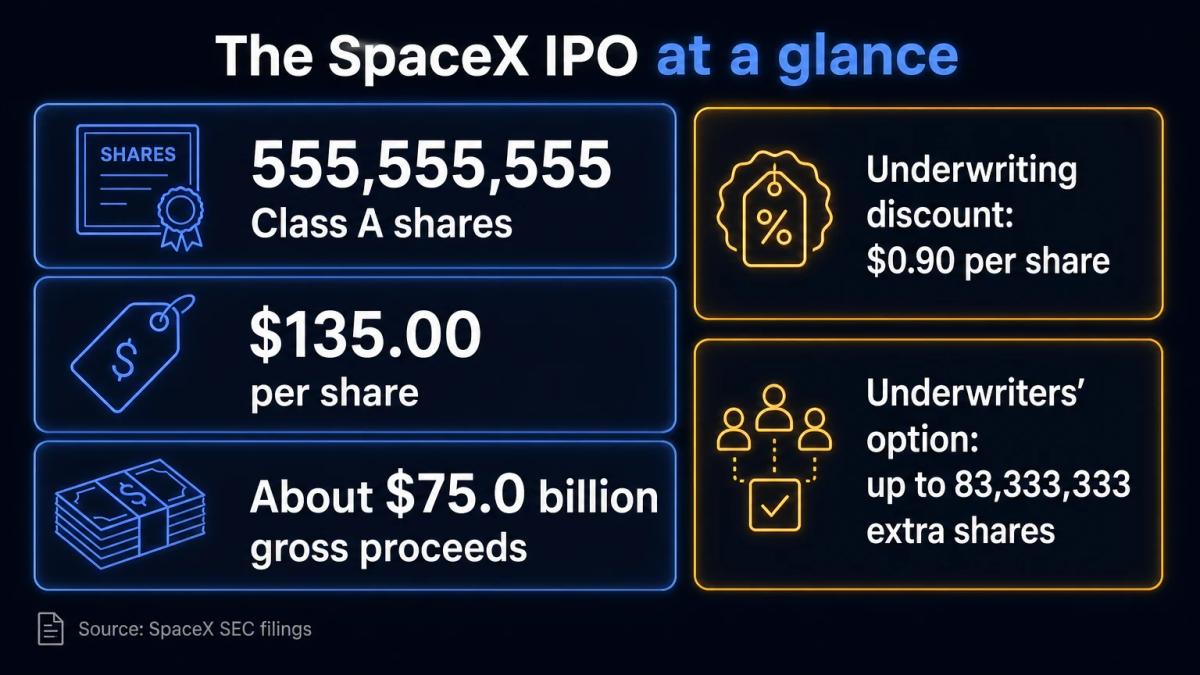
The final prospectus, dated June 11, 2026, offered 555,555,555 Class A shares at $135 each, about $75.0 billion in gross proceeds. The underwriting terms were:
- Underwriting discount: $0.90 per share, around $500 million in total.
- Underwriters' option (greenshoe): a 30-day option to buy up to 83,333,333 additional Class A shares.
- Lead bookrunners: Goldman Sachs, Morgan Stanley, BofA Securities, Citigroup and J.P. Morgan.
- Par value: $0.001 per Class A share.
SpaceX valuation: what $135 implies
Valuation at the IPO is a derived figure: shares outstanding multiplied by the share price. The prospectus listed about 13.08 billion total shares immediately after the offering: 7,380,196,910 Class A shares (one vote each) and 5,695,668,265 Class B shares (10 votes each, mostly held by Elon Musk). At $135, that implies an equity value of roughly $1.77 trillion at the IPO price. The 10-Q for the quarter ended September 30, 2026 reports 8,246,541,218 Class A and 5,334,522,491 Class B shares outstanding as of October 15, 2026, around 13.58 billion in total. Market capitalisation moves every trading day, so check the live SPCX quote for the current figure.
SpaceX's three business segments
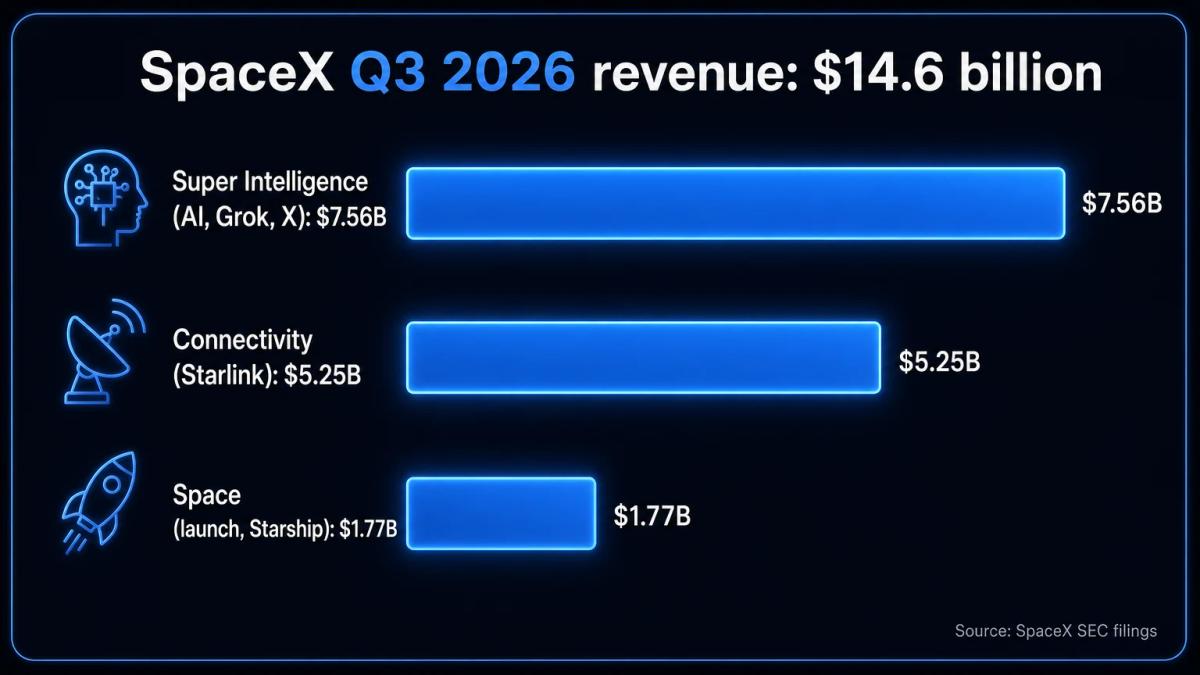
SpaceX's Q3 2026 results, filed on Form 8-K on October 20, 2026, show a group with three reportable segments. Revenue reached $14.6 billion in the quarter, up 161% from $5.6 billion a year earlier, with net income of $4.4 billion and operating income of $2.8 billion. Adjusted EBITDA, a non-GAAP measure that SpaceX reconciles to net income in the release, came in at $8.8 billion.
| Segment | Q3 2026 revenue | What it covers |
|---|---|---|
| Connectivity (Starlink) | $5.25 billion | Satellite internet subscriptions and enterprise |
| Space | $1.77 billion | Launch services and Starship programme |
| Super Intelligence (SI) | $7.56 billion | AI compute, Grok and X, added via the xAI Merger |
Source: SpaceX Q3 2026 results (Form 8-K, October 20, 2026).
Super Intelligence is a reported segment that reflects the February 2026 xAI acquisition, sitting alongside SpaceX's traditional aerospace core. Starlink reached 13.6 million consumer subscribers as of September 30, 2026 (versus 7.2 million a year earlier) at a consumer ARPU of $69 per month. The Space segment ran 35 launches in the quarter, including Starship Flight 14, the first revenue-generating Starship mission.
Why there is no separate Starlink IPO
Starlink is not a separately listed company. In SpaceX's filings, it is the Connectivity segment and remains inside the SPCX corporate structure, with its revenue and subscriber base consolidated into group results. SpaceX's prospectus and 10-Q disclose no plan to spin off or separately list Starlink. For a public-market investor, the only listed way to own Starlink's economics is to own SPCX shares themselves.
Buying SPCX: order types, lock-up risks and voting control
SPCX trades like any other Nasdaq-listed equity through a regulated broker. The practical steps are straightforward:
- Open and fund an account with a broker that gives access to Nasdaq-listed US stocks.
- Search the ticker SPCX.
- Choose an order type: a market order fills at the next available price; a limit order fills only at your chosen price or better.
- Review the trade confirmation and position after settlement.
Suppose SPCX is quoted a little above the price you are willing to pay. A limit order at your price stays open and fills only if the stock trades down to that level during market hours; if it never does, the order expires unfilled and you buy nothing.
Some diversified funds and ETFs may also hold SPCX once index inclusion criteria are met; check each fund's holdings before assuming exposure.
Key risks for traders
According to the SpaceX prospectus (June 2026) and the Q3 2026 10-Q:
- Lock-ups: Elon Musk's shares are locked up until the 366th day after the June 11, 2026 prospectus (around mid-June 2027), with no early release. About 7.8 billion shares, including all of Musk's holdings, face longer restrictions with staged releases tied to Q4 2026 through Q2 2027 results. Lock-up expiries can add selling pressure as more supply becomes tradable.
- Voting control: Class B shares carry 10 votes each versus one vote for Class A. After the IPO, Musk held about 82.4% of the voting power, and SpaceX is a Nasdaq "controlled company", which limits minority shareholder influence.
- Capital intensity: Q3 2026 capex was $19.6 billion, of which $16.4 billion sat in the SI segment. Heavy AI compute spending can constrain near-term profitability and free cash flow.
- No dividend: the prospectus states SpaceX does not anticipate paying cash dividends in the foreseeable future, so any return depends on share price.
This article is editorial information from SEC filings, not investment advice.
Frequently Asked Questions
Is SpaceX publicly traded after the June 2026 IPO?
Yes. SpaceX began trading on Nasdaq and Nasdaq Texas under the ticker SPCX on June 12, 2026, after pricing its IPO at $135.00 per Class A share on June 11, 2026 and delivering shares on or about June 15, 2026.
What was the SpaceX IPO price and when did it list?
The IPO price was $135.00 per Class A share, set in the final prospectus dated June 11, 2026. SpaceX offered 555,555,555 Class A shares, with underwriters holding a 30-day option for up to 83,333,333 additional shares. Trading began on Nasdaq on June 12, 2026.
How much is SpaceX worth after going public?
At the $135 IPO price and the roughly 13.08 billion shares outstanding listed in the prospectus, the equity value was approximately $1.77 trillion. Market capitalisation changes every trading day, so check the live SPCX quote and the latest share count disclosed in SpaceX's SEC filings.
Can I buy SpaceX stock through my regular brokerage?
Yes, if your broker offers Nasdaq-listed US equities. Open and fund the account, search the ticker SPCX, and place a market or limit order. Some diversified funds and ETFs may also hold SPCX indirectly; check each fund's holdings to confirm the actual exposure.
Why did SpaceX not do a separate Starlink IPO?
SpaceX's filings consolidate Starlink as the Connectivity segment of the group, not a standalone entity. The prospectus and the Q3 2026 10-Q disclose no plan to spin off or separately list Starlink, so public-market exposure to Starlink is available only through SPCX shares.
About the authors


Put this into practice
Brokers we have reviewed
Scored on the same five dimensions. Here are three of them — the full list is on the brokers page.



Related articles
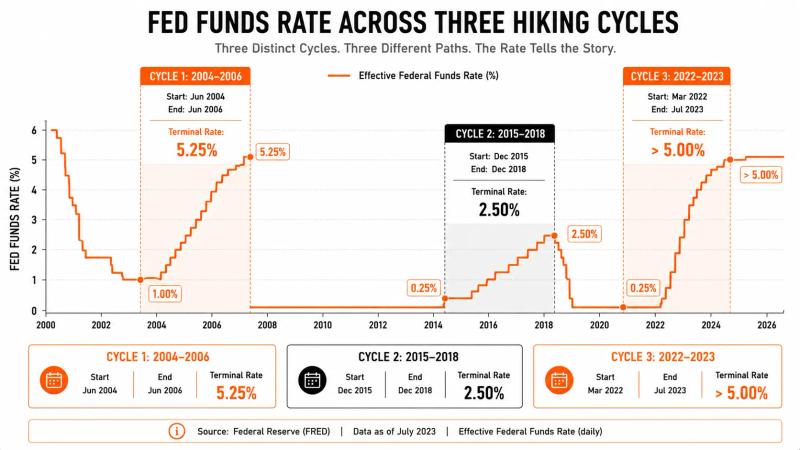
Which Asset Classes Perform Best During Rate Hiking Cycles?
Historical performance of equities, bonds, commodities, real estate, and currencies during Fed and ECB rate hiking cycles; with patterns, caveats, and a framework for using the data.

Best ETFs for Long-Term Investing in the US: Core Holdings and Strategy
A working guide to the best ETFs for long-term investing in the US: fees, diversification, tax efficiency, rebalancing discipline, and ESG options.

Best Investments for Passive Income: A Retail Investor's Playbook
A working guide to the best investments for passive income: dividends, bonds, real estate, digital products, P2P lending, plus a time-to-profitability comparison.
0 comments