



Trading Strategies · Beginner · 3 min read
Politician Stock Tracker: Why the 30-45 Day Lag Limits Retail Edge
The reporting lag is the single most important thing to understand: US politicians must disclose trades within 30 to 45 days under the STOCK Act, so any politician stock tracker shows you activity that is already weeks old. The tool itself is a dashboard that aggregates those public filings into searchable views by lawmaker, ticker or chamber.
Run this strategy on a solid platform — see the best forex brokers.
The most-traded names in these disclosures are mega-caps like Nvidia, Tesla and Apple.
What is a politician stock tracker and what does it actually show you?
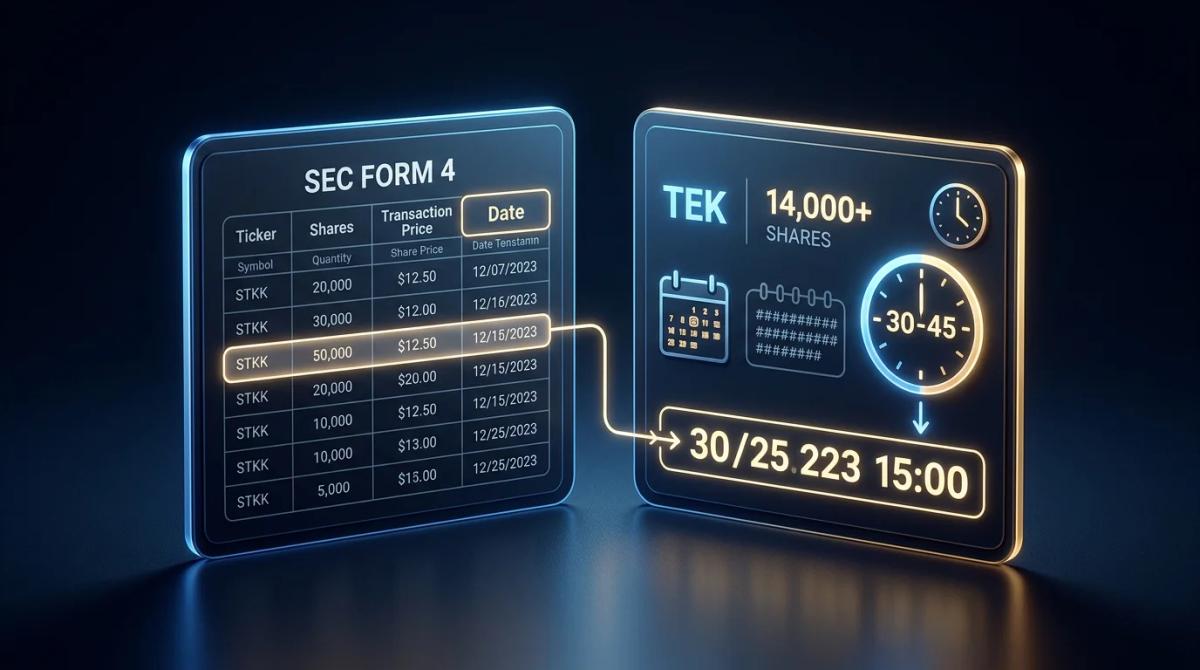
A politician stock tracker parses periodic transaction reports filed by members of the US Congress and displays them in a searchable interface. According to the U.S. Securities and Exchange Commission, these filings are required under the Stop Trading on Congressional Knowledge Act (STOCK Act) of 2012, the law that forces lawmakers to publish covered trades. A ticker is the short code that identifies a listed stock, such as AAPL for Apple. The tracker collects those reports, standardises them, and lets you filter by politician, chamber, sector or date. It does not offer live order flow. It offers a cleaned view of what has already been disclosed.
The 30-45 day lag: why it matters for retail traders
The lag is the catch. Under the STOCK Act, a lawmaker has up to 45 days from a trade to file the report, and the tracker can only show data once the filing is public.
By the time you see the trade, the news that drove it may already be priced in. That does not make the data useless. It changes how you use it: as a research prompt about sector rotation, money shifting between industries, or industry concentration, not as a real-time signal. For related context, see our guide to insider trading rules for retail traders.
| What a tracker shows you | What it does not show you |
|---|---|
| Disclosed trades, 30-45 days old | Live or same-day activity |
| Ticker, size band, buy or sell | Exact price and full position size |
| Filer name and chamber | The reason behind the trade |
| Sector patterns over time | Any material non-public information |
U.S. Securities and Exchange Commission: The STOCK Act requires covered members of Congress to publicly report specified securities transactions within 30 to 45 days of the transaction.
Frequently Asked Questions
Is it legal to trade based on politician stock trades?
Yes. Once a trade is publicly disclosed under the STOCK Act, the information is no longer non-public, so a retail trader acting on that filing is not trading on inside information. Copy-trading services that automate this may face broker or jurisdictional restrictions, so check your provider's terms.
How long does it take for politician trades to appear in a tracker?
US law allows up to 30 to 45 days between the trade and the required disclosure filing. Trackers can only display the trade once that filing is public, so you are typically looking at activity that is several weeks old.
Can politician stock trackers predict market movements?
Not reliably. Because the data is delayed by weeks, any short-term move linked to the original trade is often already reflected in the price. The trackers are more useful for spotting longer-term sector concentration or thematic patterns than for timing entries.
What is the STOCK Act and how does it affect politician trading?
The Stop Trading on Congressional Knowledge Act of 2012 prohibits members of Congress from trading on material non-public information gained through their office and requires them to file periodic transaction reports for covered securities within 30 to 45 days.
Are there free politician stock tracker tools available?
Yes. Several platforms provide free tiers that let you search filings by lawmaker or ticker, while paid tiers add analytics such as backtesting, portfolio leaderboards and benchmark comparisons against indices like the S&P 500.
About the authors


Put this into practice
Related articles

Price Action Trading Strategy: Read Charts Without Indicators
A practical guide to price action trading for retail traders: patterns, levels, timeframes, position sizing, backtesting, and volume confirmation.
Quantitative Trading Explained: Strategies, Methods, and How It Differs from Algo Trading
Quantitative trading explained: how it differs from algorithmic trading, core quant strategies, and how retail traders can get started.

Trendline Trading Strategy: How to Trade Breaks and Bounces
How to trade trendline bounces and breaks with clear entry rules, stop placement and confluence checks across forex, indices and equities.
0 comments