



Dividend stocks are shares in companies that distribute part of their profits to shareholders on a regular schedule, usually quarterly. You receive cash payments without selling your shares, building a passive income stream alongside any capital appreciation the share price delivers over time.
What are dividend stocks and how do they work
A dividend is a cash payment declared by a company's board out of retained earnings and paid per share held. Mature businesses in sectors such as utilities, consumer staples, energy, and financials typically pay dividends because they generate stable cash flow but have fewer high-growth reinvestment opportunities. You need to hold the stock before the ex-dividend date (the cut-off after which new buyers are not entitled to the next payment) to qualify. Payments hit your brokerage account in cash, which you can withdraw, spend, or reinvest to buy additional shares and compound your position.
For many retail investors, dividend stocks form part of a broader best investments for passive income strategy.
Dividend yield and payout ratio: metrics that matter
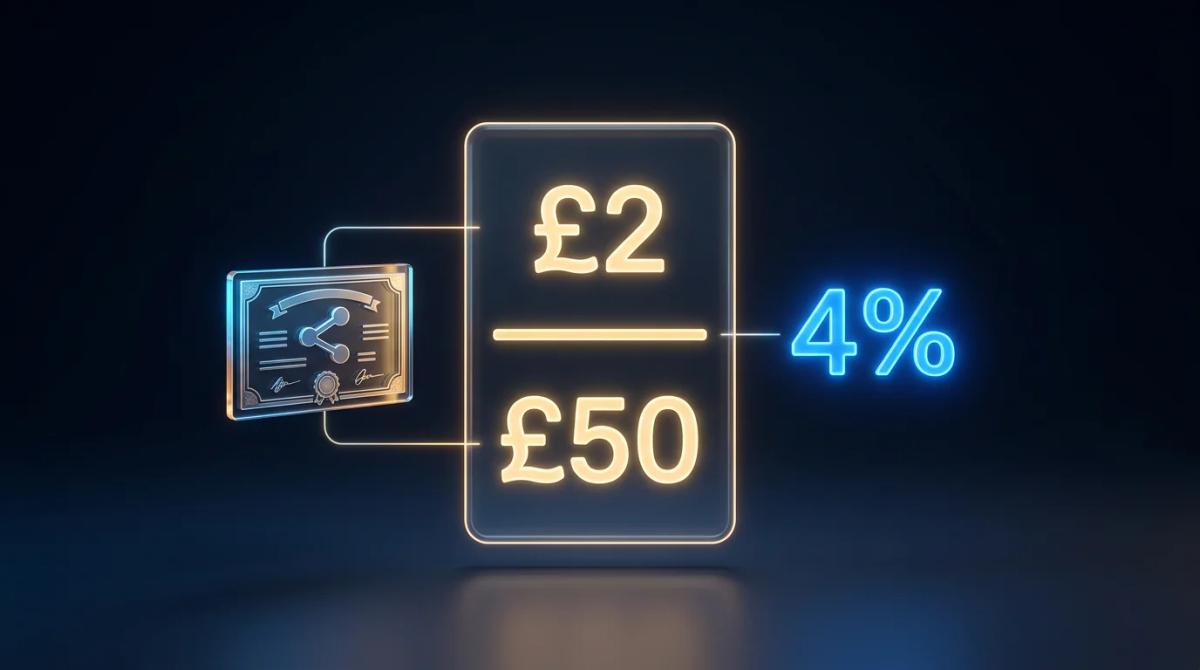
Dividend yield measures the annual dividend as a percentage of the current share price: a 4% yield on a £50 stock means £2 per share per year. Payout ratio shows what percentage of net earnings the company pays out; sustainable ratios usually sit between 30% and 60%. Above 80%, the dividend leaves little room for earnings dips.
Check the dividend coverage ratio (earnings per share divided by dividend per share): a value above 1.5 signals the company can absorb a downturn without cutting the payment.
| Metric | Formula | Healthy range |
|---|---|---|
| Dividend yield | Annual dividend / share price | 2% to 6% |
| Payout ratio | Dividends / net earnings | 30% to 60% |
| Coverage ratio | EPS / dividend per share | Above 1.5 |
Why dividend stocks appeal to income investors
Dividend stocks provide predictable cash income and dampen portfolio volatility through steady payouts. Reinvested dividends compound powerfully when run through a DRIP (dividend reinvestment plan). For retail investors seeking alternatives to low-yield savings accounts or bonds, dividend-paying equities combine ownership in growing businesses with inflation-beating income.
Passive income for beginners often starts with dividend reinvestment, since reinvested dividends have historically accounted for a large share of long-term equity returns, particularly when compounded over decades. Tax treatment matters: in the UK, dividends above the annual allowance are taxed at rates that differ from savings interest, and a stocks and shares ISA shields dividends entirely.
Risks and red flags in dividend investing

Dividend cuts or suspensions happen when earnings fall, debt rises, or a sector faces structural pressure; high yields above 8% often signal distress rather than opportunity, a pattern known as a yield trap. Share prices can decline enough to wipe out several years of dividend income, and dividend stocks typically lag growth stocks in bull markets. Watch for rising payout ratios, falling coverage, heavy debt loads, and management language hinting at 'reviewing capital returns'. Sector concentration is another risk: energy, banking, and REITs (real estate investment trusts) all cut dividends materially during the 2020 pandemic shock.
Understanding which asset classes perform best during rate hiking cycles helps you anticipate dividend pressure in interest-rate-sensitive sectors.
Well-known dividend names include Coca-Cola, Exxon Mobil and British American Tobacco.
How to research and select dividend-paying companies
Screen for companies with at least ten years of consistent or growing dividends, stable earnings, and coverage ratios above 1.5. Review the sector's competitive dynamics, the balance sheet's debt profile, and management commentary on capital return policy in annual reports.
Compare candidates on yield, payout ratio, dividend growth rate, and free cash flow. Before you commit capital, ask yourself the questions to ask before opening a trading account, including your tax status and broker choice. For international dividend stocks, factor in withholding tax: US dividends paid to UK investors typically face 15% withholding under the tax treaty when a W-8BEN form is filed with your broker, and currency movements can add or erode returns.
Frequently Asked Questions
How do I find and screen dividend-paying stocks?
Use your broker's stock screener or a public financial data platform to filter by dividend yield, payout ratio, dividend growth history, and market capitalisation. Prioritise companies with at least ten years of consistent or rising dividends, coverage ratios above 1.5, and manageable debt. Cross-check the latest annual report and any recent trading updates for language about capital return policy before you buy.
What is the difference between qualified and non-qualified dividends for tax purposes?
The qualified versus non-qualified distinction applies primarily under US tax rules, where qualified dividends are taxed at long-term capital gains rates and non-qualified at ordinary income rates. In the UK, HMRC treats dividends under a single dividend allowance and tiered rates based on your income tax band. A stocks and shares ISA removes UK tax on dividends entirely up to the annual subscription limit.
Can I reinvest dividends automatically, and does it improve returns?
Most brokers offer a dividend reinvestment plan (DRIP) that uses each cash dividend to buy fractional or whole additional shares of the same company, often commission-free. Reinvesting compounds your position: each new share generates its own future dividends. Over decades, reinvested dividends can account for a substantial share of total equity returns, particularly when the underlying company grows its payment consistently.
Which sectors or industries offer the most reliable dividend payments?
Utilities, consumer staples, healthcare, and established financials are historically the most consistent dividend payers because they generate predictable cash flow. Energy majors and REITs pay higher yields but with more cyclicality; both cut dividends materially in 2020. Technology has become a growing source of dividends as large-cap firms mature, though yields there tend to be lower than in traditional income sectors.
How do currency fluctuations affect international dividend stocks?
If you hold a US stock paying dollar dividends and the pound strengthens against the dollar, your sterling income falls even if the company keeps the payment flat. Some UK investors accept this currency exposure for diversification; others hedge using currency-hedged ETFs. Foreign dividends may also face withholding tax at source, though a treaty rate of 15% typically applies to UK investors in US stocks who file a W-8BEN with their broker.
About the authors


Put this into practice
Brokers we have reviewed
Scored on the same five dimensions. Here are three of them — the full list is on the brokers page.



Related articles

How to Invest $1,000: A Diversification Strategy for Beginners
A practical, diversification-first guide to investing your first $1,000: three portfolio models, fractional-share deployment, fees, taxes and the behavioural traps that quietly erode small portfolios.

How to Invest in Bonds: A Practical Guide for Retail Investors
A practical guide to investing in bonds: understand types, ratings, interest rate risk, laddering, tax efficiency, and how to compare bond funds with direct purchases.

Passive Income for Beginners: A Realistic Guide to Your First Stream
Passive income for beginners explained: startup costs, timelines, tax rules by jurisdiction, risk assessment and the automation tools that keep streams running.
0 comments