



EQQQ is the European equivalent to QQQ: it's the Invesco Nasdaq-100 UCITS ETF, tracking the same Nasdaq-100 index as the US version but wrapped in EU UCITS rules, using physical replication and trading on European exchanges. US-domiciled QQQ cannot be sold to EU or UK retail investors, so EQQQ is your standard route to Nasdaq-100 exposure.
Why can't European investors buy US QQQ directly?
US QQQ is not registered for retail distribution in the EU or UK because it fails to comply with UCITS, the EU ruleset that standardises fund structure, transparency and investor protection. ESMA and the FCA restrict distribution of non-UCITS funds to retail clients.
Since 2018, brokers must supply a Key Information Document that US ETFs do not publish. That is why your broker either blocks the QQQ ticker for retail accounts or redirects you to EQQQ. The barrier is regulatory, not related to the underlying index, which is identical. Before you commit capital, ask your broker key questions about compliance and settlement.
EQQQ total expense ratio and cost comparison
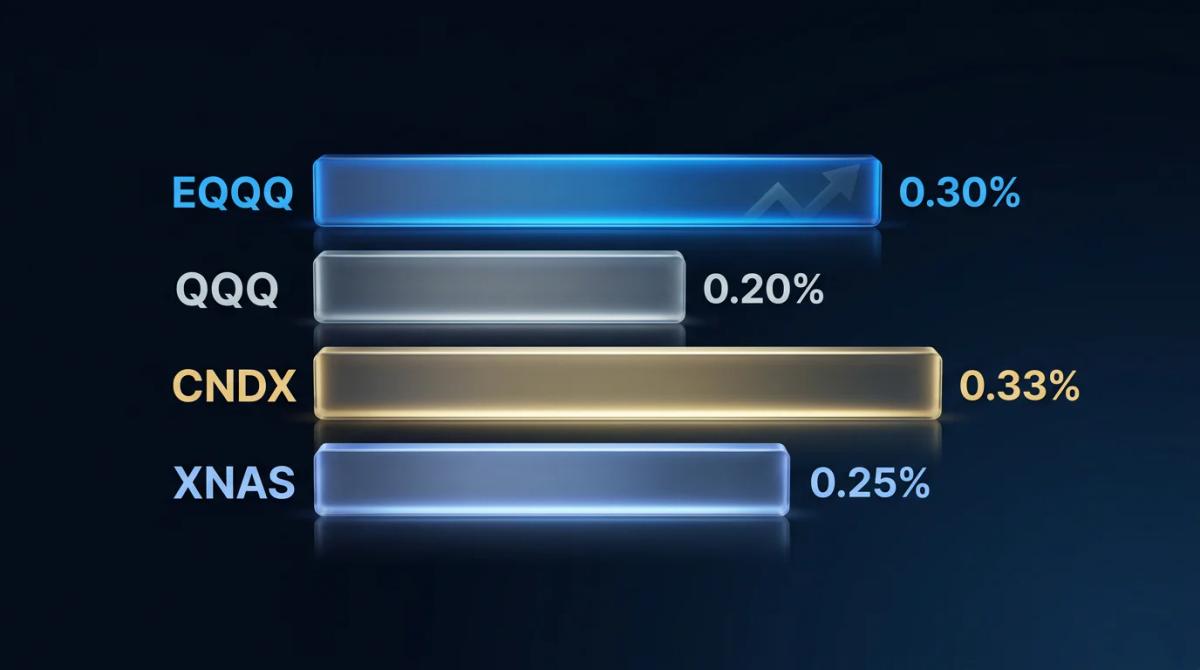
EQQQ's total expense ratio (TER, the annual fund fee) is 0.30% according to Invesco's official KID. US QQQ charges 0.20% per Invesco's US prospectus, so the UCITS wrapper adds roughly 10 basis points. The table below compares the three main Nasdaq-100 UCITS ETFs available to European investors.
| ETF | Ticker (LSE) | TER | Replication | Distribution |
|---|---|---|---|---|
| Invesco Nasdaq-100 UCITS | EQQQ | 0.30% | Physical | Distributing |
| iShares Nasdaq 100 UCITS | CNDX | 0.33% | Physical | Accumulating |
| Xtrackers Nasdaq 100 UCITS | XNAS | 0.20% | Physical | Accumulating |
On a £10,000 position, the gap between the cheapest UCITS option and QQQ is roughly £10 per year, a modest premium for EU settlement and regulatory compliance. ETFs like these form part of a broader strategy for building passive income through dividend and growth assets.
Currency hedging and share class options

EQQQ comes in unhedged and GBP-hedged share classes. Unhedged units leave you exposed to USD movements against your home currency, since the underlying stocks are priced in dollars; a stronger dollar boosts your returns, a weaker dollar erodes them.
Hedged units use rolling forward contracts to neutralise that swing, typically at a cost of 0.10 to 0.30% per year depending on interest rate differentials. A UK investor in GBP holding unhedged EQQQ carries both USD and index risk. Hedged classes suit investors who want pure index exposure; unhedged classes suit those who see USD as a natural diversifier.
Understanding how to size your position and manage exposure is essential when choosing between hedged and unhedged share classes.
Where to trade EQQQ and other European Nasdaq-100 ETFs
EQQQ trades on the London Stock Exchange (ticker EQQQ in USD and EQQE in GBP), Xetra, Euronext Paris and Borsa Italiana, with liquidity concentrated between 08:00 and 16:30 London time. Most FCA and EU brokers list it; check the ticker matches the currency and venue you want. iShares CNDX and Xtrackers XNAS offer accumulating share classes that reinvest dividends inside the fund, which can improve tax efficiency in ISAs and general accounts. Before trading, verify your broker's FX conversion fee, settlement cycle (T+2 is standard) and whether stamp duty applies (it does not on ETFs listed on the LSE).
Frequently Asked Questions
Can I buy US QQQ if I live in the UK or EU?
No, not as a retail investor. FCA and ESMA rules require brokers to supply a Key Information Document that US-domiciled ETFs do not produce, so brokers block the ticker. Professional or elective professional clients can sometimes access QQQ, but retail accounts are restricted to UCITS alternatives such as EQQQ, CNDX or XNAS.
What is the difference between EQQQ and iShares Nasdaq 100 UCITS ETF?
Both track the Nasdaq-100 with physical replication. EQQQ distributes dividends quarterly and charges 0.30% TER; CNDX accumulates dividends inside the fund and charges 0.33%. Accumulating structures avoid the manual reinvestment step and can be more efficient inside tax-sheltered accounts. Distributing structures suit investors who want the income stream in cash.
Does EQQQ pay dividends, and how are they reinvested?
EQQQ is a distributing share class and pays dividends quarterly in USD. Reinvestment is not automatic inside the fund; you receive the cash in your brokerage account and must manually buy more units, which typically incurs commission and a small cash drag. For automatic compounding, an accumulating UCITS Nasdaq-100 ETF such as CNDX or XNAS is more efficient.
How do tax withholding rates differ between EQQQ and US QQQ for European investors?
EQQQ is Ireland-domiciled and benefits from the US-Ireland tax treaty, which reduces US withholding tax on dividends from 30% to 15% at the fund level. A European investor holding US QQQ directly through a broker with a W-8BEN typically also pays 15%, but the operational and reclaim process differs. Irish-domiciled UCITS ETFs like EQQQ are generally the more efficient route for EU and UK investors.
What are the trading hours and liquidity conditions for EQQQ on European exchanges?
EQQQ trades on the LSE, Xetra, Euronext Paris and Borsa Italiana from around 08:00 to 16:30 London time. Liquidity is deepest between 14:30 and 16:30 when US markets open and market makers can hedge intraday. Bid-ask spreads typically widen in the first and last 15 minutes of the European session, so limit orders during the US-Europe overlap tend to fill closer to fair value.
About the authors


Put this into practice
Brokers we have reviewed
Scored on the same five dimensions. Here are three of them — the full list is on the brokers page.


Related articles
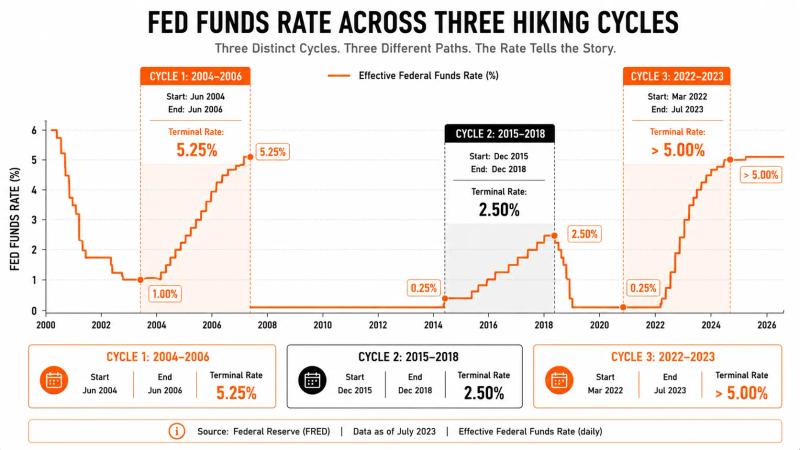
Which Asset Classes Perform Best During Rate Hiking Cycles?
Historical performance of equities, bonds, commodities, real estate, and currencies during Fed and ECB rate hiking cycles; with patterns, caveats, and a framework for using the data.
Best ETFs for Long-Term Investing in the US: Core Holdings and Strategy
A working guide to the best ETFs for long-term investing in the US: fees, diversification, tax efficiency, rebalancing discipline, and ESG options.

Best Investments for Passive Income: A Retail Investor's Playbook
A working guide to the best investments for passive income: dividends, bonds, real estate, digital products, P2P lending, plus a time-to-profitability comparison.
0 comments