



How to Trade · Intermediate · 5 min read
Earnings Call Transcripts: How to Use Them for Trading Decisions
Traders use earnings call transcripts to gauge management tone, verify forward guidance, and time entries around results. Reading transcripts alongside price and volume gives you context that raw headline numbers rarely deliver on their own.
What are earnings call transcripts and why traders use them
[NYU Libraries Finance Guide, 2026]: Every quarter, a company's leadership holds an earnings call
An earnings call transcript is the verbatim record of a listed company's results call, typically held soon after quarterly or annual filings with the securities regulator. Two blocks matter: the prepared remarks, where the CEO and CFO frame the numbers, and the Q&A, where sell-side analysts probe the story.
You get more than the press release: you see hedging language, tone shifts, and which topics management refuses to quantify. That subtext often predicts how the stock reacts over the days and weeks after the call.
Open an account with one of the best forex & CFD brokers to follow along.
Where to access earnings call transcripts: free and paid sources
Your first decision is coverage breadth versus depth. Free options usually cover large caps and lag by a day or two; paid platforms cover mid and small caps globally with same-session delivery and searchable archives going back years.
| Source type | Example | Cost | Delivery speed | Best for |
|---|---|---|---|---|
| Company IR page | Issuer website | Free | Same day audio, transcript later | Verifying wording |
| Aggregator (free tier) | Public research portals | Free or freemium | 1 to 2 days | Occasional readers |
| Institutional terminal | LSEG Workspace, FactSet, Capital IQ | Paid subscription | Minutes to hours | Active traders and analysts |
| Regulator filings | SEC EDGAR 8-K exhibits | Free | Within 4 business days | Legal-grade wording |
The US Securities and Exchange Commission requires material information from earnings calls to be filed on Form 8-K, giving you a free, authoritative fallback when other sources disagree.
How to extract trading signals from prepared remarks and Q&A
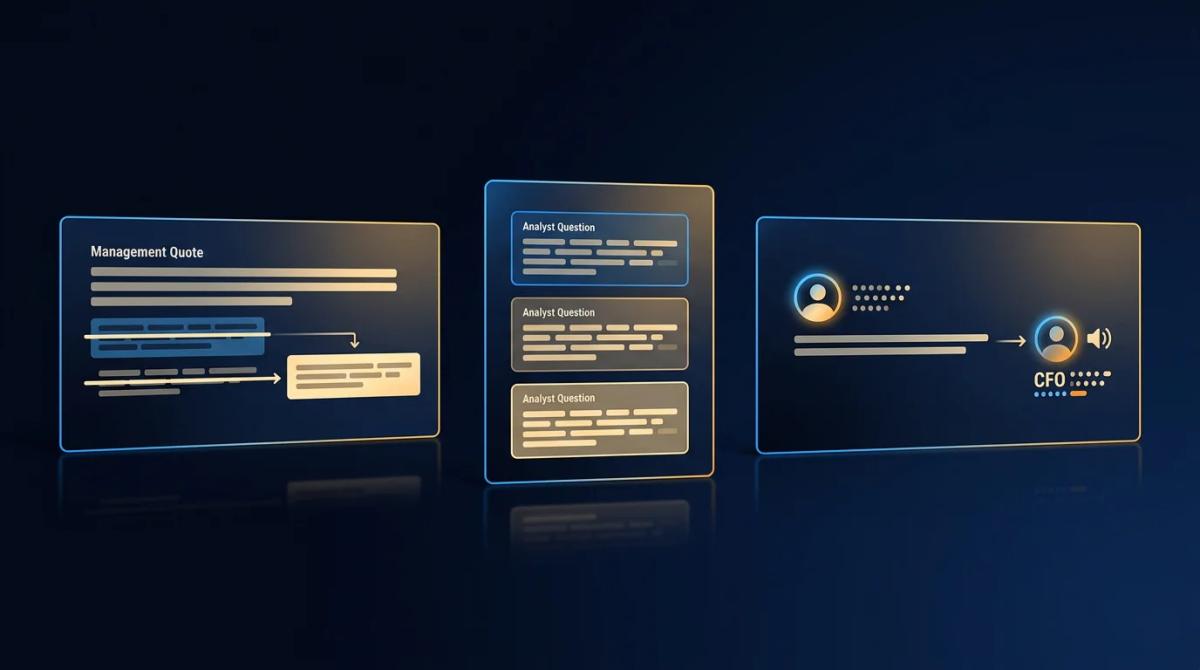
Prepared remarks are rehearsed: they tell you the story management wants priced in. The Q&A is where that story is stress-tested. Watch for three patterns.
- First, guidance revisions: a shift from 'expect double-digit growth' to 'expect growth' without a number is a downgrade in all but name.
- Second, analyst repetition: if two or three analysts circle the same margin or backlog question, the desk consensus is that management is dodging.
- Third, executive handovers: when the CFO answers a strategic question the CEO would normally take, the market often reads that as a confidence signal about internal alignment.
Understanding trading signals and how to use them can help you refine this process.
Sentiment analysis and linguistic patterns in earnings calls
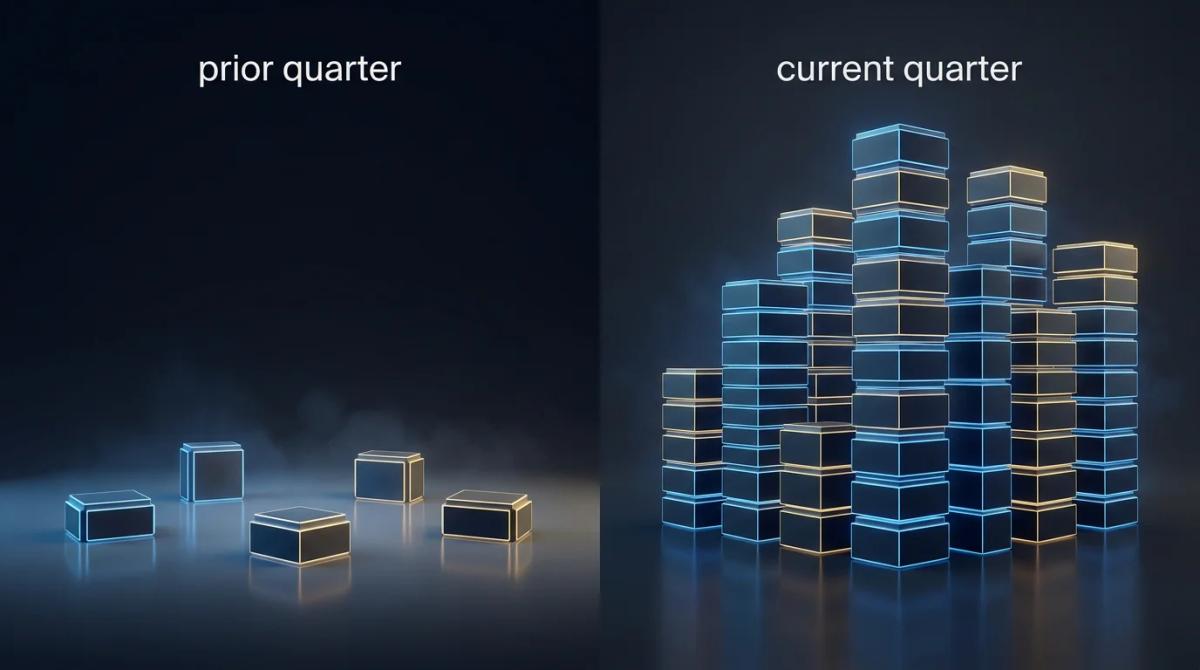
Language shifts are measurable. Compare the current transcript against the prior two quarters and count hedging words such as 'challenging', 'uncertain', 'monitoring', 'transitory', and 'timing'. A rising count against stable revenue guidance is a mismatch worth flagging. Watch also for repetition: if 'macro' appears 15 times when it appeared 3 times last quarter, management is preparing you for a miss.
Some retail traders now run transcripts through open-source natural language models to score tone, but a manual word-frequency table in a spreadsheet delivers most of the value with none of the setup cost.
Filtering and searching transcripts by sector, company, and date
Efficient filtering is what separates browsing from research. Institutional terminals let you query by GICS sector, market capitalisation, fiscal quarter, and keyword; free aggregators usually stop at ticker and date.
A useful workflow: pick a sector, pull the five largest names' latest transcripts, and search each for the same phrase, say 'pricing power' or 'inventory'. Diverging language across peers in one week is often the earliest sign of a rotation.
Identifying market trends through sector analysis is the sort of comparison a press release alone will not surface, and it costs you nothing beyond an hour of reading.
Real-time transcript availability and same-day access
Same-day access matters if you trade the immediate post-earnings reaction; it matters less for swing traders holding for the guidance re-rating over subsequent weeks. Institutional feeds deliver rough transcripts within 30 to 60 minutes of the call ending and a cleaned version by end of session. Free aggregators typically post 24 to 48 hours later.
If you cannot pay for a terminal, the pragmatic route is to listen live via the company's investor relations webcast, take notes on tone, and use the free transcript later to confirm the wording.
Comparing transcript accuracy and completeness across providers
Accuracy varies more than most retail traders expect. Institutional providers use trained transcribers and speaker tagging; free crowd-sourced versions occasionally drop clauses, mis-attribute analysts, or smooth over stumbles that matter.
Before you rely on any source for a trade, spot-check one call against the company's official audio: pick a Q&A exchange and confirm the wording word for word. If a provider consistently paraphrases, downgrade it to a scanning tool and go back to the audio or the 8-K filing for anything you plan to size a position around.
Frequently Asked Questions
Can I use earnings call transcripts to predict stock price movements?
Transcripts help you form a directional view, not a guaranteed forecast. Language shifts, guidance revisions, and repeated analyst questions often precede multi-day moves, but earnings reactions also depend on positioning, options flow, and the broader tape. Use transcripts as one input alongside price action and volume.
What is the difference between prepared remarks and the Q&A section in an earnings call?
Prepared remarks are the scripted opening from the CEO and CFO, framing results in the way management wants them read. The Q&A that follows is unscripted: sell-side analysts push management on margins, guidance, and competitive threats. Most of the useful trading information sits in the Q&A.
How far back do earnings call transcripts go on free platforms?
Free aggregators typically archive two to five years of transcripts for large caps, less for smaller listings. If you need older material, the company's investor relations site or the regulator's filing database (SEC EDGAR in the US, National Storage Mechanism in the UK) will hold the associated 8-K or interim results going back further.
Are earnings call transcripts available for international companies outside North America?
Yes, but coverage thins outside US and UK large caps. European, Japanese, and emerging-market issuers often publish results on their investor relations pages; institutional terminals such as LSEG Workspace and FactSet cover them more consistently. For non-English calls, look for the company's official English translation before trusting third-party summaries.
How do I integrate earnings call data with technical analysis or other trading metrics?
Combine transcript signals with price levels, implied volatility, and volume. For example, if management downgrades guidance in tone but the stock is holding a technical support level on above-average volume, that mismatch is itself the trade thesis. Transcripts add the 'why' behind the chart, not a replacement for it.
About the authors


Put this into practice
Brokers we have reviewed
Scored on the same five dimensions. Here are three of them — the full list is on the brokers page.


Related articles

Forex Swing Trading Signals: How to Read, Evaluate and Use Them
A practical editorial guide to forex swing trading signals: anatomy, indicators, risk sizing, provider evaluation, and the mistakes that quietly destroy accounts.

Futures Trading Signals: How to Read and Act on Them
A practical guide to futures trading signals: delivery channels, algorithmic logic, free trials, backtesting, and position sizing tied to signal confidence.

How Many Trades Per Day Should You Make? A Beginner's Guide
A practical guide to deciding how many trades per day fits your strategy, your account size, and the rules that apply to your jurisdiction.
0 comments