



Trading Basics · Beginner · 7 min read
Is MetaTrader 5 Available in the US? What Traders Need to Know
The short answer: availability and regulatory reality
MetaQuotes distributes MetaTrader 5 as free software worldwide, and Americans can download it without restriction. The company holds the trademark with the US Patent and Trademark Office under Certificate No. 3896669, registered on December 28, 2010 (source: USPTO). What US residents cannot easily do is open a retail forex account that runs on it, because MT5's order handling and hedging design were built around global market conventions that sit poorly with the framework the Commodity Futures Trading Commission (CFTC) and the National Futures Association (NFA) enforce on brokers serving US residents. As a result, almost no NFA-regulated broker offers MetaTrader 5 for retail accounts.
Putting this into practice means opening an account, and you can begin with the best forex brokers our team reviewed.
Why US brokers do not offer MetaTrader 5
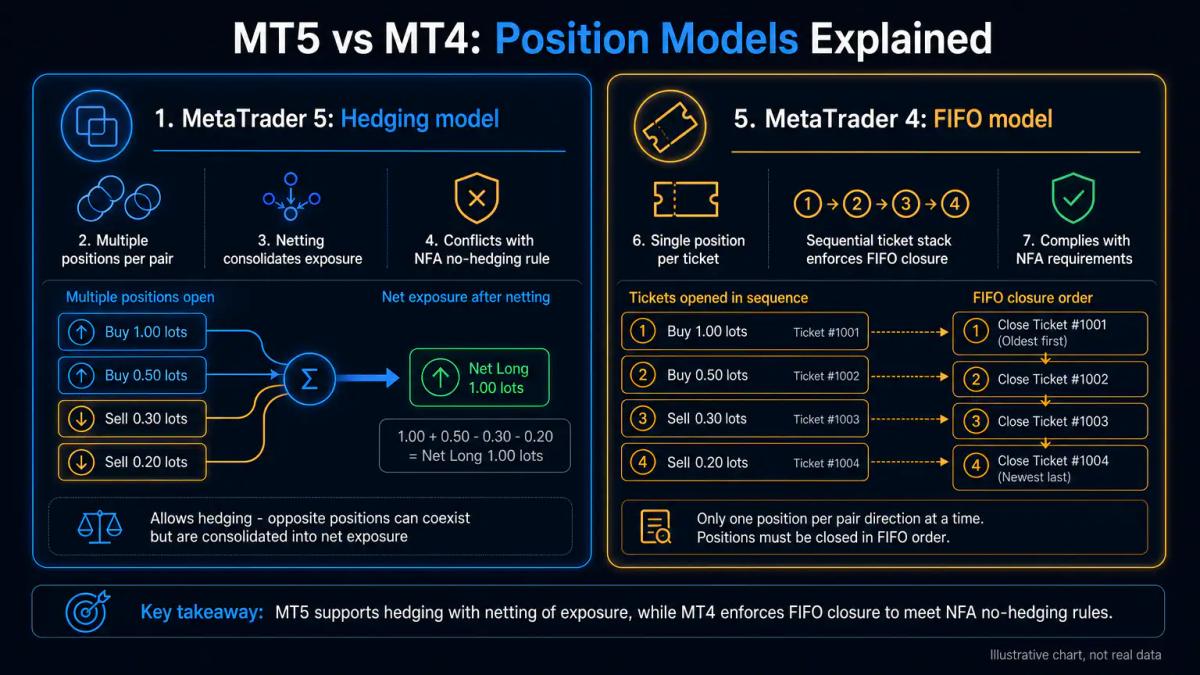
US retail forex is governed by two NFA rules that sit awkwardly with how MT5 handles orders:
- the FIFO rule (first in, first out), which forces a broker to close the oldest open position in a symbol before any newer one;
- the no-hedging rule, which prohibits holding a long and a short in the same currency pair at the same time within a retail account.
MetaTrader 5 was built for a global audience whose regulators generally permit hedging, and its native position handling assumes each ticket can be treated independently. That assumption clashes head-on with the way US rules require retail forex positions to be tracked.
Offering MT5 in a US-regulated setting would require heavy modification of the platform or a compliance layer bolted on top of it, on top of which the NFA imposes strict registration and audit requirements on every trading system connected to retail accounts. Given the cost of that certification work and the relatively small US retail forex base, most brokers have chosen to keep MetaTrader 4, which was grandfathered in and adapted years ago.
MetaTrader 5 vs MetaTrader 4 for US market access
MetaTrader 4 remains the standard MetaQuotes platform at US forex brokers for reasons rooted in how each platform models a position. MT4 uses a single-position model per order ticket, which lets brokers apply FIFO and no-hedging rules cleanly. MT5 uses a netting or hedging position model that can consolidate exposure across tickets, and that consolidation runs against the way the NFA expects retail forex positions to be tracked.
| Feature | MetaTrader 4 | MetaTrader 5 |
|---|---|---|
| US retail forex availability | Widely offered | Not offered by major NFA brokers |
| Position model | Single ticket per order | Netting or hedging |
| FIFO rule compatibility | Native fit | Requires customisation |
| Asset classes | Forex, CFDs | Forex, stocks, futures, options |
| Programming language | MQL4 | MQL5 (trademark Cert. No. 3879299, USPTO) |
For a US retail trader, the table above shows why the jump from MT4 to MT5 involves regulatory questions rather than a straightforward software upgrade, since each platform sits on a different side of the US retail forex line.
How to legally use MetaTrader 5 as a US trader
Downloading and installing MetaTrader 5 on your own computer is entirely legal, because the software is free from MetaQuotes and simply holding it on a hard drive is not a regulated activity. What US regulation attaches to is the broker relationship, which is where the constraints start to apply.
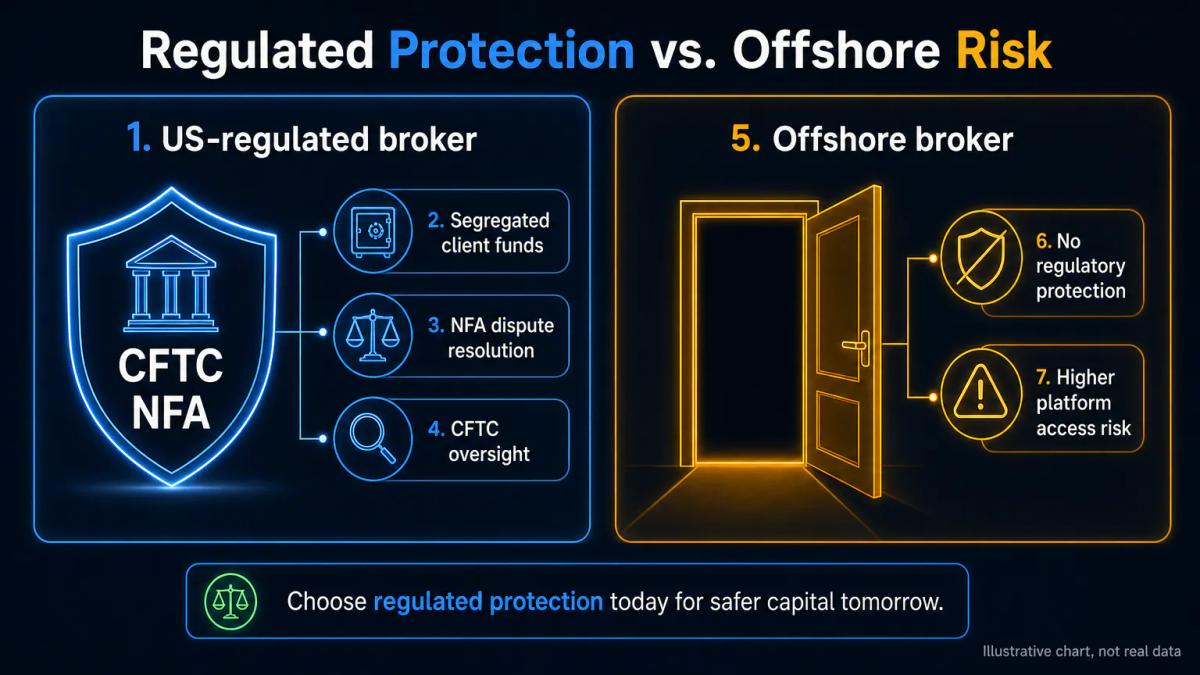
A US resident who opens a retail forex account with an offshore broker to access MT5 is not committing a crime, though that broker is unlikely to be registered with the NFA. Stepping outside that oversight means giving up the protections the CFTC framework provides, including:
- segregated client funds under US rules;
- NFA dispute resolution;
- the NFA BASIC database for background checks.
A cleaner route is to use MT5 for asset classes that fall outside the CFTC retail forex framework. Through non-US brokers that accept US clients, and the pool is smaller than it looks given SEC and CFTC reach, US traders can use MT5 to trade international stocks, index CFDs and commodity CFDs.
Another common approach is to run MT5 in demo mode for strategy development and backtesting, and then deploy the live version on a compliant US platform. Whatever the setup, US traders remain fully responsible for reporting the results to the IRS, and every situation should be checked with a licensed tax professional and, where relevant, a compliance lawyer for your jurisdiction, since this article is general information.
Platforms and brokers available to US traders instead
US retail traders have a working set of platforms available even without MT5:
- MT4 covers most forex needs and remains widely offered by NFA-regulated brokers;
- cTrader, a broker-neutral trading platform with depth-of-market pricing, is offered by a smaller number of US-facing brokers;
- TradingView, a browser-based charting and strategy platform, is widely used for analysis and now supports order routing through several US brokers;
- proprietary broker platforms, tuned by each large US broker to its own product mix.
| Platform | Typical US availability | Assets | Best for |
|---|---|---|---|
| MT4 | Widely available at NFA forex brokers | Forex, some CFDs | Automated forex strategies, expert advisors |
| cTrader | Limited, a few US-facing brokers | Forex, CFDs | Level II pricing, algorithmic trading |
| TradingView | Available, integrates with US brokers | Stocks, futures, forex, crypto | Charting, social analysis, alerts |
| Proprietary broker platforms | Universally available | Depends on broker | Stocks, options, futures under one login |
| MT5 | Rare with US-regulated brokers | Multi-asset globally | Non-US markets, offshore accounts |
Before you commit, check whether the broker is listed in the NFA BASIC database and confirm which platforms are offered under your specific account type, keeping in mind that retail forex, futures, and securities accounts often sit at different subsidiaries.
US-regulated brokers that support MetaTrader 5
In practice, the list of US-regulated brokers offering MetaTrader 5 to retail clients is very short.
Among brokers registered with the NFA as Retail Foreign Exchange Dealers or Futures Commission Merchants, MetaTrader 5 is essentially absent from the retail forex offering. Where MT5 does appear at a US-touching broker, it is usually reserved for futures on a separate entity, or it sits with an international affiliate that does not accept US residents.
Before opening any account you should verify current status directly in the NFA BASIC database and read the account application to see which legal entity you are contracting with.
What to check before you commit
A broker's homepage can advertise MT5 globally even when the US-facing entity offers only MT4 or a proprietary platform. A few points are worth confirming in writing:
- the exact legal entity on your account agreement, and whether it is the NFA-registered one;
- whether MT5 is offered on that entity or only on an offshore affiliate;
- which asset class MT5 covers on that account, whether retail forex, futures, or CFDs, since CFDs on forex and indices are not available to US retail clients;
- how FIFO and the no-hedging rule are enforced inside the platform, and whether any MT5 features you rely on are disabled;
- whether client funds are held in segregated US accounts under CFTC rules.
Implications for your trading
Choosing a US-regulated broker that supports MT5 in any form usually means accepting a narrower product than an international MT5 account would give you. The typical trade-offs look like this:
- no hedging inside the same symbol;
- oldest-position-first closes under FIFO;
- often no CFDs at all.
In exchange, the account keeps NFA dispute resolution, segregated funds under US rules, and a broker you can look up in a public register. If MT5 is central to your strategy and the US-regulated option does not fit, two paths remain open:
- adapt the strategy to MT4 on a domestic broker;
- move to an offshore MT5 broker that accepts US clients, accepting the loss of CFTC-level protections that comes with it.
Tax and compliance considerations for US traders
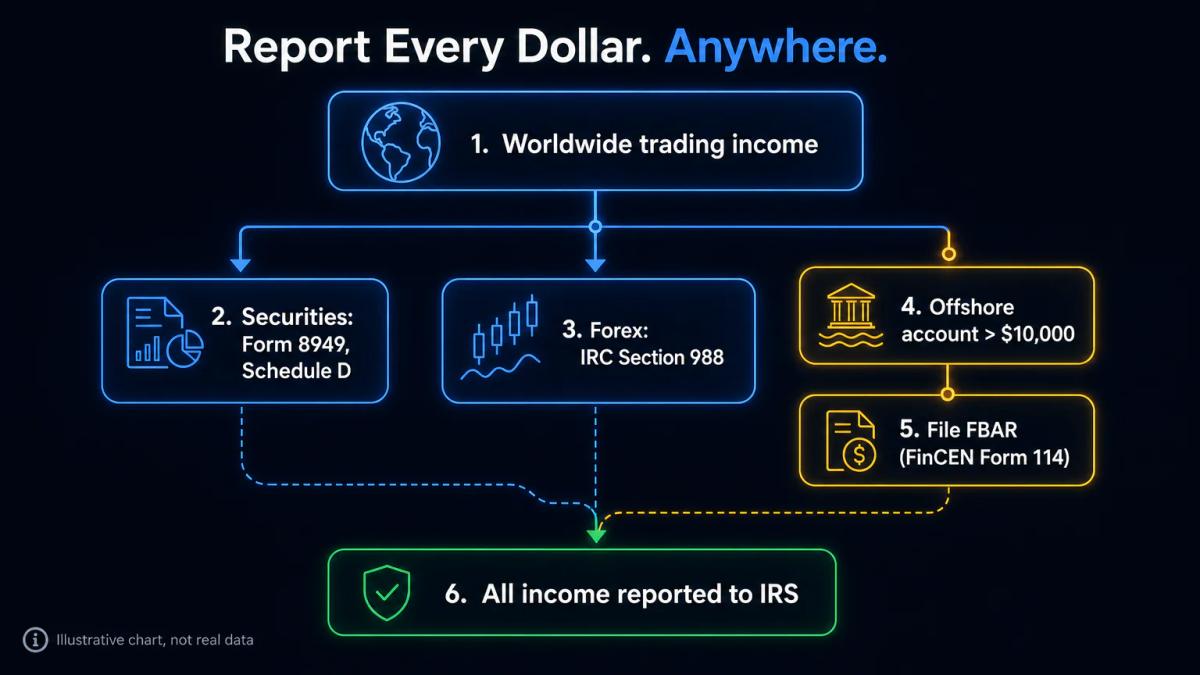
US taxpayers report worldwide trading income to the Internal Revenue Service regardless of where the broker is located. Capital gains and losses on securities generally flow through Form 8949 and Schedule D, while retail forex has its own treatment under IRC Section 988 unless a trader elects otherwise. Using an offshore MT5 broker does not remove any reporting duty, and it can add a Foreign Bank Account Report (FBAR) filing on FinCEN Form 114 whenever balances cross the $10,000 threshold at any point in the year. Because this is general information, a licensed US tax professional should confirm the treatment for any specific setup.
The Apple App Store removal and what it means for you
In 2022, Apple removed MetaTrader 4 and MetaTrader 5 from its App Store, which limited how iPhone and iPad users could install the mobile apps. The desktop terminals for Windows and macOS have always remained available directly from MetaQuotes, and after compliance updates the mobile platforms have since reappeared in the App Store. For a US trader, this changes very little in practice: even with the mobile app installed, an account at a broker that offers MT5 is still required, and the retail forex constraints described above remain in place.
Next steps: choosing a compliant platform for your trading
Start by confirming your broker's status in the NFA BASIC database and asking which platforms it supports for the exact account type you want to open. If MT5 is not on the list, you have a few solid options depending on what you need:
- MT4 for automated forex strategies with expert advisors;
- cTrader for depth-of-market execution;
- TradingView for charting with routing through partner brokers.
Whichever platform you pick, keep tax records from day one, and remember that the software on your screen sits inside a bigger picture where the identity and jurisdiction of the regulator behind the account will shape most of what you are allowed to do.
This article is general information only and is not tax, legal or investment advice. Rules on retail forex, CFDs and cross-border trading vary by state and change over time, so every situation should be reviewed with a licensed tax professional, compliance lawyer or financial adviser in the relevant jurisdiction before you act on it.
For a concrete example of costs and platform choice, the Axi review walks through them line by line.
Frequently Asked Questions
Can I download MetaTrader 5 in the United States?
Yes. MetaTrader 5 is free software from MetaQuotes and any US resident can download and install the desktop terminal. What is restricted is opening a live retail forex account with a US-regulated broker that runs on MT5: almost none do, because the platform does not fit CFTC and NFA retail forex rules.
Why do US brokers not offer MetaTrader 5 for forex trading?
US retail forex is governed by the FIFO rule and a no-hedging rule enforced by the NFA. MT5 uses a netting or hedging position model that conflicts with these rules and would require deep customisation to certify. MT4's older ticket-based model was already adapted for US compliance, so brokers have kept it.
Is MetaTrader 5 illegal in the US?
No. MetaTrader 5 is not illegal. MetaQuotes holds a US trademark registration for the platform with the USPTO under Certificate No. 3896669. The platform itself is legal to use; the constraint sits on the broker side, where US retail forex firms do not offer accounts running on MT5.
What is the best alternative to MetaTrader 5 for US traders?
For automated forex strategies, MT4 remains the standard and is offered by most NFA-regulated forex brokers. For depth-of-market execution, cTrader is available at a smaller number of US-facing brokers. For charting and routing, TradingView integrates with several US brokers across stocks, futures and forex.
Can I use MetaTrader 5 with an offshore broker as a US resident?
It is not itself illegal, but the offshore broker is likely not NFA-registered, which means you lose CFTC oversight, segregated fund protections under US rules, and NFA dispute resolution. You still owe full IRS reporting on gains and losses, and you may face FBAR filing on FinCEN Form 114. Confirm the position with a licensed US tax professional.
About the authors


Put this into practice
Related articles
Leverage Trading Mistakes: How to Avoid Blowing Your Account
The retail trader's guide to leverage trading mistakes: regulatory caps, margin call mechanics, position sizing and recovery routines that actually work.

MT4 vs MT5: Which Platform Should You Actually Use?
MT4 vs MT5: compare platforms by trading style, EA compatibility, and asset class to choose the right MetaTrader for you.
Margin Call Explained: What Triggers It and How to Avoid It
A margin call is your broker's demand for more equity when leveraged losses eat into your account. Here is how it works, why it happens, and how to avoid one.
0 comments