



Trading Basics · Beginner · 8 min read
Types of Traders: Timeframe, Strategy, and Frequency Explained
The main ways traders are classified
Traders in retail markets fall into three overlapping categories: timeframe (how long you hold a position), strategy (what method drives your decision), and frequency (how many trades you place each week). These lenses help you match an approach to your capital, your risk tolerance, and the hours you can realistically sit in front of a screen.
These classifications overlap in practice, and most traders end up wearing several labels at once. You might describe yourself as a technical swing trader working forex, or as a fundamental position trader building an equity portfolio over years. Treating the labels as combinable tags gives you a more honest description of how you actually behave when the market opens.
The rest of this article walks through each lens in turn, then covers capital, platforms, taxes, and the questions of personal fit that ultimately decide which combination works for you.
If you still need a broker, our guide to the best forex brokers compares the regulated options side by side.
Timeframe-based trader types
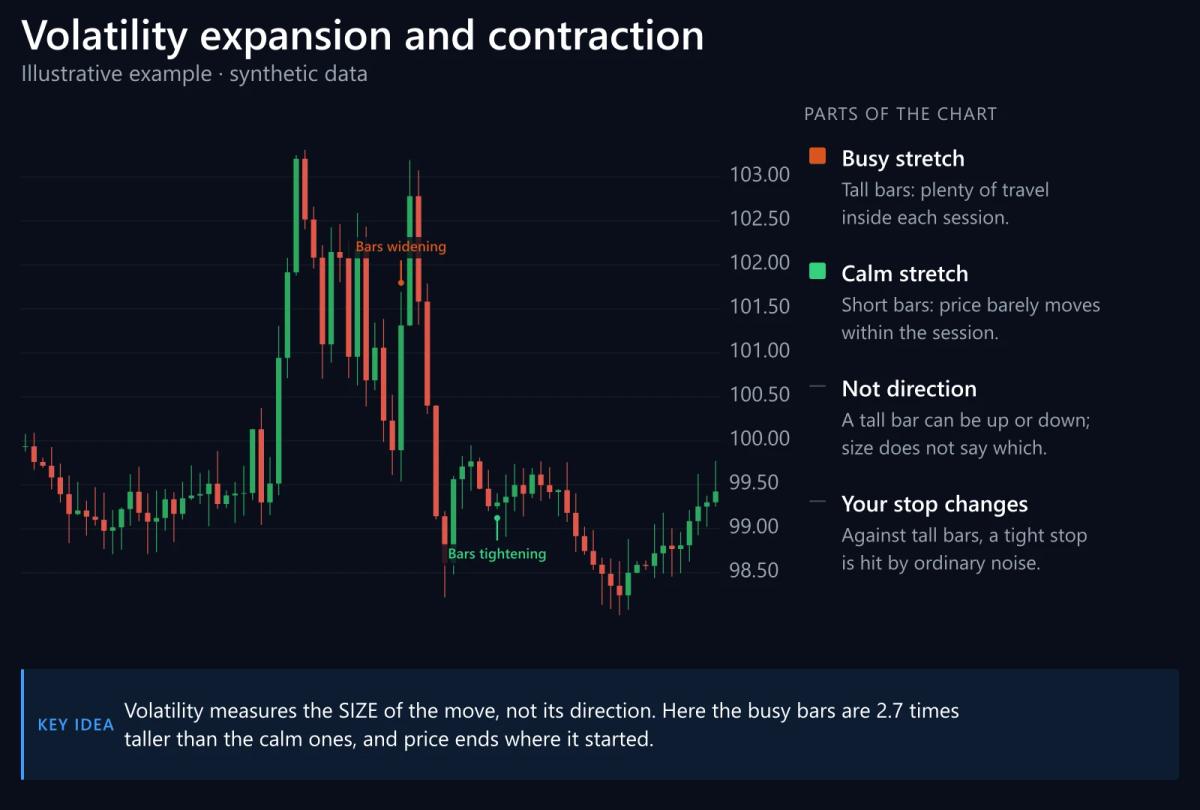
Your holding period is the cleanest way to sort trader types. When you explore day trading, swing trading and scalping, you'll see that scalpers open and close positions in seconds or minutes, aiming for a few pips per trade and relying on tight spreads.
- Day traders (also called intraday traders) open and close every position within the same trading session and go home flat, meaning with no open trades overnight.
- Swing traders hold for several days to a few weeks, riding a defined price move.
- Position traders hold for months or years, closer in spirit to an investor but still using leverage and short selling.
Each timeframe demands its own tolerances.
- Scalpers work with tiny profit targets and need near-perfect execution, because even a slightly wider spread can wipe out the trade before it moves.
- Day traders concentrate their attention through a single session and live with the intraday volatility spikes that come with it.
- Swing traders accept the overnight risk of holding through the close, including gaps (a jump in price between one session's close and the next session's open) and weekend headlines.
- Position traders sit through months of unrealised drawdown, meaning the fall from a capital peak to the trough before a new peak, in exchange for capturing the larger moves that only reveal themselves over long horizons.
| Timeframe type | Typical holding period | Trades per week | Primary risk |
|---|---|---|---|
| Scalper | Seconds to minutes | 50 to 500 | Spread and execution costs |
| Day trader | Minutes to hours | 5 to 40 | Intraday volatility |
| Swing trader | Days to weeks | 2 to 10 | Overnight gaps |
| Position trader | Weeks to years | Less than 1 | Deep drawdown, funding costs |
Treat the table as a starting map rather than a rulebook, and don't be surprised if you find yourself sitting somewhere between two rows, which is a common and perfectly reasonable place to land.
Strategy-based trader types
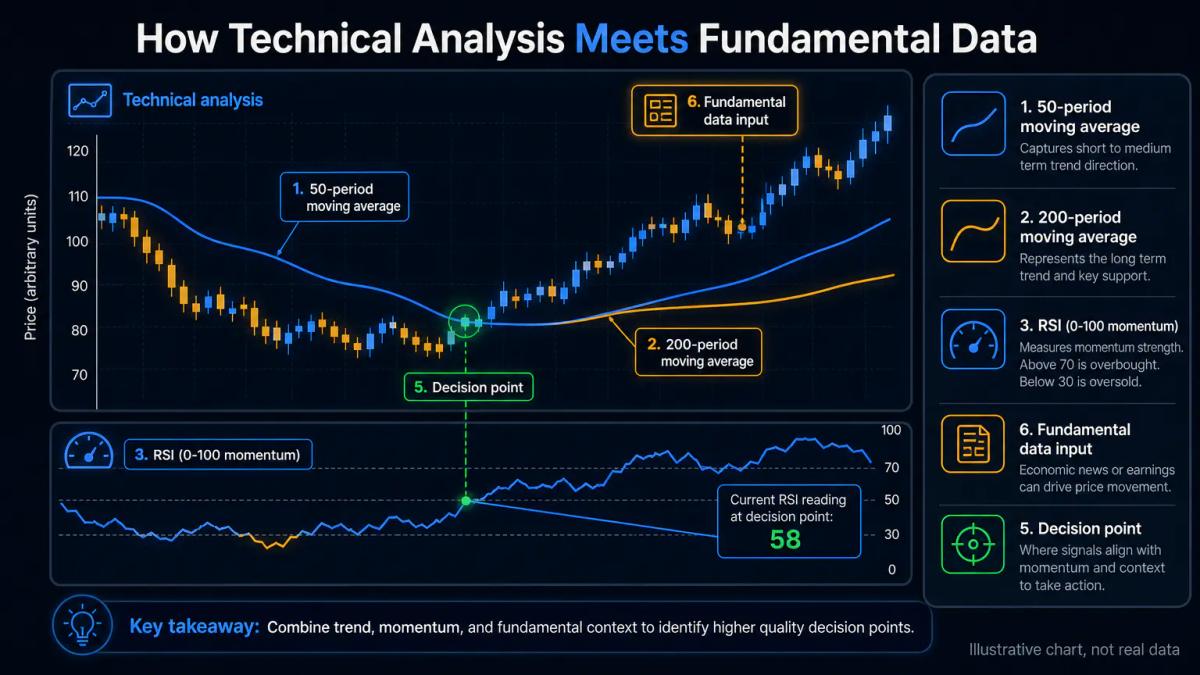
Strategy describes the method behind each decision. Technical traders read price charts alongside indicators such as moving averages or the relative strength index (RSI, a momentum gauge scaled 0 to 100).
- Fundamental traders spend their time on macroeconomic data and central bank policy, and, for equities, on company earnings and guidance.
- Algorithmic traders codify a set of rules into software that then executes automatically once the conditions trigger.
- Discretionary traders make each decision manually, usually blending technical signals with a broader fundamental picture.
Within algorithmic trading sits high-frequency trading (HFT), an institutional discipline that places thousands of orders per second using co-located servers, meaning servers physically placed inside the exchange's data centre to shave milliseconds off round-trip time.
Retail traders rarely operate at genuine HFT speeds, and what retail platforms describe as automated trading is generally rule-based execution running on MetaTrader Expert Advisors or on Python scripts that call a broker API. This infrastructure gap explains why HFT profits stay concentrated in a small number of specialised firms with the capital to fund the arms race.
Discretionary and algorithmic styles reward very different personalities.
- Discretionary trading rewards pattern recognition, patience, and the willingness to stand aside when conditions do not fit your playbook.
- Algorithmic trading rewards coding discipline, statistical thinking, and comfort with long stretches during which the software runs the account while you do very little.
According to the U.S. Securities and Exchange Commission, algorithmic and high-frequency activity accounts for a majority of U.S. equity trading volume, which shapes the microstructure that retail discretionary traders operate inside.
Frequency and activity levels
Frequency measures how often you actually place trades, and it changes the economics of your account in ways that can dominate any edge you think you have on entries.
- High-frequency traders execute dozens to hundreds of orders per day, which puts commissions and spread costs at the top of their profit and loss statement.
- Active traders place several trades per week and remain sensitive to fees, though each trade has more room to absorb them.
- Part-time traders open a handful of positions per month, usually around the constraints of a day job, while passive traders hold long-term positions and adjust only occasionally.
Understanding how many trades per day you should make helps you choose the right fee structure.
- Commission-based accounts (a fixed fee per lot, alongside a raw interbank spread) tend to suit scalpers and high-frequency retail traders whose costs are dominated by the spread.
- Spread-only accounts (no commission, a wider marked-up spread) work better for less frequent traders, because the per-trade cost only appears when a trade is placed.
Someone opening two positions a month rarely recovers the value of the tighter spread on a commission account, whereas someone opening two hundred usually will.
Specialization and market focus
Many traders also specialise by asset class.
- Forex traders concentrate on currency pairs, watching central bank policy, interest rate differentials, and the flow between overlapping 24-hour sessions.
- Equity traders buy and sell company shares, so their calendar revolves around earnings, sector rotation, and index composition changes.
- Commodity traders work with oil, gold, agricultural products, or industrial metals, tracking inventory reports and supply chain developments that move underlying prices.
- Crypto traders deal in digital assets, which trade around the clock and carry their own custody and regulatory risks.
Your asset choice interacts with your jurisdiction. For UK retail clients, the Financial Conduct Authority prohibits the sale of crypto derivatives (contracts for difference on cryptoassets), so a UK-based retail crypto trader typically buys spot on a registered exchange rather than trading crypto CFDs. Forex, indices, and share CFDs remain available to UK retail through FCA-authorised brokers under the standard leverage caps.
Capital requirements and account setup
Different trader types need different starting capital. In the United States, the Financial Industry Regulatory Authority defines a pattern day trader as an account that places four or more day trades in five business days in a margin account, and requires that account to maintain a minimum equity of $25,000. Below that, the account is restricted from further day trading until the balance is restored.
Outside the US there is no equivalent floor for retail forex or CFD day trading, but the practical minimum is driven by the risk you take on each trade. If you risk 1% per trade and your smallest sensible stop loss on EUR/USD is 20 pips, you need roughly $2,000 to size positions cleanly on a micro lot (0.01 lot, worth about $0.10 per pip).
Swing and position traders can start with less because their stops sit wider in pips but trigger less often, while scalpers and high-frequency retail traders need larger balances to justify the commission drag baked into every round trip. Many traders explore funded trading accounts as an alternative to bootstrapping their own capital.
Platform and technology needs
Platform choice follows your timeframe.
- Day traders and scalpers need fast execution, direct market access where possible, and stable low-latency connections: MetaTrader 4, MetaTrader 5, and cTrader are the common retail choices, often paired with a virtual private server (a remote server that keeps your platform online without depending on your home internet).
- Swing traders can work from a web platform or a mobile app because minutes of latency do not spoil a multi-day setup.
- Position traders often use TradingView for charting alongside a basic broker platform for execution, and if you're considering algorithmic trading, you may want to research prop firms that use TradingView.
- Algorithmic traders add an API layer. MetaTrader Expert Advisors run in MQL4 or MQL5; more advanced retail setups use Python against a broker's REST or FIX API.
The cost of infrastructure, data feeds, and hosting scales sharply with frequency: an occasional swing trader needs almost none of it, while a serious algorithmic operator budgets for both.
Choosing your trader type
The honest test of a trader type is how well it fits your available time, your capital, your risk tolerance, and your emotional discipline once the P&L starts moving.
- Day trading asks for several concentrated hours each session and the composure to accept a long string of small losses without losing the plot.
- Swing trading suits someone with a few hours a week to review setups, provided they can leave open positions alone between checkpoints.
- Position trading, by contrast, calls for conviction that can survive months of noise around a thesis.
Tax treatment also differs by jurisdiction: HM Revenue and Customs generally treats UK retail CFD and forex profits as capital gains, though very frequent trading may be classed differently, so keeping a written record of every trade remains essential regardless of the style you settle on.
Start by writing down two numbers: hours per week you can dedicate, and the maximum you can lose per trade without breaking your rules. Those two numbers narrow the list of viable trader types faster than any personality quiz.
Frequently Asked Questions
What is the difference between a day trader and a swing trader?
A day trader opens and closes every position within the same trading session, so no trades stay open overnight. A swing trader holds positions for several days to a few weeks to capture a larger price move, accepting overnight and weekend risk in exchange for fewer trades and lower time commitment per week.
Can you be more than one type of trader at the same time?
Yes. The labels combine. You can be a technical swing trader in forex and a fundamental position trader in equities, using different accounts or sub-accounts. What matters is that each strategy has its own written rules, position sizing, and risk limit, so you do not mix timeframes inside a single trade.
Which trader type is most profitable?
No trader type is systematically most profitable. Profitability depends on skill, risk management, capital, and cost structure, not on the label. Higher-frequency styles have more chances to compound but also pay more in spreads and commissions. Lower-frequency styles trade less often but need patience to hold through drawdowns.
Do different trader types face different tax obligations?
Yes, and it depends on your jurisdiction. HM Revenue and Customs, for example, treats most UK retail CFD and forex results as capital gains, while high-frequency activity may be assessed differently. The U.S. Internal Revenue Service has separate rules for section 1256 contracts and for those who qualify as traders in securities. Keep every trade record and check with a local tax adviser.
What is the minimum capital needed to start as each trader type?
In the US, a pattern day trader account must hold at least $25,000 under FINRA rules. Outside the US, there is no fixed floor, but a practical minimum for day trading forex is around $2,000 to size micro lots at 1% risk per trade. Swing and position traders can start with a few hundred dollars using micro lots, though costs are proportionally higher on small balances.
About the authors


Put this into practice
Brokers we have reviewed
Scored on the same five dimensions. Here are three of them — the full list is on the brokers page.



Related articles
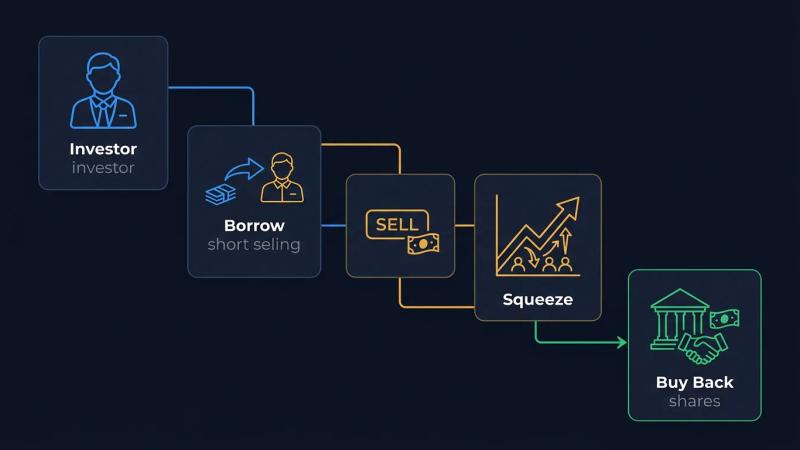
What Does Short Selling Mean: Definition, Mechanics, and Risks
A plain-English guide to short selling: how borrowing and selling a security works, where the risks sit, what the position really costs, and the alternatives you can use.
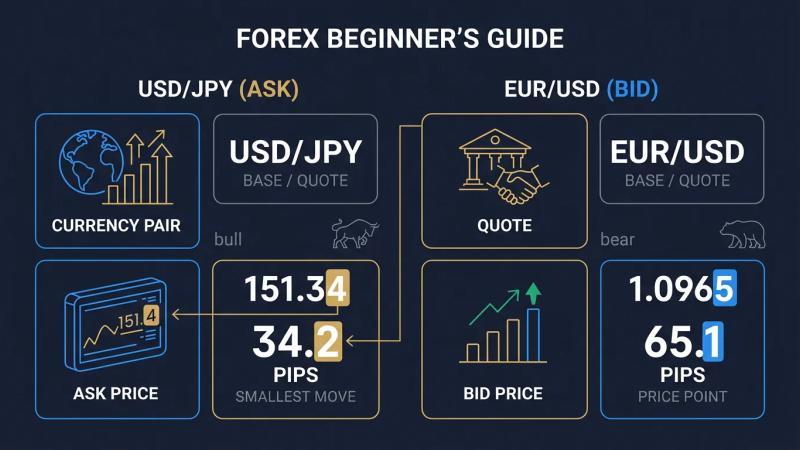
What Is a Pip in Forex: Definition, Calculation and Trading Examples
A pip is the smallest standard price movement in a forex pair. This guide explains pip value, the yen exception, pipettes and how to size trades with pips.
What Is a Ticker Symbol? How Stock Codes Work
A ticker symbol is the short code that identifies a stock on an exchange. Here is how to read them, find them, and avoid costly mix-ups when you trade.
0 comments