



Trading Basics · Beginner · 8 min read
What Is a Pip in Forex: Definition, Calculation and Trading Examples
A pip in forex is the smallest standard price movement in a currency pair, short for percentage in point. For most pairs, one pip equals 0.0001 (the fourth decimal place); for Japanese yen pairs, it is 0.01 (the second decimal place). Pips determine your profit, your loss, and your position size on every trade.
What Is a Pip in Forex
A pip is the unit traders use to measure how much a currency pair has moved. The acronym stands for percentage in point or price interest point, and it is the standardised tick that lets a EUR/USD quote in London, a GBP/JPY quote in Tokyo and an AUD/CAD quote in Sydney be compared on the same scale. According to FXTM (2024), for most currency pairs a pip sits at the fourth decimal place of the price, equivalent to 0.0001, which is 1/100 of 1%.
The reason this matters is mechanical: every stop loss (an order that closes your trade at a preset loss), every take profit (an order that closes your trade at a preset gain) and every position size you calculate is expressed in pips before it is converted to money. Without a fixed unit, risk management would be guesswork.
Ready to start? See our pick of the best forex brokers for beginners.
How Pips Work in Currency Pairs
A forex quote shows the exchange rate between two currencies: the base currency (the first one) and the quote currency (the second one).
If EUR/USD trades at 1.0850, one euro buys 1.0850 US dollars. When the quote moves from 1.0850 to 1.0851, the pair has risen by one pip; when it moves from 1.0850 to 1.0860, it has risen by ten pips. The direction and the size of the move, expressed in pips, is what the market is doing to your open position.
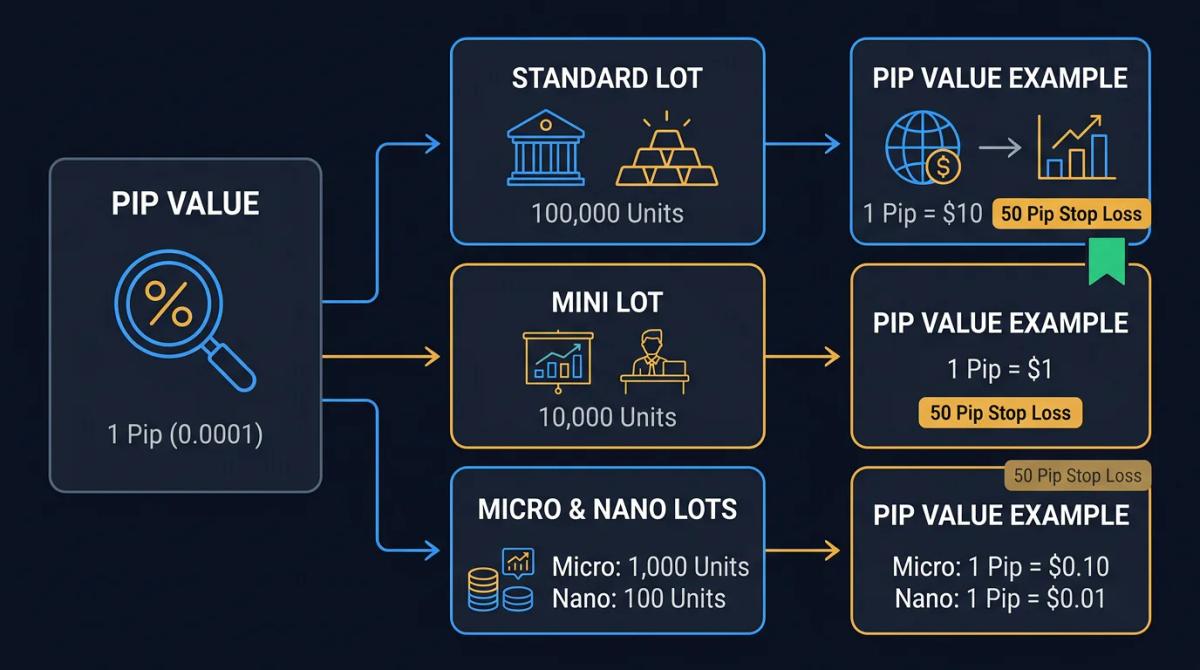
The monetary value of that pip move depends on two things: the lot size you are trading and the quote currency of the pair. A standard lot, one mini lot and one micro lot all experience the same pip move on the chart, but the cash impact on your account is very different.
[CMC Markets, 2026]: A pip is a measurement of movement in forex trading, used to calculate the value of price changes. One standard lot in forex equals 100,000 units of the base currency.
The Japanese Yen Exception
Yen pairs break the four-decimal convention. Because one US dollar buys more than one hundred yen, putting four decimals on the quote would be visual clutter; the market standardised on two.
According to Skrill (2024), for pairs involving the Japanese yen, a pip is measured at the second decimal place (0.01). USD/JPY moving from 150.50 to 150.51 is a one-pip move, not a four-pip move. This is the single most common error you make when you switch from EUR/USD to USD/JPY without recalibrating your stop distances.
Calculating Pip Value for Your Account
Pip value scales with lot size and depends on whether your quote currency matches your account currency. According to Skrill (2024), for standard lots a pip is usually worth $10 / $1 / $0.10 across standard, mini and micro lot sizes respectively.
According to FXTM (2024), mini lots represent 10,000 / 1,000 units of the base currency depending on the account type. The table below shows the standard breakdown when the quote currency is the US dollar.
| Lot type | Units of base currency | Pip value (USD-quoted pairs) | Example: 50-pip stop |
|---|---|---|---|
| Standard | 100,000 | $10.00 | $500 |
| Mini | 10,000 | $1.00 | $50 |
| Micro | 1,000 | $0.10 | $5 |
| Nano (some brokers) | 100 | $0.01 | $0.50 |
When the quote currency is not the US dollar, the formula adds a conversion step. For EUR/GBP held in a USD account, the pip value is calculated in pounds (£1 per pip per 10,000 units) and then converted to dollars at the current GBP/USD rate. Brokers and platforms like MT4, MT5 and cTrader display pip value in your account currency automatically in the order ticket, but the underlying calculation is the one you should be able to do by hand before opening a position.
[IG, 2026]: When the quote currency is the US dollar, the value of a pip is typically $10 for a standard lot, $1 for a mini lot, and $0.10 for a micro lot.
Pipettes and Fractional Pips
A pipette, sometimes called a baby pip or a fractional pip, is one-tenth of a standard pip. According to CMC Markets (2026), a pipette is 1/10 of a pip and is represented by an extra decimal place in the quote. Most modern brokers display EUR/USD to five decimals (1.08501) and USD/JPY to three decimals (150.501).
The fifth digit on EUR/USD or the third digit on USD/JPY is the pipette. It does not change how profit and loss are calculated, but it lets the market quote tighter spreads (the gap between the buy price and the sell price) and gives you finer order precision.
Using Pips for Risk Management and Position Sizing
Pips are the bridge between a chart-based trading idea and a money-based risk rule. The standard workflow is reversed from what beginners assume: you do not pick a lot size and then see what happens; you pick the cash you are willing to lose, measure the stop distance in pips on the chart, and back out the lot size. If your risk per trade is $100 and your stop loss sits 50 pips below entry on EUR/USD, your maximum allowed pip value is $2.00, which corresponds to roughly two mini lots (20,000 units).
This is the discipline that separates a trader from a gambler. A 50-pip stop on a standard lot risks $500; the same 50-pip stop on a micro lot risks $5. The chart looks identical, the only variable is position size.
Anchoring every trade to a fixed cash risk, expressed through pips, is also how prop firms enforce drawdown rules (a drawdown is the fall from a capital peak to the trough before a new peak).
Pips Across Different Brokers and Account Types
The pip itself is standardised, but what you actually earn or lose per pip varies between brokers. Spread structure is the main driver: a broker quoting EUR/USD at 0.1 pip spread on a raw-spread account plus commission will produce a different net result from a broker quoting 1.4 pips with no commission, even though both have the same pip definition.
Leverage caps add another layer; as of 2025, brokers regulated by the FCA (UK) and ESMA (EU) cap retail leverage on major pairs at 30:1, while offshore brokers commonly offer 500:1.
| Broker setup | Typical spread on EUR/USD | Commission per standard lot | Effective cost per round-turn |
|---|---|---|---|
| Standard account | 1.0 to 1.4 pips | $0 | ~$10 to $14 |
| Raw / ECN account | 0.0 to 0.3 pips | $6 to $7 | ~$6 to $10 |
| Cent / micro account | 1.5 to 2.0 pips | $0 | ~$15 to $20 |
Before sizing any trade, verify your broker's pip value and contract specifications inside the platform; the figure shown in the order ticket is the only one that will be used to settle your position.
Common Mistakes When Trading Pips
Four errors recur in retail accounts.
- First, confusing pips with pipettes and entering a stop that is ten times tighter than intended.
- Second, applying the four-decimal rule to yen pairs and ending up with a 5-pip stop instead of 50.
- Third, ignoring the conversion when the quote currency is not the account currency, which distorts the actual cash risk.
- Fourth, increasing leverage to chase small pip targets, which is the classic path to a margin call.
The regulator's data on the outcome of these habits is unambiguous. According to IG (2026), 69% of retail client accounts lose money when trading CFDs with the firm. Disciplined pip-based sizing is not a guarantee of profit, but the absence of it is closely associated with the losing side of that statistic.
Frequently Asked Questions
How do I calculate the monetary value of a pip for my trade?
Multiply the pip size by your position size in units of the base currency, then convert to your account currency if needed. For a 10,000-unit position on EUR/USD, a pip is 0.0001 x 10,000 = $1. For a 100,000-unit (standard lot) position on USD-quoted pairs, one pip is worth $10.
Why do Japanese yen pairs use a different pip measurement?
Because one US dollar buys more than 100 yen, quoting four decimals would be unwieldy. The market standardised on two decimals for yen pairs, so a pip is 0.01. A move on USD/JPY from 150.50 to 150.51 is one pip, the same proportional change as EUR/USD moving from 1.0850 to 1.0851.
What is the difference between a pip and a pipette?
A pipette is one-tenth of a pip. Most brokers now quote prices to five decimals on non-yen pairs and three decimals on yen pairs; that extra digit is the pipette. It does not change pip-value calculations but gives tighter spreads and finer order precision.
How should I use pips to set my stop loss and position size?
Decide the cash amount you are willing to lose on the trade, measure the stop distance in pips from your entry, then divide the cash risk by the per-pip value to get your lot size. If risk is $100 and stop is 50 pips, your pip value must be $2, which is roughly two mini lots on USD-quoted pairs.
Do all brokers quote pips the same way?
The pip definition is standardised across the industry, but cost per pip varies. Standard accounts bake the broker's mark-up into the spread, while raw or ECN accounts show near-zero spreads with a separate commission. Always check the contract specifications on your specific account before sizing trades.
About the authors


Put this into practice
Brokers we have reviewed
Scored on the same five dimensions. Here are three of them — the full list is on the brokers page.



Related articles
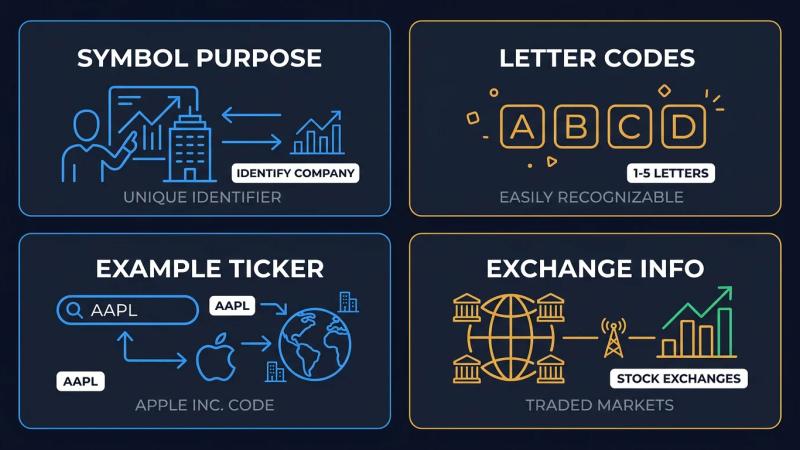
What Is a Ticker Symbol? How Stock Codes Work
A ticker symbol is the short code that identifies a stock on an exchange. Here is how to read them, find them, and avoid costly mix-ups when you trade.
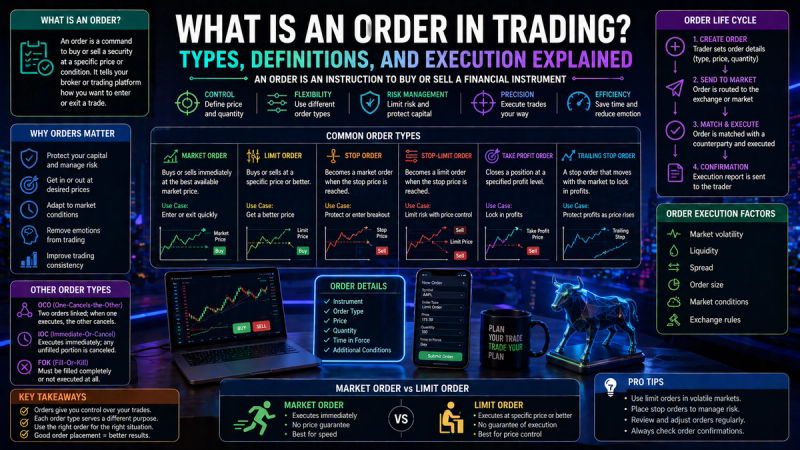
What Is an Order in Trading? Types, Definitions, and Execution Explained
Learn what Is an order in trading, explore every major order type from market to stop-limit, and understand how execution works. A guide for beginners.
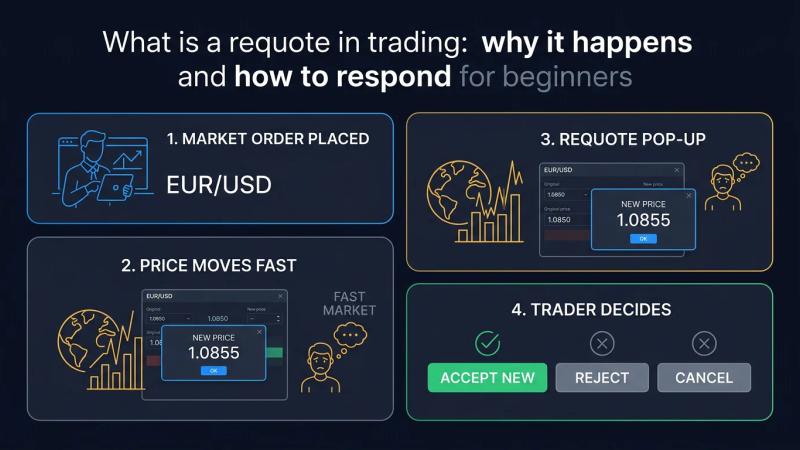
What is a requote in trading: why it happens and how to respond
A requote is the message your broker sends when the price you clicked is no longer available. Here is why it happens, how it affects your trade, and how to limit it.
0 comments