



Trading Strategies · Intermediate
Copy Trading vs Algo Trading: Which Has the Better Risk Profile?
Copy trading and algo trading both promise relief from the grind of manual trading, but they expose you to fundamentally different kinds of risk. This article compares the two directly through the lens of risk: where it comes from, who controls it, and how each approach behaves when markets turn against you. By the end, you will have a framework to judge which path fits your situation, and where each one can quietly hurt you.
The differences run deeper than which approach sounds more sophisticated. They start with who is actually in control.
What Is Copy Trading?
Copy trading hands your trading decisions to someone else, and that single fact defines its entire risk profile. You are relocating risk to a person whose decisions you do not control.
To judge that trade-off, you first need to see how the mechanics actually work.
How copy trading works in practice
Copy trading lets you automatically mirror the trades of another trader, often called a signal provider. You browse a platform, pick a provider based on their track record, allocate capital, and from then on their trades are replicated in your account in proportion to what you committed.
You get exposure to a strategy without building one yourself. The cost is less obvious, and it lives in the next question.
Who controls the risk in copy trading

The signal provider makes the decisions, the platform copies them, and your capital absorbs the outcome. You control how much you allocate and when to stop copying, but you do not control the trades themselves. Your results are tethered to the judgment, discipline, and continued participation of a person you may never speak to.
That dependency is the defining feature of copy trading risk, and it has no direct equivalent in the automated alternative.
Pick a low-cost broker for this approach from our best forex brokers.
What Is Algo Trading?
Algo trading replaces a human decision-maker with a set of fixed rules, which trades one form of uncertainty for another. When emotion leaves the room, the risk changes shape rather than disappearing.
Understanding that shift starts with how an algorithm actually operates.
How algo trading works in practice
Algo trading uses software to execute a predefined strategy automatically. You (or whoever built the system) define entry rules, exit rules, and position sizing, and the algorithm executes them against live market data without manual intervention. On the retail side, this often means an Expert Advisor running on MetaTrader or a custom script connected to a broker.
The logic is fixed, which is both its strength and its vulnerability because a rule that no longer fits the market keeps firing anyway.
Who controls the risk in algo trading
In algo trading, the risk chain runs from the algorithm's logic, through your platform and broker, to your capital.
You control the rules and you can switch the system off, but you are exposed to two failure points a human trader manages on the fly: a strategy that was over-optimized to past data, and technical breakdowns in execution. The algorithm will not improvise when conditions change. It does exactly what it was told, even when that is the wrong thing.
With both models mapped, the comparison can move to where it counts: the dimensions of risk themselves.
Risk Profile Comparison: The Core Differences
The phrase "which is safer" hides the real answer, because these approaches are risky in different places rather than one being safer overall. Here is where each one concentrates its danger.
Source of risk
In copy trading, risk originates with a human: the signal provider's decisions, discipline, and continued involvement. In algo trading, risk originates with a system: the quality of the strategy logic and the reliability of execution. One depends on trusting a person, the other on trusting a process.
Transparency and auditability
Algo trading is generally more auditable, because the rules are explicit and you can inspect exactly what conditions trigger a trade. Copy trading is more opaque, since you see a provider's results but rarely the full reasoning or risk controls behind them. You are judging an outcome rather than a method.
Drawdown behavior
Drawdown is where the two approaches reveal their characters. A signal provider in a losing streak may revenge-trade, increase size to recover, or abandon their usual discipline, and your account follows them down. An algorithm in a losing streak keeps executing the same rules with mechanical consistency, which protects you from panic but offers no judgment when the strategy itself has stopped working.
Operational and technical risk
Algo trading carries heavier operational risk. System crashes, connectivity failures, slippage, and latency can all distort or break execution. Copy trading offloads much of this to the platform, though you inherit whatever operational weaknesses the platform and provider carry.
Dependency risk (human vs. system)
This is the cleanest dividing line. Copy trading creates dependency on a human who can stop trading, change strategy, or vanish. Algo trading creates dependency on a system that can decay as market conditions shift away from the conditions it was built for. Both are real. They simply fail in different ways.
Seeing the dimensions side by side is useful, but the failure modes deserve a closer look on their own terms.
Copy Trading Risk: What Can Go Wrong
The comfort of copying an expert can mask how exposed you actually are. The specific failure modes in copy trading tend to surprise people who assumed they had outsourced the hard part safely.
The main ways copy trading goes wrong:
- Provider stops trading or closes their account. Your strategy source disappears, sometimes mid-position, leaving you to manage an exit you did not plan.
- Strategy drift. A provider who built a record with a careful approach starts taking bigger risks, and you are along for the ride before you notice.
- Survivorship in the rankings. Platform leaderboards highlight recent winners, and past performance on those leaderboards does not predict future results.
- Hidden risk-taking. A provider may post smooth returns while quietly running large undisclosed exposure that blows up later.
Before copying anyone, study how their drawdowns behaved historically, not just their headline returns. Our guide on how drawdown limits work explains what to look for.
Algo trading has its own catalogue of failure, and it is just as specific.
Algo Trading Risk: What Can Go Wrong
An algorithm fails differently from a human, and often more quietly. The danger is that everything looks fine right up until it does not.
The main ways algo trading goes wrong:
- Over-optimization (curve fitting). Picture a key cut to fit one lock so exactly that it opens nothing else. A strategy tuned too tightly to historical data behaves the same way, flawless in backtests and useless live.
- System and connectivity failure. A crashed platform, a dropped connection, or a broker outage can leave a position unmanaged at the worst moment.
- Strategy decay. Markets change, and a system that matched last year's conditions can bleed money in this year's while running exactly as designed.
- Slippage and execution gaps. The price the algorithm expects and the price it gets can diverge, especially in fast or thin markets.
The throughline is that an algorithm does not know when it is wrong. It needs your oversight, which means algo trading is not the hands-off solution it is sometimes sold as.
With both risk catalogues clear, the practical question is which set of risks suits you.
Which Approach Suits Which Trader?
The right choice comes down to which set of trade-offs matches your skills, your capital, your risk profile, and how you handle relying on something outside your direct control.

| Dimension | Copy Trading | Algo Trading |
|---|---|---|
| Control level | Low (provider decides) | Medium to high (you set the rules) |
| Transparency | Lower (outcome visible, method hidden) | Higher (rules explicit) |
| Barrier to entry | Low (no coding needed) | Medium (rule-building, possibly coding) |
| Primary risk type | Dependency on a person | System decay and execution failure |
| Oversight required | Provider monitoring | System monitoring |
Copy trading tends to suit traders who lack the time or skills to build a strategy and are comfortable delegating, provided they monitor their chosen provider closely. Algo trading tends to suit traders who want explicit control over their rules and are willing to maintain a system and absorb its technical demands. Neither removes the need for active oversight.
That oversight requirement is the thread that ties everything together.
Key Takeaways
If you remember nothing else, remember this: both approaches relocate risk rather than removing it.
- Copy trading concentrates risk in a person you depend on. Algo trading concentrates it in a system that can decay.
- Algo trading is generally more transparent and auditable; copy trading is generally more opaque.
- Drawdown exposes the difference, where a provider may behave unpredictably and an algorithm may execute a broken strategy without flinching.
- Neither approach is passive, and past performance, whether a provider's track record or a backtest, does not predict future results.
- The better choice is the one whose specific risks you can monitor and tolerate, given your time, skill, and capital.
Frequently Asked Questions
Is copy trading passive investing or does it require active involvement?
Copy trading is not truly passive. You need to monitor your chosen signal provider for changes in strategy, rising risk-taking, or a drop-off in activity, and decide when to stop copying. Delegating the trades does not remove your responsibility to oversee them.
Is algo trading accessible to retail traders without coding skills?
Yes, to a degree. Pre-built Expert Advisors and rule-based tools let non-coders run automated strategies. Coding skills give you more control and the ability to build custom logic, but they are not a strict requirement for getting started.
What happens to my copy trading account if the signal provider stops trading or closes their account?
Your account stops receiving new trades from that provider, and you may be left holding open positions that you then have to manage yourself. This is a core dependency risk, which is why diversifying across providers and monitoring their activity matters.
Can backtested algo results be trusted as a predictor of live performance?
No. Backtested results show how a strategy would have behaved on past data and are vulnerable to over-optimization. Live performance often diverges significantly, so backtests should be treated as one input, not a forecast.
Which approach requires more starting capital?
Neither has a fixed minimum, and requirements depend on the platform and broker. The more important point is that your account size determines your absolute results in both approaches, regardless of how the strategy performs in percentage terms.
Is either approach suitable for prop firm challenge environments?
It depends entirely on the firm's rules. Many prop firms restrict or ban copy trading and automated strategies, and some prohibit them outright. Always confirm a firm's policy before using either approach in a funded or evaluation account.
How can I evaluate a signal provider's risk profile before copying them?
Look beyond headline returns at how the provider handled drawdowns, how consistent their position sizing is, and how long their track record runs. A smooth equity curve over a short period can hide large undisclosed risk-taking.
Do regulated copy trading platforms offer investor protection if a provider blows their account?
Regulation of copy trading platforms varies by jurisdiction, and protections differ accordingly. Being on a regulated platform may offer certain safeguards, but it generally does not protect you from trading losses caused by a provider's decisions. Check the specific protections of any platform before committing capital.
About the authors


Put this into practice
Related articles

5 Trading Strategies That Work Across Multiple Asset Classes
Discover trading strategies that work across forex, stocks, indices, and commodities; with clear guidance on how to adapt each one.
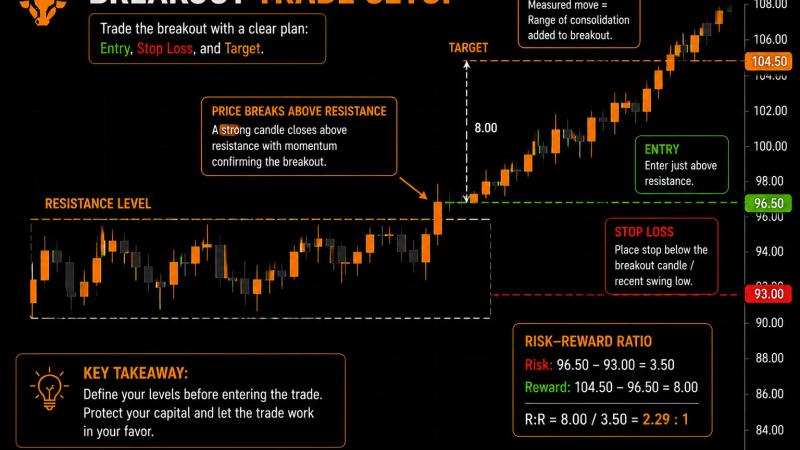
Breakout Trading Strategy: How to Identify Real Breaks From False Ones
Learn the breakout trading strategy and how to spot real breaks from false ones using volume, confirmation, and clean entry rules that protect your capital.
Algorithmic Trading Guide: Strategies, Software & How to Get Started
Learn in this algorithmic trading guide how it works, explore strategies, compare platforms, and follow a step-by-step framework to build your first algorithm.
0 comments