



CFD Trading · Beginner · 6 min read
Who Is Considered an Insider: Legal Definition and Trading Rules
The legal definition of an insider, and why it matters to traders
Who is considered an insider under securities law? An insider is a person with access to material non-public information about a company, or authorised access to its systems and resources.
According to the Legal Information Institute, Cornell Law School, under US federal law this includes a company's officers, directors, or anyone in control of at least 10% of its equity securities. The distinction matters because insiders face legal restrictions on when and how they can trade. If you hold company shares through an employee scheme or work in a regulated role, understanding this status is the first step to staying compliant.
If you still need a broker, our guide to the best forex brokers compares the regulated options side by side.
Who qualifies as an insider under securities law

Regulators draw the line across several overlapping categories. The US Securities and Exchange Commission (SEC) and the UK Financial Conduct Authority (FCA) both treat officers, directors and beneficial owners of 10% or more of voting shares as statutory insiders. They also capture employees, advisers, consultants and contractors granted privileged access to confidential information, sometimes called temporary or constructive insiders.
Understanding these types of traders and roles helps clarify where the regulatory boundary sits.
Material non-public information (MNPI) is information a reasonable investor would use in a buy or sell decision and that has not been released to the market. Anyone who receives MNPI in the course of their duties inherits an obligation to keep it confidential and not trade on it. Tippees, meaning people who receive a tip from an insider, can also be liable if they knew or should have known the information was leaked in breach of duty.
| Category | Typical examples | Trigger for insider status |
|---|---|---|
| Statutory insiders | Officers, directors | Role in the company |
| Beneficial owners | Shareholders with >=10% voting stock | Ownership threshold |
| Employees | Finance, legal, IT staff | Access to MNPI |
| Temporary insiders | Auditors, lawyers, consultants | Contractual access |
| Tippees | Family, friends, contacts | Receipt of leaked MNPI |
Insider trading rules and reporting obligations
Insiders are prohibited from trading on MNPI and must disclose their dealings. In the United States, statutory insiders file Form 4 with the SEC within two business days of any transaction in their company's securities under Section 16(a) of the Securities Exchange Act. Initial holdings are declared on Form 3, and annual updates go on Form 5. These filings are public, and market data services build entire feeds around them. The SEC received 6,000 comment letters during the rule-making process, reflecting the depth of scrutiny applied to insider trading frameworks.
Under the UK Market Abuse Regulation, persons discharging managerial responsibilities (PDMRs) and their close associates must notify the issuer and the FCA of dealings above a modest annual threshold, typically within three business days. Both regimes require blackout periods, which are windows around results announcements when insiders cannot trade at all. A typical closed period is 30 days before the publication of interim or full-year financial results, extending until the announcement is public. Companies usually add their own dealing codes on top of the statutory minimum.
When insiders are allowed to trade

Insiders can trade during open windows, once financial results are public and the market has had a reasonable interval to absorb them. To reduce the risk of accidental abuse, US insiders often rely on a written schedule under Rule 10b5-1, which lets them commit in advance to a plan setting the price, amount and dates of future trades.
According to the Harvard Law School Forum on Corporate Governance, the SEC's cooling-off period for these plans ranges from 30 to 120 days, depending on the insider's role, before the first trade can be executed.
A cooling-off period is simply a mandatory waiting time between adopting a plan and using it, designed to prevent insiders from front-running information they already hold.
Penalties for insider trading violations

Enforcement is severe on both sides of the Atlantic. In the US, the SEC can seek disgorgement of profits gained or losses avoided, civil penalties up to three times that amount under the Insider Trading Sanctions Act, and permanent bars from serving as an officer or director. Criminal cases brought by the Department of Justice can add prison sentences of up to 20 years per count under Section 32 of the Exchange Act.
In the UK, sanctions are equally serious. According to the Financial Conduct Authority, incorrect handling of inside information under the Criminal Justice Act can result in a penalty of up to 10 years imprisonment and an unlimited fine. Civil market abuse cases can add public censure and further financial penalties.
Insider threats versus insider trading: the distinction
The two terms sound similar and often overlap in the same person, but they belong to different rulebooks. Insider trading is a securities offence: someone with MNPI trades, tips or recommends trades based on that information. Insider threat is an information security concept: an authorised person misuses access to systems, data or facilities, whether deliberately, through negligence, or after their credentials are compromised.
If you hold shares as an insider, maintaining a taxable brokerage account with proper compliance controls is essential.
[SEC Investor.gov]: Illegal insider trading refers generally to buying or selling a security in breach of a fiduciary duty or other relationship of trust and confidence, while possessing material, non-public information about the security.
A finance director who leaks earnings figures to a friend commits insider trading if trades follow, and creates an insider threat by exfiltrating confidential data.
The frameworks differ: insider trading is enforced by financial regulators such as the SEC and FCA, while insider threat sits with corporate security, IT and, in some cases, national security agencies.
Frequently Asked Questions
What are insiders in trading and how do they differ from regular shareholders?
Insiders are officers, directors, employees with confidential access, and shareholders holding 10% or more of a company's voting equity. Unlike a regular shareholder, they routinely receive material non-public information and are legally required to report their trades and observe blackout periods around results.
What are the rules against insider trading and who enforces them?
The core rule is that anyone with material non-public information must not trade on it or pass it to someone who will. In the US, the SEC and Department of Justice enforce it under the Securities Exchange Act; in the UK, the FCA enforces it under the Market Abuse Regulation and the Criminal Justice Act.
When can an insider trade their company's shares without breaking the law?
During open trading windows, once financial results are public and the market has absorbed them, and outside any company-imposed closed period. Insiders often use pre-arranged Rule 10b5-1 plans, which set price, amount and timing in advance after a cooling-off period of 30 to 120 days.
What happens if an insider trades on material non-public information?
The SEC can order disgorgement of profits and civil penalties up to three times that amount, plus bars from serving as an officer or director. Criminal cases can add prison time. According to the FCA, UK penalties reach up to 10 years imprisonment and an unlimited fine.
How do I know if I qualify as an insider for reporting purposes?
You are likely an insider if you serve as an officer or director, hold 10% or more of the voting equity, or have access to material non-public information as part of your role, including as an auditor, lawyer or consultant. Check your employer's dealing code and consult its compliance team before trading.
About the authors


Put this into practice
Brokers we have reviewed
Scored on the same five dimensions. Here are three of them — the full list is on the brokers page.



Related articles
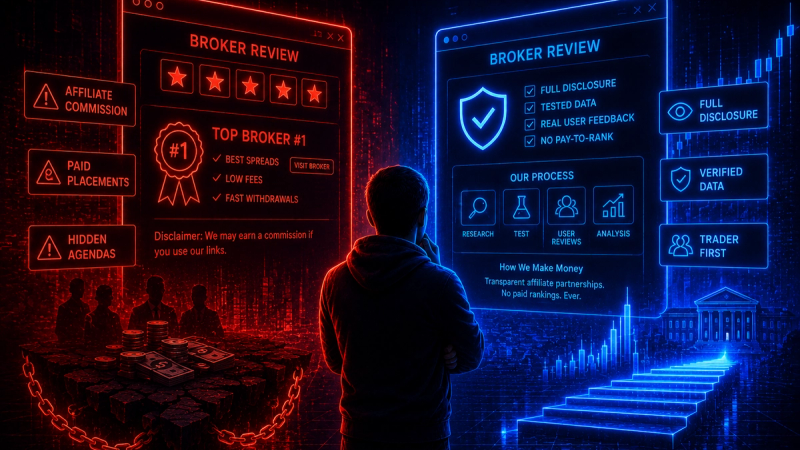
Why Most Broker Review Sites Can't Be Trusted (And How to Spot the Ones That Can)
Broker review sites often claim to be independent while earning revenue from the brokers they recommend. This guide explains how affiliate commissions influence rankings, the warning signs of biased reviews, and the transparency standards traders should look for when evaluating any broker review platform.

Why Offshore Forex Brokers Keep Winning Despite the Risks
Regulators warn against offshore brokers. Millions of traders use them anyway. This article breaks down the structural reasons behind their appeal, the protections you forfeit, and how to make an informed decision before you deposit.

Why Tight Spreads Are No Longer Enough to Judge a Forex Broker
Tight spreads are only part of what you pay per trade. Learn how to evaluate forex broker execution quality: fill speed, slippage, routing, and true cost.
0 comments