



Trading Basics · Beginner · 9 min read
Trading Skills Development: How to Become a Better Trader
Trading can be overwhelming at first: there's a lot of information you need to assimilate in a very short period of time. This urgency causes many beginners to make rookie mistakes and abandon their trading career before it even begins.
In this article, we'll show you how to develop your trading skills to become a better trader and avoid mistakes that erase accounts.
The Two Pillars of Trading Competence
Trading skill is built on two things running in parallel: the technical ability to read a chart, size a position and manage risk, and the emotional discipline to execute that plan when your money is actually at stake. Traders who survive have both. Technical skill without composure produces impulsive trades; composure without a tested method produces calm losses.
Most retail traders spend the first year loading indicators onto a chart and almost no time on process. That imbalance explains why skilled analysts still blow up accounts. A trader who has drilled position sizing, understands the leverage caps that apply to them, and can close a losing trade without hesitation outperforms one who knows twenty indicators but freezes when price moves against them.
This article maps the specific hard skills, the specific soft skills, and a weekly routine you can run to develop both. The examples use tools and rules a UK retail trader will actually meet: MetaTrader, TradingView, and the FCA leverage limits that shape how you can size a position.
Putting this into practice means opening an account: start with the best forex brokers our team reviewed.
Hard Skills: The Technical Foundation
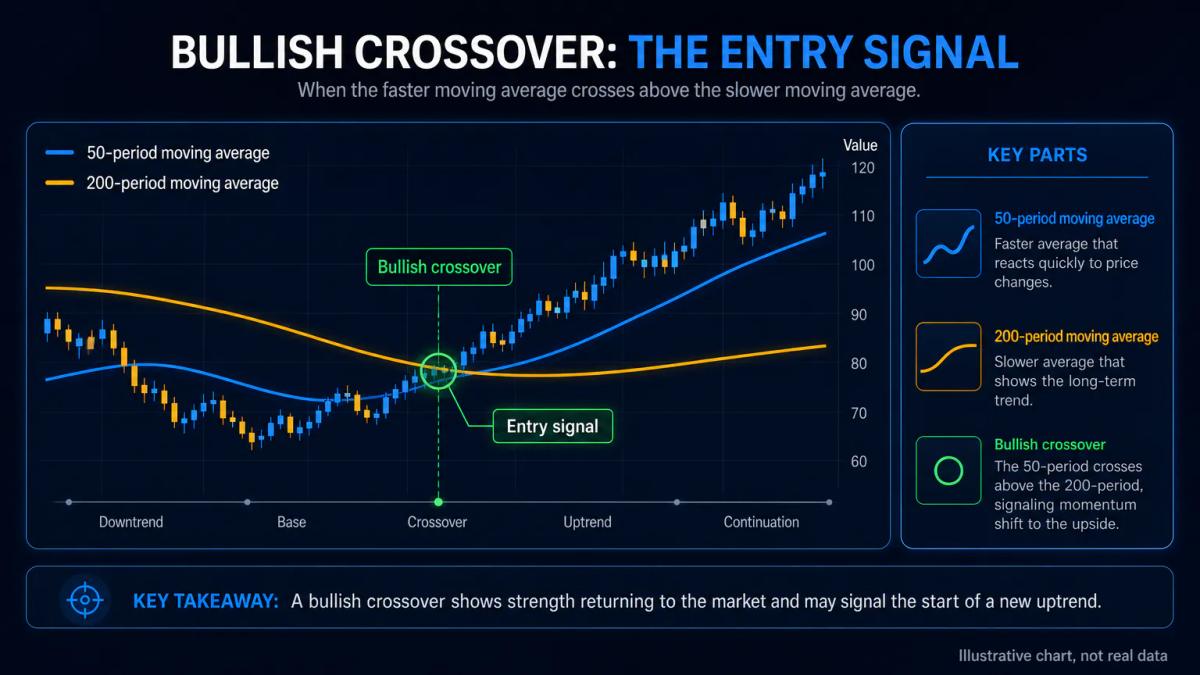
Hard trading skills are the measurable, teachable competencies you need to read markets and manage positions. Four sit at the core:
- Technical analysis.
- Fundamental analysis.
- Position sizing.
- Platform proficiency.
Each is learnable in weeks of focused study, but only useful after months of application.
Technical analysis is the study of price and volume on a chart to infer probable direction.
In practice, that means recognising support and resistance (price levels where buying or selling has previously halted a move), reading candlestick patterns, and using two or three indicators, no more. A moving average (the average closing price over a set number of bars) and how the RSI is calculated (a momentum gauge scaled 0 to 100) are enough to start.
Fundamental analysis is the study of the economic drivers behind an instrument: interest rates for currencies, earnings for equities, supply data for commodities. You do not need a macro degree; you need to know which release moves your pair and check the economic calendar before you trade. Understanding central bank forex impact is a key part of this foundation.
Position sizing is the arithmetic that keeps you in the game. The standard rule is to risk a fixed percentage of your account per trade, commonly 1%. On a $10,000 account risking 1%, your maximum loss per trade is $100. Divide $100 by your stop loss distance in pips to get the position size.
A pip is the smallest standard price move in a currency pair, typically the fourth decimal.
Platform proficiency is the fourth pillar. If you cannot place a stop loss order in under ten seconds, the other three skills do not matter yet.
Soft Skills: Discipline and Emotional Control
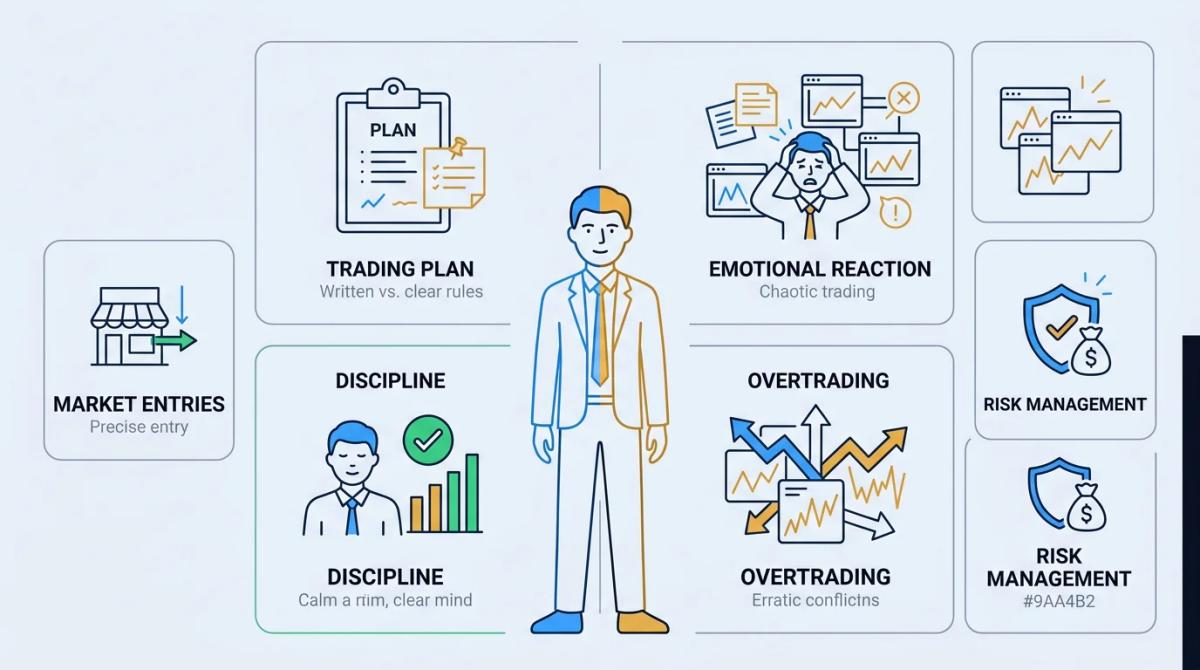
Soft skills are the behavioural traits that determine whether you can execute your plan when the outcome is uncertain. Patience, composure during drawdowns, acceptance of losses, and rule-following without deviation are the four that matter. They are harder to build than technical skills because they only appear under pressure.
Composure during drawdowns is the ability to keep executing when the account equity is falling. A drawdown is the fall from a capital peak to the trough before a new peak. Even a well-tested strategy can lose five or six trades in a row. If you widen stops or double size to recover, the losing streak becomes a blowup.
Acceptance of losses is the recognition that a loss inside your risk parameters is not a failure, it is a cost of doing business. The trade was correct if the rules were followed, regardless of the outcome.
Rule-following is the ability to place the trade your plan says to place, and to skip the one it does not. This sounds trivial. It is the hardest skill in the list.
What Separates Good Traders from Bad Traders
Good traders execute a tested strategy consistently, manage risk strictly and keep emotion out of the decision. Bad traders chase profits, ignore stop losses, overtrade after a loss, and let fear or greed override the plan. The gap is behavioural far more than intellectual.
The table below sets out the contrast in the behaviours that show up in a trade journal.
| Behaviour | Good trader | Bad trader |
|---|---|---|
| Risk per trade | Fixed at 1% of account | Varies with confidence or recent P&L |
| Stop loss | Placed at entry, not moved against the position | Widened when price approaches it |
| Trade frequency | Only when setup matches written criteria | Trades boredom and revenge after losses |
| Journal | Every trade logged with rationale and outcome | No journal, or logged only wins |
| Losing streak response | Reduces size or pauses to review | Doubles size to recover losses |
| News events | Checks the economic calendar before entry | Trades through releases without checking |
The common thread is that good traders treat trading as a repeatable process with defined inputs. Bad traders treat each trade as a separate bet and lose the statistical edge the process was designed to produce.
How to Get Better at Trading: A Structured Approach
You improve at trading through deliberate practice, not screen time. The routine below is what a structured six-month development plan looks like for someone starting from a working strategy idea.
Start with backtesting. Take your rules and apply them to at least two years of historical data on the instrument you plan to trade. If your rules cannot be stated clearly enough to backtest, they are not rules yet, they are intuitions. Learning how to evaluate a prop firm teaches similar discipline in vetting trading systems.
Move to paper trading, also called demo trading, once the backtest shows a positive expectancy. Paper trading is execution on live prices without real money. Spend at least three months here. The goal is not to prove the strategy works, it is to build the muscle memory of placing the order, setting the stop, and walking away.
Keep a trade journal from day one. For every trade log: date and time, instrument, direction, entry, stop loss, take profit, position size, the rule that triggered entry, the emotion at entry, the outcome, and one sentence of review. After fifty trades, patterns emerge: which setups win, which time of day you make mistakes, which emotions precede the worst decisions.
Review weekly. Sit down on a Sunday, read the week's journal entries and write three lines: what worked, what did not, what you will change next week. This weekly review compounds. Six months of it will teach you more than any course.
Move to a small live account only after ninety days of profitable paper trading with disciplined journaling.
Continuous Learning and Self-Assessment
Markets change and your skills must change with them. The volatility regime of 2020 did not resemble 2023, and a strategy calibrated on one can bleed silently through the other. Continuous learning is not reading more articles; it is testing whether your edge still exists.
Build three habits.
- First, read the economic calendar every morning for the instruments you trade, so you know which releases are due and adjust position sizing around them.
- Second, study price action on a weekly chart at the weekend to see the structure your intraday trades sit inside.
- Third, re-run your backtest on the most recent six months of data every quarter. If the expectancy has drifted, the strategy needs adjustment before the account tells you the same thing more painfully.
Self-assessment is honest journaling. According to the FCA, most retail investor accounts trading CFDs lose money, and the retail leverage caps in place, 30:1 on major forex, 20:1 on major indices, 5:1 on equities, with CFDs on crypto prohibited for UK retail, exist because of that outcome. Knowing the rules that govern your account is part of the competence.
Overcoming Psychological Barriers in Live Trading
Trading anxiety, fear of taking a loss, and overconfidence after a win are the three barriers that show up when demo becomes live. The account balance is real, and the brain responds to that difference before you notice. When you are ready to trade live, comparing prop firms can help you find a platform that suits your risk tolerance and trading style.
Recognise the signs. Hesitating on a valid signal, moving a stop loss further away, sizing up after two winners, closing a winner early to lock in a small gain: each is a specific behaviour with a specific emotion behind it.
The trade journal is where you catch them. Add a column for pre-trade emotion and a column for post-trade regret. After a month you will see which emotions cost you money.
If the rules are written and the size is fixed, the decision at the moment of the trade shrinks to a yes or no, and the emotion has less to grip.
Frequently Asked Questions
What are the most essential trading skills for any trader to develop first?
Position sizing and stop loss discipline come first. Before any indicator or strategy, you need to know how to calculate the maximum you can lose on a trade (typically 1% of account equity), how to translate that into a position size given your stop distance, and how to place that stop at entry without moving it. Everything else, from technical analysis to platform shortcuts, is built on top of that foundation.
Can you teach yourself trading skills, or do you need formal education or a mentor?
You can teach yourself the hard skills using books, backtesting software and a demo account. A mentor accelerates the process by pointing out mistakes you cannot see in your own journal and by shortening the feedback loop. Formal education (a finance degree, a professional qualification) is not required to trade retail, but structured study of price action, risk and market microstructure matters more than the source.
How long does it typically take to develop competent trading skills?
Plan for two to three years of consistent effort before expecting steady profitability, and at least six months of disciplined paper trading before touching a live account. The technical knowledge can be absorbed in weeks, but the behavioural side, executing the plan under real pressure without deviation, takes far longer. Most traders who quit do so before the behavioural skills have had time to form.
What is the single biggest skill gap that causes new traders to fail?
Risk management. New traders either do not use stop losses, use stops so tight that normal noise closes every trade, or size positions so large that one loss wipes out weeks of gains. Combined with the tendency to double down after a loss, this behavioural gap accounts for most retail losses. Fixed percentage risk per trade and a stop loss placed before entry solve most of it.
How do you know if you have developed sufficient trading skills to trade with real money?
You are ready when you have kept a trade journal for at least three months, executed your rules with no deviation, produced positive expectancy on demo, and can describe your setup, risk per trade, stop placement and exit criteria in one paragraph without hesitation. If any of those four is missing, spend more time on demo. The market is not going anywhere.
About the authors


Put this into practice
Related articles

TradingView Tutorial: How to Use Technical and Fundamental Analysis Together
Learn how to use TradingView for both technical and fundamental analysis in one unified workflow. Setup, tools, and tips included.
Types of Traders: Timeframe, Strategy, and Frequency Explained
A practical guide to the main types of traders, from scalpers to position traders, with the capital, technology, tax, and regulatory factors that shape each one.
What Is a Pip in Forex: Definition, Calculation and Trading Examples
A pip is the smallest standard price movement in a forex pair. This guide explains pip value, the yen exception, pipettes and how to size trades with pips.
0 comments